IFT physiotherapy for shoulder pain is a highly effective treatment option for managing shoulder pain and can offer significant relief. It uses electrical currents to target pain and inflammation deep in the tissues.
At Physiotattva, we customise IFT physiotherapy plan to suit your shoulder pain needs. Our team of experts will assess your condition and design a treatment plan that works best for you.
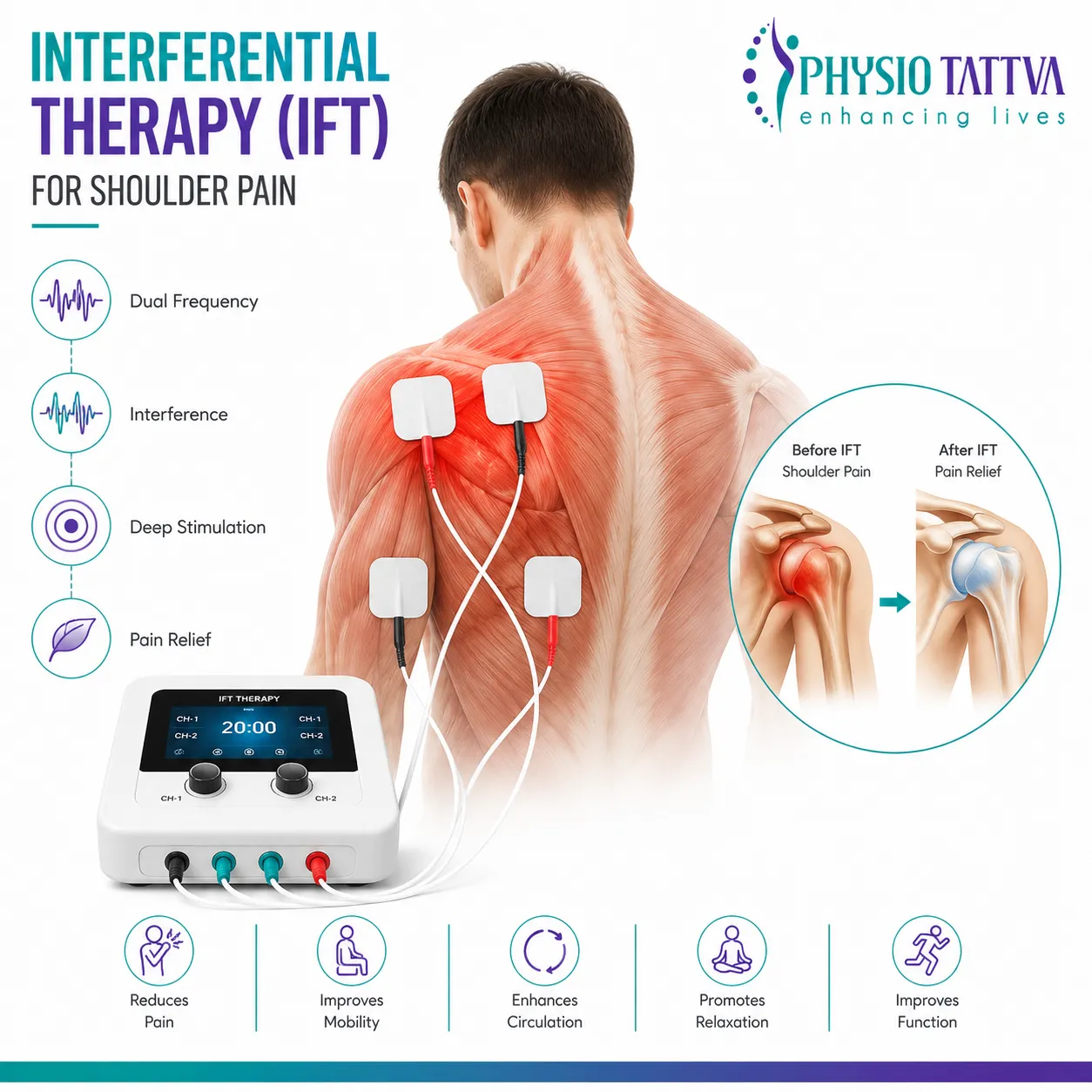
IFT physiotherapy for shoulder pain is a highly effective treatment option for managing shoulder pain and can offer significant relief. It uses electrical currents to target pain and inflammation deep in the tissues. Here’s how it works: during an IFT session, electrodes are placed around your shoulder.
These electrodes send low-frequency electrical currents through your skin, which helps block pain signals and reduce swelling. You might feel a gentle tingling sensation, but it’s usually quite comfortable.
This form of IFT physiotherapy for shoulder pain is beneficial for both acute and chronic conditions such as rotator cuff injuries or arthritis. Many patients often report less pain and improved mobility after just a few sessions. The best part? IFT is non-invasive and doesn’t require downtime, so you can get back to your daily activities right away.
At Physiotattva, we customise IFT physiotherapy plan to suit your shoulder pain needs. Our team of experts will assess your condition and design a treatment plan that works best for you. Whether you’re dealing with a recent injury or a long-term issue, we’re here to help you find relief and get back to living comfortably.
Understanding Shoulder Pain
Shoulder pain, including aches, stiffness, or sharp pain in or about the shoulder joint, is an uncomfortable symptom that limits movements. Sometimes the pain affects daily activities, in that it's difficult to lift or reach. Recognition of the early stages of shoulder pain will be beneficial for effective management and faster recovery.
Early intervention with treatments like IFT physiotherapy for shoulder pain can help relieve discomfort, reduce inflammation, and restore shoulder mobility before the condition worsens. Seeking a proper diagnosis when pain persists ensures that the underlying issue is identified and treated effectively, preventing further deterioration and supporting long-term joint health.
Common Symptoms of Shoulder Pain
Shoulder pain can appear in several ways depending on the cause and severity. Recognising these symptoms early helps guide effective treatment such as IFT physiotherapy for shoulder pain, which targets pain and inflammation to promote recovery.
Here are some common signs to look out for:
Aching or sharp pain in or around the shoulder joint.
Stiffness that limits your ability to move freely.
Weakness in the arm or shoulder when lifting objects.
Pain that worsens with certain movements or when resting.
Discomfort while sleeping on the affected side.
If you experience any of these symptoms, consult a healthcare professional. Early treatment with IFT physiotherapy can help reduce discomfort, improve mobility, and prevent further joint strain.
Common Causes of Shoulder Pain
Knowing what’s causing your shoulder pain helps in choosing the right treatment. Many issues can be relieved with early care and specialised options like IFT physiotherapy for shoulder pain, which reduces pain and supports faster recovery.
Arthritis leading to inflammation and stiffness in the shoulder joint.
Bursitis, caused by irritation or swelling of the shoulder’s fluid-filled sacs.
Overuse or repetitive strain from sports or daily activities.
Poor posture that puts extra pressure on the shoulder muscles.
Injuries or trauma from accidents or sudden impacts.
Neck or upper back issues that radiate pain into the shoulder.
Diagnosing Shoulder Pain
To diagnose shoulder pain, a healthcare provider will ask about your symptoms, medical history, and any recent injuries. They might perform a physical exam and ask you to move your shoulder in different ways.
In some cases, imaging tests such as X-rays, MRI scans, or ultrasound evaluations are used to identify inflammation, soft-tissue injury, or structural damage. Accurate diagnosis is crucial for selecting the right treatment and preventing long-term issues.
Once the root cause is known, your therapist can recommend targeted treatments such as IFT physiotherapy for shoulder pain, designed to relieve discomfort, improve circulation, and restore normal joint movement safely.
How Does IFT for Shoulder Pain Work for Pain Management?
IFT physiotherapy for shoulder pain helps relieve discomfort by using electrical currents to target deep tissues. During treatment, electrodes placed on your shoulder send currents that interfere with pain signals and reduce inflammation.
These gentle electrical currents interfere with pain signals travelling to the brain, helping to block them naturally while reducing inflammation and improving blood circulation. The therapy also encourages tissue healing and relaxation, easing muscle tension around the joint.
As a result, patients experience less pain, better movement, and faster recovery, making IFT an effective, non-invasive solution for managing both acute and chronic shoulder conditions.
Benefits of Interferential Therapy IFT for Shoulder Pain
Interferential Therapy for shoulder pain helps reduce inflammation, relieve pain, and improve mobility. It also boosts blood flow and relaxes muscles, making it easier to move and feel better.
Reduced Inflammation
Interferential Therapy IFT for shoulder pain helps reduce inflammation in the pain area located in your shoulder by sending electrical currents through the skin. These currents reach deep tissues and help decrease swelling.
By targeting inflammation directly, IFT can relieve pain and make movement easier. Less inflammation means your shoulder feels better and recovers faster if you’re dealing with swollen or painful areas.
Enhanced Blood Circulation
IFT boosts blood circulation in your shoulder by stimulating the tissues with electrical currents. Improved circulation helps deliver more oxygen and nutrients to the injured area, which supports healing and reduces pain.
Better blood flow also helps remove waste products from the area, speeding up recovery.
Muscle Relaxation
IFT promotes muscle relaxation by sending gentle electrical currents through your shoulder. These currents help relieve muscle tension and reduce spasms, making your shoulder feel more comfortable.
Relaxed muscles are less likely to cause or worsen pain, which can improve your range of motion and overall shoulder function. If you’re struggling with tight or sore muscles in your shoulder, IFT can provide relief and make it easier to move without discomfort.
Improved Joint Function
Interferential Therapy IFT for shoulder pain enhances joint function by targeting pain and inflammation in the shoulder. The electrical currents help reduce swelling and improve blood flow, which supports better movement and flexibility.
With less pain and inflammation, your shoulder can move more freely, making everyday tasks easier. Improved joint function means you can return to your normal activities with less discomfort and better mobility.
Convenient and Quick
IFT is convenient and quick, with each session typically lasting 20-30 minutes. The treatment is non-invasive and doesn’t require recovery time, so you can easily fit it into your daily schedule.
You can go about your day right after the session without any downtime. This makes IFT a practical option for busy lifestyles, providing effective pain relief and support without disrupting your routine.
Types of Interferential Therapy IFT for Shoulder Pain
Types of Interferential Therapy (IFT) for shoulder pain work by using different electrical currents to target pain and inflammation. Each type adjusts frequency, direction, or amplitude to provide customised relief, helping reduce pain and improve shoulder function. Some of the common types are:
Premodulated Interferential Therapy IFT for Shoulder Pain: Premodulated IFT uses a pre-modulated current that mixes two frequencies before applying it to the shoulder. This method helps reduce pain and inflammation by targeting deeper tissues.
True Interferential Therapy for Shoulder Pain: True IFT involves using two different frequencies that intersect to create a therapeutic effect. This technique provides deep tissue stimulation to alleviate shoulder pain.
Dynamic Interferential Therapy for Shoulder Pain: Dynamic IFT adjusts the frequency and amplitude of the currents during treatment. This variation helps target pain more effectively and adapts to changing needs.
Vector Interferential Therapy for Shoulder Pain: Vector IFT allows for control over the direction of the electrical currents. This method helps focus on specific areas of pain and improves treatment accuracy.
Frequency-Specific Interferential Therapy for Shoulder Pain: Frequency-Specific IFT uses different frequencies to target various types of pain and inflammation in the shoulder. This approach customises treatment based on your specific condition.
High-Frequency Interferential Therapy for Shoulder Pain: High-Frequency IFT uses higher electrical frequencies to treat superficial tissues. This method is effective for managing surface pain and improving local circulation.
Low-Frequency Interferential Therapy for Shoulder Pain: Low-Frequency IFT targets deeper tissues with lower frequencies. This technique helps relieve deeper pain and reduce inflammation in the shoulder.
Amplitude-Modulated Interferential Therapy IFT for Shoulder Pain: Amplitude-Modulated IFT adjusts the strength of the electrical currents during treatment. This modulation helps in managing pain and muscle spasms effectively.
Quadripolar Interferential Therapy for Shoulder Pain: Quadripolar IFT uses four electrodes arranged in a way that creates an interference pattern in the shoulder. This method provides even coverage and effective pain relief across the joint.
Treatment Parameters of Interferential Therapy IFT for Shoulder Pain
Frequency settings help in determining how often currents are delivered, targeting different tissue depths. Electrode placement ensures currents reach the pain area effectively. Intensity controls the strength of the currents, while duration defines how long each session lasts.
Vector mode adjusts the direction of the currents, and pulse duration manages the length of each pulse. Amplitude modulation varies the current strength to enhance pain relief.
What to Expect During Interferential Therapy IFT for Shoulder Pain Management?
During Interferential therapy IFT for Shoulder pain, you'll start with electrodes placed around your shoulder. The device sends electrical currents through these electrodes. You'll likely feel a mild tingling sensation, but it should be comfortable.
Each session usually lasts about 20-30 minutes. The therapy helps reduce pain and inflammation while improving shoulder movement. You might notice relief right after the session.
Initial Consultation and Assessment
In your initial consultation for IFT, a healthcare professional will review your shoulder pain symptoms and medical history. They'll conduct a physical exam and may use imaging tests if needed. This assessment helps them understand the cause of your pain and decide if IFT is suitable for you.
They’ll also explain the treatment process, what to expect, and how many sessions might be needed.
IFT Session
The therapist sits down and explains the process and what to expect from the Interferential Therapy IFT for shoulder pain session. This is then followed by a quick review of your condition, upon which the settings for the frequency are adjusted.
You’ll feel a gentle tingling as the electrical currents stimulate the tissues. The session typically lasts 20-30 minutes, during which the currents work to reduce pain and inflammation. After the session, you can resume normal activities. The therapist will guide you on how to care for your shoulder and what to expect from the therapy.
Post-Treatment Care
After an Interferential Therapy IFT for shoulder pain session, you might feel some relief, but it's important to follow any care instructions provided. This could include resting your shoulder, applying ice if needed, or doing specific stretches.
Avoid any activities that could aggravate your pain. Your therapist might also recommend follow-up sessions or additional treatments to continue managing your shoulder pain effectively.
Recovery Timeline and Expected Results
Recovery speed depends on the severity of your condition and how consistently you attend therapy sessions. Many patients experience noticeable relief within 3–5 sessions of IFT physiotherapy for shoulder pain, while chronic or long-term issues may take 8–10 sessions for sustained improvement. With regular follow-ups and guided exercises, most people regain shoulder mobility, reduced pain, and better flexibility over time.
Risks and Precautions in IFT Physiotherapy for Shoulder Pain
While IFT physiotherapy for shoulder pain is widely recognised as a safe and effective treatment, it’s essential to be aware of certain risks and precautions to ensure it’s suitable for your condition. Understanding these points helps you get the most benefit while keeping the therapy completely safe.
Who Should Avoid IFT
Not everyone can undergo IFT immediately. Some people may need to avoid or delay sessions if they have specific medical conditions that could interfere with the treatment. These include:
Individuals with pacemakers or other implanted electrical devices.
Those with metal implants near the shoulder area.
People with severe skin infections or open wounds at the treatment site.
Pregnant women, especially near the abdominal or pelvic area.
Precautions and Safety Measures
Taking proper precautions ensures a safe and effective therapy experience. Patients are encouraged to follow professional guidance and share full health details before treatment.
Always have IFT sessions supervised by a qualified physiotherapist to ensure proper settings and electrode placement.
Avoid using IFT devices at home without medical supervision.
Inform your therapist about existing health conditions, medications, or implants before starting therapy.
Stop the session immediately if you experience pain, burning, or unusual discomfort.
At Physiotattva, every IFT physiotherapy for shoulder pain session is conducted by skilled physiotherapists who tailor treatments to your health profile, ensuring comfort, safety, and lasting relief.
Integrating Interferential Therapy IFT for Shoulder Pain in Treatment
Integrating Interferential Therapy IFT for shoulder pain into treatment enhances overall effectiveness. Combining IFT with physical therapy targets pain while improving strength and flexibility. IFT can also complement chiropractic care by reducing inflammation and pain, allowing for more effective spinal adjustments.
Using IFT alongside medication provides additional pain relief and reduces dependency on drugs. Adopting a holistic pain management strategy combines these approaches, addressing different aspects of shoulder pain for comprehensive care.
Each method supports the others, creating a well-rounded treatment plan tailored to your specific needs.
Combining Interferential Therapy IFT for Shoulder Pain with Physical Therapy
Combining Interferential Therapy (IFT) with physical therapy offers a powerful approach to shoulder pain relief. IFT reduces pain and inflammation, allowing you to engage more comfortably in physical therapy exercises. These exercises then work to improve strength, flexibility, and range of motion in the shoulder.
Interferential Therapy IFT for Shoulder Pain and Chiropractic Care
Using Interferential Therapy (IFT) alongside chiropractic care can enhance shoulder pain relief. While IFT addresses pain and inflammation through electrical currents, chiropractic adjustments focus on aligning the spine and improving joint function.
IFT can reduce pain and swelling, making chiropractic adjustments more effective and comfortable.
Using Interferential Therapy IFT for Shoulder Pain Alongside Medication
Combining Interferential Therapy (IFT) with medication can provide more comprehensive shoulder pain relief. IFT works to reduce pain and inflammation through electrical currents, which can enhance the effects of medication. This approach helps lower your reliance on drugs while maximising pain relief.
By using IFT and medication together, you address pain from multiple angles, which can improve your overall comfort and speed up your recovery. Always consult with your healthcare provider to ensure this combined approach is suitable for your specific condition and needs.
Holistic Pain Management Strategies
Integrating Interferential Therapy IFT for shoulder pain with physical therapy, chiropractic care, and medication creates a comprehensive plan that addresses pain, inflammation, and functional issues.
This strategy considers your overall well-being and uses various methods to provide relief. By combining these treatments, you can target different aspects of shoulder pain, leading to a more balanced and effective recovery process.
Consulting a Healthcare Professional for Optimal Results
Consulting a healthcare professional is crucial for getting the best results with Interferential Therapy (IFT). A professional will assess your shoulder pain, determine if IFT is right for you, and design a personalised treatment plan.
They can also guide you on combining IFT with other therapies to maximise relief. Regular consultations ensure that your treatment adapts to your progress and needs. For a tailored approach to managing your shoulder pain, consult the experts at Physiotattva. Schedule your appointment today to start on the path to effective relief.
Experience Complete Relief with Interferential Therapy IFT for Shoulder Pain at Physiotattva
At Physiotattva, we offer comprehensive shoulder pain relief through Interferential therapy IFT for shoulder pain. Our team uses state-of-the-art technology and personalised care to address your specific needs. We’ll work with you to design a treatment plan that combines Interferential Therapy IFT for shoulder pain with other therapies for optimal results.
Experience how our tailored approach can help reduce pain, improve mobility, and enhance your quality of life. Don’t let shoulder pain hold you back. Contact Physiotattva today to schedule your appointment and take the first step towards effective pain relief.
At Physiotattva physiotherapy clinics in Bangalore and Hyderabad, you receive personalised care tailored to your specific needs, ensuring effective results and comfort throughout your journey to recovery.
Can Interferential Therapy IFT for Shoulder Pain help with chronic shoulder pain?
Yes, Interferential Therapy IFT for Shoulder Pain can help with chronic shoulder pain by reducing inflammation and blocking pain signals. It offers long-term relief when used consistently and combined with other therapies.
How soon can I expect to feel relief from Interferential Therapy IFT for Shoulder Pain?
You might start feeling relief from Interferential Therapy IFT for Shoulder Pain after just one or two sessions. The exact timing varies, but many people notice improvement quickly as the therapy reduces pain and inflammation.
Can Interferential Therapy IFT for Shoulder Pain be combined with other treatments?
Yes, Interferential Therapy IFT for Shoulder Pain can be combined with other treatments such as physical therapy, chiropractic care, or medication. This combination often enhances overall effectiveness and provides more comprehensive relief.
How is Interferential Therapy IFT for Shoulder Pain administered?
Interferential Therapy IFT for Shoulder Pain involves placing electrodes on the shoulder. Electrical currents are then delivered through these electrodes, targeting pain and inflammation. Each session typically lasts 20-30 minutes.






.webp)
.webp)


.webp)


.jpeg)



.webp)
.webp)



.webp)
.webp)


.webp)








.webp)







%20(1)-p-3200.jpeg)


.jpg)
.webp)
.webp)
.webp)


