




Knee pain, swelling, and stiffness can significantly interfere with daily activities, making tasks like climbing stairs or sitting for long periods uncomfortable. One common cause is knee bursitis, an inflammatory condition that often persists despite rest and ice. When standard measures fail to provide relief, many look for more targeted solutions.
Dry needling therapy for knee bursitis offers a modern, focused approach designed to address the underlying muscular contributors to pain. This article explains what knee bursitis is, how dry needling works, and whether this treatment option may be suitable for your recovery.
What Is Knee Bursitis?
Before discussing treatment options, let's understand the problem.
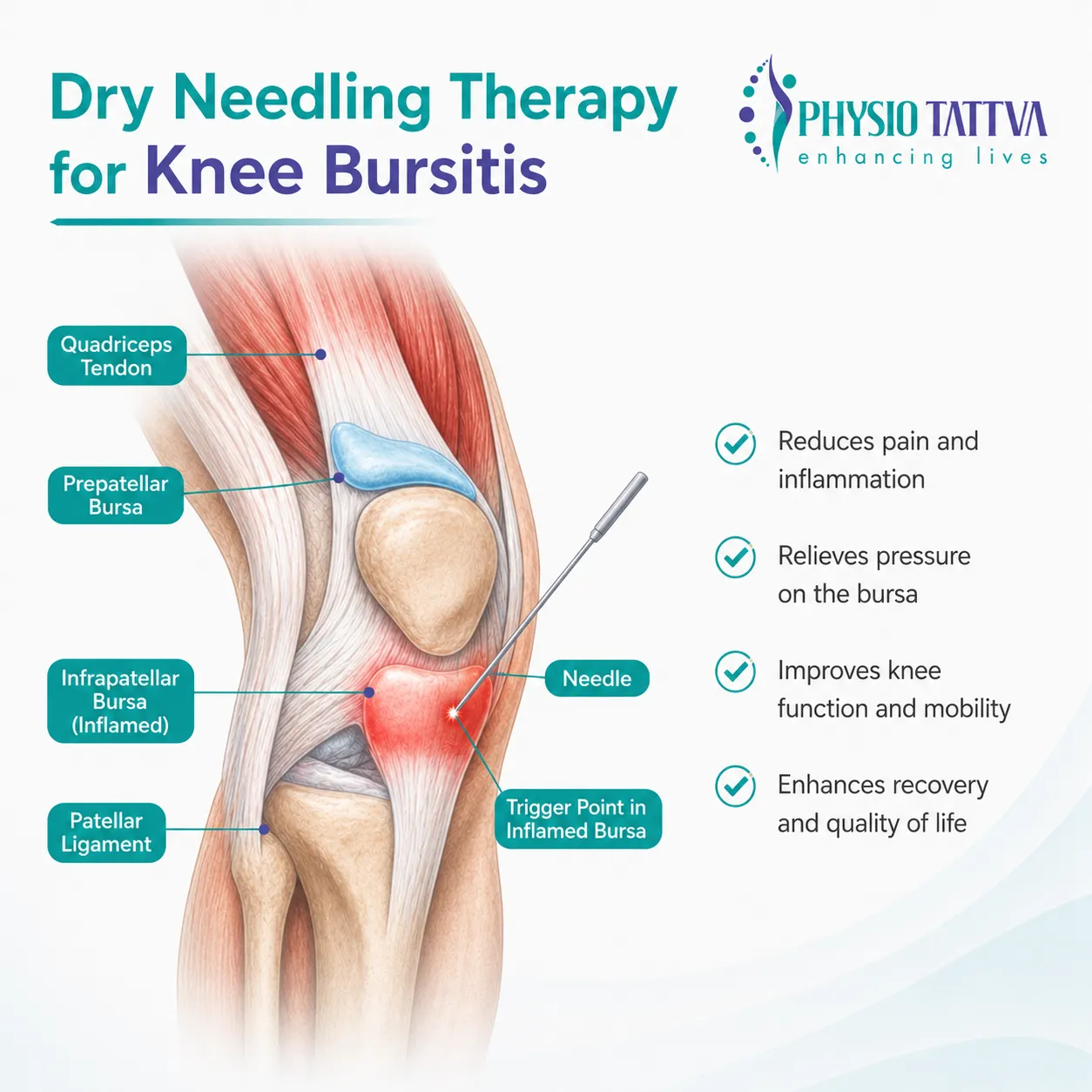
Your knee joint is surrounded by small, fluid-filled sacs called bursae (singular: bursa). Think of them as tiny cushions that reduce friction between your bones, tendons, and muscles. When one of these bursae becomes inflamed, the condition is called bursitis.
Common Types of Knee Bursitis
The knee contains several bursae, and inflammation can occur in different locations depending on stress, activity, or underlying conditions. The most commonly seen types include:
- Prepatellar Bursitis: Inflammation over the front of the kneecap. Often called "housemaid's knee" or "carpenter's knee" due to prolonged kneeling.
- Pes Anserine Bursitis: Inflammation on the inner side of the knee, just below the joint. Common in runners, those with osteoarthritis, or overweight individuals.
- Infrapatellar Bursitis: Occurs just below the kneecap, affecting the patellar tendon.
Symptoms of Knee Bursitis
When a bursa becomes inflamed, certain signs and symptoms commonly develop, which may vary in severity depending on the stage of the condition:
- Pain that worsens with movement or pressure
- Visible swelling and tenderness to the touch
- Warmth around the affected area
- Stiffness and reduced range of motion
What is Dry Needling?
This is a crucial point of clarification. While both use fine, sterile needles, their philosophies and applications are different.
- Acupuncture is based on traditional Chinese medicine and works to restore the flow of energy (Qi) along meridians in the body.
- Dry Needling is a modern Western medical technique performed by trained physical therapists and other healthcare professionals. It focuses on treating musculoskeletal and nervous system issues directly.
During dry needling, a therapist inserts a thin filiform needle into the skin to target underlying trigger points within a muscle.
How Does Dry Needling Help Knee Bursitis?
Dry needling for bursitis doesn't target the inflamed bursa itself. In fact, needling an inflamed bursa would be painful and counterproductive.
Instead, the therapy targets the overly tight and dysfunctional muscles surrounding the knee.
These tight muscles are often the root cause of the problem. Here’s how:
- They Compress the Bursa: Muscles like your quadriceps (front of thigh), hamstrings (back of thigh), and adductors (inner thigh) cross the knee joint. When they are tight and full of trigger points, they create constant tension and compression on the nearby bursae.
- They Cause Abnormal Movement: Tight muscles alter your biomechanics, causing uneven stress on the knee joint with every step. This friction and abnormal pressure are primary irritants for the bursae.
By inserting a needle into these trigger points, a therapist can achieve several things:
- Elicit a "Local Twitch Response": This is an involuntary spinal cord reflex where the muscle fibers contract and then relax. This action effectively "resets" the muscle, releasing the knot and deactivating the trigger point.
- Reduce Muscle Tension: With the trigger points released, the overall tension in the surrounding quadriceps, hamstrings, or adductors decreases. This immediately reduces the compressive and frictional forces on the inflamed bursa.
- Improve Blood Flow: The needling process stimulates blood flow to the area, bringing oxygen and essential nutrients that promote healing and flush out pain-causing chemicals.
- Pain Gate Neuromodulation: The sensation from the needle can help "distract" the nervous system, effectively blocking pain signals from reaching the brain.
In short, dry needling addresses the cause (muscle dysfunction) rather than just the symptom (bursa inflammation).
Note: A trigger point is essentially a hyper-irritable "knot" in the muscle tissue that can cause pain, tightness, and referred pain to other areas.
What to Expect During a Dry Needling Session
If you are considering dry needling therapy for knee bursitis, understanding the process can help you feel more comfortable and prepared. A typical session follows a structured and carefully guided approach:
- Assessment: Your physical therapist will perform a thorough evaluation to identify which muscles are tight and contributing to your knee pain. They will locate the specific trigger points to be treated.
- Preparation: You will be positioned comfortably, and the therapist will clean the skin over the target area.
- The Procedure: The therapist will expertly insert the sterile, single-use needle into the trigger point. You may feel a small prick, but the primary sensation is often a deep, dull ache or a muscle "twitch" as the trigger point releases. This twitch is a sign that the therapy is working.
- Post-Treatment: The needles are only in for a very short period. Afterward, you may experience some muscle soreness, similar to what you'd feel after a tough workout. This is normal and usually subsides within 24-48 hours. Your therapist will provide aftercare instructions, such as gentle stretching, applying heat or ice, and staying hydrated.
Benefits and Considerations of Dry Needling for Knee Bursitis
Dry needling offers several advantages when used as part of a structured physiotherapy program for knee bursitis. By targeting the muscular contributors to pain and inflammation, it helps improve outcomes while supporting other rehabilitation strategies. Some of the key benefits include:
- Highly Targeted: Directly treats the source of the mechanical stress.
- Fast Relief: Many patients report a noticeable improvement in pain and mobility after just one or two sessions.
- Part of a Holistic Plan: It pairs perfectly with other physical therapy interventions like strengthening exercises and stretching to provide a long-term solution.
- Minimally Invasive: It's a drug-free approach to pain management.
Is Dry Needling Therapy Safe for Knee Bursitis?
Dry needling therapy is widely regarded as a safe and effective treatment option for knee bursitis when carried out by a licensed and properly trained physiotherapist. The technique focuses on releasing tight muscles and trigger points around the knee rather than needling the inflamed bursa itself, which helps reduce risk and discomfort. Most patients tolerate the procedure well. Mild side effects such as temporary muscle soreness, slight bruising, or stiffness may occur but typically resolve within a few days without any complications.
Is Dry Needling Right for You?
Dry needling therapy for knee bursitis may be a suitable treatment option when symptoms are driven by muscular tension rather than the inflamed bursa itself. It is often recommended if your knee pain is associated with:
- Muscle tightness around the knee.
- Palpable knots or tender points in your thigh muscles.
- Pain that hasn't fully resolved with rest, ice, and anti-inflammatory medications.
You should always get a proper diagnosis from a healthcare professional first. Dry needling is not recommended for individuals with a phobia of needles, blood clotting disorders, or active infections.
Targeted Dry Needling Therapy for Lasting Knee Bursitis Relief at Physiotattva
Knee bursitis can be persistent and frustrating, but effective relief is possible with the right treatment approach. Dry needling therapy for knee bursitis addresses the underlying muscular tension that contributes to ongoing inflammation and pain. By releasing tight muscles and restoring normal movement patterns, this therapy supports the natural healing of the inflamed bursa. With a targeted, evidence-based approach, many individuals are able to reduce discomfort, improve mobility, and return to daily activities with greater comfort and confidence.
At Physiotattva physiotherapy clinics in Bangalore and Hyderabad, you receive personalised care tailored to your specific needs, ensuring effective results and comfort throughout your journey to recovery.
Don’t wait to start your recovery! Get in touch with Physiotattva for more details! Contact us at +91 89510 47001.
Why Physiotattva?
22+
50,000+
95%
200+
25+
4.8
Cities We Serve

Bangalore
At Physio Tattva, we are committed to bring access to quality physio care through ultra-modern clinics and high-skilled practitioners to all.
.webp)
Hyderabad
At Physio Tattva, we are committed to bring access to quality physio care through ultra-modern clinics and high-skilled practitioners to all.
.webp)
Vishakhapatnam
At Physio Tattva, we are committed to bring access to quality physio care through ultra-modern clinics and high-skilled practitioners to all.
Core Treatments
Core Conditions
Core Symptoms
Frequently Asked Questions
How many dry needling sessions will I need for knee bursitis?

Will dry needling hurt?
Is dry needling for knee bursitis covered by insurance?




%20(1)-p-3200.jpeg)


.jpg)
.webp)
.webp)
.webp)