





Plantar fasciitis is notorious for the sharp, stabbing pain it causes in the heel, especially with those first few steps in the morning. If you're struggling with this frustrating condition, you've likely heard that hot and cold therapy can help. But the key to effective relief is knowing when to use each one.
Using the wrong therapy at the wrong time can be ineffective or even make your symptoms worse. This article will break down the science behind hot and cold therapy for plantar fasciitis, telling you exactly when to grab an ice pack and when to turn on the heating pad.
The Role of Cold Therapy (Ice) for Plantar Fasciitis
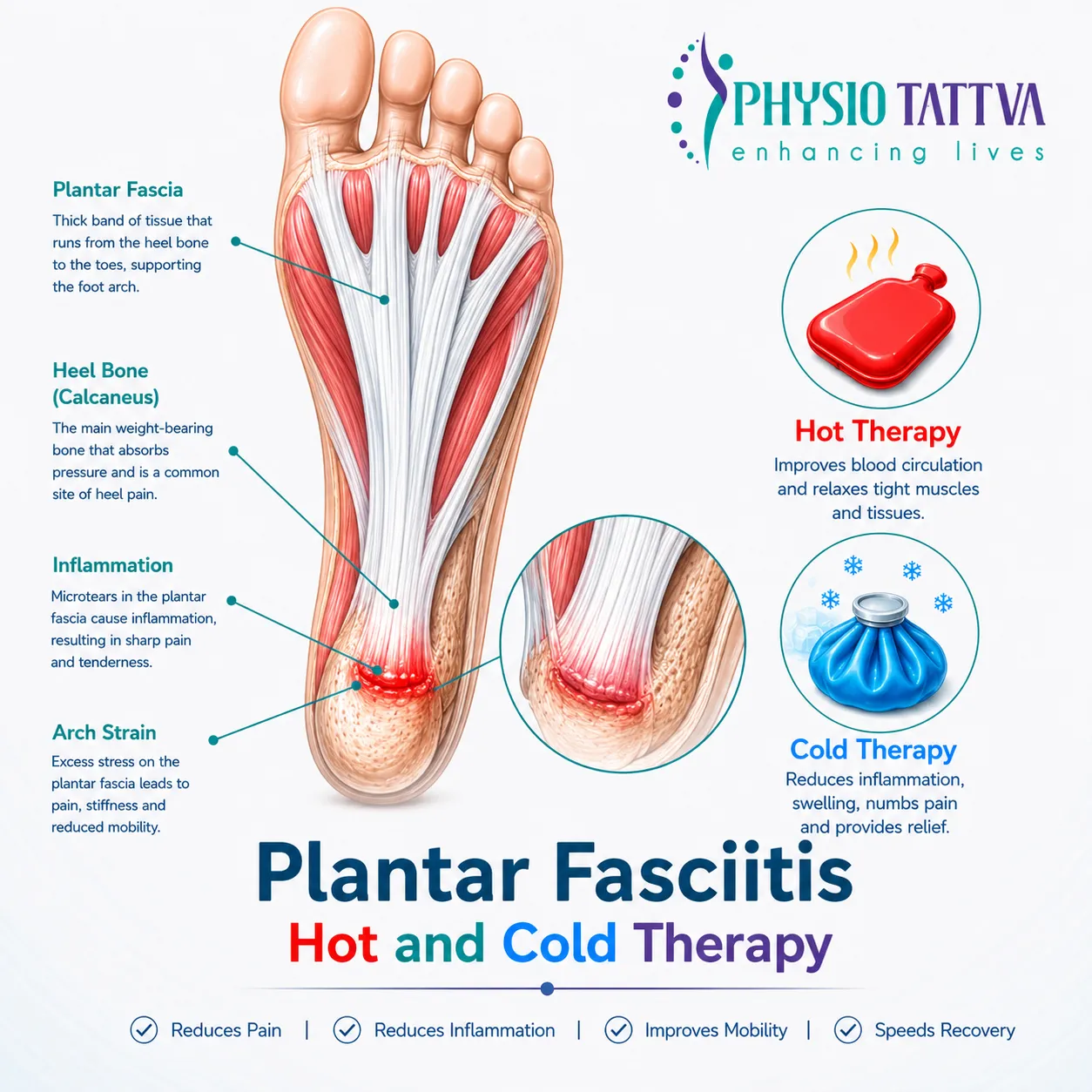
Cold therapy plays a critical role in managing plantar fasciitis, especially during painful flare-ups or after strain. Think of ice as your emergency responder. Its primary job is to combat inflammation and acute pain.
Why Cold Therapy Works?
To understand why ice is so effective, it helps to look at how cold affects injured tissue.
Cold therapy, or cryotherapy, causes vasoconstriction, which means it narrows your blood vessels. This process provides two key benefits:
- Reduces Inflammation: By restricting blood flow to the heel, ice decreases the swelling and inflammatory response that causes much of the pain.
- Numbs the Area: Cold has a natural analgesic (pain-relieving) effect by temporarily numbing the nerve endings in the foot.
When to Use Cold Therapy?
Timing is crucial when using ice for plantar fasciitis. Cold therapy works best when inflammation is present or when pain is sharp and sudden.
- After Activity: Use ice immediately after a run, a long walk, or a day spent on your feet. This is when the plantar fascia is most likely to be inflamed.
- During a Flare-Up: If you're experiencing a sudden increase in sharp, intense pain, ice is your first line of defense.
- When You See Swelling: If your heel or arch looks or feels puffy and swollen, cold therapy will help reduce it.
How to Apply Cold Therapy for Plantar Fasciitis?
Using the right method ensures you get maximum relief without irritating the skin or tissue.
- Frozen Water Bottle (Most Recommended): Freeze a standard plastic water bottle. Sit in a chair and roll your bare foot over the bottle, applying gentle pressure to the arch and heel. This method combines the benefits of icing and massage. Do this for 15 minutes.
- Ice Pack: Use a gel pack or a bag of frozen peas wrapped in a thin towel. Never apply ice directly to the skin, as it can cause ice burn. Apply to the heel and arch for 15-20 minutes.
- Ice Bath: Fill a small tub or basin with cold water and ice. Submerge your affected foot for 10-15 minutes. This can be intense but is highly effective.
Rule of Thumb: Use ice for 15-20 minutes at a time, several times a day, especially after activity.
The Role of Heat Therapy for Plantar Fasciitis
Heat therapy is best suited for easing stiffness rather than swelling. Think of heat as your muscle relaxer. Its main purpose is to increase circulation and soothe chronic tightness in the plantar fascia and surrounding muscles.
Why Heat Therapy Works?
To understand when heat is helpful, it’s important to know how warmth affects injured and stiff tissue.
Heat therapy causes vasodilation, which means it widens your blood vessels. This has the opposite effect of ice and supports tissue recovery in two key ways:
- Improves Circulation: Increased blood flow brings more oxygen and nutrients to the damaged fascia, which can promote long-term healing.
- Reduces Stiffness: Heat helps relax the tight muscles and connective tissues in your foot and calf (a tight calf is a major contributor to plantar fasciitis). This makes the tissue more pliable and less prone to injury.
When to Use Heat Therapy?
Heat therapy is most effective when stiffness, not inflammation, is the main problem.
- Before Activity (Morning Routine): Applying heat first thing in the morning can be a game-changer for that dreaded morning foot pain. It warms up the fascia, making those first steps more bearable.
- Before Stretching: Gentle heat before you perform calf and plantar fascia stretches can make them more effective and less painful.
- For Chronic, Dull Aches: If the pain is more of a constant, dull ache without significant swelling, heat can provide soothing comfort.
Warning: Do NOT use heat on an acute injury or when you have noticeable swelling. It will increase blood flow and can make inflammation worse.
How to Apply Heat Therapy?
Using safe, controlled heat helps relax tissue without irritating the skin or worsening symptoms.
- Warm Foot Soak: Soak your foot in a basin of warm water (not scalding) for 15-20 minutes. Add 1/2 cup of Epsom salts for an extra soothing effect that can help relax muscles.
- Heating Pad: Use an electric heating pad on a low-to-medium setting. Place it under your foot or wrap it around your heel for 15-20 minutes.
- Warm Damp Towel: Microwave a damp towel for about 30 seconds (be careful, it will be hot). Wrap it around your foot for 10-15 minutes.
Combining Both: The Power of Contrast Therapy
When single-temperature treatments don’t provide enough relief, combining heat and cold can offer additional benefits. For some people, especially those with stubborn or long-standing plantar fasciitis, alternating between hot and cold therapy can be highly effective. This method is commonly known as contrast therapy or a contrast bath.
The benefit comes from the natural “pumping” effect created by temperature changes, which may support healing in several ways:
- Encourages better circulation by alternately constricting and expanding blood vessels
- Helps flush out inflammatory by-products from the plantar fascia
- Promotes the delivery of oxygen and nutrients needed for tissue repair
- Reduces stiffness while still controlling inflammation
- Can be particularly useful for chronic symptoms that don’t fully respond to heat or ice alone
Contrast therapy is best used as a supportive technique alongside stretching, strengthening, and physiotherapy-guided care, rather than as a standalone treatment.
How to Do a Contrast Bath for Your Foot?
A contrast bath is a simple at-home technique that alternates warm and cold water to support circulation and reduce plantar fascia discomfort. Preparing everything in advance helps ensure the process is smooth and effective.
What You’ll Need
Before you begin, gather the following:
- Two small basins or buckets, large enough to comfortably fit your foot
- Warm water for the first basin (comfortably warm, not hot)
- Cold water with ice for the second basin
The Step-by-Step Protocol
Follow this sequence carefully to get the best results:
- Start with warm water: Soak your affected foot in the warm basin for 3 minutes to relax the tissues and improve circulation.
- Switch to cold water: Immediately move your foot to the cold basin and soak for 1 minute to help control inflammation.
- Repeat the cycle: Alternate between warm and cold water 4–5 times, maintaining the same time intervals.
- Finish with cold: Always end with the cold-water soak to leave an anti-inflammatory effect on the plantar fascia.
Helpful Tips for Using Contrast Therapy
A few simple precautions can help you use contrast therapy safely and get the most benefit from each session:
- Keep the water temperatures consistent throughout the session.
- Perform contrast therapy once daily, preferably after activity or in the evening.
- Stop immediately if you experience numbness, discomfort, or skin irritation.
Hot and Cold Therapy as Part of a Complete Treatment Plan?
Remember, hot and cold therapy is a component of a larger plantar fasciitis treatment plan. It helps manage symptoms but doesn't cure the underlying cause. For best results, combine it with:
- Targeted Stretching: Regularly stretch your plantar fascia and your calf muscles.
- Proper Footwear: Wear supportive shoes and avoid walking barefoot on hard surfaces.
- Orthotic Inserts: Over-the-counter or custom orthotics can provide crucial arch support.
- Rest and Modification: Reduce activities that trigger your pain.
When to Consult a Doctor for Plantar Fasciitis?
While at-home therapies like hot and cold treatment can be very effective, some situations require professional assessment to rule out complications and ensure proper healing. Consider consulting a podiatrist or doctor if:
- The pain does not improve after several weeks of consistent home treatment
- The pain becomes severe or completely prevents you from bearing weight
- You experience numbness, tingling, or unusual sensations in your foot
Supporting Your Recovery Journey with Physiotattva
With the right timing and technique, hot and cold therapy for plantar fasciitis can help manage pain, reduce inflammation, and support recovery. However, combining these methods with professional guidance ensures safer, faster, and more lasting relief.
Managing plantar fasciitis doesn’t have to feel overwhelming. By understanding when to use ice for inflammation and heat for stiffness, hot and cold therapy can become a simple yet powerful part of your pain-relief routine. When used correctly, and combined with stretching, supportive footwear, and physiotherapy guidance, these therapies can significantly improve comfort, mobility, and long-term recovery.
At Physiotattva physiotherapy clinics in Bangalore and Hyderabad, you receive personalised care tailored to your specific needs, ensuring effective results and comfort throughout your journey to recovery.
Don’t wait to start your recovery! Get in touch with Physiotattva for more details! Contact us at +91 89510 47001.
Why Physiotattva?
22+
50,000+
95%
200+
25+
4.8
Cities We Serve

Bangalore
At Physio Tattva, we are committed to bring access to quality physio care through ultra-modern clinics and high-skilled practitioners to all.
.webp)
Hyderabad
At Physio Tattva, we are committed to bring access to quality physio care through ultra-modern clinics and high-skilled practitioners to all.
.webp)
Vishakhapatnam
At Physio Tattva, we are committed to bring access to quality physio care through ultra-modern clinics and high-skilled practitioners to all.
Core Treatments
Core Conditions
Core Symptoms
Frequently Asked Questions
Why does my plantar fasciitis hurt most in the morning?

Can I use hot/cold therapy for a heel spur?
How many times a day should I use these therapies?
Should I walk on my foot after icing it?






%20(1)-p-3200.jpeg)


.jpg)
.webp)
.webp)
.webp)