




Living with arthritis often means coping daily with pain, stiffness, and limited movement that can make even simple tasks feel exhausting. Kinesio taping therapy for arthritis offers a safe, non-invasive way to support joints, ease discomfort, and improve mobility as part of a comprehensive management plan.
This article explains what Kinesio tape is, how it works to relieve arthritis symptoms, and the correct ways it can be applied to support affected joints and everyday movement.
What Is Kinesio Taping?
Kinesio taping uses a specialised elastic tape, often called kinesiology tape, designed to support the body without restricting movement. Unlike braces or standard athletic tapes that hold joints rigidly in place, Kinesio tape works with your body’s natural motion.
The tape is made from breathable cotton, stretches similarly to human skin, is latex-free, and uses a heat-activated acrylic adhesive. This allows it to stay on comfortably for several days, even during exercise or bathing. Kinesio taping was developed by Dr. Kenzo Kase, a Japanese chiropractor, to promote healing while maintaining normal movement.
In contrast to rigid athletic tape, which immobilises joints to prevent movement, Kinesio tape facilitates movement, muscle activation, and circulation. This makes it especially useful for chronic conditions like arthritis, where maintaining mobility is essential.
How Can Kinesio Tape Help Arthritis Symptoms?
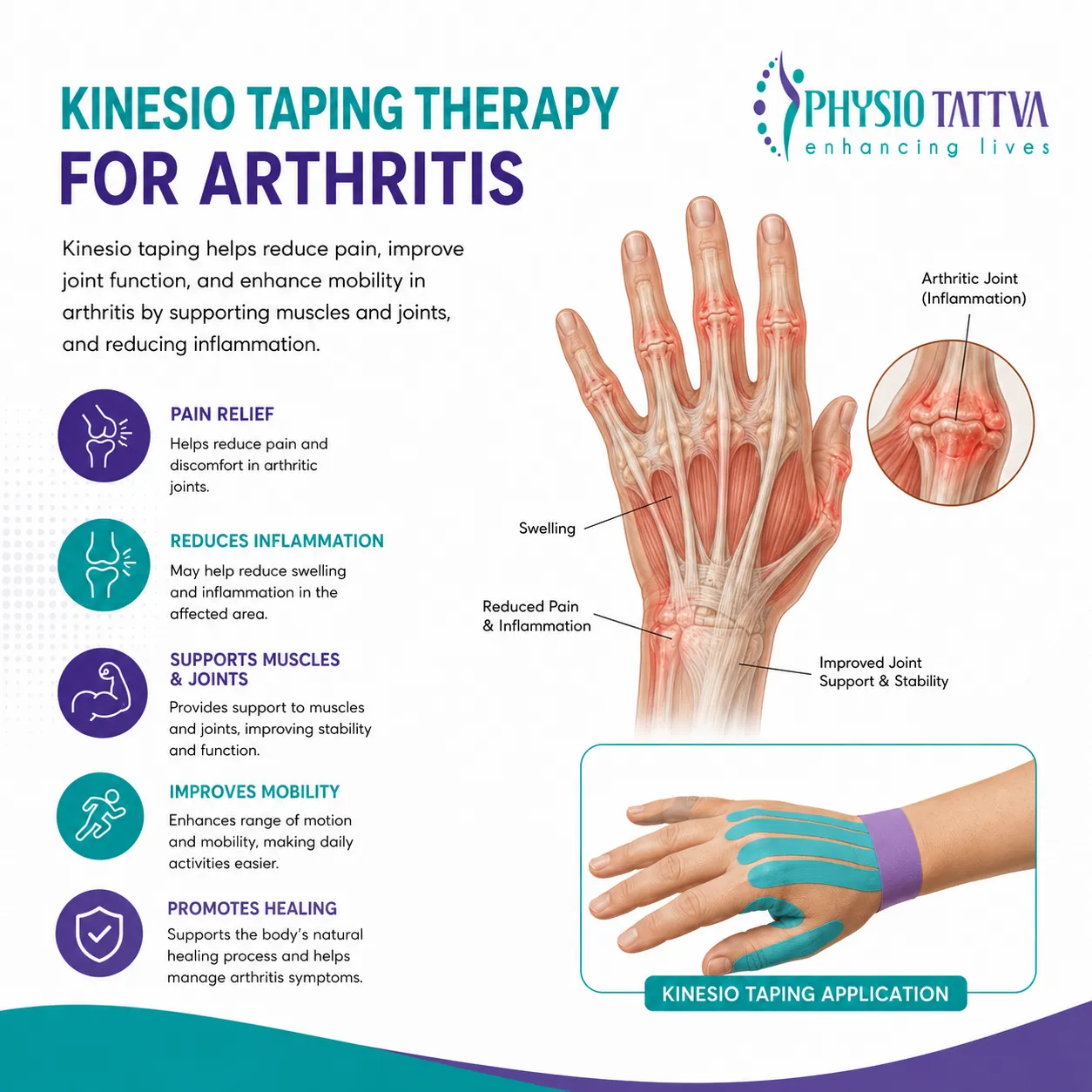
Kinesio taping therapy for arthritis works through several well-established physiological mechanisms. When applied correctly, it can help reduce pain, manage swelling, and improve joint function.
Pain Relief (The Gate Control Theory)
When Kinesio tape is applied to the skin, it gently lifts the outer layers, creating microscopic space between the skin and underlying tissues. This light stimulation activates sensory receptors in the skin, which can interfere with pain signals travelling to the brain. According to the gate control theory of pain, this sensory input helps “close the gate” to pain signals coming from the arthritic joint, reducing perceived discomfort.
Reducing Swelling and Inflammation
Joint swelling is common during both osteoarthritis and rheumatoid arthritis flare-ups. The skin-lifting effect created by Kinesio tape promotes better lymphatic drainage by reducing pressure on lymph vessels. This helps clear inflammatory byproducts and excess fluid around the joint, easing stiffness and swelling over time.
Providing Joint Support and Stability
Although flexible, Kinesio tape provides gentle support to weakened muscles and unstable joints. This added support helps reduce excessive strain during daily movements without limiting the range of motion. For people with arthritis, this can make walking, gripping, or lifting feel safer and more controlled.
Enhancing Proprioception
Proprioception refers to the body’s ability to sense joint position and movement. Arthritis can reduce this awareness, increasing the risk of awkward or painful movements. Kinesio tape provides constant feedback through the skin, improving joint awareness and encouraging healthier movement patterns that protect the joint.
Common Kinesio Taping Applications for Arthritic Joints
Kinesio taping can be adapted for different joints affected by arthritis, depending on pain location, swelling, and movement limitations. Application techniques vary to provide targeted support, reduce joint stress, and improve daily function.
Kinesio Taping for Knee Arthritis (Osteoarthritis)
One of the most common uses is KT tape for osteoarthritis of the knee. Therapists often apply the tape in a “jellyfish” or “donut hole” pattern around the kneecap (patella). This technique helps decompress the joint space while supporting the quadriceps muscles and patellar tendon, reducing pain during walking, climbing stairs, and standing.
Kinesio Taping for Hand, Thumb, and Finger Arthritis
For basal thumb arthritis and finger joint pain, smaller strips of tape are used to provide targeted support. Taping for hand arthritis helps stabilise the thumb joint, reduce swelling in fingers, and make everyday tasks like writing, gripping, or buttoning clothes more comfortable.
Taping for Shoulder or Wrist Arthritis
In the shoulder and wrist, Kinesio taping focuses on supporting surrounding muscles and reducing strain on inflamed tendons and soft tissues. This can help improve joint control and reduce pain during reaching, lifting, or repetitive hand movements.
Important Note: While self-application is possible, it is highly recommended to first consult a physical therapist or a certified Kinesio taping practitioner to learn the correct taping techniques for your specific condition.
Best Practices for Applying Kinesio Tape
For safe, comfortable, and effective results, Kinesio tape should be applied correctly and with care. Following these guidelines helps maximise support while reducing the risk of skin irritation or early peeling.
- Clean, Dry Skin: Make sure the skin is clean and completely dry before application. Remove oils, lotions, sweat, or excess hair, as these can weaken adhesion and reduce wear time.
- Round the Edges: Always round the corners of the tape before applying. This small step helps prevent the tape from catching on clothing and peeling off prematurely.
- Anchor with No Stretch: The first and last inch of the tape should always be applied without any stretch. These anchor points protect the skin and ensure the tape stays securely in place.
- Apply Appropriate Stretch: Stretch only the middle portion of the tape, known as the therapeutic zone.
- Use 15–25% stretch when the goal is lymphatic drainage and swelling reduction
- Use 25–50% stretch when supporting muscles or stabilising joints
- Activate the Adhesive: After applying the tape, gently rub it with your hand. The heat generated activates the acrylic adhesive, helping the tape bond properly to the skin.
- Wear Time: Kinesio tape can typically be worn for 3–5 days, even during showers and light exercise. Remove it earlier if you notice itching, redness, or skin discomfort.
Supporting Joint Health with Kinesio Taping Therapy at Physiotattva
Kinesio taping therapy for arthritis provides a safe, non-invasive approach to easing pain, reducing swelling, and supporting joint movement without restricting mobility. When combined with physiotherapy, lifestyle adjustments, and medical care, it can play a valuable role in long-term arthritis management.
At Physiotattva physiotherapy clinics in Bangalore and Hyderabad, you receive personalised care tailored to your specific needs, ensuring effective results and comfort throughout your journey to recovery.
Don’t wait to start your recovery! Get in touch with Physiotattva for more details! Contact us at +91 89510 47001.
Why Physiotattva?
22+
50,000+
95%
200+
25+
4.8
Cities We Serve

Bangalore
At Physio Tattva, we are committed to bring access to quality physio care through ultra-modern clinics and high-skilled practitioners to all.
.webp)
Hyderabad
At Physio Tattva, we are committed to bring access to quality physio care through ultra-modern clinics and high-skilled practitioners to all.
.webp)
Vishakhapatnam
At Physio Tattva, we are committed to bring access to quality physio care through ultra-modern clinics and high-skilled practitioners to all.
Core Treatments
Core Conditions
Core Symptoms
Frequently Asked Questions
Is Kinesio taping a cure for arthritis?

Can I apply the tape myself?
Are there any side effects of Kinesio taping?
What’s the difference between Kinesio Tape and other KT tape brands?






%20(1)-p-3200.jpeg)


.jpg)
.webp)
.webp)
.webp)