




Living with Degenerative Disc Disease (DDD) can bring chronic pain, stiffness, and limited mobility. While there's no cure for disc wear and tear, Kinesio taping therapy is an effective, non-invasive treatment that provides pain relief and support.
If you're looking to reduce pain medication use and improve your quality of life, understanding how Kinesio taping can help is the first step. In this article, we’ll explore how Kinesio taping works for DDD and how it can be part of your treatment plan.
What is Degenerative Disc Disease (DDD)?
Before we dive into the taping solution, it's important to understand the problem. Degenerative Disc Disease isn't actually a "disease" but a condition where the intervertebral discs, the soft, compressible cushions between your vertebrae, begin to break down.
As discs lose water content and thin out, they become less effective shock absorbers. This can lead to:
- Chronic lower back or neck pain.
- Pain that radiates into the legs (sciatica) or arms.
- Muscle spasms and tension as surrounding muscles work harder to stabilise the spine.
- Inflammation and nerve compression.
The goal of any DDD management plan is to reduce pain, decrease inflammation, and improve spinal stability, all areas where Kinesio taping can provide significant support.
How Can Kinesio Taping Help with Degenerative Disc Disease?
Kinesio tape (or KT tape) is not like rigid athletic tape. It’s a highly elastic, cotton-based tape designed to mimic the skin's elasticity. When applied correctly by a trained professional, it provides targeted relief for DDD symptoms in several ways.
Neurological Pain Reduction
When Kinesio tape is applied to the skin over a painful area, it gently lifts the epidermis. This microscopic lifting action creates space between the skin and the underlying tissues, relieving pressure on pain receptors. This signal-scrambling effect, based on the "Gate Control Theory of Pain," tells your brain to pay less attention to the pain signals coming from the degenerated disc area.
Decompression and Reduced Inflammation
The same lifting mechanism that reduces pain also enhances circulation. By creating more space in the subcutaneous layer, the tape facilitates better flow of blood and lymphatic fluid.
- Improved Blood Flow: Brings more oxygen and nutrients to damaged tissues.
- Enhanced Lymphatic Drainage: Helps clear out inflammatory byproducts, reducing swelling and chemical irritation around the affected nerves and muscles.
For DDD, this "decompression" effect can provide a feeling of relief and lightness in the lower back or neck.
Proprioceptive Support and Postural Correction
Kinesio tape provides continuous sensory feedback to your brain about your body's position (proprioception). For someone with DDD, whose spinal stability is compromised, this is crucial. The tape on your skin acts as a gentle reminder to:
- Maintain proper posture.
- Engage core muscles for stability.
- Avoid movements that could exacerbate pain.
This improved body awareness helps retrain muscles to support the spine correctly, reducing the strain on the degenerated discs.
Functional Muscle Support
Pain from DDD often leads to protective muscle guarding or spasms. Kinesio tape can be applied to either inhibit overused, tight muscles or facilitate underused, weak muscles. Unlike a rigid brace, it supports the muscles without restricting your range of motion, allowing you to move more freely and confidently during daily activities or physical therapy exercises.
Common Taping Applications for Degenerative Disc Disease
While the exact application depends on your specific symptoms, two common areas are targeted for DDD.
Lumbar Spine (Lower Back)
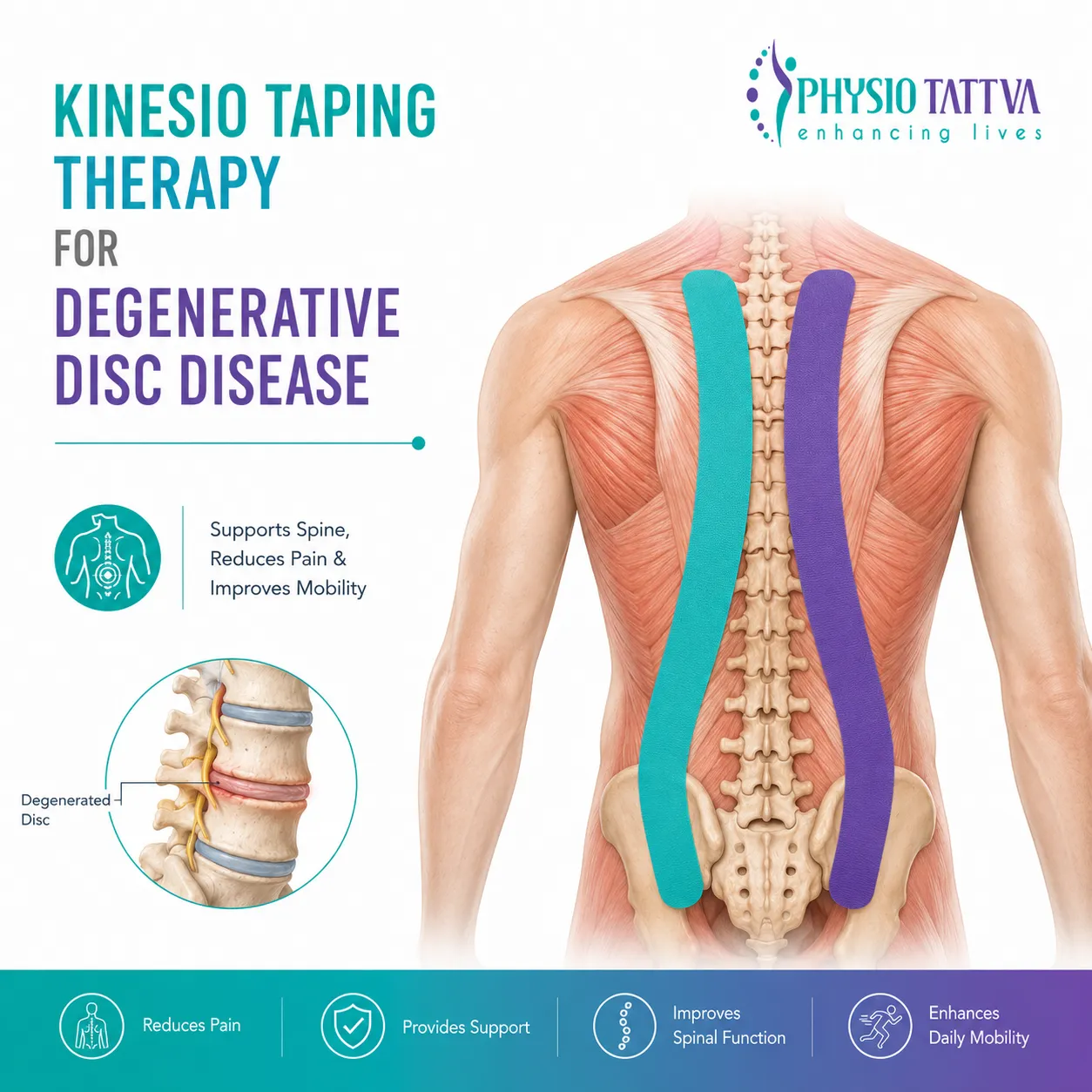
A common technique involves applying one or more "I" strips vertically along the muscles on either side of the spine (erector spinae). Decompression strips can also be applied horizontally across the most painful area to provide lift and relieve pressure.
Cervical Spine (Neck)
For neck pain related to cervical DDD, strips are often applied from the top of the shoulders up toward the base of the skull. This helps support the neck muscles, reduce tension, and promote better head and neck alignment.
Important Note: To achieve the best results and ensure safety, your first Kinesio taping therapy for Degenerative Disc Disease should be performed by a qualified professional, such as a physical therapist, chiropractor, or certified Kinesio Taping Practitioner. They can assess your specific condition and teach you how to apply it correctly at home.
Is Kinesio Taping a Cure for Degenerative Disc Disease (DDD)?
No, Kinesio taping is not a cure for Degenerative Disc Disease (DDD). It is a powerful, supportive tool that helps manage symptoms and is most effective when integrated into a comprehensive treatment plan. This plan may include:
- Physical therapy and strengthening exercises to improve spinal stability.
- Stretching and mobility work to reduce stiffness and improve flexibility.
- An anti-inflammatory diet and lifestyle changes to support overall healing.
- Ergonomic adjustments at work and home to reduce strain on the spine.
When used correctly, Kinesio taping can significantly reduce pain, allowing you to engage more effectively in the exercises and activities necessary for long-term spinal health and improved quality of life.
Manage Degenerative Disc Disease Effectively with Kinesio Taping with Physiotattva
While Kinesio taping is not a cure for Degenerative Disc Disease (DDD), it offers valuable support in managing pain, reducing muscle tension, and improving mobility. When incorporated into a comprehensive treatment plan that includes physical therapy, stretching, and lifestyle adjustments, it can significantly enhance your quality of life. By helping to alleviate pain, Kinesio taping allows you to participate more effectively in exercises essential for long-term spinal health and overall well-being. If you're dealing with DDD, consult with a healthcare professional to see how Kinesio taping can be part of your recovery strategy.
At Physiotattva physiotherapy clinics in Bangalore, Hyderabad and Vizag you receive personalised care tailored to your specific needs, ensuring effective results and comfort throughout your journey to recovery.
Don’t wait to start your recovery! Get in touch with Physiotattva for more details! Contact us at +91 89510 47001.
Why Physiotattva?
22+
50,000+
95%
200+
25+
4.8
Cities We Serve

Bangalore
At Physio Tattva, we are committed to bring access to quality physio care through ultra-modern clinics and high-skilled practitioners to all.
.webp)
Hyderabad
At Physio Tattva, we are committed to bring access to quality physio care through ultra-modern clinics and high-skilled practitioners to all.
.webp)
Vishakhapatnam
At Physio Tattva, we are committed to bring access to quality physio care through ultra-modern clinics and high-skilled practitioners to all.
Core Treatments
Core Conditions
Core Symptoms
Frequently Asked Questions
How long can I wear Kinesio tape?

Can I apply the tape myself?
Are there any side effects of Kinesio tape?
Will Kinesio taping help a herniated or bulging disc?






%20(1)-p-3200.jpeg)


.jpg)
.webp)
.webp)
.webp)