





Carpal Tunnel Syndrome (CTS) commonly causes pain, numbness, and tingling in the hand and arm due to compression of the median nerve at the wrist. Among the available treatment options, manual therapy for Carpal Tunnel Syndrome is a highly effective, non-invasive approach used by physiotherapists to relieve nerve pressure and restore function. By addressing the mechanical causes of compression, it can complement or reduce the need for medication or surgery.
This article explores how manual therapy helps manage CTS symptoms and improve hand function.
Why Manual Therapy Is Effective for Carpal Tunnel Syndrome
The primary goal of manual therapy for CTS is to reduce pressure on the median nerve. It achieves this by targeting the anatomical structures in and around the carpal tunnel. The key objectives are:
- Decrease Nerve Compression: Directly or indirectly create more space for the median nerve to pass through the carpal tunnel.
- Improve Tissue Mobility: Release restrictions in muscles, fascia, ligaments, and tendons that contribute to compression.
- Restore Joint Mechanics: Ensure the small bones of the wrist (carpals) and the forearm bones are moving correctly.
- Address Contributing Factors: Treat issues in the forearm, elbow, shoulder, and even the neck that can lead to a "double crush" phenomenon, where the nerve is compressed at more than one site.
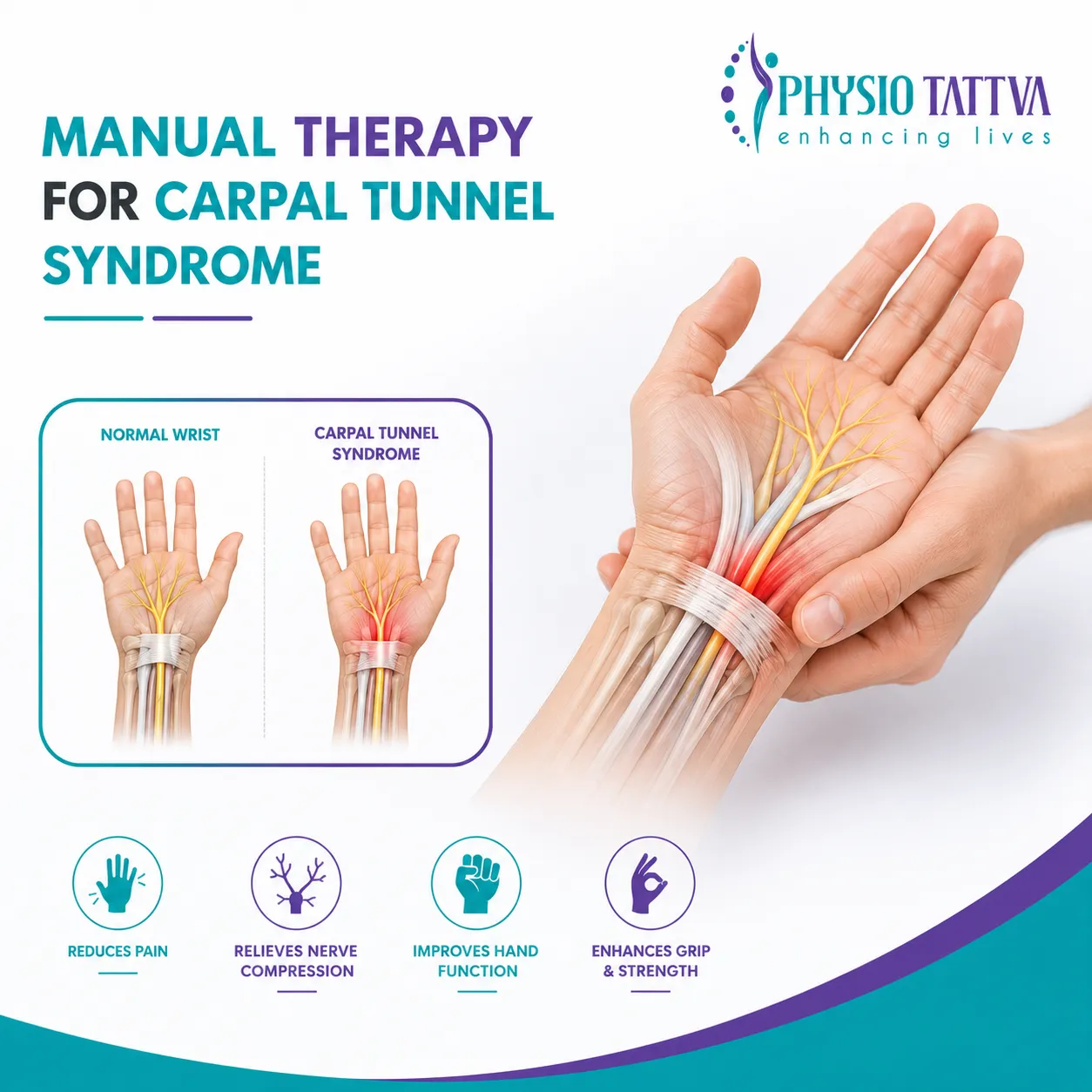
Key Manual Therapy Techniques for Carpal Tunnel Syndrome
A qualified therapist will use a combination of techniques tailored to the individual's specific presentation. These are the most common and effective methods.
Soft Tissue Mobilisation & Myofascial Release
This is often the first line of manual treatment. The therapist uses targeted pressure and strokes to release tension in the muscles and connective tissue (fascia) of the forearm, wrist, and hand.
- Target Areas: Forearm flexor muscles (the muscles that bend your fingers and wrist), the palm of the hand (thenar eminence), and the transverse carpal ligament itself.
- Purpose: Tight forearm muscles can increase tension on the tendons that pass through the carpal tunnel, effectively crowding the median nerve. Releasing this tension reduces that pressure. This is a specialized form of massage for carpal tunnel.
Nerve Gliding / Flossing (Neurodynamics)
This technique is designed to improve the mobility of the median nerve itself. Nerves are meant to slide and glide smoothly as we move. When they get "stuck" or adhered to surrounding tissues, they can become irritated.
- How it Works: The therapist guides the patient's arm, wrist, and neck through a specific sequence of movements that gently pull or "floss" the median nerve through its pathway, breaking up minor adhesions.
- Purpose: Restores the nerve's natural movement, improves its blood supply, and reduces irritation and symptoms like tingling and numbness. Patients are often taught these as home exercises.
Joint Mobilization
Improper movement of the wrist bones can narrow the carpal tunnel. Joint mobilization involves the therapist applying gentle, specific forces to the joints.
- Target Areas: The carpal bones of the wrist, as well as the radioulnar joint (where the two forearm bones meet at the wrist).
- Purpose: To improve the specific arthrokinematics (small movements within the joint) of the carpal bones, which can help increase the cross-sectional area of the carpal tunnel. This is a key technique in physical therapy for CTS.
Transverse Carpal Ligament (TCL) Stretching
The TCL is the "roof" of the carpal tunnel. While it's a very tough ligament, manual techniques can aim to gently stretch it and the surrounding soft tissues.
- How it Works: Therapists use specific thumb or finger pressure to apply a slow, sustained stretch across the ligament at the base of the palm.
- Purpose: To increase the flexibility of the ligament and create a small but meaningful amount of extra space within the tunnel.
Cervical and Thoracic Spine Mobilization
A skilled therapist will always assess the neck and upper back. Nerve compression in the neck (cervical radiculopathy) or thoracic outlet can mimic CTS or contribute to it (the "double crush" syndrome).
- How it Works: The therapist assesses movement in the neck and upper back and can perform mobilizations to improve joint mobility and release nerve pressure at its root.
- Purpose: To ensure the entire pathway of the median nerve, from the spine to the fingertips, is free from impingement.
Integrating Manual Therapy into a Complete CTS Treatment Plan
Manual therapy for Carpal Tunnel Syndrome delivers the best results when integrated into a comprehensive, multi-modal physiotherapy program. Hands-on treatment helps relieve nerve compression, but long-term improvement depends on correcting movement patterns, reducing strain, and improving wrist resilience through supportive interventions.
A complete CTS treatment plan typically includes:
- Therapeutic Exercises: Targeted stretching for tight wrist and forearm flexors, along with strengthening exercises for wrist extensors and postural muscles to improve load tolerance.
- Ergonomic Education: Practical guidance on workstation setup, tool handling, and daily activity modifications to minimize repetitive wrist stress.
- Splinting Support: Use of a neutral wrist splint, particularly at night, to prevent positions that aggravate median nerve compression during sleep.
- Patient Education: Self-management strategies such as nerve gliding exercises, posture awareness, and self-release techniques to maintain progress between sessions.
Evidence and Effectiveness of Manual Therapy in CTS Management
Research strongly supports the use of manual therapy as an effective, non-surgical treatment for Carpal Tunnel Syndrome. Clinical studies show that physiotherapy programs incorporating manual therapy techniques, such as soft tissue mobilization, joint mobilization, and nerve gliding, can significantly reduce pain, improve hand function, and enhance nerve mobility. In many cases, these benefits are sustained longer than those achieved through medication or splinting alone. As a result, manual therapy is widely recommended as a first-line conservative management strategy before considering invasive options like corticosteroid injections or surgical release.
Supporting Long-Term Carpal Tunnel Relief Through Physiotherapy at Physiotattva
Manual therapy for Carpal Tunnel Syndrome (CTS) is a targeted, evidence-based approach that addresses the biomechanical and soft tissue causes of median nerve compression. By releasing tight muscles, improving nerve mobility, and restoring proper joint mechanics, it offers significant pain relief and functional improvement. If you are experiencing symptoms of CTS, consulting a qualified physical or occupational therapist for a hands-on assessment is a critical step toward effective, long-lasting relief.
At Physiotattva physiotherapy clinics in Bangalore, Hyderabad and Vizag you receive personalised care tailored to your specific needs, ensuring effective results and comfort throughout your journey to recovery.
Don’t wait to start your recovery! Get in touch with Physiotattva for more details! Contact us at +91 89510 47001.
Why Physiotattva?
22+
50,000+
95%
200+
25+
4.8
Cities We Serve

Bangalore
At Physio Tattva, we are committed to bring access to quality physio care through ultra-modern clinics and high-skilled practitioners to all.
.webp)
Hyderabad
At Physio Tattva, we are committed to bring access to quality physio care through ultra-modern clinics and high-skilled practitioners to all.
.webp)
Vishakhapatnam
At Physio Tattva, we are committed to bring access to quality physio care through ultra-modern clinics and high-skilled practitioners to all.
Core Treatments
Core Conditions
Core Symptoms
Frequently Asked Questions
Is manual therapy painful for Carpal Tunnel Syndrome?

How many sessions will I need to see improvement?
Can manual therapy help me avoid CTS surgery?
What's the difference between a regular wrist massage and manual therapy?






%20(1)-p-3200.jpeg)


.jpg)
.webp)
.webp)
.webp)