




An ankle sprain is one of the most common musculoskeletal injuries, affecting everyone from elite athletes to individuals simply stepping off a curb incorrectly. While initial treatment focuses on rest, ice, compression, and elevation (RICE), recovery can often be hindered by lingering pain, stiffness, and muscle dysfunction.
Dry needling has emerged as a highly effective, modern treatment modality used by physical therapists and other trained clinicians to address these persistent issues and accelerate recovery from an ankle sprain.
What is Dry Needling?
Dry needling is a therapeutic technique where a thin, solid filiform needle (the same kind used in acupuncture) is inserted into the skin and muscle. The primary goal is to target and release myofascial trigger points, hyperirritable "knots" within a taut band of muscle.
Unlike acupuncture, which is based on Traditional Chinese Medicine principles of balancing energy flow (Qi), dry needling is a Western medicine technique based on a modern understanding of anatomy, physiology, and neurology.
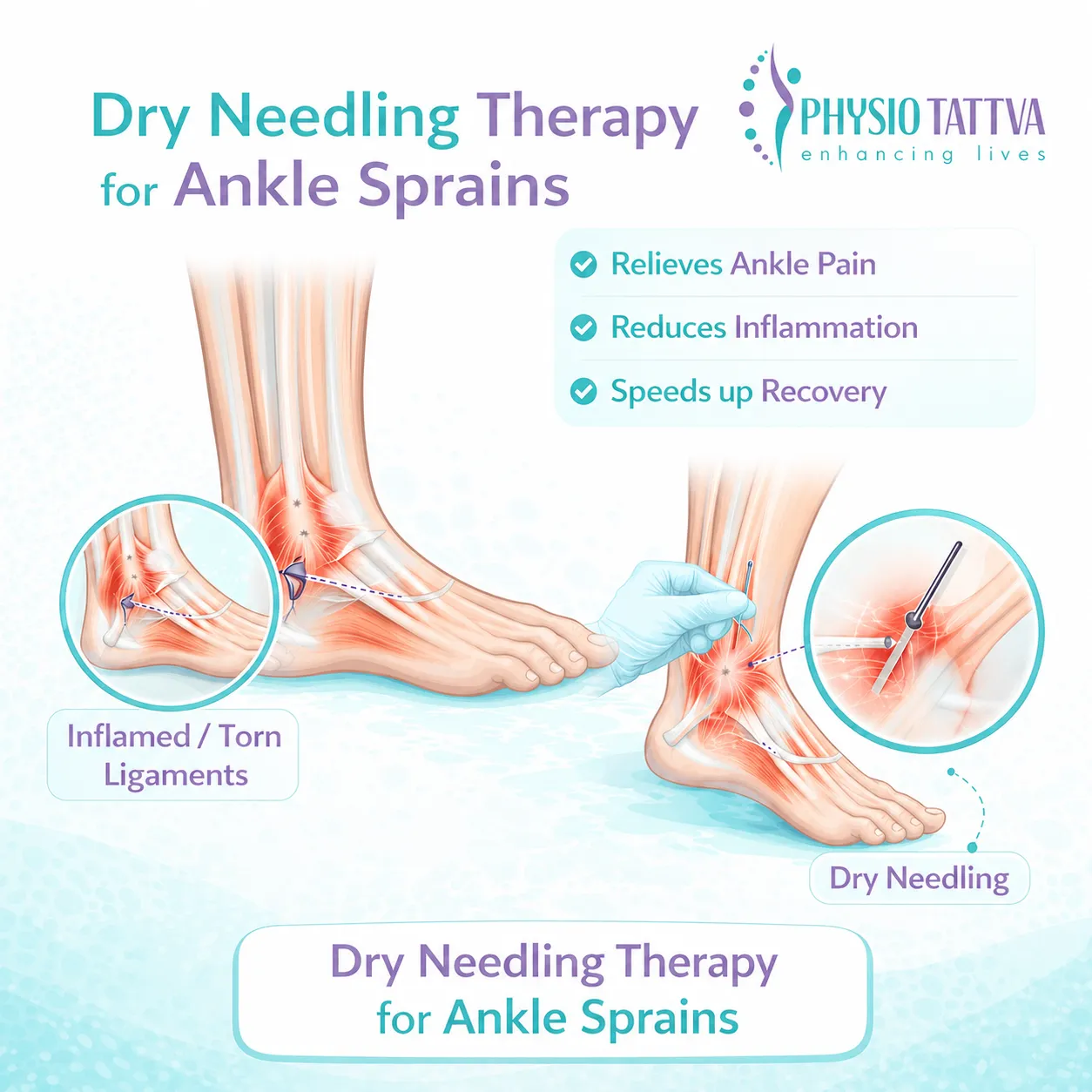
How Dry Needling Specifically Helps an Ankle Sprain
When you sprain your ankle, you stretch or tear the ligaments that provide stability. The body's immediate response is inflammation and pain, but a crucial secondary response is protective muscle guarding.
Muscles surrounding the ankle, primarily the peroneal muscles (on the outside of the lower leg), the tibialis posterior/anterior, and the calf muscles (gastrocnemius and soleus), go into spasm to protect the injured joint. This guarding, while initially helpful, can lead to several problems that stall recovery:
- Trigger Point Formation: The sustained muscle contraction creates painful trigger points. These knots not only cause localized pain but can also refer pain to other areas of the foot and ankle.
- Limited Range of Motion: Tight, spastic muscles physically restrict the ankle's ability to move, making it difficult to walk normally or perform rehabilitation exercises.
- Reduced Blood Flow: Chronically tight muscles can compress blood vessels, slowing the delivery of oxygen and nutrients needed for healing and the removal of metabolic waste.
- Altered Biomechanics: Continued muscle tightness and pain cause you to alter your walking pattern, which can lead to compensatory issues in the knee, hip, and lower back.
Dry needling addresses these muscular issues directly:
- Eliciting a Local Twitch Response (LTR): When the needle is inserted into a trigger point, it often elicits an LTR—a brief, involuntary contraction of the muscle fibers. This response is believed to "reset" the neuromuscular system, breaking the pain-spasm cycle and releasing the knot.
- Improving Circulation: The micro-trauma from the needle stimulates a local healing response, increasing blood flow to the area. This helps flush out inflammatory chemicals and deliver oxygenated blood to promote tissue repair.
- Pain Modulation: The stimulation of sensory nerves can help block pain signals from reaching the brain (known as the Gate Control Theory of Pain). It also prompts the release of the body's natural painkillers, such as endorphins.
Key Benefits of Dry Needling for Ankle Sprain Recovery
Dry needling offers targeted benefits in ankle sprain rehabilitation by directly addressing muscle tightness, trigger points, and neuromuscular dysfunction that often persist after ligament injury. When integrated into a structured physiotherapy programme, it helps reduce pain, restore movement, and support a faster, more complete recovery while lowering the risk of long-term complications.
- Rapid Pain Reduction: By releasing tight muscles and trigger points, patients often experience a significant and immediate decrease in pain.
- Improved Range of Motion: Once the restrictive muscles are released, ankle mobility (especially dorsiflexion, or pulling the foot up) improves, which is critical for a normal gait.
- Accelerated Return to Activity: By resolving the muscular component of the injury, dry needling allows patients to progress more quickly with their physical therapy exercises (strengthening, balance, and proprioception).
- Targeted Treatment: A skilled therapist can precisely identify and treat the specific muscles that are contributing to dysfunction, whether it's the peroneals in a classic inversion sprain or other surrounding musculature.
- Prevention of Chronic Issues: By addressing muscle imbalances and restoring proper function early, dry needling can help prevent the development of chronic ankle instability and recurrent sprains.
Who is an Ideal Candidate for Dry Needling for an Ankle Sprain?
Dry needling is not a one-size-fits-all treatment and is most effective when applied at the right stage of recovery and for the right patient profile. A thorough assessment by a trained physiotherapist helps determine whether dry needling is appropriate, based on the severity of the sprain, healing stage, and presence of muscle-related dysfunction.
Dry needling is not typically used in the immediate acute phase of a severe ankle sprain (the first 24-72 hours), when swelling and inflammation are at their peak. It is most effective for:
- Sub-acute Ankle Sprains: After the initial inflammation has subsided (typically 3-5 days post-injury), when muscle tightness and pain become the primary limiting factors.
- Chronic Ankle Sprains: For individuals with lingering pain, stiffness, or a feeling of instability weeks or months after the initial injury.
- Recurrent Ankle Sprains: To address underlying muscle imbalances and trigger points that may be contributing to repeated injuries.
- Athletes: Who need to accelerate recovery and return to sport safely and quickly.
Important Note: Dry needling should be part of a comprehensive rehabilitation program that also includes manual therapy, strengthening exercises, and balance/proprioception training. It is a tool to unlock movement, not a standalone cure.
What to Expect During a Dry Needling Session
Knowing what happens during a dry needling session can help ease anxiety and set realistic expectations. Each session is carefully planned and tailored to your specific ankle condition, ensuring the treatment is both safe and effective while supporting your overall rehabilitation goals.
- Assessment: Your therapist will first assess your ankle’s range of motion, strength, and movement patterns. They will also palpate the muscles of the lower leg and ankle to identify active trigger points contributing to pain or stiffness.
- Procedure: You will be positioned comfortably, and the treatment area will be cleaned using alcohol. The therapist will then insert a sterile, single-use filiform needle into the targeted muscle areas.
- Sensation: You may feel a mild prick as the needle enters the skin. As the therapist locates the trigger point, a deep ache or referred sensation may occur. A local twitch response can feel like a brief muscle cramp or jolt and is considered a positive therapeutic response.
- Post-Treatment Care: After the session, treated muscles may feel sore, similar to post-exercise soreness, for 24-48 hours. Your therapist may recommend gentle stretching, heat application, adequate hydration, and continued physiotherapy exercises to support recovery.
Clinical Applications and Key Considerations of Dry Needling for Ankle Sprains
Dry needling addresses several underlying factors that influence ankle sprain recovery beyond ligament healing alone. By targeting muscle dysfunction, trigger points, and neuromuscular control, it supports both short-term symptom relief and long-term ankle stability as part of a comprehensive physiotherapy programme.
- Ankle Sprain Rehabilitation: Dry needling is a key component of a modern rehab plan.
- Peroneal Tendonitis Treatment: The peroneal muscles are almost always affected in an inversion ankle sprain and are a primary target for dry needling.
- Myofascial Release Ankle: This describes the effect of dry needling on the muscle and its surrounding connective tissue (fascia).
- Trigger Point Therapy for Foot and Ankle: A specific application of dry needling for this body region.
- Chronic Ankle Instability: A common long-term consequence of poorly rehabilitated sprains, which dry needling can help manage.
- Physical Therapy for Ankle Sprain: Dry needling is a modality used within the scope of physical therapy practice.
- Local Twitch Response (LTR): The primary mechanism of action targeted during a session.
Supporting Complete Ankle Sprain Recovery With Physiotattva
Dry needling therapy can play a valuable role in the recovery of sub-acute and chronic ankle sprains, particularly when pain, stiffness, or muscle tightness continues to limit movement. By addressing the muscular dysfunction that often accompanies ligament injuries, it helps reduce pain, restore mobility, and support a faster, more complete recovery. Consulting a qualified physiotherapist trained in dry needling can help determine whether this therapy is an appropriate and effective addition to your ankle rehabilitation programme.
At Physiotattva physiotherapy clinics in Bangalore, Hyderabad, and Vizag you receive personalised care tailored to your specific needs, ensuring effective results and comfort throughout your journey to recovery.
Don’t wait to start your recovery! Get in touch with Physiotattva for more details! Contact us at +91 89510 47001.
Why Physiotattva?
22+
50,000+
95%
200+
25+
4.8
Cities We Serve

Bangalore
At Physio Tattva, we are committed to bring access to quality physio care through ultra-modern clinics and high-skilled practitioners to all.
.webp)
Hyderabad
At Physio Tattva, we are committed to bring access to quality physio care through ultra-modern clinics and high-skilled practitioners to all.
.webp)
Vishakhapatnam
At Physio Tattva, we are committed to bring access to quality physio care through ultra-modern clinics and high-skilled practitioners to all.
Core Treatments
Core Conditions
Core Symptoms
Frequently Asked Questions
Is dry needling safe for ankle sprains?

Does dry needling hurt during or after the session?
How soon after an ankle sprain can dry needling be started?
How many dry needling sessions are needed for ankle sprain recovery?






%20(1)-p-3200.jpeg)


.jpg)
.webp)
.webp)
.webp)