




Kinesio taping (KT) is not a primary treatment for Myasthenia Gravis. It does not address the underlying autoimmune cause of the disease. However, it can be used as a supportive, complementary tool under the guidance of a qualified physical or occupational therapist to help manage specific physical symptoms, primarily related to muscle weakness and postural instability. Its effectiveness is based on anecdotal evidence and clinical reasoning rather than large-scale scientific studies for MG.
Understanding Myasthenia Gravis and Kinesio Taping Therapy
To better understand how Kinesio taping may play a supportive role, it is important to first look at both the underlying condition and the therapy technique itself:
Myasthenia Gravis (MG)
An autoimmune disorder where the body's immune system mistakenly attacks the communication points (neuromuscular junctions) between nerves and muscles. This leads to fluctuating muscle weakness and fatigue that worsens with activity and improves with rest. Common symptoms include ptosis (drooping eyelids), diplopia (double vision), difficulty swallowing, slurred speech, and weakness in the limbs, neck, and respiratory muscles.
Kinesio Taping (KT)
A therapeutic technique using a flexible, elastic, adhesive tape. Unlike rigid athletic tape, KT is designed to mimic the skin's elasticity. When applied, it gently lifts the skin, which is thought to:
- Improve circulation and lymphatic drainage.
- Provide sensory feedback to the brain (proprioception).
- Support weak or injured muscles without restricting movement.
- Reduce pain signals.
Potential Applications of Kinesio Taping for MG Symptoms
Because Kinesio Taping does not fix the neuromuscular junction, its role is purely symptomatic and assistive. A therapist experienced with neurological conditions may use it for:
Ptosis (Drooping Eyelid)
This is one of the most common and practical uses of tape for MG.
- Method: A small strip of gentle, hypoallergenic tape (or Kinesio tape) is applied to the eyelid and anchored above the eyebrow.
- Function: It acts as a mechanical "ptosis crutch," physically holding the eyelid open to improve the field of vision.
- Considerations: This is a temporary fix. Care must be taken to not dry out the eye, and the tape must be applied and removed gently to protect delicate skin.
Postural Support (Neck and Trunk Weakness)
Many MG patients experience weakness in the neck extensors ("dropped head syndrome") and trunk muscles, leading to poor posture, pain, and fatigue.
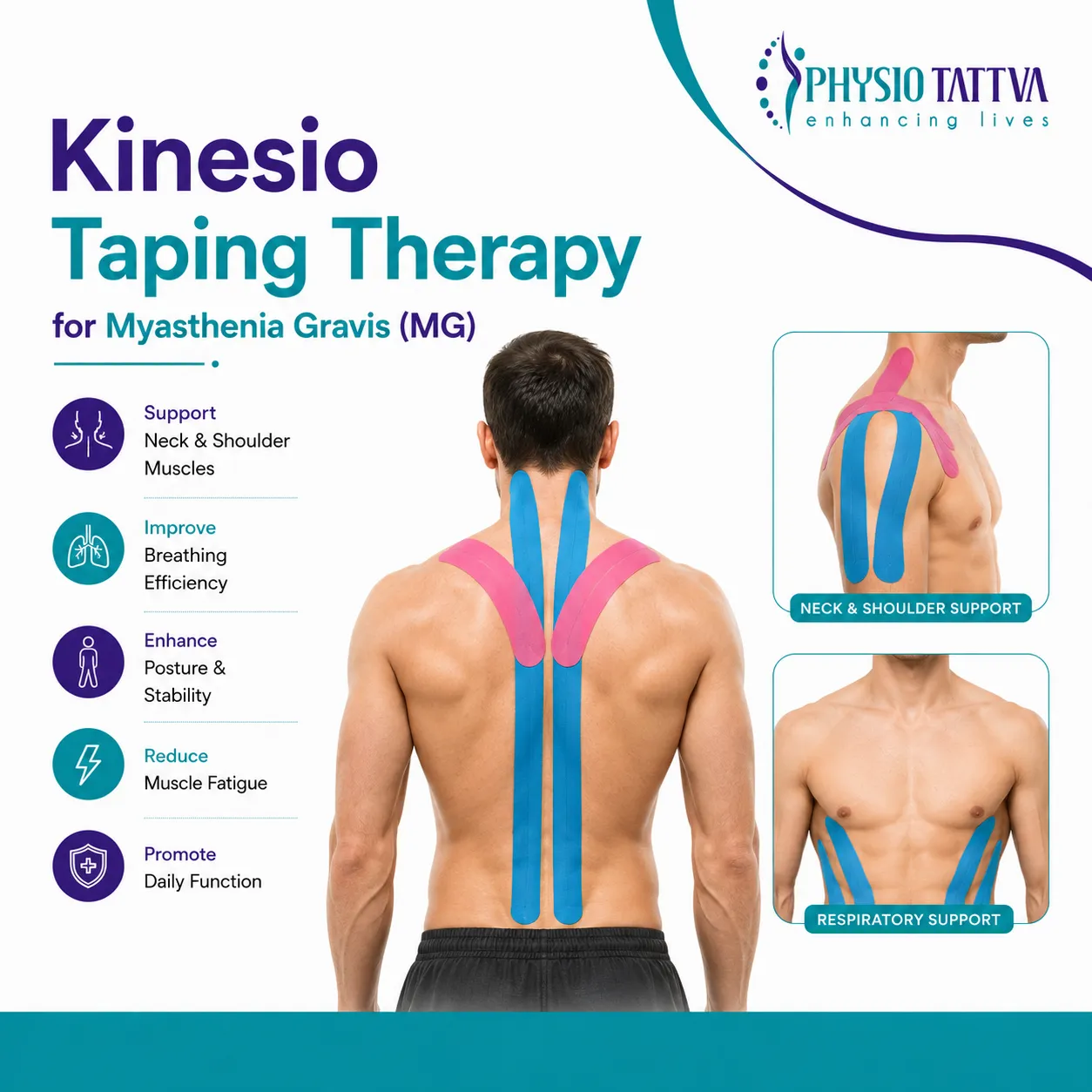
- Method: A therapist can apply KT to the posterior neck muscles, trapezius, and along the spinal erectors.
- Function: The tape provides sensory cueing rather than strong mechanical support. This tactile feedback reminds the patient to engage their muscles and maintain a more upright posture, which can help conserve energy and reduce secondary pain from postural strain.
Limb Weakness and Proprioception
For mild to moderate weakness in the shoulders, arms, or legs.
- Method: Taping patterns are applied to facilitate (assist) weak muscle groups, such as the deltoids for shoulder weakness or quadriceps for knee instability.
- Function:
- Proprioceptive Feedback: The tape on the skin enhances the brain’s awareness of the limb's position in space, which can improve coordination.
- Light Support: It can provide a feeling of stability and lightness, potentially reducing the perceived effort of movement. It does not make the muscle fundamentally stronger.
Managing Secondary Musculoskeletal Pain
Poor posture and altered movement patterns associated with Myasthenia Gravis can place additional strain on surrounding muscles and joints, leading to secondary musculoskeletal pain such as neck stiffness, shoulder discomfort, or low back pain. In these cases, Kinesio taping can be applied to the affected areas to provide gentle support, reduce discomfort, and improve postural awareness, similar to its use in individuals without MG, while carefully avoiding fatigue or overexertion.
Important Considerations and Limitations of Kinesio Taping for Myasthenia Gravis
While Kinesio taping may offer supportive benefits for certain Myasthenia Gravis symptoms, it is essential to understand its limitations, risks, and appropriate use to ensure patient safety and realistic expectations.
- Lack of Robust Scientific Evidence: There are no large-scale clinical trials proving the efficacy of Kinesio taping specifically for Myasthenia Gravis. Current use is based on case studies, anecdotal reports, and principles extrapolated from other neurological conditions.
- Not a Substitute for Primary Medical Treatment: KT must never replace prescribed medical treatments like Mestinon (pyridostigmine), immunosuppressants, steroids, IVIg, or plasmapheresis. It is an adjunct therapy at best.
- Requires Professional Expertise: Application is not intuitive. A physical or occupational therapist with experience in both Kinesio taping and neurological disorders like MG is essential. Incorrect application is ineffective and can cause skin irritation.
- Skin Sensitivity: Patients on long-term corticosteroids may have fragile, thin skin. The adhesive on the tape can cause irritation, tearing, or allergic reactions. A patch test is recommended.
- Risk of Overexertion: The nature of MG is activity-induced fatigue. If the tape provides enough support to make a patient feel "better," they might overdo activity, leading to a more significant exacerbation of weakness later. This must be managed carefully through patient education.
Supportive Kinesio Taping Care for Myasthenia Gravis at Physiotattva
Kinesio taping therapy can play a supportive, low-risk role in managing selected physical symptoms of Myasthenia Gravis, particularly issues such as ptosis, postural fatigue, and secondary musculoskeletal discomfort. Rather than treating the underlying autoimmune condition, taping works by offering gentle mechanical support and enhanced sensory feedback. Its use must always be carefully guided by a qualified therapist who understands the fluctuating nature of MG, prioritises fatigue management, and works in coordination with medical care.
At Physiotattva physiotherapy clinics in Bangalore and Hyderabad, you receive personalised care tailored to your specific needs, ensuring effective results and comfort throughout your journey to recovery.
Don’t wait to start your recovery! Get in touch with Physiotattva for more details! Contact us at +91 89510 47001.
Why Physiotattva?
22+
50,000+
95%
200+
25+
4.8
Cities We Serve

Bangalore
At Physio Tattva, we are committed to bring access to quality physio care through ultra-modern clinics and high-skilled practitioners to all.
.webp)
Hyderabad
At Physio Tattva, we are committed to bring access to quality physio care through ultra-modern clinics and high-skilled practitioners to all.
.webp)
Vishakhapatnam
At Physio Tattva, we are committed to bring access to quality physio care through ultra-modern clinics and high-skilled practitioners to all.





%20(1)-p-3200.jpeg)


.jpg)
.webp)
.webp)
.webp)