




Whiplash is a common and painful neck injury resulting from a sudden, forceful back-and-forth movement of the neck. While often associated with car accidents, it can also occur from sports injuries or falls. The resulting pain, stiffness, and reduced mobility can be debilitating. Kinesio taping therapy for whiplash has emerged as a popular and effective complementary treatment to help manage symptoms and accelerate the healing process.
This article explores how Kinesiology tape (or KT tape) works, its specific benefits for whiplash-associated disorders (WAD), and how it's integrated into a comprehensive recovery plan.
What Is Kinesio Taping?
Unlike traditional rigid athletic tape that immobilizes a joint, Kinesio tape is a flexible, elastic therapeutic tape. Its key features include:
- Elasticity: It can stretch up to 140% of its original length, mimicking the flexibility of human skin.
- Mechanism: When applied, it gently lifts the skin. This lifting action is believed to decompress the underlying tissues.
- Breathable & Water-Resistant: It can be worn for several days at a time, even through showers and daily activities.
This unique design allows it to provide support and stability without restricting the body's natural range of motion, which is crucial for whiplash recovery.
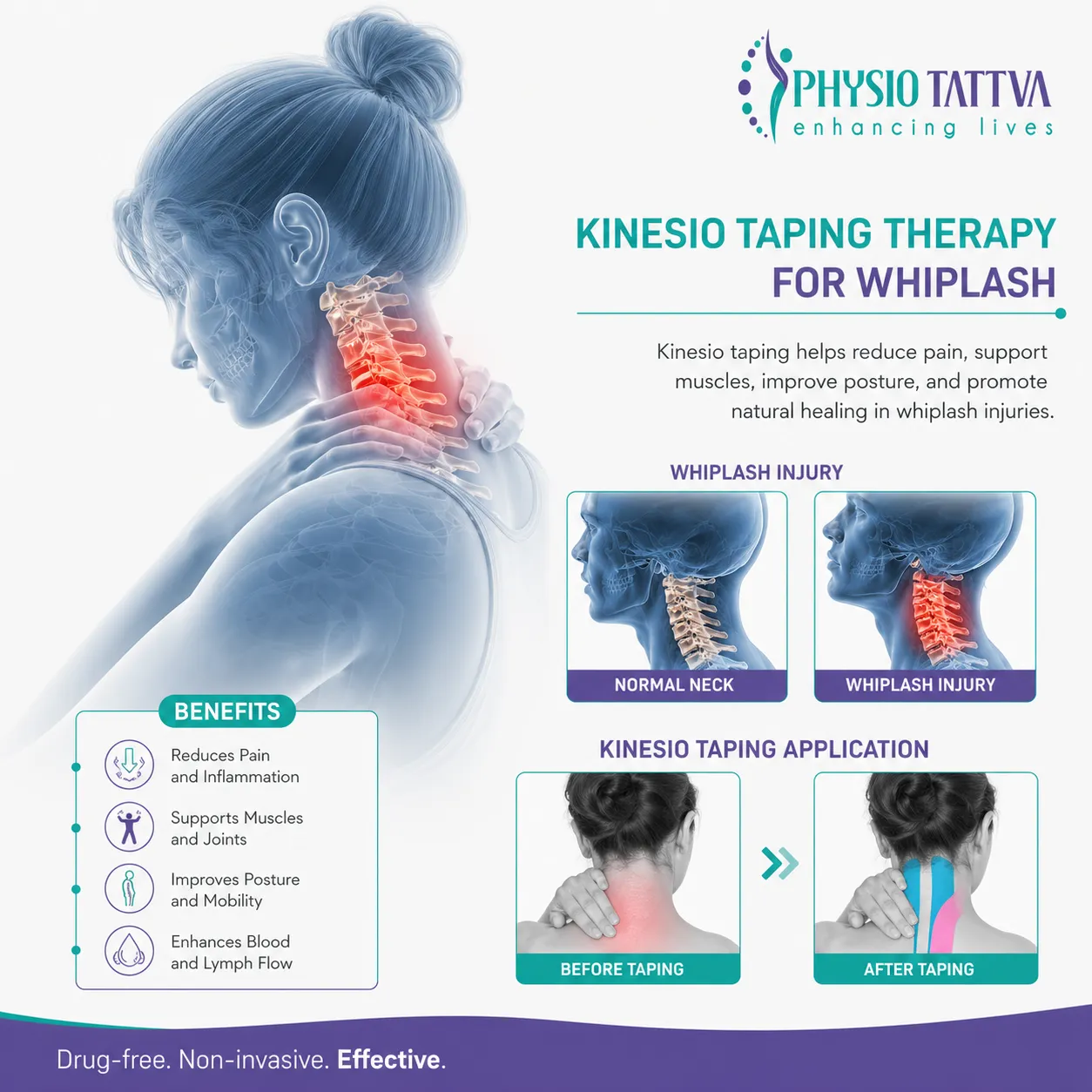
How Kinesio Taping Specifically Helps Whiplash Symptoms
When applied correctly by a trained professional (like a physical therapist or chiropractor), KT tape can address the primary symptoms of a whiplash injury.
Pain Relief
The tape provides continuous sensory input to the skin over the injured area. According to the "Gate Control Theory of Pain," this non-painful stimulation can override and block pain signals traveling to the brain. The gentle lifting also reduces pressure on sensitive pain receptors beneath the skin.
Reduction of Swelling and Inflammation
A whiplash injury causes micro-tears in muscles and ligaments, leading to swelling. The decompressive effect of Kinesio tape creates space between the skin and the underlying muscle. This space facilitates better circulation and improves lymphatic drainage, helping to clear out inflammatory by-products more efficiently.
Muscle Support and Re-education
After a whiplash injury, the neck muscles (like the trapezius, levator scapulae, and sternocleidomastoid) can go into spasm or become neurologically inhibited (weakened). Kinesio taping can be applied in specific ways to either:
- Inhibit overactive muscles: Help reduce tension and spasms.
- Facilitate weak muscles: Provide gentle cues to encourage proper muscle activation and function.
This supports the neck without the rigidity of a cervical collar, which is often discouraged for long-term use as it can lead to muscle atrophy.
Improved Range of Motion
By reducing pain, decreasing muscle spasms, and providing gentle support, Kinesio taping for neck pain allows patients to move more freely and with greater confidence. This ability to perform gentle range-of-motion exercises is a cornerstone of effective whiplash rehabilitation.
Enhanced Proprioception
Proprioception is your body's awareness of its position in space. Whiplash can disrupt this communication between your neck and your brain. The tape on your skin acts as a constant physical reminder, enhancing sensory feedback and helping your brain re-establish control and postural awareness.
Common Taping Techniques for a Whiplash Injury
Kinesio taping techniques for whiplash are selected based on pain location, muscle involvement, and movement restrictions. When applied by a trained physiotherapist, these methods aim to reduce pain, support injured neck muscles, improve circulation, and restore safe, confident movement during the recovery phase.
Cervical Spine Support (The "I" Strip)
This technique is commonly used to provide gentle support to the neck muscles while allowing natural movement during recovery.
- Purpose: To provide general support to the cervical extensors and reduce pain.
- Application: A single “I” strip is applied from the upper thoracic spine (between the shoulder blades) up along one or both sides of the cervical spine, ending at the base of the skull. The tape is applied with a slight stretch.
Upper Trapezius Inhibition (The “Y” Strip)
This application focuses on relieving muscle tension in areas that often become tight or overactive after a whiplash injury.
- Purpose: To reduce tension and spasms in the upper trapezius muscles, a common source of pain and headaches after whiplash.
- Application: A “Y” strip is anchored near the shoulder. The two tails of the tape are laid gently, with minimal stretch, along the upper trapezius muscle toward the neck.
Pain and Decompression (The “Star” or “Fan” Cut)
This method is typically used when pain is localised to a specific area of the neck following injury.
- Purpose: To target a focal point of pain and reduce local inflammation.
- Application: Multiple small tape strips are applied in an overlapping star or asterisk pattern directly over the most painful area. The centre of each strip is applied with stretch to create maximum lift and decompression.
Disclaimer: These techniques should be demonstrated and first applied by a qualified healthcare professional who has assessed your specific injury. Improper application can be ineffective or even worsen symptoms.
Is Kinesio Taping a Standalone Treatment?
No. Kinesio taping therapy for whiplash is most effective when used as part of a multi-faceted treatment plan. It is a complementary tool that enhances other therapies, which typically include:
- Physical Therapy: Specific exercises to restore strength, flexibility, and range of motion.
- Manual Therapy: Hands-on techniques like massage or joint mobilization from a physical therapist or chiropractor.
- Postural Education: Learning to maintain correct neck and shoulder alignment during daily activities.
- Pain Management: Use of ice, heat, or prescribed medications as needed, especially in the acute phase.
- Gentle Movement: Avoiding prolonged immobilization is key to preventing chronic stiffness.
Important Considerations & Best Practices
To ensure safety, comfort, and optimal results, the following considerations and best practices should be kept in mind when using Kinesio taping for whiplash:
- Seek Professional Application: Always have Kinesio tape applied by a physical therapist, chiropractor, or athletic trainer who is certified in its use, especially for an injury as sensitive as whiplash.
- Skin Sensitivity: Although rare, some people may have an allergic reaction to the adhesive. Do a small patch test first and remove the tape immediately if you experience significant itching, redness, or a rash.
- Do Not Apply to: Open wounds, active infections, cancerous areas, or over areas with known deep vein thrombosis (DVT).
Supporting Whiplash Recovery with Kinesio Taping at Physiotattva
Kinesio taping therapy for whiplash is a valuable, non-invasive tool that can significantly aid in recovery. By providing pain relief, reducing inflammation, supporting injured muscles, and improving proprioception, it helps create an optimal environment for the body to heal. When integrated into a comprehensive rehabilitation program guided by a healthcare professional, KT tape for whiplash can help you regain function and get back to your daily life faster and with less pain.
At Physiotattva physiotherapy clinics in Bangalore and Hyderabad, you receive personalised care tailored to your specific needs, ensuring effective results and comfort throughout your journey to recovery.
Don’t wait to start your recovery! Get in touch with Physiotattva for more details! Contact us at +91 89510 47001.
Why Physiotattva?
22+
50,000+
95%
200+
25+
4.8
Cities We Serve

Bangalore
At Physio Tattva, we are committed to bring access to quality physio care through ultra-modern clinics and high-skilled practitioners to all.
.webp)
Hyderabad
At Physio Tattva, we are committed to bring access to quality physio care through ultra-modern clinics and high-skilled practitioners to all.
.webp)
Vishakhapatnam
At Physio Tattva, we are committed to bring access to quality physio care through ultra-modern clinics and high-skilled practitioners to all.






%20(1)-p-3200.jpeg)


.jpg)
.webp)
.webp)
.webp)