




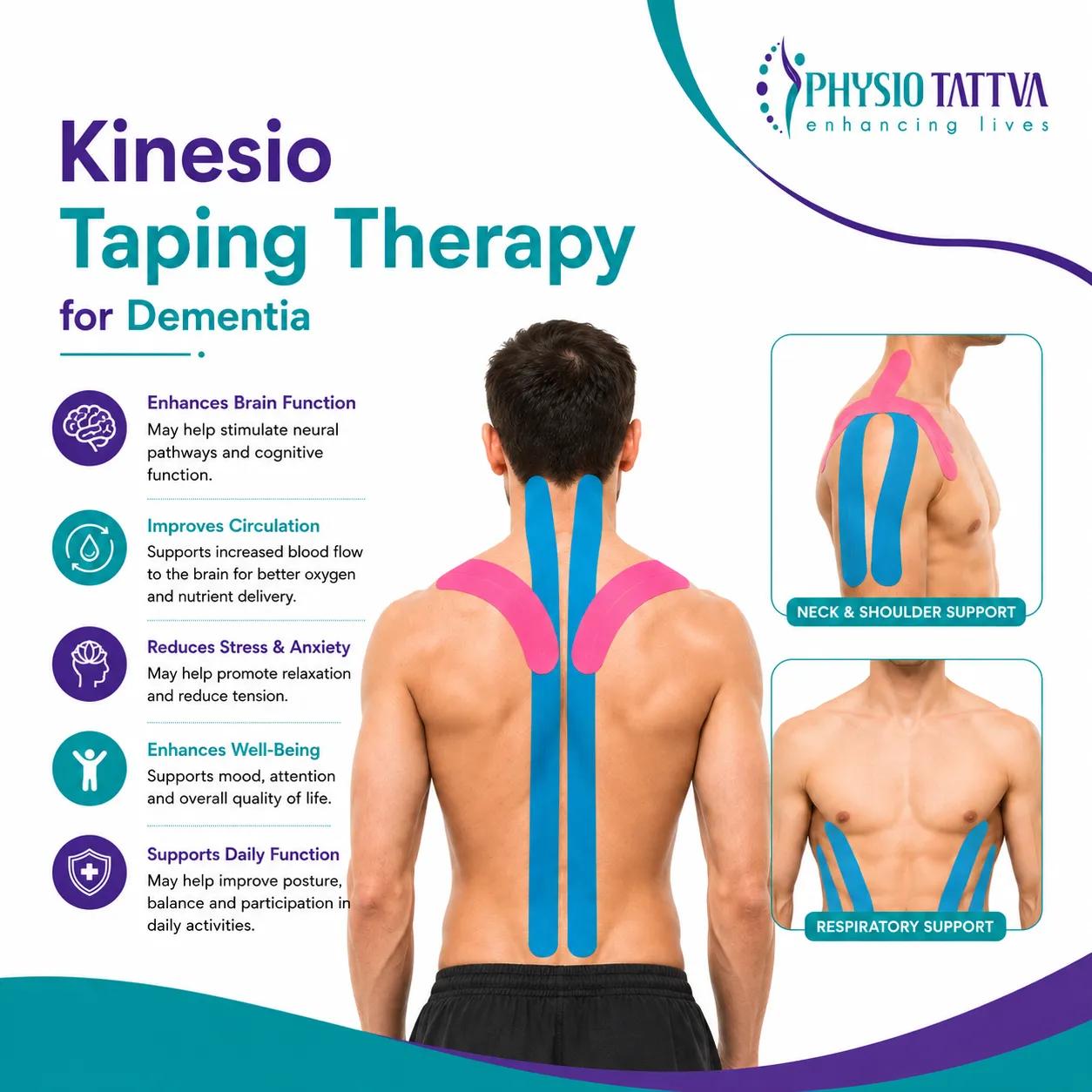
Kinesio Taping Therapy for dementia is an emerging, non-pharmacological physiotherapy approach used to support mobility, balance, posture, and sensory regulation in individuals living with dementia. By providing gentle, continuous sensory input, it may help manage motor challenges and certain behavioural symptoms while improving functional confidence and safety.
This article explores how Kinesio Taping Therapy is applied in dementia care, its potential benefits, and important considerations for safe use.
What is Kinesio Taping?
Kinesio taping (or Kinesiology tape) is a therapeutic taping method using a specially designed elastic, adhesive tape. Unlike rigid athletic tape, which immobilizes joints, Kinesio tape is designed to mimic the elasticity of human skin.
Its proposed physiological mechanisms include:
- Neurosensory Input: The tape on the skin provides continuous stimulation to sensory nerve receptors (mechanoreceptors). This constant, gentle feedback to the brain can help improve body awareness (proprioception) and modulate sensory processing.
- Decompression: When applied correctly, the tape gently lifts the superficial layer of skin. This creates a microscopic space between the skin and the underlying tissues, which is thought to reduce pressure on pain receptors and improve blood and lymphatic flow.
- Structural Support: It can provide light support to weak or tired muscles and joints without restricting their range of motion.
Why Kinesio Taping Is Used in Dementia Care
The core principle behind using Kinesio tape for dementia is sensory modulation. Individuals with dementia often experience a disconnect between their brain, their body, and their environment. This can lead to both physical and behavioral symptoms.
The therapeutic rationale is that the constant, gentle sensory input from the tape can help:
- Ground the Individual: By increasing body awareness, the tape may help a person feel more "present" and secure in their own body, potentially reducing disorientation and anxiety.
- Regulate the Nervous System: For a person who is agitated or anxious (a hyper-aroused state), the steady sensory input can have a calming, organizing effect. For a person who is apathetic (a hypo-aroused state), it may provide enough stimulation to promote engagement.
- Provide Motor Cues: For physical tasks, the tape acts as a tactile cue, reminding the muscles and brain how to perform a specific movement, such as maintaining posture or taking a stable step.
Potential Target Symptoms and Applications in Dementia
Kinesio taping is not a cure for dementia, but a supportive physiotherapy tool used to help manage specific physical, sensory, and behavioural challenges. Its application is always individualised and symptom-focused.
Motor and Physical Symptoms
Kinesio taping may support movement, posture, balance, and coordination by improving sensory feedback and providing gentle muscular support.
- Poor Balance and Gait Instability: Tape may be applied to the lower back, gluteal muscles, quadriceps, and lower legs. The continuous sensory input enhances proprioception and body awareness, supporting a more stable walking pattern and potentially reducing fall risk.
- Stooped Posture (Kyphosis): Taping patterns over the upper back and shoulders can act as a constant tactile reminder to activate postural muscles, encouraging a more upright posture during sitting and standing.
- Wandering Behaviour: In some cases, tape is applied to the legs and back. This application is more exploratory; by improving gait stability and body awareness, the individual may feel more secure, which could reduce restlessness. It does not physically restrict or prevent wandering.
- Swallowing Difficulties (Dysphagia): Small tape applications to neck muscles involved in swallowing (such as the suprahyoid muscles) may provide sensory cues that help initiate a more coordinated swallow. This technique is typically applied by trained Speech-Language Pathologists.
Behavioral and Psychological Symptoms of Dementia (BPSD)
Kinesio taping may also be used as a sensory modulation strategy to help regulate arousal levels and emotional responses.
- Agitation, Anxiety, and Restlessness: Long strips of tape applied along the paraspinal muscles of the back can provide deep, continuous sensory input. This may have a calming and organising effect on the nervous system, similar to firm touch or deep pressure.
- Apathy and Reduced Engagement: Tape applied to the back or limbs may offer gentle sensory stimulation, helping promote alertness and readiness for activity in individuals with low arousal or reduced responsiveness.
- Sleep Disturbances: By supporting posture and reducing physical discomfort or daytime agitation, taping along the spine may indirectly contribute to improved sleep patterns, although this effect varies between individuals.
Benefits, Risks, and Safety Considerations of Kinesio Taping in Dementia
Before using Kinesio taping as part of dementia care, it is important to understand both its potential benefits and its limitations. While generally considered safe when applied correctly, careful assessment and monitoring are essential, particularly in older adults with fragile skin or advanced cognitive impairment.
Potential Benefits
Kinesio taping may offer several advantages when used as a supportive physiotherapy intervention:
- Non-Pharmacological Support: Helps manage physical and behavioural symptoms without the side effects commonly associated with psychotropic medications used for BPSD.
- Minimally Invasive: Applied externally and typically well tolerated when proper techniques are followed.
- Continuous Therapeutic Input: Tape can be worn for 3–5 days, providing ongoing sensory and postural feedback throughout daily activities.
- Supports Caregiver and Therapist Interventions: Adds another proactive, hands-on tool within a person-centred dementia care plan.
Risks and Contraindications
Despite its benefits, Kinesio taping is not suitable for everyone and requires cautious application:
- Skin Integrity Concerns: Elderly skin is often thin and fragile. Adhesive tape may cause irritation, blistering, or skin tears if applied or removed improperly. A patch test is strongly recommended.
- Allergic Reactions: Rare, but possible, especially in individuals with sensitive skin or known adhesive allergies.
- Patient Tolerance Issues: Individuals with advanced dementia may not understand the purpose of the tape and may attempt to remove it, increasing the risk of skin injury.
- Contraindications: Kinesio tape should not be applied over open wounds, active infections, cancerous lesions, or areas affected by deep vein thrombosis (DVT).
What Research Says About Kinesio Taping for Dementia
Research into the use of Kinesio taping for dementia is still developing. While it is not yet supported by large-scale clinical trials, early findings suggest potential benefits when used as a supportive intervention within structured rehabilitation and care programs.
The use of Kinesio taping for dementia is an emerging field, with current evidence largely drawn from case studies and small-scale pilot studies.
- Positive Preliminary Findings: Several small studies have reported promising results, showing statistically significant reductions in agitation (measured by scales like the Cohen-Mansfield Agitation Inventory) and improvements in balance and gait speed after taping interventions.
- Need for More Research: The scientific community acknowledges these positive signals but emphasizes the critical need for larger, high-quality Randomised Controlled Trials (RCTs) to confirm these effects, establish standardized protocols, and rule out the placebo effect.
- Conclusion: At present, Kinesio taping is considered a complementary or adjunctive therapy. It should be used as part of a comprehensive, person-centered care plan, not as a standalone treatment.
Who Should Apply Kinesio Taping and How It Is Done
For individuals with dementia, Kinesio taping must be applied with caution, precision, and clinical judgement. Proper assessment, correct technique, and ongoing monitoring are essential to ensure safety and therapeutic benefit, particularly given age-related skin changes and cognitive challenges.
Who Should Apply Kinesio Taping?
Kinesio taping for dementia should only be performed by a licensed healthcare professional with specialised training in both taping techniques and geriatric or neurological care. This typically includes:
- Physical Therapists (PTs)
- Occupational Therapists (OTs)
- Speech-Language Pathologists (SLPs), particularly for swallowing-related applications
Self-application or caregiver-led application without professional guidance is strongly discouraged.
What Is the Application Process?
The taping process follows a structured, patient-centred approach:
- Assessment: The therapist conducts a comprehensive evaluation of symptoms, functional goals, skin integrity, mobility, and cognitive status to determine suitability.
- Application: The skin is cleaned and dried before taping. The tape is cut and applied using specific patterns and controlled tension to achieve the intended sensory or postural effect. The ends of the tape are always applied with zero tension to minimise skin irritation.
- Monitoring: Caregivers and therapists regularly check the skin for redness, irritation, or discomfort and observe changes in behaviour or movement.
- Safe Removal: The tape is removed slowly and gently, often using oil or an adhesive remover, to protect fragile skin and prevent tearing.
Supportive Dementia Care Through Physiotherapy at Physiotattva
Kinesio taping therapy offers a hopeful, person-centered, and non-pharmacological approach to managing some of the most difficult symptoms of dementia. Its strength lies in using the body's own sensory system to promote calm, improve physical function, and enhance quality of life. While more robust research is needed, it stands as a valuable complementary tool in the hands of a skilled therapist, providing a tangible way to support individuals living with dementia.
At Physiotattva physiotherapy clinics in Bangalore, Hyderabad and Vizag you receive personalised care tailored to your specific needs, ensuring effective results and comfort throughout your journey to recovery.
Don’t wait to start your recovery! Get in touch with Physiotattva for more details! Contact us at +91 89510 47001.
Why Physiotattva?
22+
50,000+
95%
200+
25+
4.8
Cities We Serve

Bangalore
At Physio Tattva, we are committed to bring access to quality physio care through ultra-modern clinics and high-skilled practitioners to all.
.webp)
Hyderabad
At Physio Tattva, we are committed to bring access to quality physio care through ultra-modern clinics and high-skilled practitioners to all.
.webp)
Vishakhapatnam
At Physio Tattva, we are committed to bring access to quality physio care through ultra-modern clinics and high-skilled practitioners to all.
Core Treatments
Core Conditions
Core Symptoms
Frequently Asked Questions
Will Kinesio taping therapy for dementia cure the condition?

How long does the Kinesio tape stay on?
Does the taping process hurt?
Can I buy and apply the tape myself?
What is the difference between Kinesio tape and regular brown athletic tape?






%20(1)-p-3200.jpeg)


.jpg)
.webp)
.webp)
.webp)