





Vertigo is a debilitating symptom, not a disease, characterized by a sensation of spinning or whirling that can severely impact one's quality of life. While traditional treatments like medication and vestibular rehabilitation are often effective, many individuals seek complementary options. One emerging area of interest is Pulsed Electromagnetic Fields (PEMF) therapy for vertigo.
This article will explore the theoretical basis, potential mechanisms, and current understanding of using PEMF to manage vertigo symptoms.
What Is Vertigo?
Vertigo is most often caused by a disturbance in the vestibular system, which includes parts of the inner ear and brain that process sensory information involved with controlling balance and eye movements.
Common Causes of Vertigo
Vertigo can arise from several underlying conditions affecting the inner ear, nerves, or neck, including:
- BPPV (Benign Paroxysmal Positional Vertigo): Dislodged calcium crystals in the inner ear.
- Meniere's Disease: A disorder of the inner ear causing vertigo, tinnitus, hearing loss, and a feeling of fullness.
- Vestibular Neuritis or Labyrinthitis: Inflammation of the inner ear or the nerves connecting the inner ear to the brain, often due to a viral infection.
- Cervicogenic Dizziness: Vertigo or dizziness originating from neck problems, such as injury, arthritis, or muscle tension.
Common Symptoms of Vertigo
People experiencing vertigo may notice a combination of the following symptoms, which can vary in intensity and duration:
- A spinning or whirling sensation, even when still
- Loss of balance or unsteadiness while walking
- Nausea or vomiting
- Dizziness triggered by head or neck movement
- Headaches or neck pain (especially in cervicogenic dizziness)
- Ringing in the ears or hearing changes (in inner ear conditions)
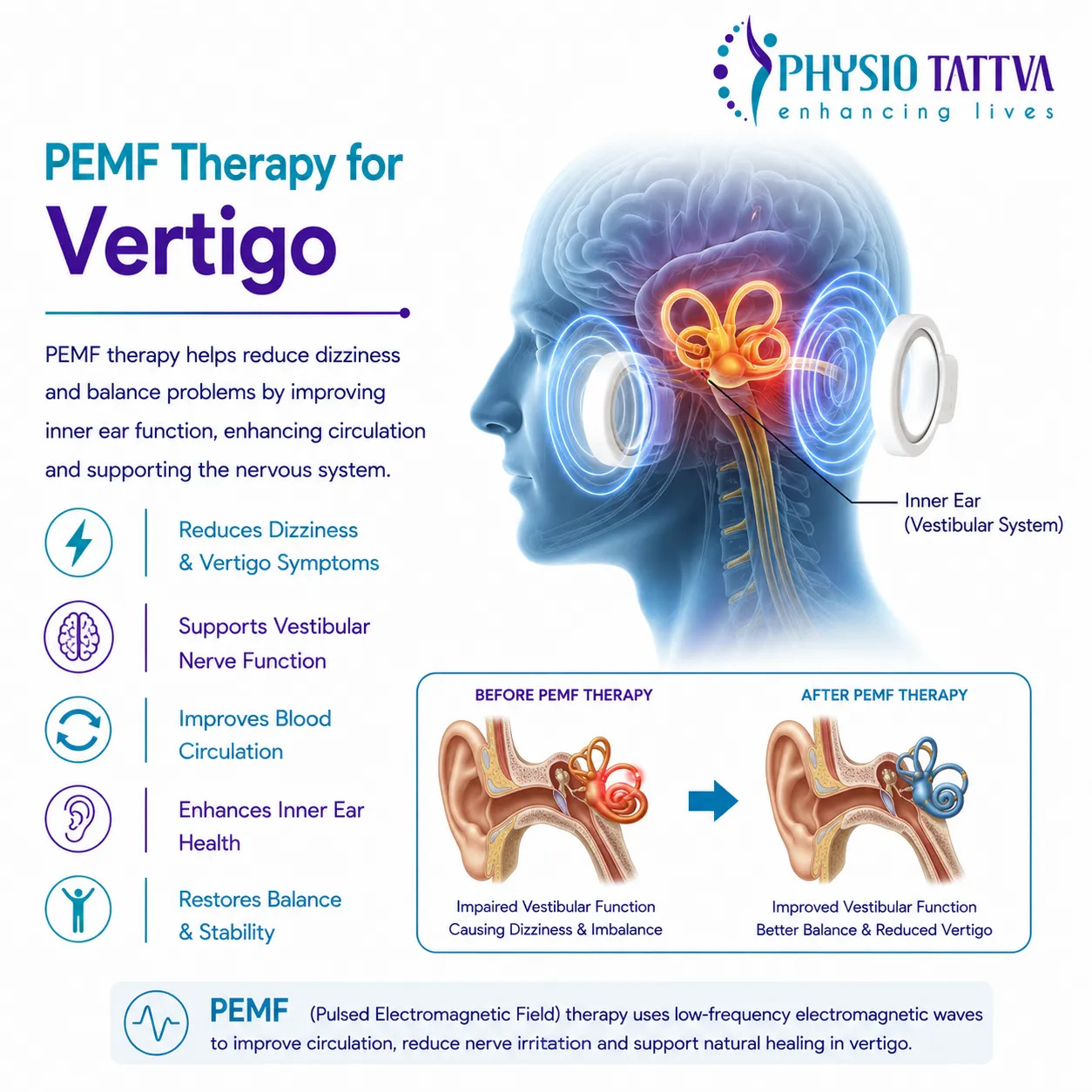
What is PEMF Therapy?
Pulsed Electromagnetic Fields (PEMF) therapy is a non-invasive treatment that uses low-frequency electromagnetic fields pulsed in specific patterns. Unlike a simple magnet, PEMF devices generate energy fields that can penetrate the body to stimulate and energize cells. The primary proposed benefits of PEMF therapy include:
- Reducing inflammation and pain.
- Improving circulation and oxygenation of tissues.
- Accelerating cellular repair and regeneration.
- Modulating the response of the nervous system.
How PEMF Therapy May Support Vertigo Relief
While large-scale clinical trials specifically on PEMF for vertigo are limited, the therapy's known biological effects provide several plausible mechanisms for how it could offer relief, depending on the root cause of the vertigo.
Reducing Inner Ear Inflammation
For conditions like Vestibular Neuritis and Labyrinthitis, the core problem is inflammation of the vestibular nerve or inner ear structures. PEMF therapy is widely recognized for its anti-inflammatory effects. By promoting the removal of cellular waste and reducing inflammatory markers, PEMF could potentially calm the inflammation in and around the vestibular system, thereby reducing the severity and duration of vertigo episodes.
Improving Microcirculation to the Vestibular System
The delicate structures of the inner ear rely on a robust blood supply. Impaired microcirculation can lead to cellular stress and dysfunction, potentially contributing to conditions like Meniere's Disease. PEMF therapy has been shown to enhance blood flow and improve the oxygen-carrying capacity of blood cells. By improving circulation to the inner ear, PEMF may help restore normal function and reduce vertigo symptoms.
Addressing Cervicogenic Dizziness
When dizziness originates from the neck (cervicogenic dizziness), PEMF therapy can be a highly relevant treatment. By applying PEMF to the cervical spine and surrounding muscles, it can:
- Relax tight muscles that may be compressing nerves or blood vessels.
- Reduce inflammation in the facet joints of the neck.
- Alleviate pain, which often contributes to the sensation of imbalance and dizziness.
This is one of the most direct and well-supported applications of PEMF for dizziness that is secondary to neck issues.
Supporting Nerve Function and Cellular Repair
The vestibular system is a complex network of nerves. PEMF therapy is believed to help normalize the electrical potential of cell membranes, which is crucial for proper nerve signaling. By supporting a healthier cellular environment, PEMF may aid in the recovery of damaged nerve tissues (neuroplasticity) and improve the overall function of the vestibular system.
What Research Reveals About PEMF Therapy for Vertigo
It is important to note that the use of Pulsed Electromagnetic Fields therapy for vertigo is still considered experimental. While early findings are interesting, the current body of evidence remains limited and should be interpreted cautiously.
Key points from the existing research include:
- Lack of Direct Studies: There is a significant lack of large-scale, placebo-controlled clinical trials proving PEMF's effectiveness specifically for primary vertigo (like BPPV or Meniere's).
- Anecdotal and Case-Study Evidence: Most support comes from anecdotal reports from clinicians and patients, as well as case studies where PEMF was used to treat a related condition (like neck pain), and vertigo improved as a secondary benefit.
- Related Research: Some studies on PEMF for tinnitus (another inner ear condition) have shown mixed but sometimes positive results, suggesting a potential impact on the inner ear environment.
Safety and Practical Considerations for PEMF Therapy in Vertigo
Before considering PEMF for vertigo, it is essential to get a proper diagnosis from a medical professional (like an ENT or neurologist) to rule out serious underlying conditions.PEMF therapy should always be approached with caution and used only after proper medical evaluation. Understanding safety guidelines and practical limitations is essential before considering it as part of a vertigo management plan.
Key considerations include:
- Who should NOT use PEMF? Individuals with pacemakers, implanted pain modulators, or certain other electronic implants. It is also generally not recommended during pregnancy.
- Professional vs. At-Home Systems: PEMF can be administered in a clinical setting (by physical therapists, chiropractors, or wellness practitioners) or with at-home devices. Professional guidance is recommended, especially when targeting the head and neck area.
- Not a Replacement for Standard Care: PEMF should be seen as a complementary therapy, not a replacement for proven treatments like the Epley maneuver for BPPV or vestibular rehabilitation therapy (VRT).
Your Next Step Towards Vertigo Relief with Physiotattva
Pulsed Electromagnetic Fields therapy for vertigo is an emerging approach that shows potential but is not yet proven. Its ability to reduce inflammation, improve blood flow, and ease neck-related issues offers a possible explanation for how it may help some people with vertigo and dizziness.
Because strong clinical evidence is still limited, PEMF should be used only as a complementary therapy and under professional guidance. If you experience vertigo, a proper medical evaluation is always the first step. After that, PEMF can be discussed with your healthcare provider as part of a broader treatment plan.
At Physiotattva physiotherapy clinics in Bangalore and Hyderabad, you receive personalised care tailored to your specific needs, ensuring effective results and comfort throughout your journey to recovery.
Don’t wait to start your recovery! Get in touch with Physiotattva for more details! Contact us at +91 89510 47001.
Why Physiotattva?
22+
50,000+
95%
200+
25+
4.8
Cities We Serve

Bangalore
At Physio Tattva, we are committed to bring access to quality physio care through ultra-modern clinics and high-skilled practitioners to all.
.webp)
Hyderabad
At Physio Tattva, we are committed to bring access to quality physio care through ultra-modern clinics and high-skilled practitioners to all.
.webp)
Vishakhapatnam
At Physio Tattva, we are committed to bring access to quality physio care through ultra-modern clinics and high-skilled practitioners to all.
Core Treatments
Core Conditions
Core Symptoms
Frequently Asked Questions
Can PEMF therapy cure my vertigo?

Is PEMF therapy safe to use on my head or neck for vertigo?
How many PEMF sessions are needed for dizziness?
Can PEMF help with Meniere's Disease?






%20(1)-p-3200.jpeg)


.jpg)
.webp)
.webp)
.webp)