





Chondromalacia patella, often called "runner's knee," is a common source of anterior knee pain caused by the softening and breakdown of cartilage on the underside of the kneecap (patella). While traditional treatments focus on rest, ice, and physical therapy, many individuals seek complementary, non-invasive options to accelerate recovery and manage pain. Pulsed electromagnetic fields (PEMF) therapy for Chondromalacia patella is emerging as a promising adjunctive treatment that addresses the core issues of pain, inflammation, and cellular health.
This article explores how PEMF works and its potential benefits for this condition.
What Is Chondromalacia Patella?
Before diving into the treatment, it's crucial to understand the condition. Chondromalacia patella involves the deterioration of articular cartilage behind the kneecap. This cartilage acts as a natural shock absorber, and when it becomes damaged, it leads to friction between the patella and the femur.
Chondromalacia patella can show up in day-to-day movements, especially when the kneecap is under repeated load. Common symptoms include:
- A dull, aching pain in the front of the knee, behind or around the kneecap.
- A grinding or grating sensation (crepitus) when bending or extending the knee.
- Pain that worsens when going up or down stairs, squatting, or sitting for extended periods with bent knees (the "theater sign").
- A feeling of swelling or tightness in the knee area.
Understanding PEMF Therapy: How Does It Work?
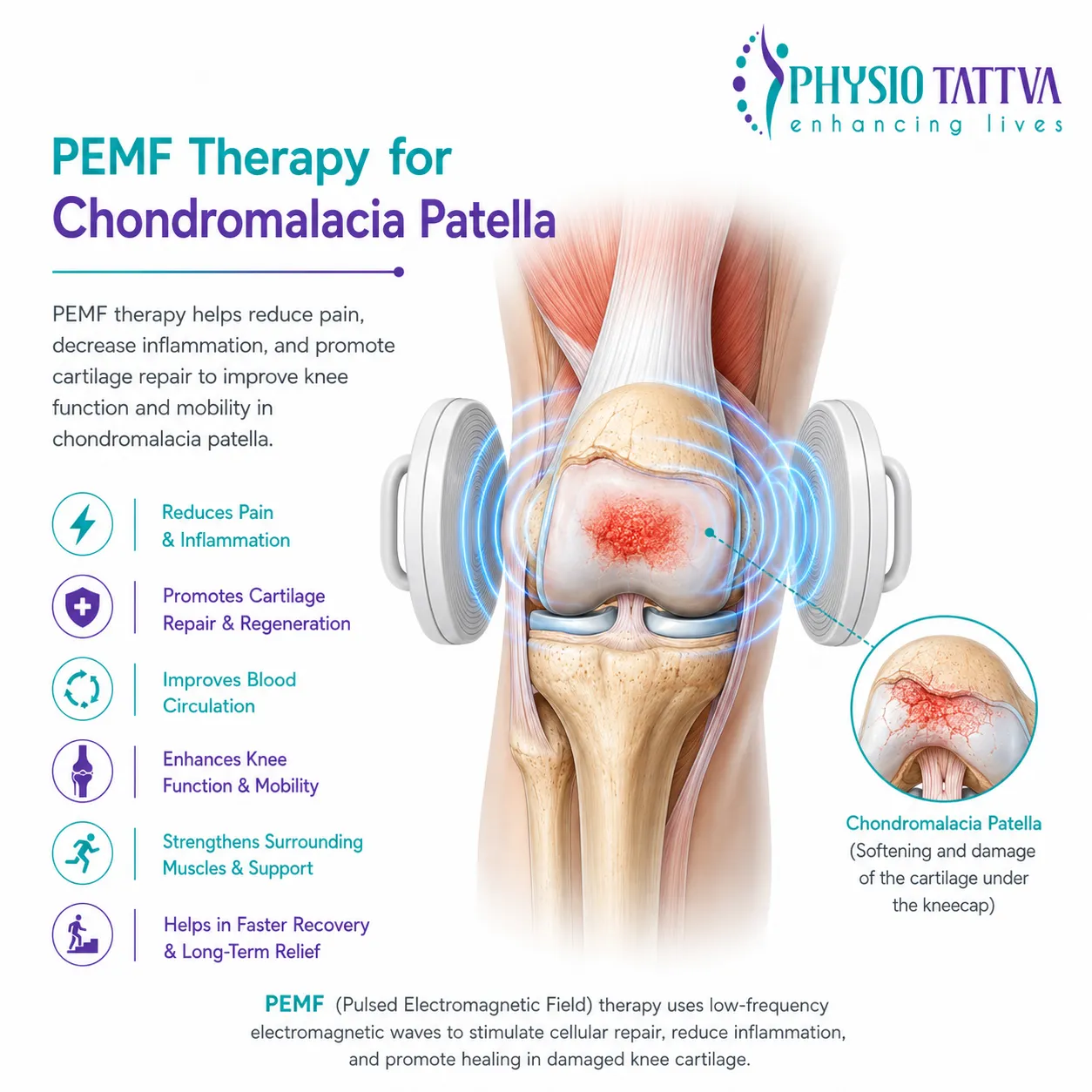
Pulsed Electromagnetic Fields (PEMF) therapy is a non-invasive treatment that uses low-frequency electromagnetic fields pulsed into the body's tissues. It is not magnetism in the conventional sense (like with a refrigerator magnet). Instead, these gentle, therapeutic fields pass through the body, penetrating deeply into tissues, including cartilage, bone, and muscle.
The primary goal of PEMF is to stimulate and "recharge" damaged or under-functioning cells. By enhancing cellular metabolism, PEMF therapy can trigger a cascade of natural healing responses without generating heat or causing discomfort.
How PEMF Therapy Can Help Chondromalacia Patella
The application of pulsed electromagnetic field therapy for Chondromalacia patella addresses the condition on multiple physiological levels.
Pain Reduction (Analgesic Effect)
PEMF therapy can help modulate pain signals by influencing nerve cell firing and promoting the release of endorphins, the body's natural painkillers. For individuals with chronic knee pain from chondromalacia, this can provide significant relief without the side effects of long-term medication use.
Inflammation Control
Inflammation is a key driver of pain and further tissue damage in chondromalacia patella. PEMF therapy has been shown to reduce inflammation by:
- Improving circulation to wash away inflammatory byproducts.
- Down-regulating pro-inflammatory cytokines.
- Increasing the production of anti-inflammatory molecules. This helps break the cycle of pain and swelling.
Enhanced Cartilage Cell Function (Chondrocyte Stimulation)
This is the most exciting potential benefit for chondromalacia. While regrowing cartilage is notoriously difficult, research suggests PEMF can create a better environment for cartilage health. It may:
- Stimulate chondrocytes (cartilage-producing cells) to increase the synthesis of proteoglycans and collagen, the essential building blocks of cartilage.
- Improve nutrient and oxygen delivery to the cartilage through enhanced microcirculation.
- Slow down the degenerative process affecting the cartilage.
Improved Circulation and Oxygenation
The pulsed fields cause a mild expansion and relaxation of blood vessels, improving blood flow to the patellofemoral joint. Better circulation means more oxygen, nutrients, and healing factors are delivered to the damaged cartilage, while metabolic waste is more efficiently removed. This optimizes the environment for natural repair.
The Scientific Evidence for PEMF and Cartilage Health
While direct, large-scale clinical trials specifically on PEMF therapy for Chondromalacia patella are still growing, a significant body of research on osteoarthritis (a condition also involving cartilage degradation) supports its use.
- Studies on knee osteoarthritis consistently show that PEMF therapy can significantly reduce pain, improve stiffness, and enhance physical function.
- In vitro (lab) studies have demonstrated that specific PEMF frequencies can stimulate chondrocyte proliferation and increase the production of the cartilage matrix.
- PEMF is FDA-approved for several conditions, including healing non-union bone fractures, which validates its ability to stimulate cellular repair processes.
Because Chondromalacia Patella is an early stage of cartilage damage, it is theoretically an ideal condition to target with a therapy designed to support cellular health and reduce degradation.
What To Expect From PEMF Treatment for Chondromalacia Patella
Before you begin, it helps to know what PEMF can and cannot do, how sessions are usually delivered, and what a realistic timeline looks like. Here are the key practical points most people want clarity on:
- Is it a Standalone Cure? No. PEMF therapy works best as an adjunctive treatment. It should be combined with a comprehensive rehabilitation plan, including physical therapy to correct muscle imbalances (e.g., strengthening the VMO and glutes) and biomechanical issues.
- How Is It Administered? PEMF can be administered in a clinical setting or via portable, at-home devices. The treatment involves placing an applicator coil or pad over the front of the knee.
- Session Duration and Frequency: A typical session lasts 20-60 minutes. For chronic conditions like chondromalacia, daily use is often recommended for several weeks to achieve optimal results.
- Is It Painful? No. The therapy is painless. Most people feel nothing at all during a session.
Who Should Use PEMF and Who Should Avoid It ?
PEMF therapy is generally considered safe for many people, but it is not suitable for everyone. A quick screening helps you understand whether it fits your knee condition and health status.
PEMF May Be An Excellent Option for
If your symptoms are ongoing or keep returning, PEMF can be a useful add-on to rehab and pain management. It is commonly considered by people such as:
- Individuals experiencing chronic anterior knee pain.
- Athletes looking to accelerate recovery from "runner's knee."
- Those seeking a non-pharmacological, non-invasive pain management solution.
- People who have not found complete relief from physical therapy alone.
Contraindications
Even though PEMF is non-invasive, certain medical conditions and devices can make it unsafe. Do NOT use PEMF if you have:
- An implanted electronic device (e.g., pacemaker, cochlear implant).
- Are pregnant.
- Have active cancer (unless approved by an oncologist).
- Have a history of epilepsy (consult a doctor).
Always consult with a healthcare professional before starting any new therapy.
Reducing Knee Pain Naturally With Physiotattva
Pulsed electromagnetic fields therapy for Chondromalacia patella offers a scientifically-backed, safe, and non-invasive method to manage symptoms and support the body's intrinsic healing capabilities. By addressing pain, reducing inflammation, and stimulating cellular activity within the cartilage, PEMF serves as a powerful complement to traditional physical therapy. If you are struggling with persistent knee pain from runner's knee, exploring PEMF therapy could be a valuable step toward lasting relief and improved joint function.
At Physiotattva physiotherapy clinics in Bangalore and Hyderabad, you receive personalised care tailored to your specific needs, ensuring effective results and comfort throughout your journey to recovery.
Don’t wait to start your recovery! Get in touch with Physiotattva for more details! Contact us at +91 89510 47001.
Why Physiotattva?
22+
50,000+
95%
200+
25+
4.8
Cities We Serve

Bangalore
At Physio Tattva, we are committed to bring access to quality physio care through ultra-modern clinics and high-skilled practitioners to all.
.webp)
Hyderabad
At Physio Tattva, we are committed to bring access to quality physio care through ultra-modern clinics and high-skilled practitioners to all.
.webp)
Vishakhapatnam
At Physio Tattva, we are committed to bring access to quality physio care through ultra-modern clinics and high-skilled practitioners to all.
Core Treatments
Core Conditions
Core Symptoms
Frequently Asked Questions
How long does it take to see results from PEMF for my knee pain?

Can I use PEMF therapy instead of my physical therapy exercises?
Is PEMF therapy for chondromalacia patella covered by insurance?
Are home PEMF devices as effective as clinical ones?






%20(1)-p-3200.jpeg)


.jpg)
.webp)
.webp)
.webp)