




Living with Degenerative Disc Disease (DDD) can be a constant struggle with chronic pain, stiffness, and discomfort. While DDD is a progressive condition involving the natural wear and tear of spinal discs, you’re not without options. Along with medical treatments and physiotherapy, simple and effective home remedies like hot and cold therapy can play a key role in managing your symptoms.
This article will discuss the proper timing and effective methods of using hot and cold therapy for Degenerative Disc Disease, helping to relieve pain and improve your quality of life.
Understanding the Impact of Heat and Cold on Your Spine
Heat and cold therapies are commonly used to manage symptoms of degenerative disc disease (DDD). Understanding how these therapies affect your body is essential for maximizing their benefits. Cold and heat each have distinct effects that target different aspects of pain, inflammation, and muscle tension, offering temporary relief and promoting recovery when used appropriately.
The Power of Cold (Cryotherapy)
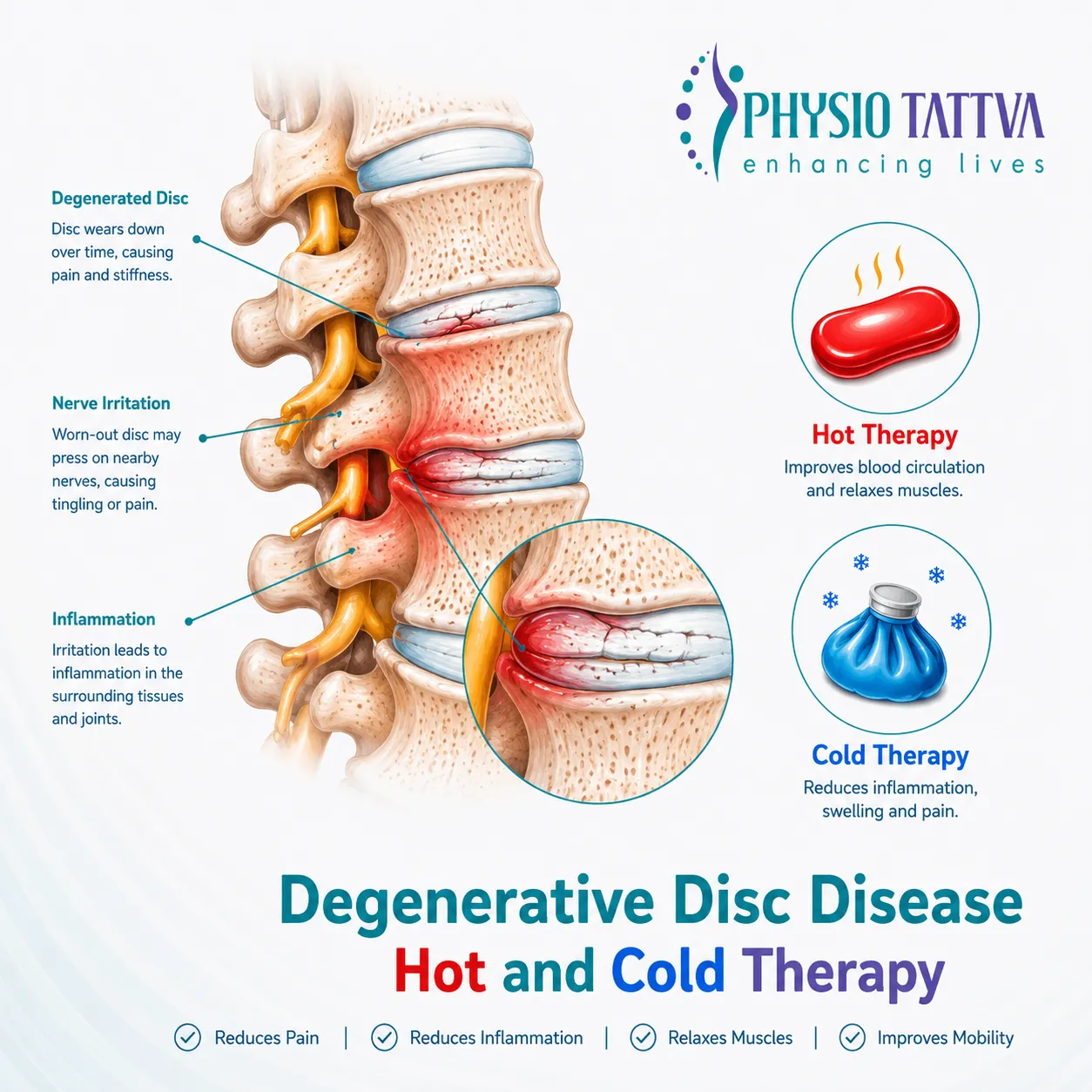
Cold therapy, or cryotherapy, works by causing vasoconstriction—narrowing the blood vessels. This process plays a crucial role in managing acute symptoms of DDD, offering relief from inflammation and pain.
- Reduces Inflammation: By constricting blood vessels, cold therapy limits the flow of inflammatory agents to the painful area. This is crucial during a flare-up when inflammation is high.
- Numbs the Pain: Cold has a natural analgesic (pain-numbing) effect on nerve endings, providing immediate, temporary relief from sharp pain.
- Decreases Swelling: Less fluid and blood flow to the area helps reduce swelling and pressure on sensitive nerves.
Best for: Acute flare-ups, sharp pain, and post-activity soreness.
The Warmth of Heat (Thermotherapy)
Applying heat has the opposite effect. It causes vasodilation, the widening of your blood vessels.
- Boosts Circulation: Increased blood flow brings more oxygen and nutrients to the affected tissues, which helps facilitate the healing process.
- Relaxes Tight Muscles: The muscles around your degenerating discs often spasm and tighten to protect the spine. Heat helps these muscles relax, easing stiffness and reducing compensatory pain.
- Increases Flexibility: By warming up soft tissues, heat can reduce the chronic stiffness often associated with DDD, especially in the morning or before activity.
Best for: Chronic muscle soreness, stiffness, and relaxing before stretching.
When to Apply Heat or Cold for Effective DDD Relief?
Knowing when to use heat or cold therapy is essential for effective symptom management. The wrong choice at the wrong time can either be ineffective or make your pain worse. Here’s how to determine the right therapy for different situations in managing degenerative disc disease (DDD).
When to Use COLD Therapy for DDD?
Cold therapy is most effective during acute flare-ups or when you need to reduce inflammation. Use cold therapy to target sharp, intense pain and swelling during the early stages of a flare-up or after activity that aggravates your symptoms.
- During an Acute Flare-Up: If you experience a sudden increase in sharp, intense pain, use cold therapy for the first 24-48 hours. This is when inflammation is at its peak.
- After Physical Activity: If you’ve done exercises, physical therapy, or any activity that has aggravated your back, applying a cold pack can prevent inflammation and soreness.
- When You Feel Sharp, Localized Pain: If the pain feels sharp, stabbing, and is concentrated in one spot, cold is generally the better choice to numb the area.
When to Use HEAT Therapy for DDD?
Heat therapy is ideal for chronic symptoms and stiffness. It helps relax tight muscles and increase circulation, making it perfect for long-term management and preparation before stretching or gentle exercise.
- For Chronic Aches and Stiffness: For the persistent, dull ache that is a hallmark of DDD, heat is your best friend. It helps soothe the surrounding muscles that have become tight.
- Before Stretching or Gentle Exercise: Applying heat for 15-20 minutes before activity can warm up your muscles, making movement easier and less painful.
- To Ease Morning Stiffness: Many people with DDD wake up feeling very stiff. A warm shower or heating pad can help you start your day with more mobility.
Contrast Therapy: Alternating Heat and Cold for Better Relief
Alternating between hot and cold therapy is an effective technique known as contrast therapy. This method creates a "pumping" action in your blood vessels by first dilating and then constricting them, helping to flush out inflammation while promoting increased circulation.
- How to Do It: Start with heat (3-4 minutes) to bring blood to the area, increasing circulation. Then switch to cold (1 minute) to reduce inflammation and numb the pain. Repeat this cycle 3-5 times, always ending with cold therapy for the best results.
- When It's Useful: Contrast therapy is particularly beneficial in the sub-acute stage (after the first 48 hours of a flare-up), helping to reduce lingering swelling while promoting healing and encouraging better circulation.
The "How": Safe and Effective Application Methods
To ensure safety and avoid skin damage such as burns or frostbite, it’s important to follow proper guidelines for both cold and heat therapies.
General Rules
To ensure safe and effective use of hot and cold therapy, follow these basic guidelines:
- Duration: Limit applications (both hot and cold) to 15-20 minutes at a time.
- Barrier: Always place a towel or cloth between the pack and your skin.
- Listen to your body: If you feel extreme discomfort, remove the pack immediately.
Cold Therapy Methods
Cold therapy is effective for reducing inflammation, pain, and swelling, especially during acute flare-ups. Below are some common methods to apply cold therapy effectively:
- Gel Packs: Reusable and flexible, gel packs conform well to the curves of your back, making them effective for targeted relief.
- Ice Pack: A simple bag of crushed ice mixed with a little water is an affordable and highly effective method for localised cold therapy.
- Frozen Vegetables: A bag of frozen peas or corn works as a moldable, convenient alternative to traditional ice packs, offering comfort and flexibility.
Heat Therapy Methods
Heat therapy is beneficial for easing muscle tension, improving circulation, and relieving chronic pain. Consider these heat application methods for long-term relief:
- Heating Pads: A popular choice, heating pads provide controlled warmth and can be easily applied to the lower back, neck, or other affected areas.
- Hot Water Bottles: A simple, reusable method for providing heat therapy that can be wrapped in a towel for comfort.
- Warm Towels: You can heat a towel in the microwave or with hot water and apply it to sore muscles, offering a gentle heat alternative.
Precautions
When applying both cold and heat therapy, it’s important to follow safety precautions to avoid injury. Keep these guidelines in mind:
- Cold Therapy: Avoid prolonged application to prevent frostbite. Always use a barrier, especially with ice packs.
- Heat Therapy: Avoid applying heat to areas with reduced sensation or open wounds. Never use heat if there is swelling from a recent injury (within the first 48 hours).
Manage DDD Pain Effectively with Heat and Cold Therapy at Physiotattva
Hot and cold therapy offers effective relief from the symptoms of Degenerative Disc Disease (DDD) by reducing pain, inflammation, and muscle stiffness. While not a cure, these therapies can complement other treatments and improve your daily comfort. Always follow safety guidelines and consult with a healthcare professional to ensure the right application for your needs.
At Physiotattva physiotherapy clinics in Bangalore and Hyderabad, you receive personalised care tailored to your specific needs, ensuring effective results and comfort throughout your journey to recovery.
Don’t wait to start your recovery! Get in touch with Physiotattva for more details! Contact us at +91 89510 47001.
Why Physiotattva?
22+
50,000+
95%
200+
25+
4.8
Cities We Serve

Bangalore
At Physio Tattva, we are committed to bring access to quality physio care through ultra-modern clinics and high-skilled practitioners to all.
.webp)
Hyderabad
At Physio Tattva, we are committed to bring access to quality physio care through ultra-modern clinics and high-skilled practitioners to all.
.webp)
Vishakhapatnam
At Physio Tattva, we are committed to bring access to quality physio care through ultra-modern clinics and high-skilled practitioners to all.
Core Treatments
Core Conditions
Core Symptoms
Frequently Asked Questions
Can I use hot and cold therapy on the same day?

Is it safe to sleep with a heating pad for my back pain?
Which is better for sciatica pain caused by DDD?
Will hot and cold therapy cure my DDD?






%20(1)-p-3200.jpeg)


.jpg)
.webp)
.webp)
.webp)