





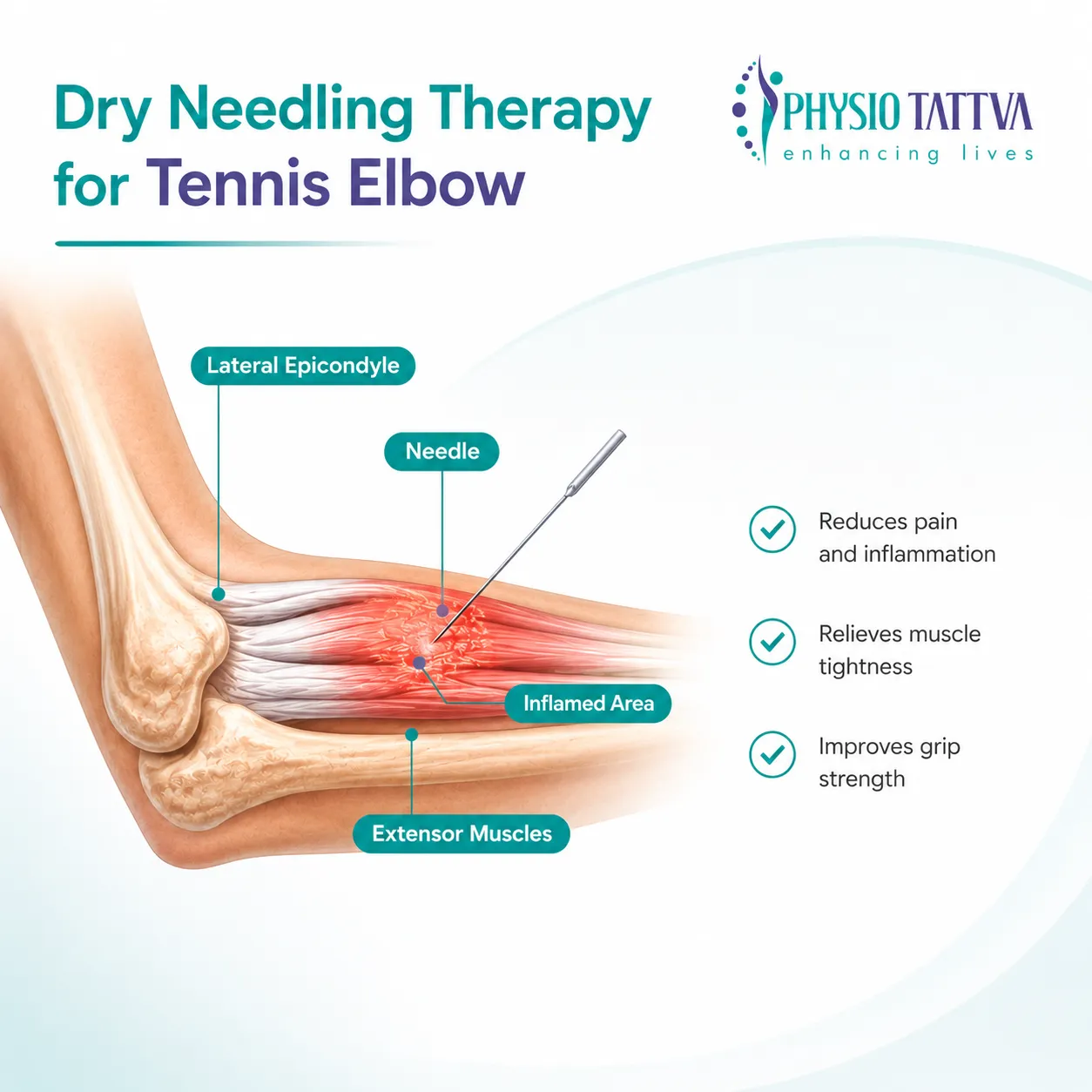
Dry needling therapy for tennis elbow is a physiotherapy treatment that targets tight trigger points in the forearm muscles that may contribute to outer elbow pain. Thin sterile needles are inserted into these muscles to help reduce muscle tension, improve comfort, and support recovery.
The therapy may help ease pain, improve grip comfort, and reduce muscle tightness when forearm trigger points add strain to the elbow tendon. Dry needling is usually used as part of a broader rehabilitation plan that includes strengthening exercises, load management, and other physiotherapy treatments.
What Is Dry Needling Therapy for Tennis Elbow?
Dry needling therapy for tennis elbow is a physiotherapy treatment used to target tight, painful trigger points in the forearm muscles that may be adding stress to the elbow tendon. It involves inserting very thin, sterile needles into specific muscles to help reduce muscle tension, improve comfort, and support recovery as part of a broader rehabilitation plan.
A few key characteristics of dry needling therapy for tennis elbow include:
- Targets forearm trigger points: It is used on muscles that may be contributing to tendon overload and outer elbow pain.
- Uses thin, sterile needles: The procedure is performed with fine, single-use needles in a controlled clinical setting.
- Focuses on muscle-related contributors: It is commonly used when muscle tightness and pain sensitivity are part of the presentation.
- Usually part of a wider plan: It is often combined with exercise, load management, and other physiotherapy treatments.
How Does Dry Needling Therapy for Tennis Elbow Work?
Dry needling therapy for tennis elbow involves a structured process aimed at alleviating pain and promoting healing. Below is a breakdown of the steps involved in your treatment session.
- Assessment: Your therapist will first conduct a thorough physical examination to identify the specific muscles and trigger points responsible for your pain. They will assess your range of motion, strength, and pain levels.
- Positioning: You will be positioned comfortably, usually lying down with your affected arm supported.
- Needle Insertion: The therapist will sterilise the area and then gently insert the thin needle directly into the identified trigger points in your forearm. You may feel a small prick, similar to a mosquito bite.
- Eliciting a Twitch Response: The therapist may gently manipulate the needle (a technique called pistoning or fanning) to find the trigger point and elicit the local twitch response. This can feel like a brief, deep cramp or ache, which is considered a positive sign of effective treatment.
- Duration: The needles may be left in for just a few seconds or for several minutes, depending on the technique and your specific condition.
- Post-Treatment Care: After the needles are removed, you may experience some muscle soreness, similar to post-workout fatigue, for 24-48 hours. Your therapist may apply heat or perform gentle stretching. They will likely give you instructions for home care, such as gentle stretching and avoiding strenuous activity for a day.
Benefits of Dry Needling Therapy for Tennis Elbow
For people with ongoing outer elbow pain, dry needling therapy for tennis elbow may be helpful when tight forearm muscles are adding to the strain. It is usually part of a wider rehab plan, but these are some of its main benefits.
- May help ease pain: Dry needling for tennis elbow is often used to reduce pain linked to tight and sensitive forearm muscles.
- May reduce muscle tightness: It can help release tight spots in the forearm that may be making elbow movement more uncomfortable.
- May improve grip comfort: Dry needling treatment for tennis elbow may make gripping, lifting, and everyday hand use feel easier for some patients.
- May support better movement: Dry needle therapy for tennis elbow may help the forearm muscles feel less restricted during activity.
- Can support rehab: It is often used alongside exercise, manual therapy, and load-management advice as part of a full treatment plan.
When Dry Needling Therapy May Not Be Suitable
Dry needling is not the right option for every patient, so suitability should always be checked before treatment begins. A physiotherapist will usually decide this after reviewing your symptoms, medical history, and any safety concerns.
Dry needling therapy may not be suitable in cases such as:
- Severe needle fear or anxiety: Patients who are extremely uncomfortable with needles may not tolerate the treatment well.
- Skin infection or open wound near the area: Dry needling is usually avoided if the treatment area has infection, irritation, or broken skin.
- Bleeding disorders or blood thinner use: Extra caution is needed in patients with higher bleeding risk.
- Certain stages of pregnancy: Dry needling may be avoided in some situations depending on the area being treated and clinical judgement.
- When the clinician feels it is not appropriate: The final decision should always depend on assessment and overall safety.
Why Is Dry Needling Therapy for Tennis Elbow Often Combined with Other Treatments?
There is a growing body of evidence supporting the use of dry needling therapy for tennis elbow, especially when it is part of a comprehensive rehabilitation program. Studies have shown it can lead to significant reductions in pain, improved grip strength, and increased function.
For optimal results, dry needling should not be a standalone treatment. It is most effective when combined with:
- Therapeutic Exercise: Specific stretching and strengthening exercises to improve the flexibility and endurance of the forearm muscles.
- Manual Therapy: Hands-on techniques to mobilize the elbow joint and soft tissues.
- Activity Modification and Ergonomics: Identifying and correcting the movements or workplace setups that caused the problem in the first place.
- Load Management: Gradually reintroducing load to the tendon to build its resilience.
Explore Dry Needling Therapy for Tennis Elbow at Physiotattva
Dry needling therapy is an effective and targeted treatment for tennis elbow, offering significant relief from pain, improving muscle function, and promoting faster healing. When combined with other therapeutic approaches such as exercise, manual therapy, and ergonomic adjustments, dry needling can accelerate recovery and help restore normal function.
However, it's important to remember that while dry needling is a highly effective therapy, it may not be suitable for everyone. If you have chronic or sub-acute tennis elbow, muscle tightness, or pain that interferes with daily activities or athletic performance, dry needling could be a beneficial treatment. Always consult with a qualified healthcare provider at Physiotattva to determine if this therapy is right for you.
At Physiotattva physiotherapy clinics in Bangalore and Hyderabad, you receive personalised care tailored to your specific needs, ensuring effective results and comfort throughout your journey to recovery.
Don’t wait to start your recovery! Get in touch with Physiotattva for more details! Contact us at +91 89510 47001.
Key Takeaways
- Dry needling therapy for tennis elbow is used to target tight and painful forearm muscles that may be adding strain to the elbow tendon.
- It may help reduce pain, ease muscle tightness, and improve comfort during gripping and everyday arm use.
- The treatment is usually brief and may cause mild temporary soreness after the session.
- Dry needling is generally most useful when combined with exercise, load management, and other physiotherapy treatments.
- Suitability should always be decided after assessment, as dry needling may not be right for every tennis elbow case.
Why Physiotattva?
22+
50,000+
95%
200+
25+
4.8
Cities We Serve

Bangalore
At Physio Tattva, we are committed to bring access to quality physio care through ultra-modern clinics and high-skilled practitioners to all.
.webp)
Hyderabad
At Physio Tattva, we are committed to bring access to quality physio care through ultra-modern clinics and high-skilled practitioners to all.
.webp)
Vishakhapatnam
At Physio Tattva, we are committed to bring access to quality physio care through ultra-modern clinics and high-skilled practitioners to all.
Core Treatments
Core Conditions
Core Symptoms
Frequently Asked Questions
Does dry needling for tennis elbow hurt?

Is dry needling for tennis elbow safe?
How many sessions of dry needling are needed for tennis elbow?
What are the side effects of dry needling for tennis elbow?
Can dry needling fix tennis elbow?
What not to do after dry needling?
Who is not a candidate for dry needling?






%20(1)-p-3200.jpeg)


.jpg)
.webp)
.webp)
.webp)