




Manual therapy is a cornerstone of effective physical therapy for Chondromalacia Patella (also known as patellofemoral pain syndrome or "runner's knee"). It involves hands-on techniques performed by a qualified therapist to address the underlying biomechanical faults contributing to abnormal stress on the patellar cartilage. The goal is not to "heal" the cartilage directly, but to improve patellar tracking, reduce pain, and create an optimal environment for the joint to function, thereby preventing further irritation and allowing symptoms to resolve.
Why Use Manual Therapy for Chondromalacia Patella?
Chondromalacia patella is often caused by poor patellar tracking, where the kneecap glides improperly within its groove on the femur (the trochlear groove). This maltracking is typically driven by a combination of factors that manual therapy directly targets:
- Muscle Imbalances: Overly tight lateral structures (like the IT band and lateral quadriceps) pull the patella outwards, while weak medial structures (like the Vastus Medialis Obliquus - VMO) fail to provide a counter-balancing pull.
- Joint Stiffness: Restricted mobility in the patellofemoral joint itself, the hip, or the ankle can force compensatory movements at the knee, leading to stress.
- Pain and Inflammation: Manual techniques can help modulate pain signals and improve local circulation to reduce inflammation and muscle guarding.
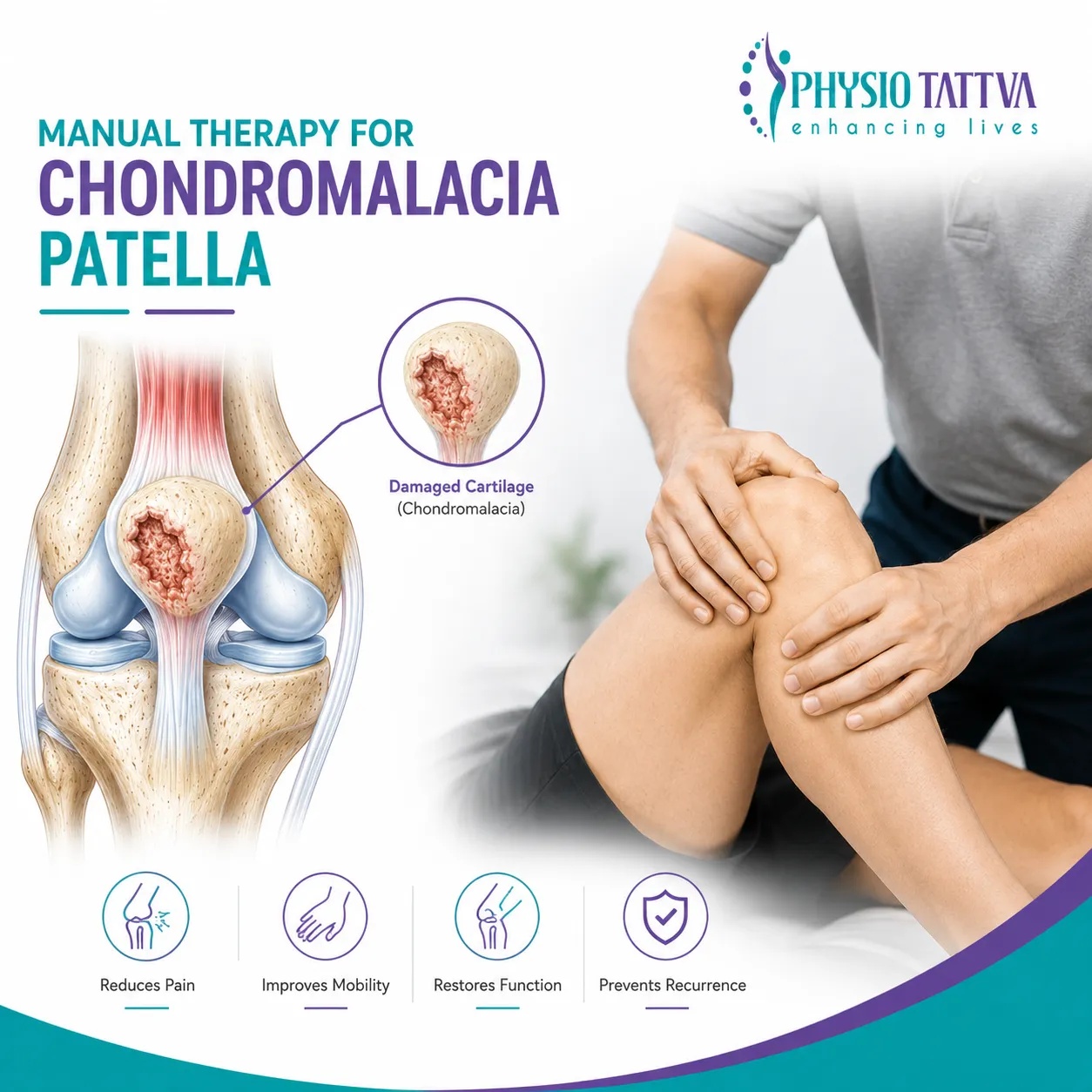
Core Manual Therapy Techniques for Chondromalacia Patella
A therapist will use a combination of the following techniques based on a thorough patient assessment.
Soft Tissue Mobilization (STM)
This involves applying pressure and stretching to muscles, fascia, and tendons to release tension and restore normal tissue mobility.
- Lateral Retinaculum Release:
- What it is: A specific technique to stretch the tight, fibrous tissue on the outside of the kneecap. This is arguably the most critical STM technique for this condition.
- Why it's done: The lateral retinaculum is a primary culprit in pulling the patella laterally (out of its groove). Releasing it helps to re-center the patella.
- Iliotibial (IT) Band Myofascial Release:
- What it is: Applying deep, sustained pressure along the IT band, which runs down the outside of the thigh.
- Why it's done: A tight IT band contributes to the lateral pull on the patella and can also cause external tibial rotation, further disrupting knee mechanics.
- Quadriceps Release (especially Vastus Lateralis):
- What it is: Massage, trigger point release, or instrument-assisted techniques on the large quadriceps muscle group, with a focus on the outer portion (Vastus Lateralis).
- Why it's done: This muscle is often overactive and tight compared to the inner VMO, contributing directly to the lateral pull on the patella.
- Hamstring and Calf (Gastrocnemius) Release:
- What it is: Techniques to lengthen and release tension in the muscles on the back of the thigh and lower leg.
- Why it's done: Tight hamstrings and calves can alter walking and running mechanics, leading to increased force and compensatory strain at the knee joint.
Joint Mobilization
This involves passive movements of a joint at varying speeds and amplitudes to restore normal joint play, reduce pain, and improve mobility.
- Patellofemoral Mobilization:
- What it is: The therapist manually glides the patella in various directions while the patient's knee is relaxed.
- Key Techniques:
- Medial Glide: Pushing the patella inwards. This is the most important direction to improve mobility and counteract the lateral pull.
- Medial Tilt: Lifting the lateral (outer) edge of the patella to stretch the tight lateral structures.
- Inferior/Superior Glides: Moving the patella down and up to ensure it can move freely through its full range of motion.
- Hip Joint Mobilization:
- What it is: Mobilizing the hip joint to improve rotation (especially internal rotation) and extension.
- Why it's done: Limited hip internal rotation is a well-documented cause of compensatory knee valgus (knee collapsing inward), which dramatically worsens patellar tracking. Improving hip mobility is crucial for long-term success.
- Tibiofemoral and Ankle/Subtalar Joint Mobilization:
- What it is: Restoring proper mechanics at the main knee joint (tibia-on-femur) and the joints of the foot and ankle.
- Why it's done: Limited ankle dorsiflexion (ability to pull the foot up) can lead to foot overpronation and knee valgus. Addressing restrictions at the foundation of the kinetic chain is essential.
Taping Techniques (Adjunct to Manual Therapy)
While not strictly "mobilization," therapeutic taping is a hands-on application that extends the benefits of a manual therapy session.
- McConnell Taping: A rigid taping technique designed to physically hold the patella in a more medial (centered) position during activity. This provides immediate feedback and pain relief, allowing the patient to perform strengthening exercises correctly.
- Kinesiology Taping: Elastic tape can be used to inhibit overactive lateral muscles (like the TFL/Vastus Lateralis) and facilitate activation of weaker medial muscles (like the VMO).
The Integrated Approach: Manual Therapy is Not a Standalone Treatment
For lasting relief, manual therapy must be part of a comprehensive rehabilitation program.This integrated rehabilitation approach includes the following essential elements:
- Assessment: Treatment begins with a detailed assessment of the entire lower kinetic chain (foot, ankle, knee, hip, pelvis, and core) to identify the specific drivers of the problem.
- Manual Therapy (The "Reset"): The techniques above are used to restore mobility and reduce pain. This creates a "window of opportunity" where the joint can move correctly.
- Therapeutic Exercise (The "Reinforcement"): This is non-negotiable. The patient must perform specific exercises to make the improvements from manual therapy permanent.
- Strengthening: VMO activation, gluteus medius and maximus strengthening (crucial for hip stability), and core stabilization.
- Stretching: Stretching the muscles that were released during manual therapy (quads, IT band, hamstrings, calves).
- Neuromuscular Re-education: Training the body to use the newly strengthened muscles and restored mobility during functional movements like squatting, lunging, and running.
Comprehensive Knee Rehabilitation with Manual Therapy at Physiotattva
Manual therapy plays a vital, evidence-based role in the treatment of Chondromalacia Patella. By addressing soft tissue tightness and joint hypomobility that disrupt patellar tracking, it helps reduce pain and restore proper knee mechanics. When combined with a structured therapeutic exercise programme, manual therapy supports lasting recovery, functional improvement, and long-term prevention of recurring knee pain.
At Physiotattva physiotherapy clinics in Bangalore and Hyderabad, you receive personalised care tailored to your specific needs, ensuring effective results and comfort throughout your journey to recovery.
Don’t wait to start your recovery! Get in touch with Physiotattva for more details! Contact us at +91 89510 47001.
Why Physiotattva?
22+
50,000+
95%
200+
25+
4.8
Cities We Serve

Bangalore
At Physio Tattva, we are committed to bring access to quality physio care through ultra-modern clinics and high-skilled practitioners to all.
.webp)
Hyderabad
At Physio Tattva, we are committed to bring access to quality physio care through ultra-modern clinics and high-skilled practitioners to all.
.webp)
Vishakhapatnam
At Physio Tattva, we are committed to bring access to quality physio care through ultra-modern clinics and high-skilled practitioners to all.


%20(1)-p-3200.jpeg)
.jpg)
.webp)
.webp)
.webp)