





Kinesio taping therapy is a supportive, non-invasive technique widely used in physiotherapy to manage pain and improve movement in individuals with chondromalacia patella. By assisting patellar alignment, reducing stress on irritated cartilage, and enhancing muscle activation, taping helps relieve symptoms while allowing the knee to move naturally. When applied correctly, it complements rehabilitation by improving confidence and functional control during daily and sporting activities.
In this article, we will explore how Kinesio taping works for chondromalacia patella, the techniques involved, its benefits and limitations, and why expert application is essential for effective recovery.
What is Chondromalacia Patella?
Chondromalacia Patella, often called "runner's knee" or patellofemoral pain syndrome, is a condition characterized by the softening, breakdown, and irritation of the cartilage on the underside of the kneecap (patella). This leads to pain, grinding sensations (crepitus), and inflammation, especially when walking up or down stairs, squatting, or sitting for long periods.
The primary cause is often improper tracking of the patella within its groove on the femur (thigh bone). This can be due to:
- Muscle Imbalances: Weakness in the inner quadriceps muscle (Vastus Medialis Obliquus or VMO) and tightness in the outer structures (like the IT band and Vastus Lateralis).
- Poor Biomechanics: Issues with foot alignment (e.g., overpronation) or hip weakness.
- Overuse or Trauma: Repetitive stress from running or a direct blow to the knee.
Role of Kinesio Taping in Managing Chondromalacia Patella
Kinesio tape (or kinesiology tape) is an elastic, adhesive tape designed to mimic the properties of human skin. Unlike rigid athletic tape, it allows for a full range of motion. When applied for Chondromalacia Patella, its goals are to:
- Improve Patellar Tracking: The tape can provide a gentle mechanical pull on the patella, encouraging it to glide correctly within its groove and reducing friction on the underlying cartilage.
- Pain Relief (Decompression): By gently lifting the skin, the tape creates a microscopic space between the skin and the tissues beneath. This decompresses pain receptors and nerve endings, providing immediate pain relief.
- Muscle Facilitation and Inhibition:
- Facilitate (Activate): It can be applied to stimulate and support the weak VMO muscle, helping it fire more effectively to stabilize the patella.
- Inhibit (Relax): It can be used to reduce tension in overactive or tight muscles, like the Vastus Lateralis or the IT band.
- Reduce Swelling and Inflammation: The skin-lifting effect enhances lymphatic drainage and blood flow, helping to clear inflammatory byproducts from the area.
- Increase Proprioception: The tape provides constant sensory feedback to your brain about your knee's position, improving your awareness and control of the joint during movement.
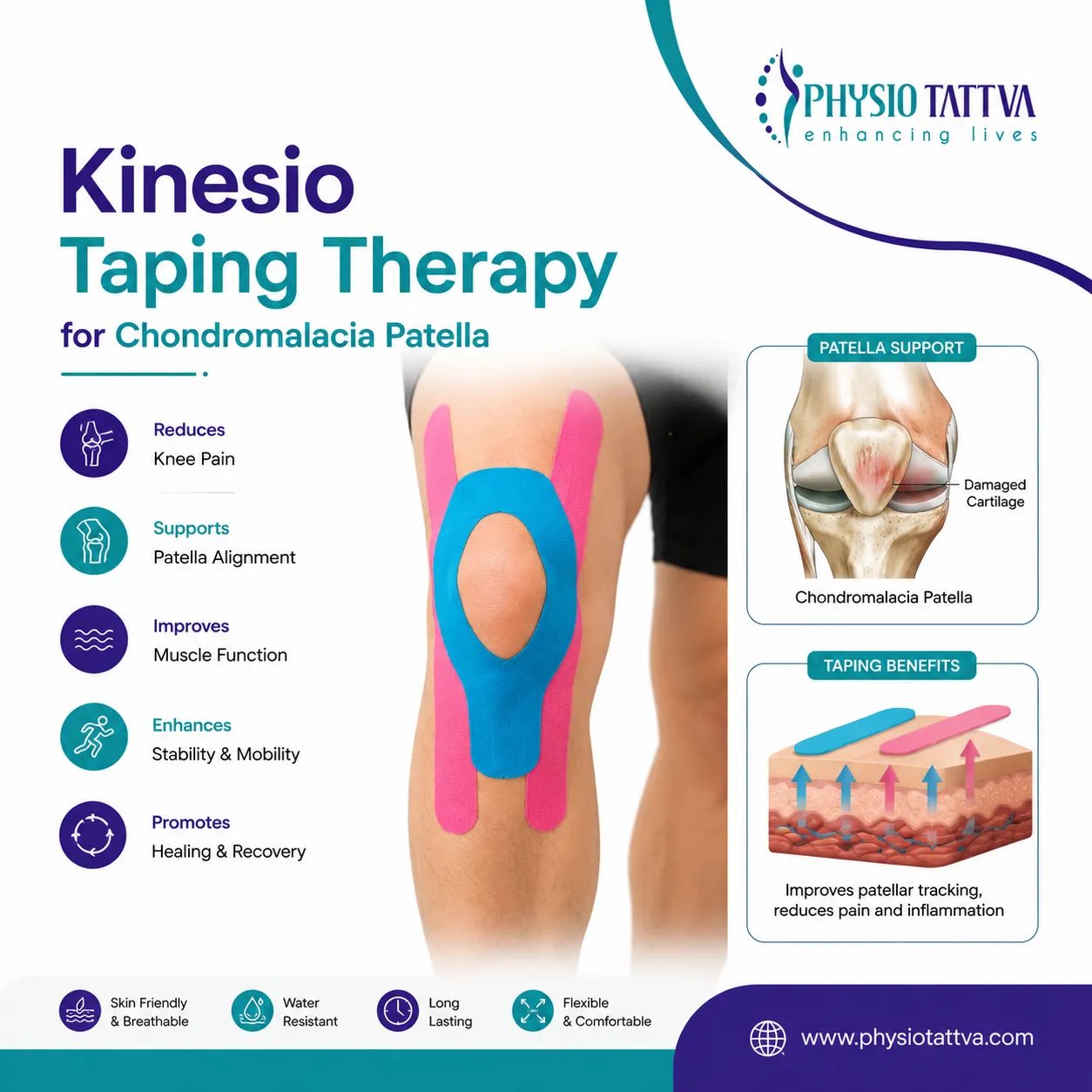
Common Kinesio Taping Techniques for Chondromalacia Patella
Kinesio taping techniques for chondromalacia patella are designed to support proper patellar tracking, reduce pain, and improve muscle activation without restricting knee movement. Before application, the skin should be clean, dry, and free of oils to ensure proper adhesion. The following techniques are commonly used by physiotherapists based on individual assessment and symptoms.
Important: Before applying, ensure the skin is clean, dry, and free of oils or lotions. Round the edges of the tape strips to prevent them from peeling.
General Application Tips
To ensure effective application and optimal results, the following general guidelines should be followed when applying Kinesio tape:
- Anchor: The first and last inch of tape are always applied with zero stretch.
- Stretch: The stretch is applied to the middle section of the tape. For this condition, a light to moderate stretch (25-50%) is typically used.
- Rub to Activate: After applying, rub the tape briskly to activate the heat-sensitive adhesive.
Technique 1: Medial Patellar Glide (Patellar Correction)
This is the most common and effective technique for correcting lateral tracking.
- Position: Sit with your knee bent to about 90 degrees.
- Measure and Cut: Cut one "I" strip about 6 inches long.
- Application:
- Anchor the first inch of the tape on the outer (lateral) edge of the kneecap with no stretch.
- Gently push the kneecap inward (medially) with your other hand.
- Apply a 50% stretch to the middle of the tape as you pull it across the kneecap toward the inside (medial) of the knee.
- Lay down the final inch of the tape on the inside of the knee with no stretch.
- Goal: To pull the patella medially, away from the tight lateral structures.
Technique 2: VMO Facilitation
This technique helps activate the crucial inner quad muscle.
- Position: Straighten your leg as much as possible, tensing your quadriceps to make the VMO muscle visible (it's the teardrop-shaped muscle on the inside of your knee).
- Measure and Cut: Cut a "Y" strip long enough to surround the VMO muscle.
- Application:
- Anchor the base of the "Y" strip below the VMO muscle belly with no stretch.
- Apply a light (15-25%) stretch to the two tails as you lay them around the borders of the VMO muscle.
- Lay the ends of the tails down with no stretch.
- Goal: To provide sensory input to the VMO, encouraging it to contract and stabilize the kneecap.
Technique 3: Decompression and Pain Relief (The "Donut Hole" or "Star")
This application is excellent for general pain relief directly over the sore area.
- Position: Sit with your knee slightly bent (about 30-45 degrees).
- Measure and Cut: Cut two "I" strips, each about 6-8 inches long.
- Application:
- Tear the backing in the middle of the first strip. Apply a moderate (50%) stretch and place the center of the tape directly below the kneecap. Lay the ends down with no stretch.
- Repeat with the second strip, placing it directly above the kneecap and crossing over the first one to form an "X" that frames the patella.
- You can also add two more strips diagonally to create a "star" or "asterisk" shape around the patella for even more decompression.
- Goal: Lift the tissue around the entire patella to reduce pressure and pain.
Benefits and Limitations
Kinesio taping offers several supportive benefits for managing chondromalacia patella symptoms, especially when used alongside physiotherapy. However, it is equally important to understand its limitations to set realistic expectations.
Benefits of Kinesio Taping
When applied correctly by a trained physiotherapist, Kinesio taping can provide the following advantages:
- Provides drug-free pain relief by reducing pressure on pain-sensitive tissues and improving sensory input around the kneecap
- Supports the patellofemoral joint without restricting movement, allowing you to stay active during rehabilitation
- Can be worn continuously for 3–5 days, including during bathing and light activity
- Enhances the effects of physiotherapy by supporting correct movement patterns during exercises
- Improves proprioception and knee awareness, helping the body maintain better alignment during daily activities
Limitations of Kinesio Taping
While helpful, Kinesio taping has certain limitations that must be considered as part of informed care:
- Does not cure chondromalacia patella or repair cartilage damage, but helps manage symptoms
- Effectiveness depends heavily on correct technique, tension, and placement, which is why professional application is recommended
- May cause mild skin irritation in individuals with sensitive skin or adhesive allergies
- Should not be used as a standalone treatment, as underlying muscle imbalances still need to be addressed
- Scientific evidence is still evolving, although clinical outcomes and patient response are often positive
Kinesio taping works best as a supportive tool within a comprehensive rehabilitation plan, rather than as a replacement for physiotherapy, strengthening, and biomechanical correction.
Why Kinesio Taping Works Best as Part of a Complete Rehab Plan
Kinesio taping is a powerful tool, but it is most effective as part of a comprehensive rehabilitation program. To truly resolve Chondromalacia Patella, you must address the underlying causes. This includes:
- Physical Therapy Assessment: A professional can accurately diagnose the cause of your pain and create a tailored exercise program.
- Strengthening: Focus on exercises for the VMO, glutes, and core to improve overall stability and biomechanics.
- Stretching: Regularly stretch tight muscles, such as the hamstrings, IT band, and quadriceps.
- Activity Modification: Temporarily reduce activities that cause pain (like deep squats or running downhill) and gradually reintroduce them.
- Proper Footwear: Ensure your shoes provide adequate support. Orthotics may be necessary if you have significant foot alignment issues.
Disclaimer: This guide is for informational purposes only. Always consult with a qualified physical therapist or medical professional for an accurate diagnosis and guidance on proper taping techniques for your specific condition. They can ensure the tape is applied correctly to achieve the desired effect.
Using Kinesio Taping Effectively for Chondromalacia Patella at Physiotattva
Kinesio taping therapy is an effective, non-invasive support technique for managing chondromalacia patella when used as part of a structured physiotherapy programme. By improving patellar tracking, reducing pain, and enhancing muscle activation, it helps individuals move with greater confidence while protecting the knee during daily and sporting activities. However, lasting relief depends on addressing the underlying causes through proper assessment, targeted strengthening, mobility work, and biomechanical correction. When applied correctly by a trained physiotherapist, Kinesio taping becomes a valuable addition to comprehensive knee rehabilitation, supporting safer movement and long-term recovery.
At Physiotattva physiotherapy clinics in Bangalore and Hyderabad, you receive personalised care tailored to your specific needs, ensuring effective results and comfort throughout your journey to recovery.
Don’t wait to start your recovery! Get in touch with Physiotattva for more details! Contact us at +91 89510 47001.
Why Physiotattva?
22+
50,000+
95%
200+
25+
4.8
Cities We Serve

Bangalore
At Physio Tattva, we are committed to bring access to quality physio care through ultra-modern clinics and high-skilled practitioners to all.
.webp)
Hyderabad
At Physio Tattva, we are committed to bring access to quality physio care through ultra-modern clinics and high-skilled practitioners to all.
.webp)
Vishakhapatnam
At Physio Tattva, we are committed to bring access to quality physio care through ultra-modern clinics and high-skilled practitioners to all.




%20(1)-p-3200.jpeg)


.jpg)
.webp)
.webp)
.webp)