




Chronic back pain from Degenerative Disc Disease (DDD) can limit mobility and quality of life. While traditional treatments focus on symptom management, Pulsed Electromagnetic Field (PEMF) therapy offers a non-invasive, drug-free approach to target pain at a cellular level, promoting healing.
This article explores what DDD and PEMF therapy are, how they intersect, the science behind PEMF, and who can benefit from this promising therapy.
Understanding Degenerative Disc Disease
Degenerative Disc Disease (DDD) isn’t technically a “disease” but a condition caused by wear and tear on the spinal discs. Imagine a jelly donut; the jelly (water content) inside the disc gradually dries out over time, causing the disc to become thinner, less flexible, and less effective at cushioning the vertebrae. As the discs lose their ability to absorb shock, the vertebrae begin to press together, leading to pain and discomfort.
Key Symptoms: The key symptoms of DDD are related to the loss of disc function and can vary depending on the severity of the condition:
- Chronic, nagging low back or neck pain that persists over time
- Pain that worsens with activities like sitting, bending, or lifting
- Numbness or tingling in the arms or legs (radiculopathy/sciatica)
- Stiffness and reduced range of motion, making movement more difficult
This gradual breakdown of the spinal discs can result in ongoing pain, stiffness, and mobility issues, affecting your daily activities and quality of life.
What is Pulsed Electromagnetic Field (PEMF) Therapy?
Pulsed Electromagnetic Field (PEMF) Therapy is a non-invasive treatment that uses low-frequency, pulsed magnetic fields to "recharge" your cells. Essentially, it works like charging your phone, but for your body, sending gentle energy pulses into the tissues to help the cells perform better.
When the body undergoes injury, aging, or chronic conditions, the electrical charge of cells can be disrupted, causing them to function less efficiently. PEMF therapy delivers safe and gentle energy pulses into the tissues, restoring the cells' optimal charge. This process helps the cells function more effectively, repair damage, and reduce inflammation. Think of it as giving your cells a much-needed recharge, enabling them to work at their best for faster healing and pain relief.
How PEMF Therapy Targets Degenerative Disc Disease
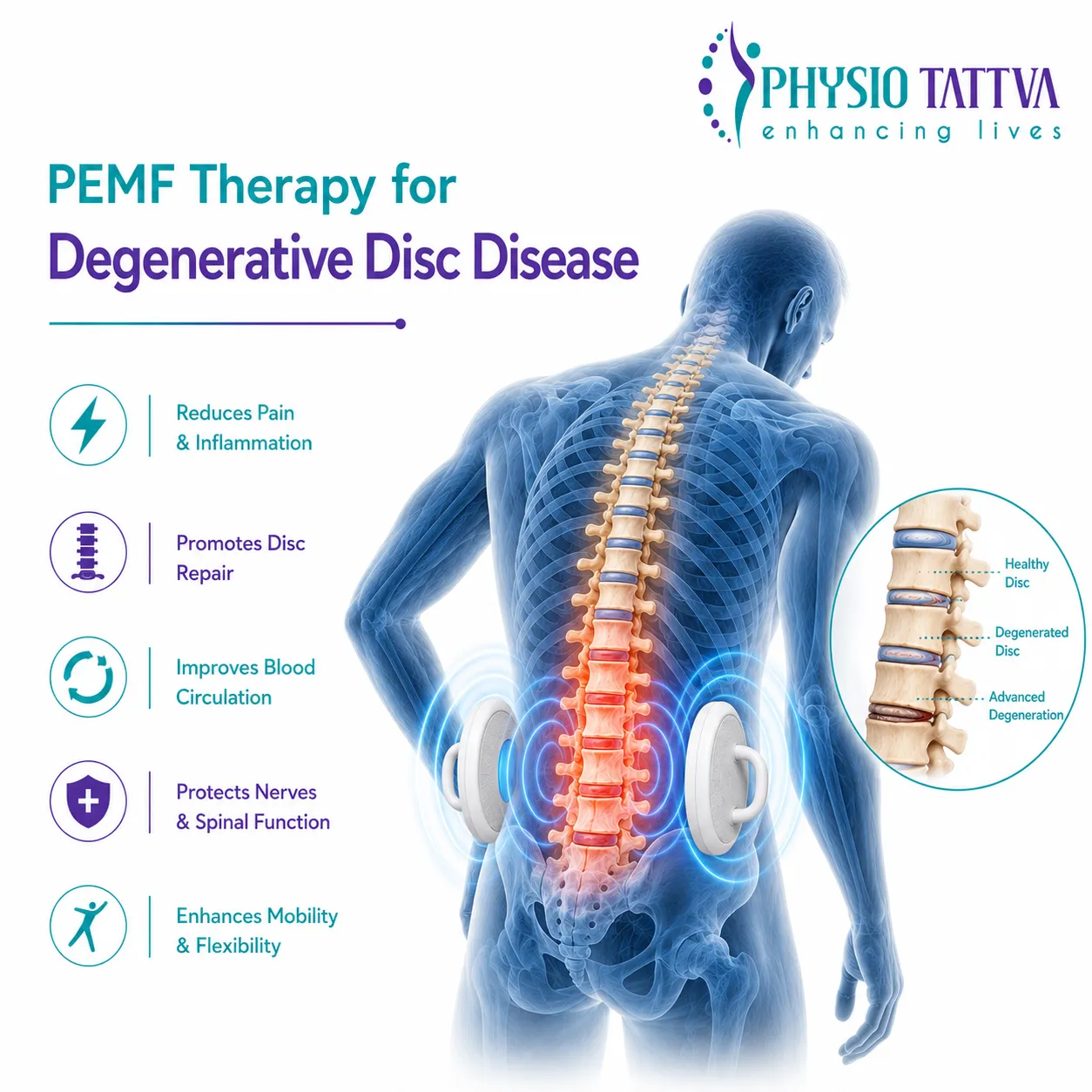
This is the core of how PEMF therapy can help manage Degenerative Disc Disease (DDD) by targeting key issues in the spine and surrounding tissues:
Pain and Inflammation Reduction
PEMF has been shown to modulate the inflammatory response by affecting cytokines and other inflammatory markers. This process directly reduces the inflammation around the affected disc and nerves, leading to significant pain relief and a reduction in the discomfort that often accompanies DDD.
Enhanced Circulation and Nutrient Delivery:
Spinal discs have a very poor blood supply (they are avascular), which is why they heal so slowly. PEMF therapy works by improving microcirculation, helping deliver more oxygen and essential nutrients to the disc and surrounding tissues, while also more efficiently removing metabolic waste that can contribute to further damage.
Stimulation of Cellular Repair and Regeneration:
This is one of the most exciting potential benefits of PEMF therapy. PEMF may stimulate the activity of chondrocytes, the cells responsible for producing and maintaining cartilage in the discs. It also increases the production of ATP (adenosine triphosphate), the energy currency of the cell. More energy means cells can repair damage more effectively and resist further degeneration.
Reduction of Muscle Spasm
Pain from DDD often causes the surrounding back muscles to tense up, creating a painful cycle that can limit movement. PEMF therapy helps relax these muscles, providing further relief and improving mobility, which can lead to better overall function and quality of life.
PEMF Therapy for Degenerative Disc Disease: What to Expect During Treatment
When you undergo PEMF therapy, the process is straightforward, non-invasive, and generally comfortable. Here’s what you can expect during your treatment sessions:
- Treatment Process: You’ll typically lie down in a comfortable position while a PEMF device is placed near the affected area of your spine or body. The device delivers low-frequency magnetic pulses to stimulate the tissues and cells.
- Session Duration: A typical PEMF session lasts anywhere from 15 to 30 minutes, depending on the severity of your condition and the areas being treated. Multiple sessions may be recommended for optimal results.
- Comfort During Treatment: Most patients experience no pain during PEMF therapy, though some might feel a mild tingling sensation. The therapy is completely non-invasive and does not require any recovery time, allowing you to resume daily activities right away.
- Expected Results: Many patients report feeling immediate relief after just a few sessions, while others experience more gradual improvement over time. Consistency is key for the best results, and your healthcare provider will guide you on the frequency of treatments based on your specific needs.
Who is a Good Candidate for PEMF Therapy?
PEMF therapy can be a great option for those suffering from Degenerative Disc Disease (DDD), but it's not suitable for everyone. Here’s who can benefit and who should avoid it:
Ideal Candidates
PEMF therapy can be a great choice for the following individuals:
- Individuals with chronic pain due to diagnosed Degenerative Disc Disease (DDD)
- Those seeking non-invasive, drug-free treatment options
- Patients aiming to avoid or delay surgery
- People using PEMF as a complementary therapy alongside physical therapy or chiropractic care
Contraindications (Crucial Safety Information)
There are a few safety considerations to keep in mind when considering PEMF therapy:
- Individuals with pacemakers or other implanted electronic devices
- Pregnant women
- Patients with active cancer (always consult an oncologist)
- Always consult a healthcare professional before starting any new therapy.
Take Control of Degenerative Disc Disease with PEMF Therapy
Degenerative Disc Disease (DDD) can lead to chronic pain and limited mobility, but PEMF therapy offers a non-invasive, drug-free solution. By reducing inflammation, improving circulation, and supporting cellular repair, PEMF provides a comprehensive approach to managing symptoms. It’s a safe, effective option for those looking to regain control over their condition and improve their quality of life.
If you’re ready to explore your options, consult with your doctor, physical therapist, or a qualified practitioner to see how PEMF therapy can benefit you.
At Physiotattva physiotherapy clinics in Bangalore and Hyderabad, you receive personalised care tailored to your specific needs, ensuring effective results and comfort throughout your journey to recovery.
Don’t wait to start your recovery! Get in touch with Physiotattva for more details! Contact us at +91 89510 47001.
Why Physiotattva?
22+
50,000+
95%
200+
25+
4.8
Cities We Serve

Bangalore
At Physio Tattva, we are committed to bring access to quality physio care through ultra-modern clinics and high-skilled practitioners to all.
.webp)
Hyderabad
At Physio Tattva, we are committed to bring access to quality physio care through ultra-modern clinics and high-skilled practitioners to all.
.webp)
Vishakhapatnam
At Physio Tattva, we are committed to bring access to quality physio care through ultra-modern clinics and high-skilled practitioners to all.
Core Treatments
Core Conditions
Core Symptoms
Frequently Asked Questions
Is PEMF therapy painful or safe for DDD?

How many PEMF sessions will I need for my Degenerative Disc Disease?
Can PEMF therapy cure DDD?
How soon will I see results from PEMF therapy?
Why choose Physiotattva for my DDD treatment?






%20(1)-p-3200.jpeg)


.jpg)
.webp)
.webp)
.webp)