





Persistent numbness, tingling, and wrist pain from Carpal Tunnel Syndrome (CTS) can make everyday tasks difficult, especially when splinting or stretching offers only short-term relief. Dry needling therapy for Carpal Tunnel Syndrome is an evidence-based physiotherapy approach that targets tight forearm muscles contributing to nerve compression.
This article explores how dry needling helps reduce CTS symptoms and restore hand function.
Understanding Carpal Tunnel Syndrome
Carpal Tunnel Syndrome occurs when the median nerve, which runs from your forearm into your hand, becomes compressed or squeezed at the wrist. This compression leads to the classic symptoms:
- Numbness and tingling in the thumb, index, middle, and ring fingers
- Weakness in grip strength
- Burning pain in the hand and wrist, often worse at night
- Pain that radiates up the forearm
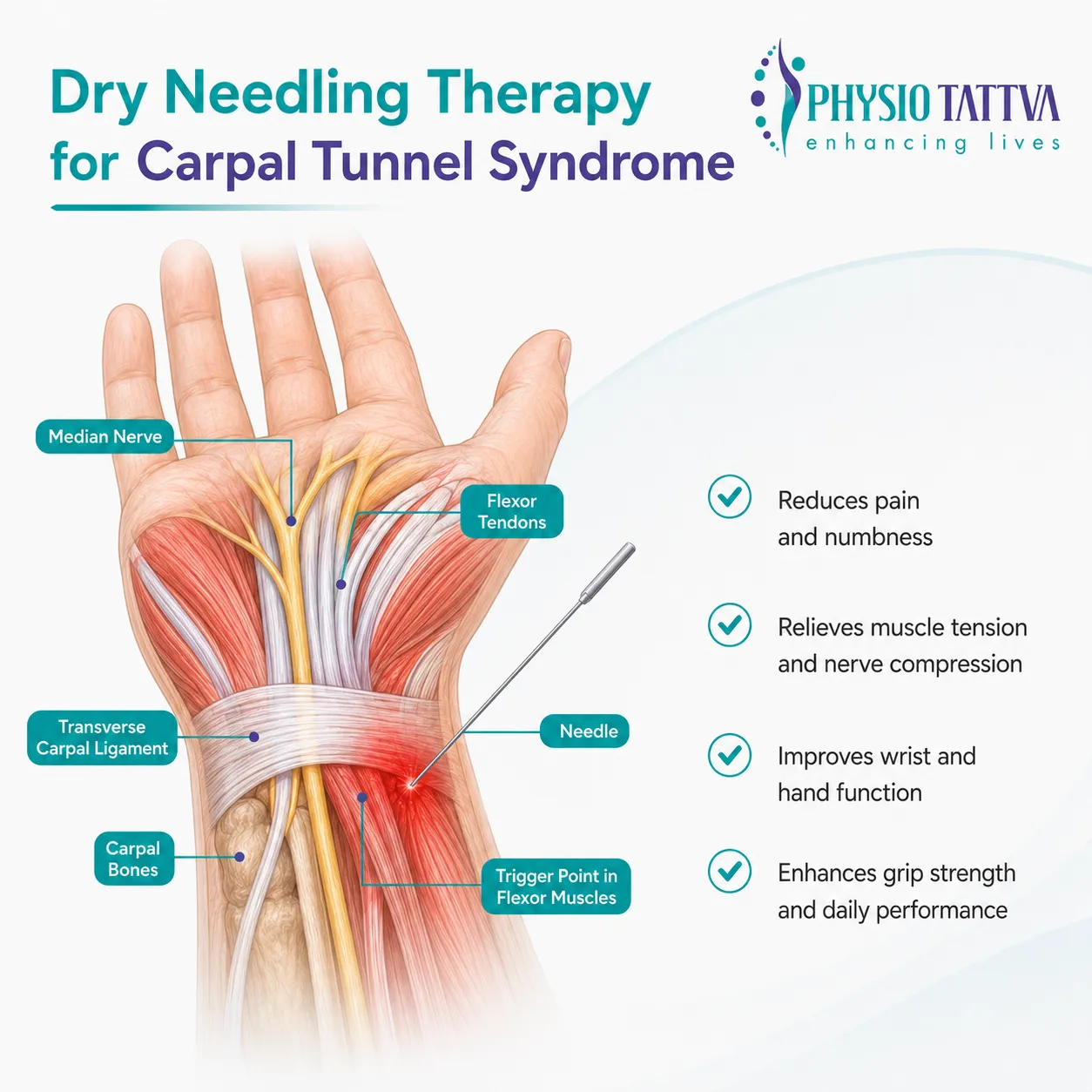
While the problem manifests at the wrist, the cause is often linked to overuse and tension in the muscles of the forearm. These muscles, when tight and overworked, develop "trigger points" (or muscle knots) that can contribute directly to nerve compression and referred pain in the hand.
How Dry Needling Works for Carpal Tunnel Syndrome
Dry needling is not acupuncture. It is a skilled intervention based on modern Western medicine and anatomy, performed by a trained physical therapist or clinician. It uses a very thin filiform needle to penetrate the skin and stimulate underlying myofascial trigger points in the muscle.
Here’s how dry needling therapy for Carpal Tunnel Syndrome provides relief:
Releasing Forearm Muscle Trigger Points
Your therapist will first assess your forearm to identify specific, tight bands of muscle (flexors and pronators) that are contributing to the compression of your median nerve. The needle is inserted into these trigger points, eliciting a "local twitch response." This is an involuntary reflex that causes the muscle fiber to contract and then relax, effectively "releasing the knot" and relieving tension.
Reducing Inflammation and Improving Blood Flow
The insertion of the needle creates a micro-lesion that triggers a natural healing response from your body. This increases blood flow to the area, which helps to flush out inflammatory chemicals and deliver oxygen-rich blood to promote tissue healing.
Decompressing the Median Nerve
By releasing the chronic tension in the forearm muscles, dry needling helps to reduce the overall mechanical stress and pull on the tendons that pass through the carpal tunnel. This directly alleviates pressure on the median nerve, which is the ultimate goal of any CTS treatment.
What to Expect During Your Dry Needling Session
Understanding what happens during a dry needling session can help you feel more comfortable and confident about the treatment. Each session is carefully planned to ensure safety, precision, and maximum therapeutic benefit.
- Assessment: Your physiotherapist will perform a detailed evaluation of your wrist, hand, and forearm to identify tight muscles and trigger points contributing to your CTS symptoms.
- Treatment: You’ll be positioned comfortably while the therapist cleans the area and inserts a sterile, single-use needle into the targeted trigger points. A brief muscle cramp or “local twitch response” may occur, which indicates effective muscle release.
- Post-Treatment Sensation: Mild soreness, similar to post-exercise muscle ache, is common and usually resolves within 24–48 hours.
- Aftercare Guidance: You’ll receive specific stretching, mobility, or strengthening exercises to enhance results and support long-term symptom relief.
Key Benefits of Dry Needling for Carpal Tunnel Syndrome
Dry needling offers both symptom relief and functional improvement by addressing the muscular factors contributing to Carpal Tunnel Syndrome. When used as part of a physiotherapy program, it can support faster and more sustainable recovery.
- Reduces Pain and Numbness: Targets tight forearm muscles that contribute to median nerve compression.
- Improves Grip Strength: Restores normal muscle activation, making daily tasks easier and less painful.
- Increases Wrist and Hand Mobility: Helps relieve stiffness and improves overall range of motion.
- Minimally Invasive Treatment: A non-surgical approach that may reduce the need for injections or surgery.
- Part of a Comprehensive Plan: Works best when combined with therapeutic exercises, manual therapy, and ergonomic corrections.
Personalised Dry Needling Care for CTS Recovery at Physiotattva
Dry needling therapy for Carpal Tunnel Syndrome offers a precise, evidence-based approach to relieving pain, numbness, and wrist discomfort by addressing the muscular causes of median nerve compression. When combined with physiotherapy exercises and ergonomic corrections, it can support lasting symptom relief and functional recovery. If CTS symptoms are affecting your daily activities, consulting a qualified physiotherapist can help determine whether dry needling is the right treatment for your condition.
At Physiotattva physiotherapy clinics in Bangalore, Hyderabad and Vizag you receive personalised care tailored to your specific needs, ensuring effective results and comfort throughout your journey to recovery.
Don’t wait to start your recovery! Get in touch with Physiotattva for more details! Contact us at +91 89510 47001.
Why Physiotattva?
22+
50,000+
95%
200+
25+
4.8
Cities We Serve

Bangalore
At Physio Tattva, we are committed to bring access to quality physio care through ultra-modern clinics and high-skilled practitioners to all.
.webp)
Hyderabad
At Physio Tattva, we are committed to bring access to quality physio care through ultra-modern clinics and high-skilled practitioners to all.
.webp)
Vishakhapatnam
At Physio Tattva, we are committed to bring access to quality physio care through ultra-modern clinics and high-skilled practitioners to all.
Core Treatments
Core Conditions
Core Symptoms
Frequently Asked Questions
Is dry needling for CTS painful?

How many dry needling sessions will I need for CTS?
Who is a good candidate for dry needling for CTS?
Is dry needling the same as acupuncture?






%20(1)-p-3200.jpeg)


.jpg)
.webp)
.webp)
.webp)