




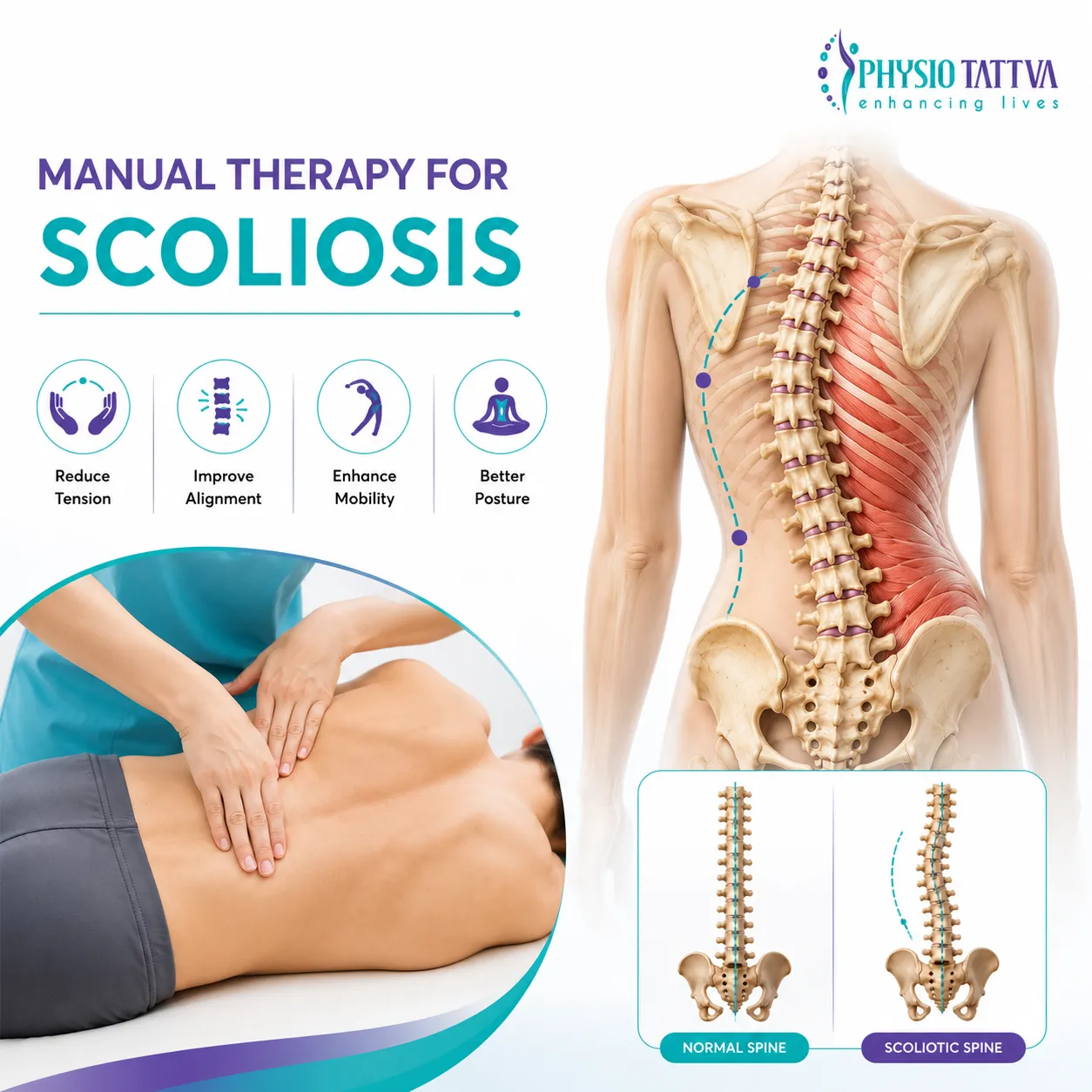
Manual therapy for scoliosis is a hands-on, conservative treatment approach focused on managing pain, muscle imbalance, stiffness, and movement limitations caused by spinal curvature. While it does not correct or reverse the structural curve, manual therapy plays a vital supportive role by improving mobility, reducing discomfort, and enhancing posture awareness. When combined with scoliosis-specific exercises and postural training, it helps improve daily function, comfort, and overall quality of life for individuals with scoliosis.
What is Manual Therapy in the Context of Scoliosis?
Manual therapy refers to specialised, hands-on techniques used by trained practitioners to diagnose and treat musculoskeletal issues. In the context of scoliosis, these techniques are not aimed at correcting the Cobb angle (the measure of the curve) but at addressing the significant soft tissue and joint dysfunctions that result from the spinal asymmetry.
The primary goals are to:
- Relieve Pain: By releasing muscle tension, reducing inflammation, and improving circulation.
- Improve Mobility: By addressing joint restrictions in the spine, ribs, and pelvis.
- Correct Muscle Imbalances: By lengthening tight, overworked muscles (typically on the concave side of the curve) and facilitating the activation of weak, overstretched muscles (on the convex side).
- Enhance Respiratory Function: By mobilizing the rib cage to improve diaphragm movement and lung capacity.
- Improve Body Awareness (Proprioception): Helping the patient better sense their posture and alignment.
Key Principles of Manual Therapy for Scoliosis
Before starting manual therapy for scoliosis, it is important to understand its purpose, limitations, and how it fits within a broader, evidence-based treatment approach guided by trained professionals.
- Not a Cure: Manual therapy cannot cure or reverse the structural spinal curve of scoliosis. Its primary role is not to straighten the spine.
- Symptom Management: It is an effective complementary treatment for managing secondary symptoms associated with scoliosis, such as pain, muscle imbalances, stiffness, and reduced mobility.
- Comprehensive Approach: Manual therapy is most effective when integrated into a comprehensive treatment plan that includes scoliosis-specific exercises (such as the Schroth Method), postural education, and, when necessary, bracing or surgical consultation.
- Qualified Practitioner Is Essential: Seek a physical therapist, osteopath, chiropractor, or licensed massage therapist who has specific training and experience in treating scoliosis.
Common Manual Therapy Techniques Used for Scoliosis
Different practitioners will use a combination of techniques based on the patient’s specific curve pattern, symptom severity, age, and functional limitations. These hands-on approaches are carefully selected to address soft tissue restrictions, joint stiffness, and movement imbalances associated with scoliosis.
Soft Tissue Mobilization / Therapeutic Massage
This involves applying pressure and movement to muscles, ligaments, and tendons. For scoliosis, a therapist will focus on releasing trigger points and reducing hypertonicity (excess tension) in the muscles of the back, shoulders, and hips that are compensating for the curve.
Myofascial Release (MFR)
This technique targets the fascia, the web of connective tissue that encases muscles and organs. In scoliosis, the fascia becomes restricted and pulls the body into the pattern of the curve. MFR uses slow, sustained pressure to gently stretch and release these fascial restrictions, improving flexibility and reducing a "pulling" sensation.
Joint Mobilization
This involves gentle, passive, rhythmic movements applied to a spinal or rib joint to restore its normal motion (joint play). This is different from a high-velocity manipulation. It can be very effective for "unlocking" stiff segments of the spine and improving overall spinal mobility.
Muscle Energy Techniques (MET)
A technique where the patient actively participates. The therapist positions a muscle or joint at its restricted barrier, and the patient gently contracts the muscle against the therapist's resistance. Following the contraction, the muscle relaxes, allowing it to be stretched further. This is excellent for resetting muscle tone and improving range of motion.
Craniosacral Therapy (CST)
A very gentle technique focused on the membranes and cerebrospinal fluid that surround the brain and spinal cord. Proponents believe it can help release dural tension that may be contributing to spinal patterns and improve the overall function of the nervous system.
Visceral Manipulation
This specialized technique addresses the mobility and motility of the internal organs (viscera). The fascia connecting the organs to the spine can create tension patterns. Releasing these restrictions can sometimes have a positive, indirect effect on spinal mobility and comfort.
The Role and Realistic Goals of Manual Therapy
It is crucial to have realistic expectations when using manual therapy for scoliosis. Understanding what this approach can and cannot achieve helps patients make informed decisions and set appropriate treatment goals.
What Manual Therapy Can Do for Scoliosis:
- Help manage and reduce pain caused by muscle strain and tension
- Improve flexibility and overall range of motion in the spine and surrounding joints
- Address muscle imbalances to support better posture and movement patterns
- Improve breathing mechanics by mobilizing stiff rib segments
- Increase comfort for individuals who wear a scoliosis brace
- Prepare the body for scoliosis-specific exercises and postural correction programs
What Manual Therapy Cannot Do for Scoliosis:
- Cure or reverse a structural spinal curve
- Stop the progression of a curve in adolescents during growth spurts
- Replace the need for bracing or surgery in severe or progressive cases
- Act as a standalone treatment for progressive scoliosis
Integration with Scoliosis-Specific Physical Therapy (PSSE)
The "gold standard" conservative treatment for scoliosis involves Scoliosis-Specific Physical Therapy Exercises (PSSEs), with the most well-known being the Schroth Method.
Manual therapy and PSSEs work in perfect synergy:
- Manual therapy prepares the body: By releasing tight muscles and mobilizing stiff joints, the therapist makes it easier for the patient to get into the corrective positions required by the Schroth exercises.
- PSSEs reinforce the changes: The exercises then strengthen the muscles in their newly lengthened positions, improve postural control, and teach the patient how to actively maintain a more neutral alignment throughout the day.
Finding a Qualified Practitioner
When seeking manual therapy for scoliosis, look for a provider with specific expertise.
- Credentials: Physical Therapists (PT, DPT), Osteopathic Physicians (DO), Chiropractors (DC), and Licensed Massage Therapists (LMT) can all perform manual therapy.
- Key Consideration: The most important factor is not the license, but their post-graduate training and experience with scoliosis.
- Questions to Ask a Potential Provider:
- "What is your experience treating patients with scoliosis?"
- "What specific manual therapy techniques do you use for scoliosis and why?"
- "What are your goals when treating someone with scoliosis?" (If they promise to "fix" the curve, be wary).
- "Do you collaborate with other healthcare professionals, like orthopedic surgeons or Schroth therapists?"
Personalised Manual Therapy for Scoliosis Care at Physiotattva
Manual therapy for scoliosis plays an important supportive role in managing pain, improving mobility, and addressing muscle imbalances associated with spinal curvature. While it does not correct the structural curve, it can significantly enhance comfort, posture awareness, and daily function when combined with scoliosis-specific exercises and guided physiotherapy. With realistic expectations and treatment delivered by a qualified practitioner, manual therapy can be a valuable part of a comprehensive, conservative scoliosis management plan focused on long-term function and quality of life.
At Physiotattva physiotherapy clinics in Bangalore and Hyderabad, you receive personalised care tailored to your specific needs, ensuring effective results and comfort throughout your journey to recovery.
Don’t wait to start your recovery! Get in touch with Physiotattva for more details! Contact us at +91 89510 47001.
Why Physiotattva?
22+
50,000+
95%
200+
25+
4.8
Cities We Serve

Bangalore
At Physio Tattva, we are committed to bring access to quality physio care through ultra-modern clinics and high-skilled practitioners to all.
.webp)
Hyderabad
At Physio Tattva, we are committed to bring access to quality physio care through ultra-modern clinics and high-skilled practitioners to all.
.webp)
Vishakhapatnam
At Physio Tattva, we are committed to bring access to quality physio care through ultra-modern clinics and high-skilled practitioners to all.
Core Treatments
Core Conditions
Core Symptoms
Frequently Asked Questions
What is manual therapy for scoliosis?

Can manual therapy straighten my spine or cure scoliosis?
What are the specific benefits of manual therapy for scoliosis?
Is manual therapy safe for someone with scoliosis?
What kind of professional should I see for scoliosis manual therapy?




%20(1)-p-3200.jpeg)


.jpg)
.webp)
.webp)
.webp)