





Managing an ankle sprain effectively involves controlling pain, swelling, and joint instability without limiting movement. Kinesio taping therapy provides elastic support that works with the body’s natural mechanics to aid recovery. It helps improve circulation, muscle activation, and joint awareness during rehabilitation.
This article explores how Kinesio taping therapy supports ankle sprain healing, its benefits, and proper application techniques to promote safe and functional recovery.
What is Kinesio Taping?
Kinesio tape is not your standard rigid athletic tape. It's a therapeutic elastic cotton tape with an acrylic adhesive. Its key feature is its ability to stretch up to 140% of its original length, mimicking the elasticity of human skin. This unique property allows it to provide support and stability without restricting the body's natural range of motion.
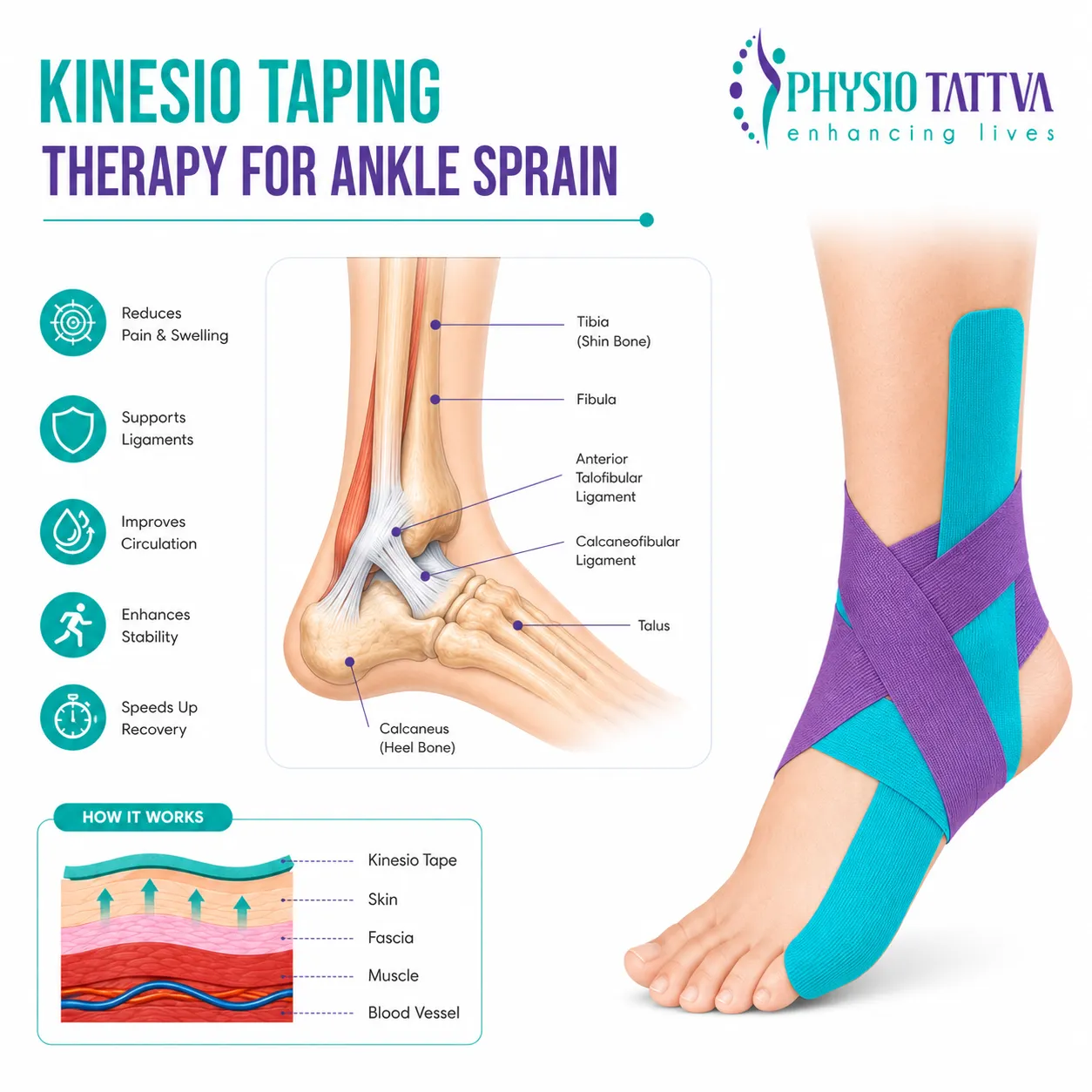
How Does Kinesio Taping Therapy Work for an Ankle Sprain?
Kinesio taping works by influencing the interaction between the skin, muscles, and nervous system rather than simply restricting movement. When applied using correct tension and placement, the tape supports the injured ankle while allowing natural motion, helping manage pain, swelling, and stability throughout the healing process.
When applied correctly, Kinesio tape interacts with the skin and underlying tissues to achieve several therapeutic goals simultaneously:
- Pain Relief (Neurological Effect): The tape gently lifts the skin, creating a microscopic space between the skin and the underlying tissues. This decompresses pain receptors (nociceptors) in the area, reducing pain signals sent to the brain. This is often referred to as the "Gate Control Theory" of pain.
- Swelling and Bruising Reduction (Lymphatic Drainage): Ankle sprains are notorious for causing significant swelling (edema) and bruising (ecchymosis). The same lifting mechanism that relieves pain also creates channels for lymphatic fluid to flow more effectively. This helps drain excess fluid and cellular waste from the injured area, visibly reducing swelling and bruising faster than without taping.
- Functional Support and Stability (Proprioception): The tape provides a constant sensory stimulus to the skin over your ankle. This feedback enhances your brain's awareness of the joint's position in space (proprioception). After a sprain, this sense is often diminished. The tape essentially "wakes up" the muscles around the ankle, encouraging them to stabilize the joint and prevent re-injury.
- Assisting Muscle Function: Depending on the direction and tension of the application, the tape can either help relax overused, painful muscles or facilitate the function of weak, underactive muscles.
Key Benefits of Using Kinesio Tape for Ankle Sprains
Kinesio taping offers multiple therapeutic benefits that support ankle sprain recovery while allowing safe, functional movement. When used as part of a structured physiotherapy programme, it helps manage pain and swelling, improves joint awareness, and provides ongoing support during daily activities and rehabilitation exercises.
- Drug-Free Pain Management: Provides significant pain relief without medication.
- Accelerated Swelling Reduction: Helps clear bruising and edema more quickly.
- Maintained Range of Motion: Supports the joint without immobilising it like a rigid brace.
- Enhanced Proprioceptive Feedback: Helps prevent instability and re-injury.
- Wearable for Days: Can be worn 24/7 for 3-5 days, even in the shower, providing continuous therapy.
How to Apply Kinesio Tape for an Ankle Sprain: Step-by-Step Techniques
Correct application of Kinesio tape is essential to achieve optimal pain relief, swelling control, and joint support. When applied with proper tension and placement, the tape supports healing while allowing natural ankle movement. The following step-by-step techniques outline commonly used taping methods for ankle sprains; however, professional assessment is always recommended for new or severe injuries.
Preparation is Key
Proper preparation ensures better tape adhesion, comfort, and effectiveness throughout the treatment period.
- Clean and Dry Skin: The area must be free of oils, lotions, and sweat. Use rubbing alcohol to clean the skin for the best adhesion.
- Trim Hair: If the area is hairy, trim the hair for better stick and less pain on removal.
- Round the Edges: Cut the corners of your tape strips into a rounded shape. This prevents the corners from catching on clothing and peeling prematurely.
Technique 1: Basic Ankle Stability (For Lateral/Inversion Sprains)
This technique is designed to support the ligaments on the outer side of the ankle, which are commonly injured during inversion sprains. It helps improve joint stability while allowing controlled movement. You will need three strips of Kinesio tape.
Strip 1: The Anchor Stirrup
This strip forms the foundation of the taping technique by supporting the heel and limiting excessive inversion movement.
- Measure: Sit with your foot at a 90-degree angle. Measure a strip from the bony bump on the inside of your ankle (medial malleolus), down under your heel, and up to the bony bump on the outside of your ankle (lateral malleolus).
- Apply: Tear the backing paper in the middle of the strip. Apply the center of the tape directly under your heel with 50–75% stretch.
- Secure: Point your toes up (dorsiflexion). Lay down the inside end of the tape with zero stretch. Then, gently pull your foot outwards (eversion) and lay down the outside end of the tape, again with zero stretch.
Strip 2: The Heel Lock for Stability
This strip enhances ankle control by reinforcing support around the heel and reducing unwanted joint movement during walking and activity.
- Measure: Measure a longer strip, about 10–12 inches.
- Apply: Find the middle of this strip and place it on the back of your heel (Achilles tendon).
- Lock the Inside: Take the inside piece of tape, wrap it under your foot, and pull it up and across the front of your ankle, ending on the outside. Apply with 50% stretch as you wrap, laying the end down with no stretch.
- Lock the Outside: Repeat with the outside piece, wrapping it under the foot and pulling it up and across the front of the ankle, ending on the inside.
Strip 3: The Frontal Support
This strip provides additional support across the front of the ankle and helps manage pain and swelling in this commonly affected area.
- Measure: Measure a strip long enough to wrap around the front of your ankle.
- Apply: Tear the backing in the middle. With a 25–50% stretch, apply the center of the tape over the front of the ankle, where the pain and swelling are most prominent. Lay the ends down on either side with no stretch.
Technique 2: Lymphatic Drainage for Swelling (The Fan Cut)
This technique is specifically used when swelling and bruising are significant, helping encourage lymphatic drainage without compressing tissues.
Fan Cut Preparation
Preparing the tape correctly is essential to maximise its swelling-reduction effect.
- Measure & Cut:
Measure a strip from just above the swelling to a clear “drainage” area (like behind your knee or up your shin). Cut the strip into 4–5 thin “tentacles,” leaving a solid 2-inch base at the end. This is the “fan” or “jellyfish” cut.
Application
This step focuses on gently lifting the skin to promote fluid movement while avoiding pressure on swollen tissues.
- Apply the Anchor:
Place the solid base of the tape on an area with no swelling, above the injury. - Lay the Tentacles:
One by one, gently lay the tentacles over the swollen and bruised area in a wave-like pattern. It is critical to apply these tentacles with ZERO stretch. The goal is only to lift the skin.
Enhancing Ankle Stability and Recovery Through Kinesio Taping at Physiotattva
Kinesio taping therapy is a valuable support tool in ankle sprain rehabilitation, offering pain relief, swelling control, and functional stability without limiting natural movement. When applied correctly, it enhances joint awareness, supports muscle function, and allows safe activity during recovery. While effective on its own, Kinesio taping works best as part of a structured physiotherapy programme that includes strengthening, mobility, and balance training, helping ensure a safer return to daily activities and sport.
At Physiotattva physiotherapy clinics in Bangalore, Hyderabad, and Vizag you receive personalised care tailored to your specific needs, ensuring effective results and comfort throughout your journey to recovery.
Don’t wait to start your recovery! Get in touch with Physiotattva for more details! Contact us at +91 89510 47001.
Why Physiotattva?
22+
50,000+
95%
200+
25+
4.8
Cities We Serve

Bangalore
At Physio Tattva, we are committed to bring access to quality physio care through ultra-modern clinics and high-skilled practitioners to all.
.webp)
Hyderabad
At Physio Tattva, we are committed to bring access to quality physio care through ultra-modern clinics and high-skilled practitioners to all.
.webp)
Vishakhapatnam
At Physio Tattva, we are committed to bring access to quality physio care through ultra-modern clinics and high-skilled practitioners to all.
Core Treatments
Core Conditions
Core Symptoms
Frequently Asked Questions
Can I apply Kinesio tape myself?

How long should I wear the tape?
Does the color of the tape matter?
When should I NOT use Kinesio tape?
Is Kinesio tape enough for my ankle sprain?






%20(1)-p-3200.jpeg)


.jpg)
.webp)
.webp)
.webp)