




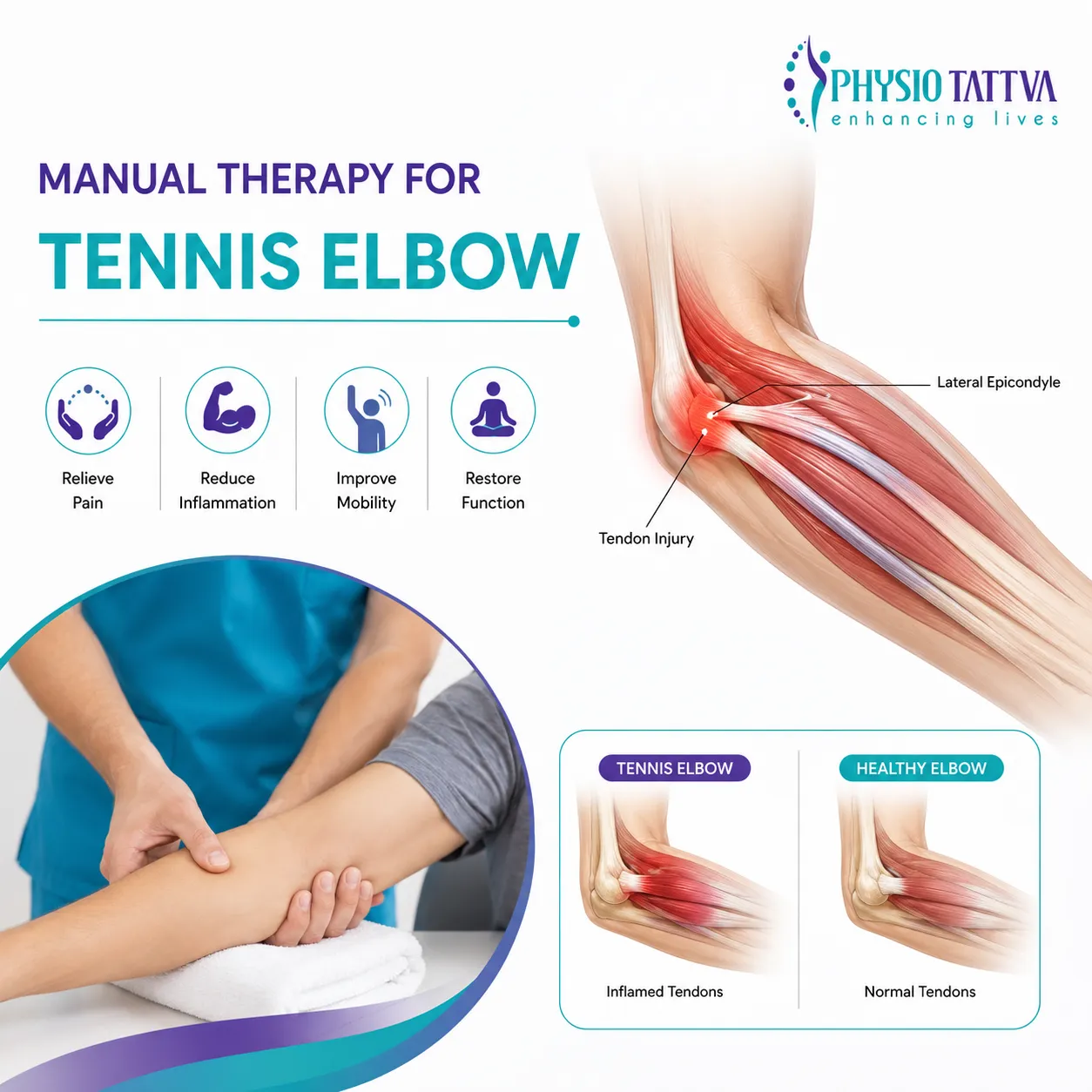
Tennis elbow, also known as lateral epicondylalgia or lateral epicondylitis, is a common condition causing pain on the outside of the elbow. While it’s often associated with tennis players, it can affect anyone due to repetitive strain on the wrist extensor muscles that attach to the lateral epicondyle (the bony bump on the outer elbow).
Manual therapy, a hands-on approach used by physical therapists, chiropractors, and osteopaths, plays a key role in the non-surgical management of tennis elbow. It focuses on reducing pain, improving mobility, and restoring function to the affected muscles, tendons, and joints.
Core Concepts: Understanding Tennis Elbow and Manual Therapy
Tennis elbow is a frequent overuse injury that causes discomfort on the outer elbow. Manual therapy, involving hands-on techniques, is highly effective in treating this condition by targeting pain sources and helping to accelerate the healing process.
What is Tennis Elbow (Lateral Epicondylitis)?
Tennis elbow, or lateral epicondylitis, is an overuse injury affecting the tendons that connect the forearm muscles to the outside of the elbow. Repetitive motions like gripping and lifting lead to small tears and inflammation in these tendons, causing pain and weakness.
How Manual Therapy Helps Treat Tennis Elbow?
Manual therapy for tennis elbow involves hands-on techniques such as soft tissue mobilisation, joint mobilisation, and neural mobilisation to reduce pain, improve mobility, and restore function. It addresses the root causes of pain, like muscle tightness and poor joint mechanics, to support faster recovery.
How Manual Therapy Helps Relieve Tennis Elbow Pain?
Manual therapy is an evidence-based and highly effective treatment for tennis elbow. It involves a combination of techniques, including soft tissue mobilisation, joint mobilisation, and neural mobilisation, aimed at reducing pain and improving function.
- Soft Tissue mobilisation helps reduce muscle tension and break down adhesions.
- Joint mobilisation, including Mulligan's mobilisation with Movement (MWM), helps restore joint mechanics, alleviating pain and improving movement.
- Neural Mobilisation addresses nerve restrictions that contribute to pain.
Combining manual therapy with a targeted exercise program, particularly eccentric strengthening, significantly enhances recovery and helps prevent recurrence. Always consult with a qualified professional, such as a Physical Therapist, Chiropractor, or Osteopath, who is trained in manual therapy for the best results.
Key Manual Therapy Techniques for Tennis Elbow
Manual therapy is not a single technique but a category of treatments. For tennis elbow, a therapist will often use a combination of the following approaches.
Soft Tissue Mobilisation (STM)
This involves applying direct, hands-on pressure to muscles, tendons, and fascia (the connective tissue surrounding muscles) to reduce tension, break down adhesions (scar tissue), and improve blood flow.
- Deep Friction Massage (DFM): Specifically targeting the extensor tendon at the lateral epicondyle, DFM involves applying small, precise, and deep movements perpendicular to the tendon fibres. To create a localised inflammatory response that stimulates healing, realigns collagen fibres, and breaks down scar tissue.
- Myofascial Release (MFR): This technique applies sustained, gentle pressure to the wrist extensor muscle group (in the forearm) to release restrictions in the fascia. To relieve muscle tightness and improve the muscle's ability to glide smoothly, reducing pull on the tendon.
- Instrument-Assisted Soft Tissue Mobilisation (IASTM): Using specifically designed tools (like Graston™ or Astym™), a therapist can effectively detect and treat fascial restrictions and scar tissue. To amplify the effects of manual soft tissue work, allowing for deeper and more specific treatment.
Joint Mobilisation and Manipulation
Pain and stiffness in the elbow are often accompanied by subtle mechanical issues in nearby joints. Mobilising these joints can provide significant and immediate pain relief.
- Elbow Joint Mobilisations: Gentle, passive movements are applied to the elbow joint (specifically the radiocapitellar joint) to restore normal joint mechanics or "joint play." This can immediately reduce pain and improve the range of motion in elbow extension and forearm rotation.
- Mulligan's Mobilisation with Movement (MWM): This is a highly effective technique for tennis elbow. The therapist applies a specific, pain-free gliding force to the elbow joint while the patient actively performs the painful movement (e.g., making a fist, lifting an object). To correct a minor "positional fault" in the joint, leading to immediate and often dramatic reductions in pain and improvements in grip strength.
- Cervical and Thoracic Spine Mobilisation/Manipulation: The nerves that supply sensation and muscle function to the arm (including the radial nerve, implicated in tennis elbow) originate in the neck (cervical spine). Stiffness or dysfunction in the neck or upper back (thoracic spine) can contribute to elbow pain. Mobilising these spinal segments can reduce nerve irritation and have a powerful pain-relieving effect on the entire arm.
Neural Mobilisation (Neurodynamics)
The radial nerve runs down the back of the arm and can become irritated or "stuck" along its path, mimicking or contributing to the symptoms of tennis elbow.
- Nerve Gliding/Flossing: This involves a sequence of gentle, specific movements of the neck, shoulder, elbow, and wrist designed to "floss" the radial nerve, helping it slide freely through the surrounding tissues. To improve nerve mobility, reduce neural tension, and decrease pain originating from nerve irritation.
How Does Manual Therapy Help Tennis Elbow?
Manual therapy offers several benefits that directly address the underlying causes of pain and dysfunction in tennis elbow. Below are the key ways in which manual therapy supports recovery:
- Pain Modulation: Joint and soft tissue mobilisation can stimulate nerve endings that block pain signals to the brain (the "Gate Control Theory of Pain").
- Improved Blood Flow: Massage and STM techniques increase circulation to the forearm muscles and tendons, delivering oxygen and nutrients essential for healing.
- Reduced Muscle Tension: Releasing trigger points and fascial restrictions in the wrist extensor muscles decreases the chronic pulling force on the painful tendon.
- Breakdown of Adhesions: Techniques like DFM and IASTM help break down dysfunctional scar tissue, allowing healthier tissue to form in its place.
- Restoration of Joint Mechanics: Joint mobilisations, especially Mulligan's MWM, correct subtle joint dysfunctions that contribute to pain and movement limitation.
The Role of Manual Therapy in a Complete Rehabilitation Program
Manual therapy is most effective when it is part of a comprehensive treatment plan. It is not a standalone cure. A typical program will look like this:
- Assessment: A thorough evaluation by a therapist to confirm the diagnosis and identify all contributing factors (e.g., muscle weakness, poor ergonomics, neck dysfunction).
- Manual Therapy: The therapist uses the hands-on techniques described above to reduce pain and improve mobility. This "opens a window of opportunity" to begin exercise.
- Therapeutic Exercise: This is the most critical component for long-term recovery. Manual therapy makes exercise possible, and exercise makes the recovery last.
- Eccentric Strengthening: Slowly lengthening the muscle under load (e.g., the "Tyler Twist" with a FlexBar or slowly lowering a dumbbell) is proven to be highly effective for tendon healing.
- Stretching: Gentle stretching of the wrist extensors.
- Postural and Scapular Strengthening: Correcting posture and strengthening shoulder blade muscles to ensure the entire arm is moving efficiently.
- Education: The therapist will provide education on activity modification, ergonomics (e.g., proper desk setup), and a home exercise program to prevent recurrence.
Effective Pain Relief and Recovery with Manual Therapy at Physiotattva
Manual therapy is a highly effective, evidence-based treatment for tennis elbow, helping to alleviate pain, improve mobility, and restore function. By combining techniques such as soft tissue mobilisation, joint mobilisation, and neural mobilisation, manual therapy addresses the root causes of pain and accelerates recovery. When paired with a targeted exercise program, especially eccentric strengthening, it can provide lasting results. Always seek treatment from a qualified professional to ensure the best outcomes and support your path to recovery.
At Physiotattva physiotherapy clinics in Bangalore and Hyderabad, you receive personalised care tailored to your specific needs, ensuring effective results and comfort throughout your journey to recovery.
Don’t wait to start your recovery! Get in touch with Physiotattva for more details! Contact us at +91 89510 47001.
Why Physiotattva?
22+
50,000+
95%
200+
25+
4.8
Cities We Serve

Bangalore
At Physio Tattva, we are committed to bring access to quality physio care through ultra-modern clinics and high-skilled practitioners to all.
.webp)
Hyderabad
At Physio Tattva, we are committed to bring access to quality physio care through ultra-modern clinics and high-skilled practitioners to all.
.webp)
Vishakhapatnam
At Physio Tattva, we are committed to bring access to quality physio care through ultra-modern clinics and high-skilled practitioners to all.
Core Treatments
Core Conditions
Core Symptoms
Frequently Asked Questions
Is manual therapy for tennis elbow painful?

How many manual therapy sessions will I need?
Can I just do the exercises I find online?



%20(1)-p-3200.jpeg)

.jpg)
.webp)
.webp)
.webp)