




Living with spinal stenosis can be a daily challenge, marked by persistent pain, numbness, and stiffness that can limit your mobility and quality of life. While medical treatments are essential, simple, at-home strategies can provide significant relief. Among the most effective and accessible of these are hot and cold therapy.
But knowing when to reach for an ice pack versus a heating pad is crucial. Using the wrong one at the wrong time can be ineffective or even make your symptoms worse.
This article will break down everything you need to know about using hot and cold therapy for spinal stenosis, helping you manage your pain safely and effectively.
What Is Spinal Stenosis?
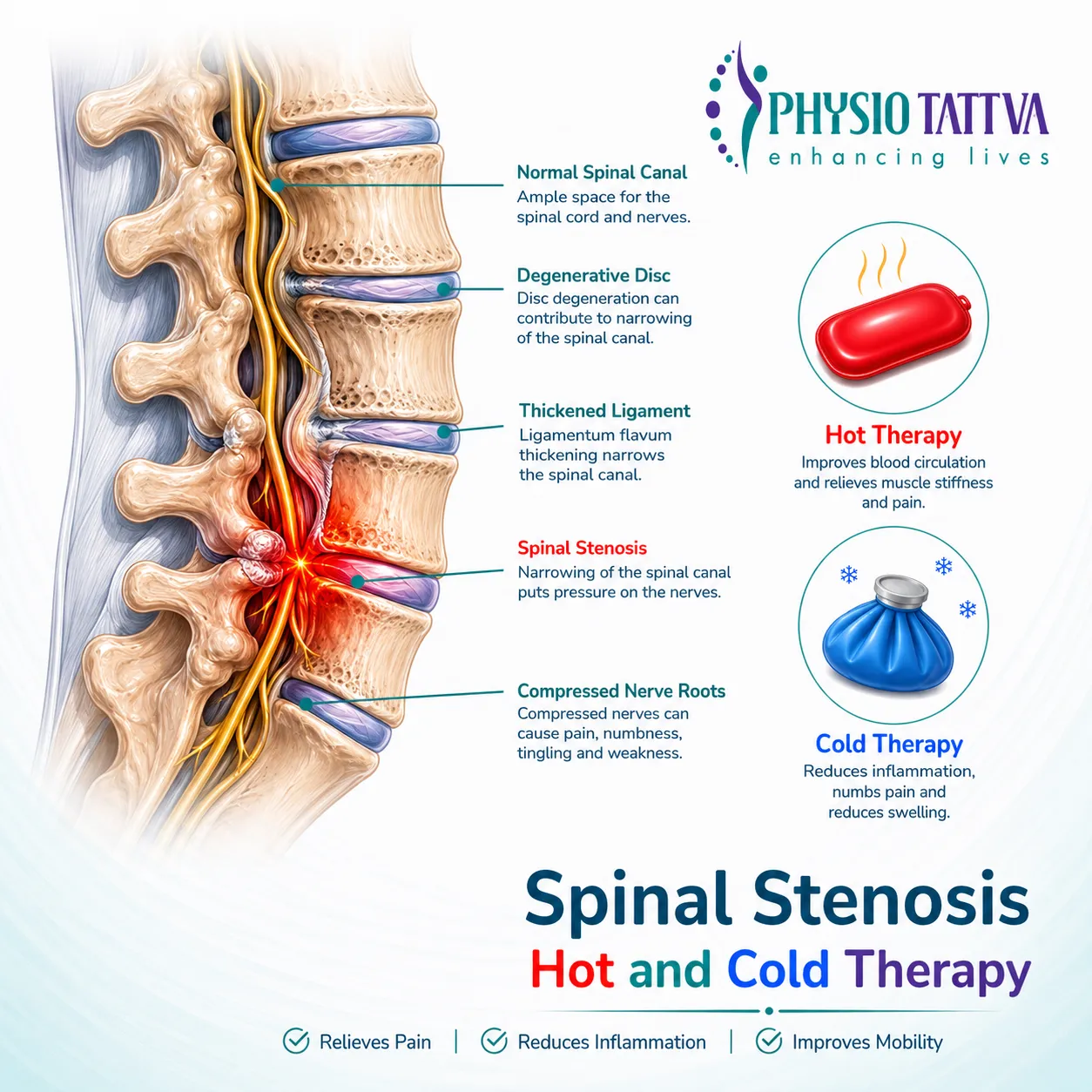
Spinal stenosis is the narrowing of the spaces within your spine, which can put pressure on the nerves that travel through it. This pressure is what causes the hallmark symptoms:
- Pain in the back or neck
- Numbness, weakness, or tingling in the legs, feet, arms, or hands (sciatica-like symptoms)
- Cramping in the legs, especially when standing or walking
- Loss of balance
The goal of any pain management strategy, including hot and cold therapy, is to reduce inflammation, relax muscles, and soothe irritated nerves.
How Cold Therapy Helps Control Spinal Stenosis Flare-Ups
Cold therapy plays a key role in managing spinal stenosis flare-ups by controlling inflammation and calming irritated nerves. When used correctly, it can provide fast, short-term relief from sharp pain and post-activity discomfort.
How Does Cold Therapy Work?
Cold therapy works by slowing down inflammatory processes in the affected area, helping reduce pain at its source.
- Reduces Inflammation: Cold causes vasoconstriction, limiting blood flow to the area and reducing inflammatory chemicals that trigger swelling and pain.
- Decreases Swelling: Narrowed blood vessels restrict excess fluid buildup in surrounding tissues, helping control localized swelling.
- Numbs the Area: Cold slows nerve signal transmission, creating a natural numbing effect that temporarily eases sharp or intense pain.
When to Use Cold Therapy for Spinal Stenosis?
Cold therapy is most effective during periods of active inflammation or symptom flare-ups.
- During an Acute Flare-Up: When pain suddenly becomes sharp, intense, or aggravated.
- After Activity: Following walking, exercise, or physiotherapy sessions that worsen symptoms.
- When Inflammation Is Obvious: If the area feels swollen, warm, or particularly tender to touch.
Rule of Thumb: Use ice for inflammation and injury-related pain.
How to Apply Cold Therapy Safely?
Proper application is essential to avoid skin irritation or cold-related injury.
- Tools: Use a gel pack, ice pack, or a bag of frozen vegetables such as peas.
- Protect Your Skin: Always wrap the cold pack in a thin towel or cloth; never apply ice directly to the skin.
- Duration: Apply for 15–20 minutes per session.
- Frequency: Repeat several times a day if needed, allowing at least one hour between sessions for the skin to return to normal temperature.
How Heat Therapy Helps Relieve Stiffness in Spinal Stenosis?
Heat therapy is especially helpful for people with spinal stenosis who experience ongoing stiffness, muscle tightness, and dull, aching pain. By relaxing soft tissues and improving circulation, heat therapy can make movement easier and more comfortable, particularly during periods of reduced mobility.
How Does Heat Therapy Work?
Heat therapy works by gently increasing blood flow to the affected area, supporting muscle relaxation and tissue flexibility.
- Improves Circulation: Heat causes vasodilation, allowing more oxygen and nutrients to reach tight or painful muscles, which supports tissue healing.
- Relaxes Tight Muscles: Warmth helps reduce muscle spasms and chronic tension that commonly develop around the spine in spinal stenosis.
- Reduces Stiffness: By increasing soft tissue elasticity, heat makes movements less restricted and more comfortable, especially after rest.
When to Use Heat Therapy for Spinal Stenosis?
Heat therapy is best suited for non-inflammatory pain patterns and muscle-related discomfort.
- For Chronic, Dull, Aching Pain: Ideal when pain is persistent and associated with muscle tightness rather than swelling.
- Before Gentle Activity: Applying heat before stretching, walking, or light exercise helps warm up muscles and improve movement tolerance.
- To Relieve General Stiffness: Particularly effective in the morning or after long periods of sitting or inactivity.
Rule of Thumb: Use heat for stiffness, muscle tension, and chronic aches.
How to Apply Heat Therapy Safely?
Using heat correctly ensures comfort while preventing skin injury.
- Tools: Electric heating pads, microwavable heat packs, warm, damp towels (moist heat), or warm baths and showers can all be effective.
- Protect Your Skin: Always place a cloth or towel between the heat source and your skin, and use a moderate temperature setting.
- Duration: Apply heat for 15–20 minutes per session.
- Safety First: Never fall asleep while using a heating pad, as prolonged exposure can cause burns.
Alternating Heat and Cold: How Contrast Therapy Helps
Contrast therapy involves alternating between heat and cold within a single session. This process creates a gentle “pumping” effect as blood vessels expand with heat and contract with cold, helping improve circulation and support the removal of inflammatory by-products.
It can be especially helpful for easing general muscle soreness after moderate activity or exercise.
A commonly used approach includes:
- Applying heat for 10–15 minutes
- Followed immediately by cold therapy for 10–15 minutes
Always consult your physiotherapist before trying contrast therapy to ensure it is appropriate for your spinal stenosis symptoms and overall condition.
Essential Safety Guidelines for Hot and Cold Therapy
While hot and cold therapy are generally safe and effective, they may not be suitable for everyone. Using these therapies in the wrong situation or without proper precautions can worsen symptoms or cause skin injury. Always review the following safety considerations before applying heat or ice.
Do NOT use hot or cold therapy if you have:
- Open wounds or broken skin, as temperature exposure can delay healing or cause tissue damage
- Poor circulation, such as in peripheral vascular disease, where temperature regulation is impaired
- Reduced sensation or nerve damage (e.g., diabetic neuropathy), as you may not feel burns or cold injury
- An active infection, where heat or cold may worsen inflammation
Additional caution: Avoid heat therapy on a new injury or visibly swollen area, as heat can increase inflammation during the acute phase
If you’re unsure whether heat or ice is appropriate for your condition, consult a physiotherapist for personalised guidance.
Take the Next Step Toward Spinal Stenosis Relief with Physiotattva
Hot and cold therapy offers a simple, accessible, and effective way to manage spinal stenosis symptoms at home. Understanding when to use ice for inflammation and sharp pain, and when to apply heat for stiffness and muscle tension, allows you to respond to your symptoms more confidently and safely. While these therapies provide valuable symptom relief, they work best as part of a broader treatment plan that includes physiotherapy, guided exercise, posture correction, and medical advice. Used correctly, hot and cold therapy can help improve daily comfort, mobility, and overall quality of life.
At Physiotattva physiotherapy clinics in Bangalore, Hyderabad and Vizag you receive personalised care tailored to your specific needs, ensuring effective results and comfort throughout your journey to recovery.
Don’t wait to start your recovery! Get in touch with Physiotattva for more details! Contact us at +91 89510 47001.
Why Physiotattva?
22+
50,000+
95%
200+
25+
4.8
Cities We Serve

Bangalore
At Physio Tattva, we are committed to bring access to quality physio care through ultra-modern clinics and high-skilled practitioners to all.
.webp)
Hyderabad
At Physio Tattva, we are committed to bring access to quality physio care through ultra-modern clinics and high-skilled practitioners to all.
.webp)
Vishakhapatnam
At Physio Tattva, we are committed to bring access to quality physio care through ultra-modern clinics and high-skilled practitioners to all.
Core Treatments
Core Conditions
Core Symptoms
Frequently Asked Questions
Can heat or ice make my spinal stenosis worse?

Which is better for spinal stenosis morning stiffness, hot or cold?
If hot and cold therapy helps, do I still need to see a physiotherapist?






%20(1)-p-3200.jpeg)


.jpg)
.webp)
.webp)
.webp)