





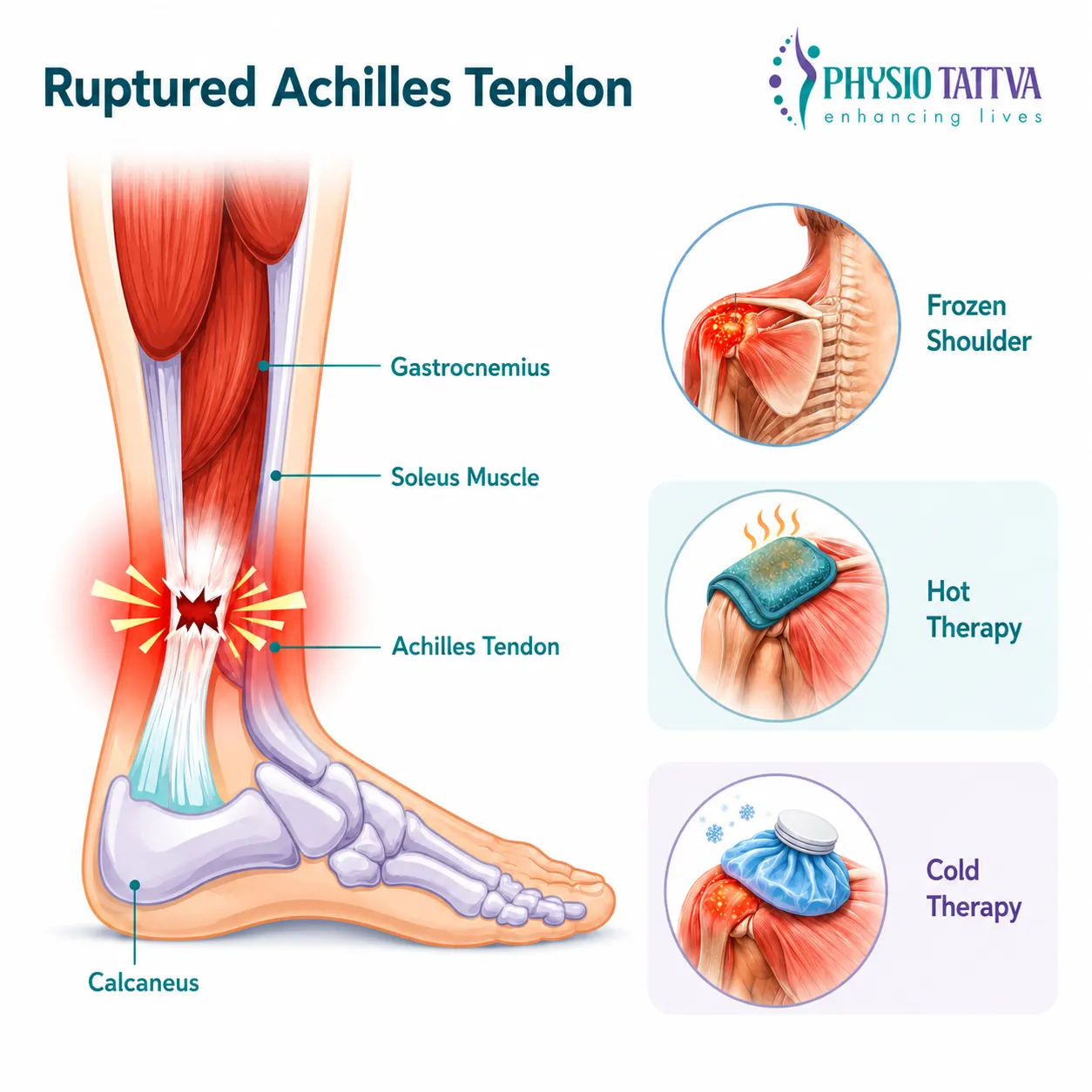
An Achilles tendon rupture is a significant injury that requires a carefully managed recovery process, whether you undergo surgery or non-operative treatment. A common question that arises during rehabilitation is how and when to use hot and cold therapy. Using them correctly can significantly aid your recovery, while using them at the wrong time can hinder it.
This article will break down the roles of cold therapy (cryotherapy) and heat therapy (thermotherapy) in your healing journey.
The Role of Cold Therapy in Managing Achilles Tendon Rupture
Cold therapy is a critical early intervention following an Achilles tendon rupture. When used correctly, it helps control pain and inflammation, protects healing tissues, and supports a safer transition into rehabilitation during the most vulnerable phase of recovery.
What Cold Therapy Does
Cold therapy works by slowing down biological processes that contribute to swelling and pain. Its key effects include:
- Reduces Swelling (Edema): Cold causes blood vessels to constrict (vasoconstriction), which limits the amount of fluid that leaks into the surrounding tissue. This is crucial for managing the significant swelling that follows an Achilles rupture and subsequent surgery.
- Numb Pain: Cold application slows down nerve signals, providing a natural analgesic (pain-relieving) effect.
- Decreases Inflammation: By reducing blood flow and cellular activity in the acute phase, cold helps put the brakes on the inflammatory process.
When to Use Cold Therapy
Timing is crucial when using ice therapy for an Achilles tendon rupture. Cold therapy is most beneficial in the following situations:
- Immediately after the Injury: While waiting for medical assessment, applying cold can help manage initial pain and swelling.
- In the Acute Post-Surgical Phase (First 1-3 weeks): This is when cold therapy is most critical. Your surgeon and physical therapist will almost certainly recommend regular icing to control post-operative swelling and pain.
- After Physical Therapy Sessions: Rehab exercises, while necessary, can cause temporary inflammation and soreness. Applying cold for 15-20 minutes after a session helps calm the tissue down.
- Anytime You Experience a Flare-Up: If you have a day with more activity and notice increased swelling or aching, cold therapy is your go-to solution.
How to Apply Cold Therapy Safely
Using cold therapy correctly helps maximise benefits while avoiding skin or nerve injury:
- Method: Use a gel pack, a bag of frozen peas, or a specialized cryo-cuff machine. Cryo-cuffs, which circulate ice water through a wrap, are highly effective for consistent cooling and compression.
- Protection: Never apply ice directly to the skin. Wrap the cold pack in a thin, dry towel to prevent ice burn and skin damage.
- Duration: Apply for 15-20 minutes at a time. Any longer offers diminishing returns and increases the risk of skin or nerve damage.
- Frequency: During the acute phase, you can apply cold every 2-3 hours while awake.
Heat Therapy (Thermotherapy) for Achilles Tendon Rupture Recovery
Heat therapy plays a supportive role in the later stages of Achilles tendon rupture recovery. Unlike cold therapy, it is used once acute inflammation has settled and focuses on improving circulation, reducing stiffness, and preparing tissues for movement and rehabilitation exercises.
What Heat Therapy Does
When applied at the appropriate stage of healing, heat therapy produces several physiological benefits that support tissue recovery:
- Increases Blood Flow: Heat causes blood vessels to dilate (vasodilation), which brings more oxygen- and nutrient-rich blood to the healing tendon and surrounding muscles.
- Increases Tissue Flexibility: Warming up the tendon and calf muscles makes them more pliable and extensible, reducing the risk of re-injury during stretching.
- Relieves Muscle Stiffness: Heat is excellent for relaxing the tight calf muscles (gastrocnemius and soleus) that often accompany an Achilles injury due to immobilization.
When to Use Heat Therapy
Timing is critical, as heat therapy should only be introduced after inflammation has resolved:
- In the Sub-Acute or Chronic Phase (Weeks or Months Later): Only use heat after your doctor or physical therapist has confirmed that the primary swelling and inflammation are gone. This is typically several weeks post-injury or post-surgery.
- BEFORE Stretching or Rehab Exercises: Applying heat for 10-15 minutes before your therapy session can "warm up" the tissues, making your exercises more effective and comfortable.
- To Alleviate Chronic Stiffness: If you experience morning stiffness or general tightness in the calf or ankle (but not sharp pain or swelling), heat can provide relief.
WARNING: When NOT to Use Heat
Heat therapy should be avoided in situations where it may worsen inflammation:
- Avoid heat on a new injury or immediately after surgery.
- Do not apply heat if the area is red, hot, swollen, or visibly inflamed.
Using heat in these cases can increase blood flow excessively and delay healing.
How to Apply Heat Therapy Safely
Using heat correctly helps maximise benefits while preventing burns or skin irritation:
- Method: Use a moist heat pack, an electric heating pad (on a low-to-medium setting), or a warm bath/soak.
- Protection: Place a towel between the heating pad and your skin.
- Duration: Apply for 15-20 minutes. Do not fall asleep with a heating pad on.
- Temperature: The heat should be comfortably warm, not painfully hot.
Contrast Therapy (Alternating Hot and Cold) for Achilles Recovery
Contrast therapy is an advanced recovery technique typically introduced during the transition from acute to active rehabilitation. It is most useful when swelling has reduced but stiffness, residual inflammation, or circulation issues continue to limit movement. This method should always be used under professional guidance.
How Contrast Therapy Works
Contrast therapy works by alternating between heat and cold to stimulate circulation. The repeated cycle of vasodilation (from heat) and vasoconstriction (from cold) creates a gentle “pumping” effect, helping move excess fluid out of tissues while encouraging fresh blood flow to the healing area.
How to Perform Contrast Therapy Safely
This technique is usually performed using an ankle bath or two separate containers of water:
- Start with warm water for 3 minutes to promote blood flow and tissue relaxation.
- Immediately switch to cold water for 1 minute to reduce swelling and limit inflammation.
- Repeat the cycle 3–5 times, alternating between warm and cold.
- Always finish with cold water to prevent a renewed inflammatory response.
Because contrast therapy timing varies based on healing stage, consult your physical therapist to determine if and when this approach is appropriate for your Achilles tendon rupture recovery.
Personalised Heat and Ice Therapy for Achilles Recovery at Physiotattva
Hot and cold therapy can play a valuable role in managing pain, swelling, and stiffness after an Achilles tendon rupture when used at the right stage of healing. Cold therapy is most effective in the early phase to control inflammation, while heat therapy supports flexibility and circulation later in recovery. Contrast therapy may offer additional benefits during the transition to active rehabilitation under professional guidance. Because timing is critical, always follow the advice of your orthopaedic surgeon or physiotherapist to ensure these therapies support healing rather than delay your recovery.
At Physiotattva physiotherapy clinics in Bangalore, Hyderabad, and Vizag you receive personalised care tailored to your specific needs, ensuring effective results and comfort throughout your journey to recovery.
Don’t wait to start your recovery! Get in touch with Physiotattva for more details! Contact us at +91 89510 47001.
Why Physiotattva?
22+
50,000+
95%
200+
25+
4.8
Cities We Serve

Bangalore
At Physio Tattva, we are committed to bring access to quality physio care through ultra-modern clinics and high-skilled practitioners to all.
.webp)
Hyderabad
At Physio Tattva, we are committed to bring access to quality physio care through ultra-modern clinics and high-skilled practitioners to all.
.webp)
Vishakhapatnam
At Physio Tattva, we are committed to bring access to quality physio care through ultra-modern clinics and high-skilled practitioners to all.
Core Treatments
Core Conditions
Core Symptoms
Frequently Asked Questions
When should I use cold therapy (ice) for an Achilles tendon rupture?

When is it safe to start using hot therapy for my Achilles rupture?
What is the correct way to apply hot and cold therapy?
Should I alternate between hot and cold therapy (contrast therapy)?
Are there any risks or times I should absolutely avoid hot or cold therapy?





%20(1)-p-3200.jpeg)


.jpg)
.webp)
.webp)
.webp)