




Manual therapy for Myasthenia Gravis must always be approached with caution, expertise, and medical coordination. While it is not intended to treat the primary neuromuscular weakness of MG, carefully modified, gentle techniques may help manage secondary muscle discomfort, reduce stress, and support overall well-being. With proper neurologist clearance, skilled physiotherapy oversight, and strict avoidance of fatiguing techniques, manual therapy can play a limited but supportive role in a holistic care plan focused on safety, comfort, and quality of life.
Understanding the Role of Manual Therapy in Myasthenia Gravis
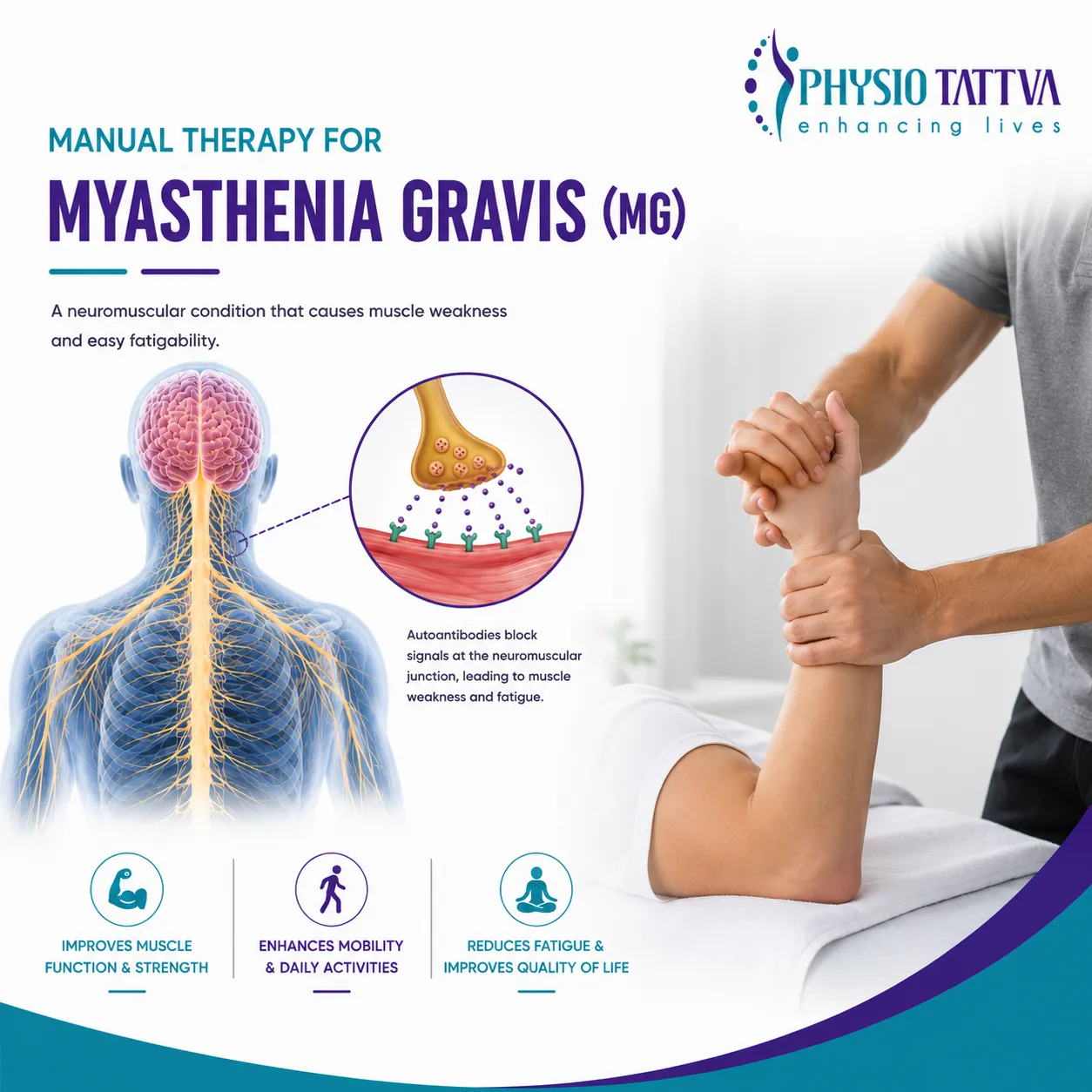
Myasthenia Gravis is characterised by fluctuating, activity-induced muscle weakness. Repetitive muscle stimulation depletes the limited available acetylcholine receptors at the neuromuscular junction, leading to profound fatigue.
- The Core Risk: Standard manual therapy techniques (like deep tissue massage or vigorous stretching) are designed to work and stimulate muscles. In a person with MG, this stimulation can rapidly exhaust the muscles, leading to increased weakness, fatigue, and a potential flare-up of symptoms.
- Respiratory Concern: The muscles of respiration (diaphragm, intercostals) can be affected in MG. Any therapy that puts pressure on the chest, neck, or abdomen, or that causes significant fatigue, could compromise breathing.
Potential Benefits of Gentle Manual Therapy
When carefully adapted to the needs of someone with Myasthenia Gravis, gentle manual therapy may offer a few supportive benefits, primarily by addressing secondary symptoms rather than the underlying neuromuscular condition. These potential benefits include:
- Relief of Secondary Pain: People with MG often develop compensatory muscle tightness and pain. For example, neck and shoulder pain can result from compensating for head drop (weak neck extensors) or upper body weakness. A gentle massage can help alleviate this secondary soreness.
- Stress and Anxiety Reduction: Living with a chronic illness is stressful, and stress is a known trigger for MG exacerbations. The relaxation response induced by gentle touch and massage can help lower stress hormones and promote a sense of well-being.
- Improved Circulation: Gentle, flowing massage strokes (effleurage) can improve blood and lymph circulation without fatiguing the muscles.
- Enhanced Body Awareness: Mindful touch can help patients connect with their bodies in a positive, non-fatiguing way.
Significant Risks and Absolute Contraindications
Without proper understanding of Myasthenia Gravis, manual therapy can pose serious risks. Certain techniques may worsen symptoms or trigger dangerous complications, making the following risks and contraindications critical to recognise
- Primary Risk: Exacerbation of Muscle Weakness: This is the most significant concern. A session that is too long, too deep, or too stimulating can leave a patient significantly weaker for hours or days.
- Triggering a Myasthenic Crisis: In severe cases, overexertion and fatigue can lead to a myasthenic crisis, a life-threatening condition involving severe respiratory muscle weakness.
- Techniques to AVOID: Certain manual therapy techniques pose significant risks for people with MG and should not be used under any circumstances, including:
- Deep Tissue Massage: Absolutely contraindicated.
- Aggressive Stretching or Mobilization: Can over-fatigue muscles.
- Tapotement (Percussion/Tapping): Repetitive stimulation is the mechanism that causes weakness in MG.
- High-Velocity Chiropractic Adjustments: Particularly in the cervical (neck) region, this is highly risky due to potential neck muscle weakness.
- Treatments that Generate Heat: Overheating can worsen MG symptoms for some individuals.
Guidelines for Patients and Therapists
As Myasthenia Gravis impacts muscle strength and fatigue levels, manual therapy must be approached with caution. The guidelines below are designed to keep treatment safe, supportive, and aligned with best medical and physiotherapy practices for individuals with MG.
For the Patient with Myasthenia Gravis
If you are considering manual therapy, careful preparation and clear communication are essential to protect your health and avoid symptom flare-ups. Patients should follow these key precautions before and during treatment:
- Consult Your Neurologist First: This is the most important step. Get medical clearance and discuss what types of therapy might be safe for your specific condition.
- Find a Qualified Therapist: Seek a licensed physical therapist, massage therapist, or osteopath who has demonstrable experience with neuromuscular disorders, specifically MG if possible. Ask them directly: "What is your understanding of MG and how would you modify your treatment for it?"
- Communicate Clearly: Before the session, explain your diagnosis, your specific symptoms (e.g., ptosis, diplopia, limb weakness, breathing difficulty), your triggers, and the medications you are on.
- Timing is Everything: Schedule your appointment for a time of day when you are typically at your strongest (e.g., in the morning or after a nap and medication). Never go during a flare-up or when you feel unwell.
- Start Low and Go Slow: The first session should be very short (15-20 minutes) and use extremely light pressure. See how your body responds over the next 48 hours before considering a slightly longer or more comprehensive session.
- Give Constant Feedback: During the session, immediately speak up if you feel any fatigue, increased weakness, shortness of breath, or discomfort. A good therapist will insist on this.
For the Manual Therapist
Therapists working with individuals who have Myasthenia Gravis must prioritise safety, medical coordination, and symptom monitoring over conventional treatment goals. The following professional guidelines are critical:
- Obtain Medical Clearance: Insist on a note or verbal confirmation from the client’s neurologist before beginning treatment.
- Thorough Intake: Understand the client’s specific presentation, including bulbar symptoms (swallowing/speech), respiratory status, and which muscle groups are most affected.
- The Goal is Relaxation, NOT "Fixing": Shift your therapeutic goal from releasing "knots" or breaking down adhesions to promoting systemic relaxation and relieving very superficial secondary tension.
- Technique Modification is Key:
- USE: Very light, soothing effleurage (gliding strokes), gentle passive range of motion (without pushing to an end-range), craniosacral therapy (with caution), and general relaxation techniques.
- AVOID: Deep tissue, friction, tapotement, aggressive stretching, and any technique that requires the client to resist you.
- Positioning: Be aware that lying flat for a long time can be difficult or cause breathing issues for some. Consider a semi-reclined position.
- Monitor for Fatigue: Watch for signs of worsening MG symptoms, such as increased drooping of the eyelids (ptosis), slurred speech, or changes in breathing patterns. Stop the session immediately if these occur.
Safer Alternatives to Manual Therapy for Myasthenia Gravis
For many individuals with Myasthenia Gravis, these low-impact and non-fatiguing therapies may provide symptom relief, stress reduction, and functional support without placing additional strain on weakened muscles:
- Gentle, Modified Yoga or Tai Chi: Focus on breathwork, balance, and very gentle movements.
- Mindfulness and Meditation: Excellent for stress reduction without physical risk.
- Acupuncture: Some patients find it helpful for energy and pain, but again, find a practitioner knowledgeable about MG.
- Occupational Therapy: To learn energy conservation techniques for daily activities.
Managing Myasthenia Gravis with Care at Physiotattva
Manual therapy has a very limited and carefully defined role in the management of Myasthenia Gravis. Because MG affects neuromuscular transmission and fatigue tolerance, many conventional hands-on techniques carry significant risk and may worsen weakness if applied inappropriately. When used, manual therapy should focus only on gentle, low-intensity techniques to address secondary pain, stress, or muscle tension, and must always be guided by medical clearance and specialist expertise. In all cases, patient safety, fatigue monitoring, and conservative care remain the highest priorities.
At Physiotattva physiotherapy clinics in Bangalore and Hyderabad, you receive personalised care tailored to your specific needs, ensuring effective results and comfort throughout your journey to recovery.
Don’t wait to start your recovery! Get in touch with Physiotattva for more details! Contact us at +91 89510 47001.
Why Physiotattva?
22+
50,000+
95%
200+
25+
4.8
Cities We Serve

Bangalore
At Physio Tattva, we are committed to bring access to quality physio care through ultra-modern clinics and high-skilled practitioners to all.
.webp)
Hyderabad
At Physio Tattva, we are committed to bring access to quality physio care through ultra-modern clinics and high-skilled practitioners to all.
.webp)
Vishakhapatnam
At Physio Tattva, we are committed to bring access to quality physio care through ultra-modern clinics and high-skilled practitioners to all.


%20(1)-p-3200.jpeg)


.jpg)
.webp)
.webp)
.webp)