




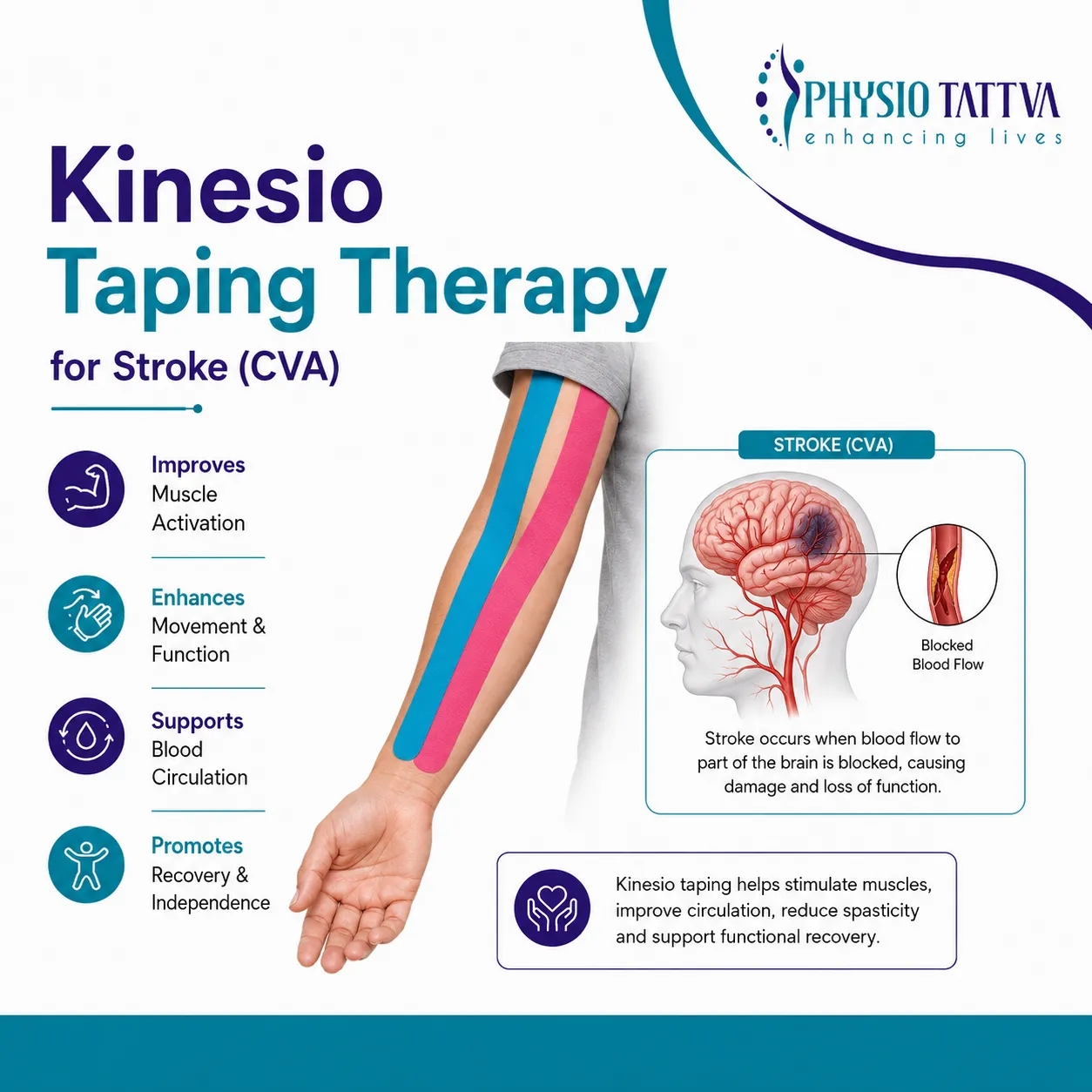
Recovering from a stroke, also known as a cerebrovascular accident (CVA), is a journey that requires a multi-faceted approach. While physical, occupational, and speech therapy form the cornerstone of rehabilitation, innovative and supportive techniques are constantly being integrated to enhance outcomes. One such powerful tool is Kinesio taping therapy for stroke (cerebrovascular accident, CVA).
You may have seen athletes wearing this colourful elastic tape, but its applications go far beyond sports injuries. For stroke survivors, Kinesio taping is a non-invasive, supportive therapy that can help retrain the brain-body connection, manage common post-stroke symptoms, and accelerate progress in rehabilitation.
What is Kinesio Taping?
Kinesio Tape (or Kinesiology Tape) is a therapeutic tape made of a unique blend of cotton and nylon. It’s designed to be elastic and mimic the flexibility of human skin.
Unlike rigid athletic tape that immobilises a joint, Kinesio tape is applied with specific tension and direction to:
- Lift the skin: This microscopic lifting creates space between the skin and the underlying tissues.
- Improve fluid flow: The created space can help reduce swelling (edema) and improve lymphatic drainage.
- Provide sensory input: The constant, gentle pull on the skin sends signals to the brain, enhancing body awareness (proprioception).
- Support muscles: It can be applied to either facilitate (activate) weak muscles or inhibit (relax) overactive, spastic muscles.
How Does Kinesio Taping Help Stroke Survivors?
After a CVA, the brain's ability to communicate with certain parts of the body is impaired. This can lead to muscle weakness, spasticity, pain, and loss of function. Kinesio taping therapy offers targeted support for these very challenges.
Improving Muscle Function and Activation
For weak or paralysed (flaccid) muscles, a therapist can apply Kinesio tape in a way that "wakes them up." The tape provides continuous sensory feedback to the skin and muscles, reminding the brain of their existence and encouraging activation during therapeutic exercises and daily activities.
Managing Spasticity
Spasticity, or abnormal muscle tightness, is a common issue after a stroke. Kinesio taping can be applied using an inhibitory technique that helps relax these overworked muscles. This can lead to improved range of motion, less pain, and easier movement.
Supporting Shoulder Subluxation and Reducing Pain
Shoulder subluxation (a partial dislocation of the shoulder joint) is a painful and frequent complication due to muscle weakness around the shoulder. Kinesio tape is highly effective in:
- Providing gentle support to the shoulder joint.
- Helping to reposition the head of the humerus back into the socket.
- Reducing pain by decreasing strain on the joint capsule and ligaments.
- Improving sensory awareness of the arm's position.
Aiding with Foot Drop
Foot drop makes it difficult to lift the front part of the foot, causing it to drag and increasing the risk of falls. Kinesio taping techniques can be used to provide external support, assisting the muscles responsible for lifting the foot (dorsiflexion). This provides a functional cue that can improve gait pattern and safety while walking.
Reducing Swelling (Edema) in the Hand and Arm
Poor muscle contraction after a stroke can lead to fluid buildup, especially in the hand and wrist. Therapists can apply Kinesio tape in a fan-like pattern to gently lift the skin and direct fluid away from the swollen area, promoting lymphatic drainage and reducing edema.
Enhancing Proprioception (Body Awareness)
A stroke can disrupt the brain’s map of the body. Kinesio tape acts as a constant reminder of where a limb is in space. This enhanced proprioceptive feedback is crucial for motor relearning, helping the brain rebuild pathways to control movement more effectively.
Is Kinesio Taping a Standalone Treatment for Stroke?
It's crucial to understand that Kinesio taping is an adjunctive therapy, not a standalone cure. While it offers significant benefits, it is most effective when incorporated into a comprehensive stroke rehabilitation program tailored by a qualified physical or occupational therapist.
Kinesio tape works by enhancing the effects of your therapy sessions. For example, taping a weak shoulder can make strengthening exercises more effective, while taping a spastic hand can improve the outcome of stretching techniques. The tape helps carry the benefits of your therapy session with you throughout the day, providing continued support and promoting faster recovery even after you leave the clinic.
Maximise Stroke Recovery with Kinesio Taping Therapy at Physiotattva
Recovery after a cerebrovascular accident (CVA) is unique for each individual, but the goal remains to maximise independence and quality of life. Kinesio taping therapy is a safe and evidence-based tool that supports muscles, reduces pain, and aids in brain-body reorganisation. When integrated into a comprehensive rehabilitation program, Kinesio taping helps accelerate recovery and enhances functional outcomes. If you or a loved one is recovering from a stroke, consult with a physical or occupational therapist to see how Kinesio taping can support your rehabilitation journey.
At Physiotattva physiotherapy clinics in Bangalore and Hyderabad, you receive personalised care tailored to your specific needs, ensuring effective results and comfort throughout your journey to recovery.
Don’t wait to start your recovery! Get in touch with Physiotattva for more details! Contact us at +91 89510 47001.
Why Physiotattva?
22+
50,000+
95%
200+
25+
4.8
Cities We Serve

Bangalore
At Physio Tattva, we are committed to bring access to quality physio care through ultra-modern clinics and high-skilled practitioners to all.
.webp)
Hyderabad
At Physio Tattva, we are committed to bring access to quality physio care through ultra-modern clinics and high-skilled practitioners to all.
.webp)
Vishakhapatnam
At Physio Tattva, we are committed to bring access to quality physio care through ultra-modern clinics and high-skilled practitioners to all.
Core Treatments
Core Conditions
Core Symptoms
Frequently Asked Questions
Who should apply the Kinesio tape after a stroke?

Is the tape comfortable to wear?
Are there any side effects of kinesio taping therapy?
How quickly will I see results from Kinesio taping therapy for my CVA?






%20(1)-p-3200.jpeg)


.jpg)
.webp)
.webp)
.webp)