




Kinesio taping therapy for Parkinson’s is a non-invasive physiotherapy technique that supports posture, balance, and movement through continuous sensory feedback. Used alongside exercise and medical care, it helps manage rigidity and gait difficulties. In this article, we will explain how it works, its benefits, and who it may help.
What is Kinesio Taping?
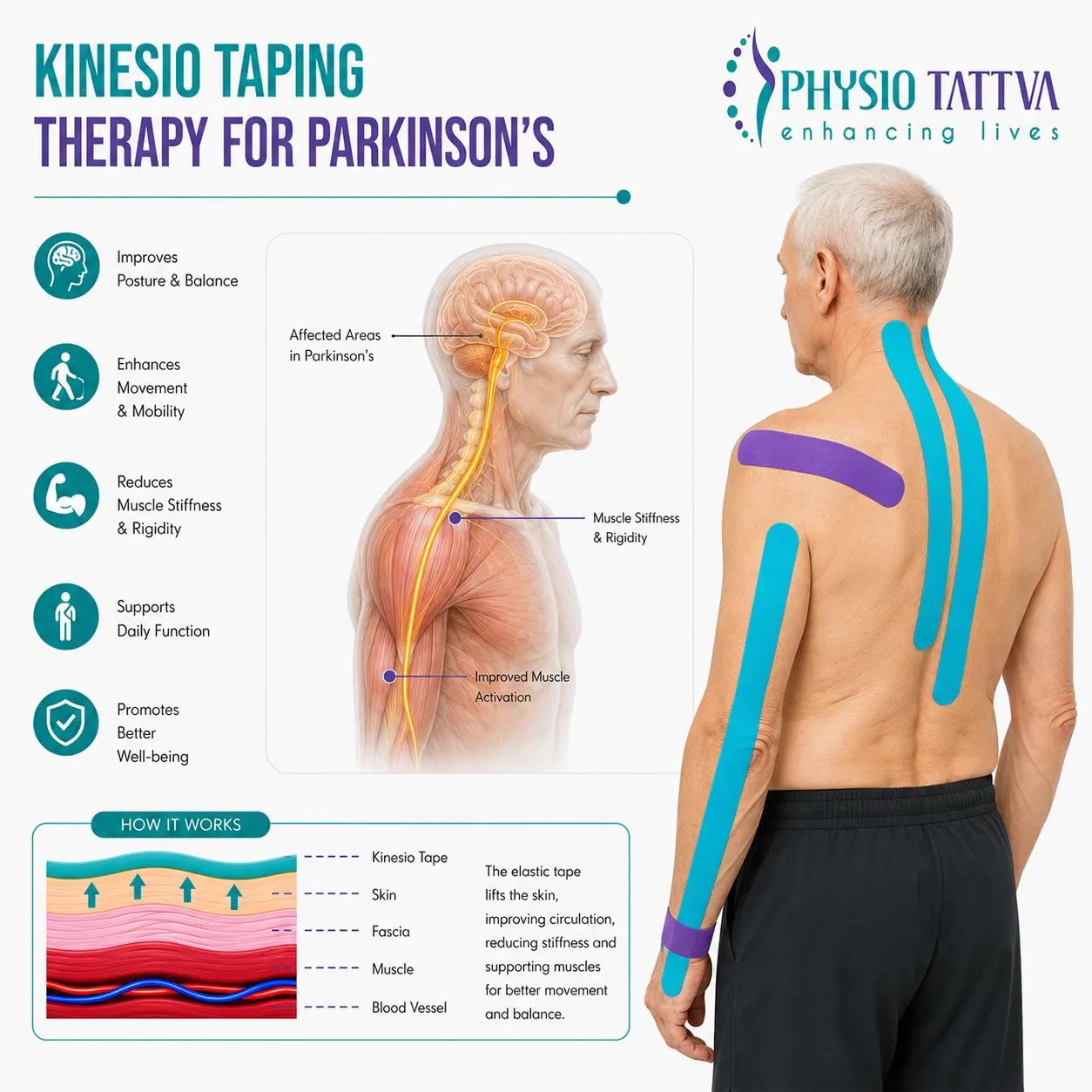
Kinesio Taping (also known as Kinesiology Tape or KT) is a therapeutic taping method that uses a uniquely elastic, water-resistant, and adhesive tape. Unlike rigid athletic tape that immobilizes a joint, Kinesio tape is designed to mimic the elasticity of human skin.
Key Properties of Kinesio Tapes:
The tape is designed with specific properties that differentiate it from traditional athletic taping:
- Elasticity: It can be stretched 40-60% of its resting length, allowing for a full range of motion.
- Mechanism: When applied, it gently lifts the superficial layer of skin. This lifting action creates a small space between the skin and the underlying tissues.
- Material: Typically made of cotton fibers with a medical-grade acrylic adhesive, making it breathable and wearable for 3-5 days.
How Can Kinesio Taping Help with Parkinson's Symptoms?
The core theory behind Kinesio taping is that it provides continuous sensory input to the body and promotes physiological healing. For Parkinson's disease, its application is focused on managing specific motor deficits.
Improved Posture and Trunk Stability
Kinesio taping can play a supportive role in improving postural awareness and control.
- Symptom: Stooped posture (camptocormia) is common in PD due to muscle rigidity and weakness in the back extensors.
- How Tape Helps: When applied to the back muscles, the tape provides constant proprioceptive feedback. This gentle, tactile cue reminds the individual to engage their postural muscles and maintain a more upright position. It doesn't force the posture but rather facilitates the body's own ability to correct it.
Enhanced Gait and Balance
Taping techniques may help address walking difficulties and balance-related challenges.
- Symptom: Shuffling gait, freezing of gait (FOG), and postural instability leading to falls.
- How Tape Helps:
- Sensory Cueing: Tape applied to the legs or lower back can provide a sensory cue that helps improve body awareness (proprioception), potentially leading to a more confident stride and better balance.
- Freezing of Gait: Some therapists apply tape to the lower legs (tibialis anterior muscle) to provide a stimulus that can help "break through" a freezing episode or reduce its frequency.
Reduced Muscle Rigidity and Pain
Kinesio taping may help ease stiffness and discomfort caused by muscle rigidity.
- Symptom: Muscle stiffness (rigidity) and associated musculoskeletal pain, particularly in the neck, shoulders, and back.
- How Tape Helps: The tape’s lifting action (decompression) is believed to reduce pressure on underlying pain receptors and nerve endings. It may also improve circulation and lymphatic drainage in the taped area, helping to alleviate stiffness and discomfort.
Support for Limb Movement (Bradykinesia)
Taping can be used as an adjunct to support smoother and more coordinated movement.
- Symptom: Slowness of movement (bradykinesia) and difficulty initiating movement.
- How Tape Helps: By applying the tape to either facilitate an underactive muscle or inhibit an overactive one, a therapist can help create a more balanced muscle function around a joint. This can make movements feel slightly smoother and more controlled.
Management of Tremor
The role of Kinesio taping in tremor management is still being explored.
- Symptom: Resting tremor.
- How Tape Helps: The evidence for taping to reduce tremors is the most limited. The theory is that the sensory input from the tape might "distract" the nervous system, subtly dampening the tremor signals. However, this effect is often minimal and inconsistent.
Assistance with Swallowing (Dysphagia) and Drooling (Sialorrhea)
In specific cases, taping may be used to support orofacial and swallowing functions.
- Symptom: Weakness in muscles responsible for swallowing and controlling saliva.
- How Tape Helps: This is a highly specialized application. A trained speech-language pathologist or occupational therapist may apply small pieces of tape to the neck's suprahyoid muscles to provide sensory cues that facilitate a stronger, more coordinated swallow or encourage mouth closure. This should never be attempted without expert guidance.
Who Can Benefit Most from Kinesio Taping in Parkinson’s Disease?
Kinesio taping may be particularly helpful for the following groups:
- Early to mid-stage Parkinson’s disease: Individuals who still have good mobility but experience emerging movement or posture-related challenges tend to benefit the most.
- Postural and trunk control issues: Patients with stooped posture, reduced trunk stability, or poor postural awareness may see improved alignment and body awareness.
- Gait and balance difficulties: Those with a shuffling gait, freezing of gait, or balance instability may benefit from the added sensory feedback provided by the tape.
- Muscle rigidity and stiffness: Individuals experiencing stiffness in the neck, shoulders, back, or limbs may find relief and improved comfort with taping.
- Limited benefit in advanced stages: People with advanced Parkinson’s, severe rigidity, or significant mobility limitations may experience only modest or temporary benefits, and taping should be used strictly as a supportive measure within a broader care plan.
Scientific Evidence and Clinical Effectiveness of Kinesio Taping for Parkinson's
The body of research on Kinesio taping for Parkinson's is promising but still emerging. Most studies are small-scale, but they consistently point toward positive, albeit modest, effects.
- Gait and Balance: Several studies have shown that Kinesio taping, when used alongside a conventional physical therapy program, can lead to statistically significant improvements in gait speed, stride length, and balance scores (e.g., Timed Up and Go test, Berg Balance Scale).
- Posture: Research supports the use of KT for providing postural feedback and improving trunk alignment, especially in the short term.
- Pain and Quality of Life: Patients often report subjective improvements in pain levels and overall quality of life when using the tape.
- Limitations: More high-quality, large-scale randomized controlled trials are needed to establish definitive guidelines and confirm long-term effectiveness.
Important Considerations and Limitations
Kinesio taping can be a useful supportive technique for managing Parkinson’s symptoms, but it works best when used correctly and with clear expectations. Understanding its limitations, safety considerations, and role within a broader rehabilitation plan is essential for effective outcomes.
- Not a Standalone Treatment: Kinesio taping is a complementary tool, not a cure or a standalone therapy. It is most effective when integrated into a comprehensive treatment plan that includes medication, physical therapy, exercise, and occupational therapy.
- Professional Application is Key: To be effective and safe, the tape must be applied by a healthcare professional (like a PT or OT) who is certified in the Kinesio Taping method and understands the unique pathology of Parkinson's disease. The direction, amount of stretch, and placement are critical.
- Skin Sensitivity: The tape should not be applied to fragile, broken, or irritated skin. A small test patch is recommended to check for allergic reactions to the adhesive.
- Temporary Effects: The benefits of the tape are generally present while it is being worn. It is a tool for management and retraining, not a permanent fix.
Personalised Kinesio Taping Therapy for Parkinson’s at Physiotattva
Kinesio taping therapy for Parkinson’s disease serves as a supportive physiotherapy technique that can enhance posture, balance, mobility, and overall body awareness when used correctly. While it is not a cure, it can play a meaningful role as part of a comprehensive rehabilitation plan that includes medication, exercise, and physiotherapy. With proper professional application and realistic expectations, Kinesio taping may help individuals with Parkinson’s manage symptoms more effectively and maintain functional independence for longer.
At Physiotattva physiotherapy clinics in Bangalore and Hyderabad, you receive personalised care tailored to your specific needs, ensuring effective results and comfort throughout your journey to recovery.
Don’t wait to start your recovery! Get in touch with Physiotattva for more details! Contact us at +91 89510 47001.
Why Physiotattva?
22+
50,000+
95%
200+
25+
4.8
Cities We Serve

Bangalore
At Physio Tattva, we are committed to bring access to quality physio care through ultra-modern clinics and high-skilled practitioners to all.
.webp)
Hyderabad
At Physio Tattva, we are committed to bring access to quality physio care through ultra-modern clinics and high-skilled practitioners to all.
.webp)
Vishakhapatnam
At Physio Tattva, we are committed to bring access to quality physio care through ultra-modern clinics and high-skilled practitioners to all.
Core Treatments
Core Conditions
Core Symptoms
Frequently Asked Questions
Is Kinesio taping painful for Parkinson's?

Can I apply the Kinesio tape myself for Parkinson's symptoms?
How long does the tape stay on?
Will Kinesio taping interfere with my Parkinson's medication?






%20(1)-p-3200.jpeg)


.jpg)
.webp)
.webp)
.webp)