




Manual therapy for Parkinson’s disease is a hands-on physiotherapy approach used to manage stiffness, rigidity, pain, and movement limitations. It supports mobility, posture, and daily comfort when combined with exercise and medical care. This article explores the techniques, benefits, and role of manual therapy in Parkinson’s management.
How Manual Therapy Specifically Helps Parkinson's Patients
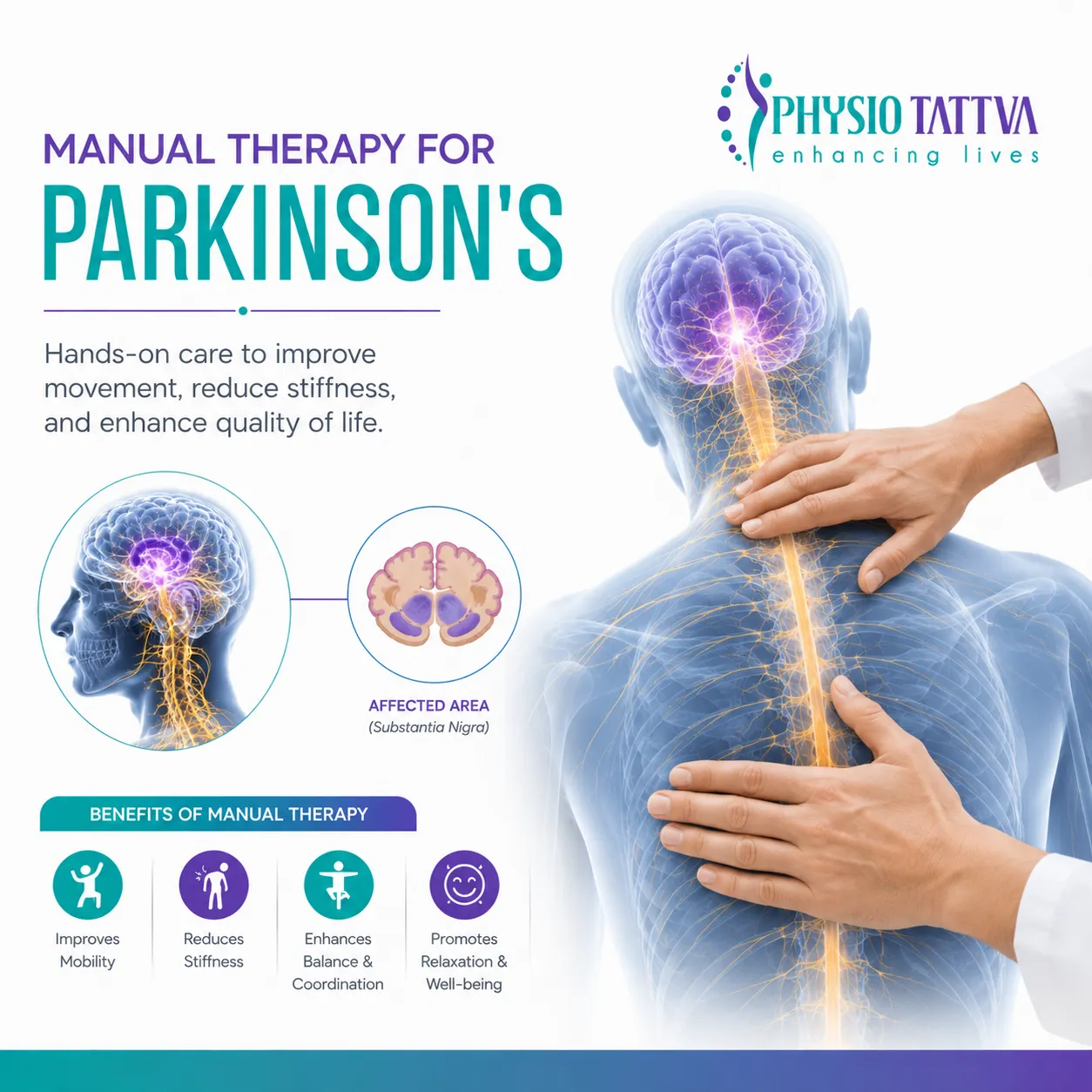
Manual therapy provides targeted relief by directly influencing the muscles, joints, and connective tissues that are profoundly affected by PD.
Combating Rigidity and Stiffness
Rigidity is a hallmark of Parkinson's, leading to stiff, inflexible muscles that resist movement. This causes pain and significantly restricts mobility.
- How it helps: Techniques like soft tissue mobilization, myofascial release, and passive stretching work to reduce muscle hypertonicity (excessive tension). By lengthening shortened muscles and releasing tight fascia, a therapist can temporarily "break the cycle" of stiffness, making subsequent movement and exercise easier and more effective.
Alleviating Musculoskeletal Pain
Pain is an under-recognized but common non-motor symptom of PD, often stemming from rigidity, poor posture, and dystonia (involuntary muscle contractions).
- How it helps: Massage and trigger point therapy can directly target painful areas, increase blood flow, and release endorphins (the body's natural painkillers). Correcting joint misalignments through mobilization can also relieve stress on the skeletal system, reducing compensatory pain in the back, neck, and shoulders.
Improving Posture and Alignment
The characteristic "Parkinsonian stoop" (flexed or stooped posture) results from a combination of muscle rigidity in the chest and abdomen and weakness in the back extensors. This poor posture compromises balance, breathing, and swallowing.
- How it helps: A therapist can use manual stretching and mobilization techniques on the trunk, chest, and hip flexors to counteract the forward pull. This helps patients achieve a more upright posture, which improves their center of gravity, balance, and the mechanical efficiency of breathing.
Enhancing Range of Motion and Flexibility
Bradykinesia and rigidity lead to a progressive loss of joint range of motion. If a joint isn't moved through its full range, it becomes stiffer, creating a vicious cycle of immobility.
- How it helps: Joint mobilization techniques involve the therapist moving a patient's joints through specific ranges and grades of motion. This passive movement helps lubricate the joint, stretch the surrounding capsule, and restore lost mobility in key areas like the spine, shoulders, and hips.
Creating a "Window of Opportunity" for Exercise
Perhaps the most crucial benefit of manual therapy is its synergy with active exercise.
- How it helps: A manual therapy session can reduce pain and stiffness to such a degree that it creates a "window of opportunity" where the patient can perform therapeutic exercises (like LSVT BIG® or PWR!Moves®) more effectively and with a greater range of motion. The manual work makes the active work possible, and the active work makes the benefits of the manual therapy last longer.
Common Manual Therapy Techniques Used for Parkinson's
Manual therapy for Parkinson’s disease involves a tailored combination of hands-on techniques selected based on the individual’s symptoms, movement limitations, and comfort levels. These techniques aim to reduce rigidity, improve mobility, and support functional movement:
- Soft Tissue Mobilization/Massage: Rhythmic kneading and stroking of muscles to reduce tension, improve circulation, and alleviate pain.
- Myofascial Release: Applying sustained, gentle pressure to the fascia (the connective tissue web surrounding muscles) to release restrictions and restore mobility. This is excellent for trunk and limb stiffness.
- Joint Mobilization: Passively moving a joint in specific directions to reduce stiffness and improve its range of motion. This is particularly useful for the thoracic spine to combat a stooped posture.
- Passive & Assisted Stretching: The therapist moves a limb to stretch a target muscle group beyond what the patient could achieve on their own, helping to combat muscle shortening.
- Visceral Manipulation: A specialised technique using gentle abdominal pressure to improve organ mobility, sometimes used to support management of constipation associated with Parkinson’s disease.
Who Should Perform Manual Therapy for Parkinson’s?
For safety and effectiveness, manual therapy for Parkinson’s disease must be delivered by qualified healthcare professionals with specific neurological training. Choosing the right provider ensures that hands-on techniques are applied appropriately and integrated into comprehensive care.
- Licensed Physical Therapists (PTs): Especially those experienced in neurological rehabilitation and movement disorders.
- Neurologic Clinical Specialists (NCS): PTs with advanced certification and expertise in treating complex neurological conditions, including Parkinson’s disease.
- Parkinson’s-Trained Therapists: Professionals trained in Parkinson's-specific rehabilitation programs who understand symptom variability and disease progression.
- Team-Based Providers: Therapists who can integrate manual therapy with targeted exercises, gait training, balance rehabilitation, and functional movement strategies.
Working with an experienced provider ensures manual therapy supports mobility, comfort, and long-term functional independence safely and effectively.
Is Manual Therapy Safe for All Stages of Parkinson’s?
Yes, manual therapy can be safely adapted for individuals at different stages of Parkinson’s disease when delivered by trained and experienced healthcare professionals. The approach is always tailored to the person’s current symptoms, physical capacity, and overall health status:
- Early Stages: Manual therapy focuses on maintaining mobility, posture, and flexibility, helping individuals stay active and engage more effectively in exercise-based rehabilitation.
- Moderate to Advanced Stages: Techniques are carefully modified to accommodate fatigue, balance difficulties, freezing of gait, dyskinesia, and reduced endurance, ensuring comfort and safety at all times.
- Individualised Approach: Treatment intensity, positioning, and session duration are adjusted based on symptom fluctuations, energy levels, medication response, and daily functional needs.
With thorough assessment and sound clinical judgment, manual therapy remains a safe, supportive, and beneficial component of Parkinson’s care across the entire disease spectrum.
Limitations and Important Considerations for Manual Therapy for Parkinson's
While manual therapy is a valuable part of Parkinson’s rehabilitation, it is important to understand its role and limitations:
- Not a Standalone Treatment: Manual therapy does not treat the neurological cause of Parkinson’s disease and must be combined with medication, exercise, and physiotherapy programs.
- Temporary Benefits Without Exercise: Improvements in stiffness and comfort are short-term unless reinforced through regular movement and strengthening exercises.
- Requires Ongoing Consistency: Parkinson’s is a progressive condition, and continued therapy with periodic reassessment is necessary to maintain functional benefits.
- Individual Response Varies: The effectiveness of manual therapy depends on disease stage, symptom severity, and overall physical condition.
Setting clear expectations helps patients and caregivers view manual therapy as a valuable component of comprehensive Parkinson’s care—one that enhances comfort, movement quality, and participation in rehabilitation, rather than a cure.
Trusted Manual Therapy for Parkinson’s Management at Physiotattva
While there is no cure for Parkinson's disease, manual therapy serves as a vital tool in the symptom management toolkit. By directly addressing the rigidity, pain, and postural changes caused by the disease, it not only provides immediate relief but also empowers patients to participate more fully in the active exercises that are proven to slow functional decline. As a complementary approach, manual therapy is a cornerstone of a holistic, effective physical therapy plan for anyone living with Parkinson's.
At Physiotattva physiotherapy clinics in Bangalore and Hyderabad, you receive personalised care tailored to your specific needs, ensuring effective results and comfort throughout your journey to recovery.
Don’t wait to start your recovery! Get in touch with Physiotattva for more details! Contact us at +91 89510 47001.
Why Physiotattva?
22+
50,000+
95%
200+
25+
4.8
Cities We Serve

Bangalore
At Physio Tattva, we are committed to bring access to quality physio care through ultra-modern clinics and high-skilled practitioners to all.
.webp)
Hyderabad
At Physio Tattva, we are committed to bring access to quality physio care through ultra-modern clinics and high-skilled practitioners to all.
.webp)
Vishakhapatnam
At Physio Tattva, we are committed to bring access to quality physio care through ultra-modern clinics and high-skilled practitioners to all.
Core Treatments
Core Conditions
Core Symptoms
Frequently Asked Questions
Is manual therapy painful for someone with Parkinson's?

Can manual therapy cure Parkinson's Disease?
How often will I need manual therapy sessions?





%20(1)-p-3200.jpeg)


.jpg)
.webp)
.webp)
.webp)