




A hamstring strain is one of the most common and frustrating injuries for athletes and active individuals. The sharp, sudden pain and subsequent weakness can sideline you for weeks or even months. While traditional treatments like rest, ice, and stretching are crucial, modern physical therapy offers advanced techniques to accelerate healing. One of the most effective of these is dry needling therapy for Hamstring strain.
This article will explain what dry needling is, how it specifically helps a strained hamstring, and what you can expect during and after treatment.
Understanding Hamstring Strains
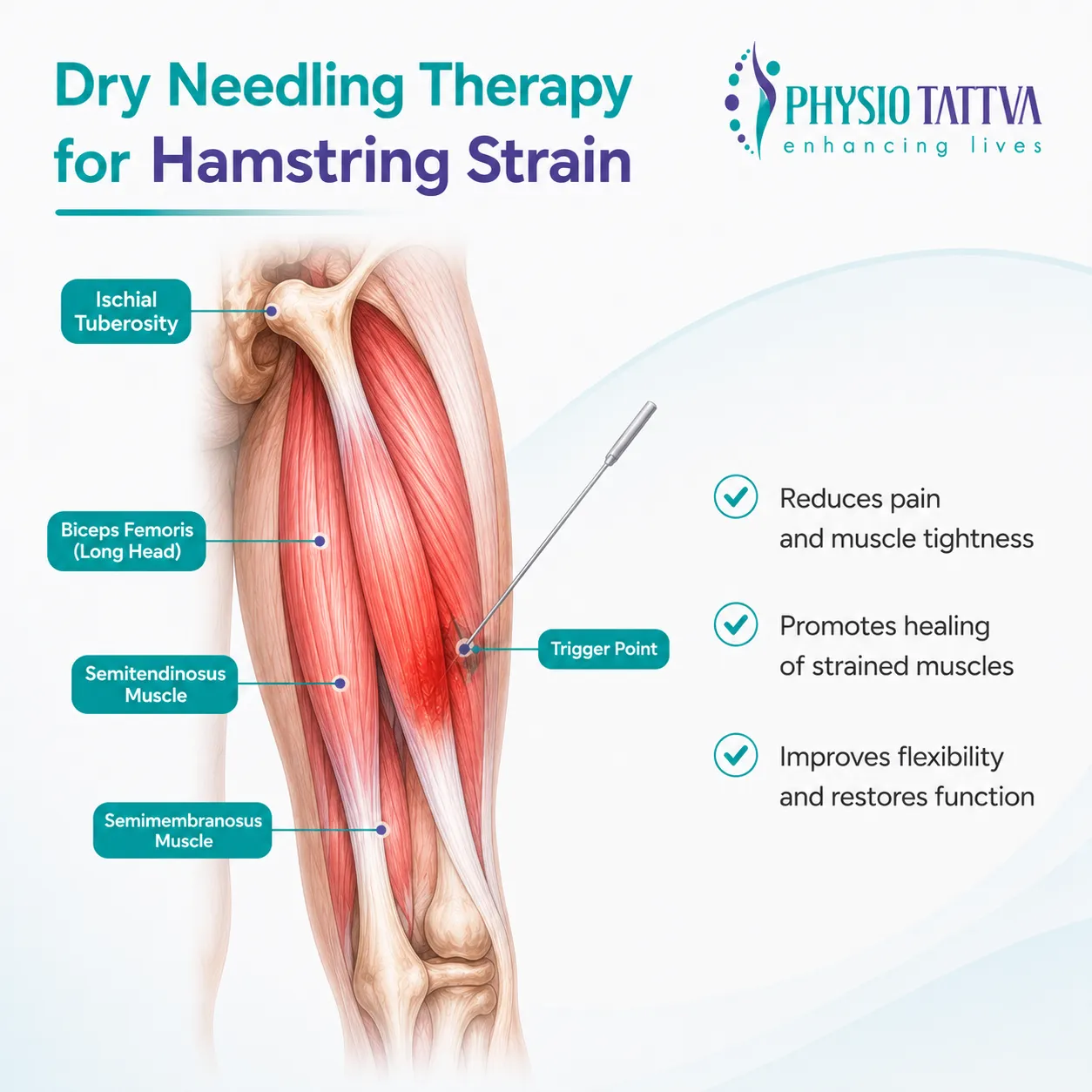
Before exploring the treatment, it's important to understand the injury. The "hamstrings" are a group of three muscles on the back of your thigh:
- Biceps femoris
- Semitendinosus
- Semimembranosus
A strain occurs when one or more of these muscles are stretched beyond their limit and tear. Strains are graded by severity:
- Grade 1: A mild pull or overstretch. You may feel tightness, but can still walk. Recovery is typically a few weeks.
- Grade 2: A partial tear in the muscle fibres. You'll experience a sharp pain, swelling, and walking may be painful. Recovery can take 4-8 weeks.
- Grade 3: A complete rupture of the muscle. This is a severe injury causing intense pain, swelling, and an inability to bear weight. Surgery may be required.
Following a strain, the body's natural response is to guard the area, leading to muscle tightness, inflammation, reduced blood flow, and the formation of myofascial trigger points, commonly known as painful "muscle knots." These trigger points can persist long after the initial injury, causing chronic pain, weakness, and limited flexibility.
What is Dry Needling Therapy?
Dry needling is a skilled intervention performed by a trained physical therapist, chiropractor, or medical doctor. It involves inserting a very thin, sterile filiform needle (the same type used in acupuncture) into the muscle to target and release myofascial trigger points.
Though it uses similar needles, dry needling differs from acupuncture. It is based on Western neuroanatomy and modern principles of musculoskeletal and nervous system function, while acupuncture is rooted in traditional Chinese medicine and the flow of "Qi" (energy). Dry needling focuses directly on dysfunctional muscle tissue to alleviate pain and improve function.
How Dry Needling Specifically Helps a Hamstring Strain
Dry needling therapy is uniquely suited to address the physiological changes that occur after a hamstring strain. Here’s how it facilitates recovery.
Releases Myofascial Trigger Points
The primary goal of dry needling for a hamstring strain is to release its trigger points. When the needle is inserted into a knot, it often elicits a local twitch response (LTR). This LTR is an involuntary spinal cord reflex in which the contracted muscle fibers quickly contract and then relax. This process:
- Immediately releases muscle tension.
- Breaks the pain-spasm-pain cycle.
- Restores the muscle's normal texture and length.
Improves Blood Flow and Oxygenation
Trigger points are areas of low oxygen and high chemical irritants due to restricted blood flow. The micro-trauma caused by the needle insertion signals the body to increase circulation to the area. This fresh blood flow delivers oxygen and nutrients essential for healing and flushes out pain-causing metabolic waste.
Reduces Pain and Inflammation
Dry needling helps reduce pain in several ways:
- Pain Gate Theory: The sensation of the needle stimulates nerve fibers that can override or "close the gate" on the transmission of pain signals to the brain.
- Endogenous Opioid Release: The treatment can trigger the release of the body’s natural painkillers, like endorphins and enkephalins, providing systemic pain relief.
Restores Muscle Activation and Function
A strained hamstring often "forgets" how to fire correctly due to pain and guarding. By releasing trigger points and resetting the nerve-muscle connection, dry needling helps restore proper muscle activation patterns. This is critical for regaining strength and preventing re-injury during the rehabilitation process.
The Dry Needling Treatment Process for a Hamstring Strain
If you're considering dry needling, here's what you can expect during the treatment process. Dry needling is a carefully controlled procedure, and your physical therapist will ensure that each step is personalised for your specific injury.
- Assessment: Your physical therapist will first conduct a thorough examination. They will palpate (feel) your hamstring muscles to locate the precise trigger points contributing to your pain and dysfunction. They will also assess your range of motion and strength.
- Procedure: You will lie down, usually on your stomach. The therapist will clean the skin and insert the sterile needles into the identified trigger points in the biceps femoris, semitendinosus, and/or semimembranosus. You may also receive needling in adjacent muscles like the glutes or adductors, as they often develop compensatory tightness.
- Sensation: You may feel a slight prick upon insertion. When the needle hits a trigger point, you'll likely feel a deep ache or the characteristic local twitch response, which can feel like a quick muscle cramp or jump. While momentarily uncomfortable, this twitch is the desired therapeutic sign.
- Post-Treatment: The needles are typically left in for a short period, from 30 seconds to a few minutes. Afterward, your therapist may apply heat, perform soft tissue massage, and guide you through gentle stretches.
Is Dry Needling a Standalone Treatment?
Dry needling therapy for hamstring strain works best when integrated into a comprehensive rehabilitation plan. It serves as a tool to "release" the muscle, alleviate pain, and restore mobility, enabling you to effectively engage in the most crucial aspect of recovery: therapeutic exercises.
A complete program will include:
- Pain and Inflammation Control: Initially using methods like PEACE & LOVE (Protection, Elevation, Avoid Anti-inflammatories, Compression, Education & Load, Optimism, Vascularisation, Exercise).
- Dry Needling: To reduce tightness and pain, helping release muscle knots and improve tissue flexibility.
- Manual Therapy: Soft tissue and joint mobilisation techniques to improve mobility and reduce stiffness.
- Targeted Stretching: To enhance flexibility and increase the range of motion in the affected muscle.
- Progressive Strengthening: Especially eccentric exercises (where the muscle lengthens under load), which are proven to be vital for hamstring health and re-injury prevention.
- Neuromuscular Re-education: To ensure the muscle fires correctly during movement, improving coordination and muscle activation patterns.
- PEMF Therapy (Pulsed Electromagnetic Field Therapy): To support tissue healing, reduce inflammation, and enhance cellular recovery.
Risks and Side Effects of Dry Needling Therapy for Hamstring Strain
Dry needling is generally a safe and effective treatment when performed by a qualified professional. While it is considered low-risk, there are some potential side effects that patients should be aware of. These side effects are typically mild and temporary but vary depending on the individual and the severity of the injury. Here are the most common and less common side effects:
- Post-Treatment Soreness: Mild soreness similar to a workout, usually subsiding within 24-48 hours.
- Minor Bruising: Small bruises at needle insertion sites, which resolve on their own.
- Fatigue: Temporary tiredness after treatment.
- Muscle Tightness: Occasional tightness or stiffness, relieved by light stretching.
- Dizziness: Rare lightheadedness, typically short-lived.
These side effects are usually mild and temporary. If discomfort persists, consult your healthcare provider.
Speed Up Your Hamstring Recovery with Dry Needling Therapy at Physiotattva
If you are struggling with a nagging hamstring strain, dry needling therapy offers a powerful, evidence-based method to break the cycle of pain and dysfunction. By directly targeting myofascial trigger points, it can significantly reduce pain, improve flexibility, and accelerate your return to activity.
For the best results, seek a certified physical therapist who can integrate dry needling into a personalised and comprehensive hamstring strain recovery program that includes crucial strengthening and movement retraining.
At Physiotattva physiotherapy clinics in Bangalore and Hyderabad, you receive personalised care tailored to your specific needs, ensuring effective results and comfort throughout your journey to recovery.
Don’t wait to start your recovery! Get in touch with Physiotattva for more details! Contact us at +91 89510 47001.
Why Physiotattva?
22+
50,000+
95%
200+
25+
4.8
Cities We Serve

Bangalore
At Physio Tattva, we are committed to bring access to quality physio care through ultra-modern clinics and high-skilled practitioners to all.
.webp)
Hyderabad
At Physio Tattva, we are committed to bring access to quality physio care through ultra-modern clinics and high-skilled practitioners to all.
.webp)
Vishakhapatnam
At Physio Tattva, we are committed to bring access to quality physio care through ultra-modern clinics and high-skilled practitioners to all.
Core Treatments
Core Conditions
Core Symptoms
Frequently Asked Questions
Is dry needling for Hamstring Strain painful?

How many dry needling sessions will I need for my hamstring strain?
Are there any side effects of dry needling therapy for hamstring strain?
Can I exercise after a dry needling session?
Who is a good candidate for dry needling therapy?






%20(1)-p-3200.jpeg)


.jpg)
.webp)
.webp)
.webp)