




Shoulder pain is one of the most common musculoskeletal complaints, and a rotator cuff injury is often the culprit. This frustrating injury can limit your ability to lift, reach, and even sleep comfortably. While rest and physical therapy are staples of recovery, Kinesio taping therapy for rotator cuff injury has emerged as a powerful, non-invasive tool to manage pain, support the joint, and accelerate healing.
This article will break down what a rotator cuff injury is, how Kinesio tape works, and the specific taping techniques that can provide significant relief.
What Is a Rotator Cuff Injury?
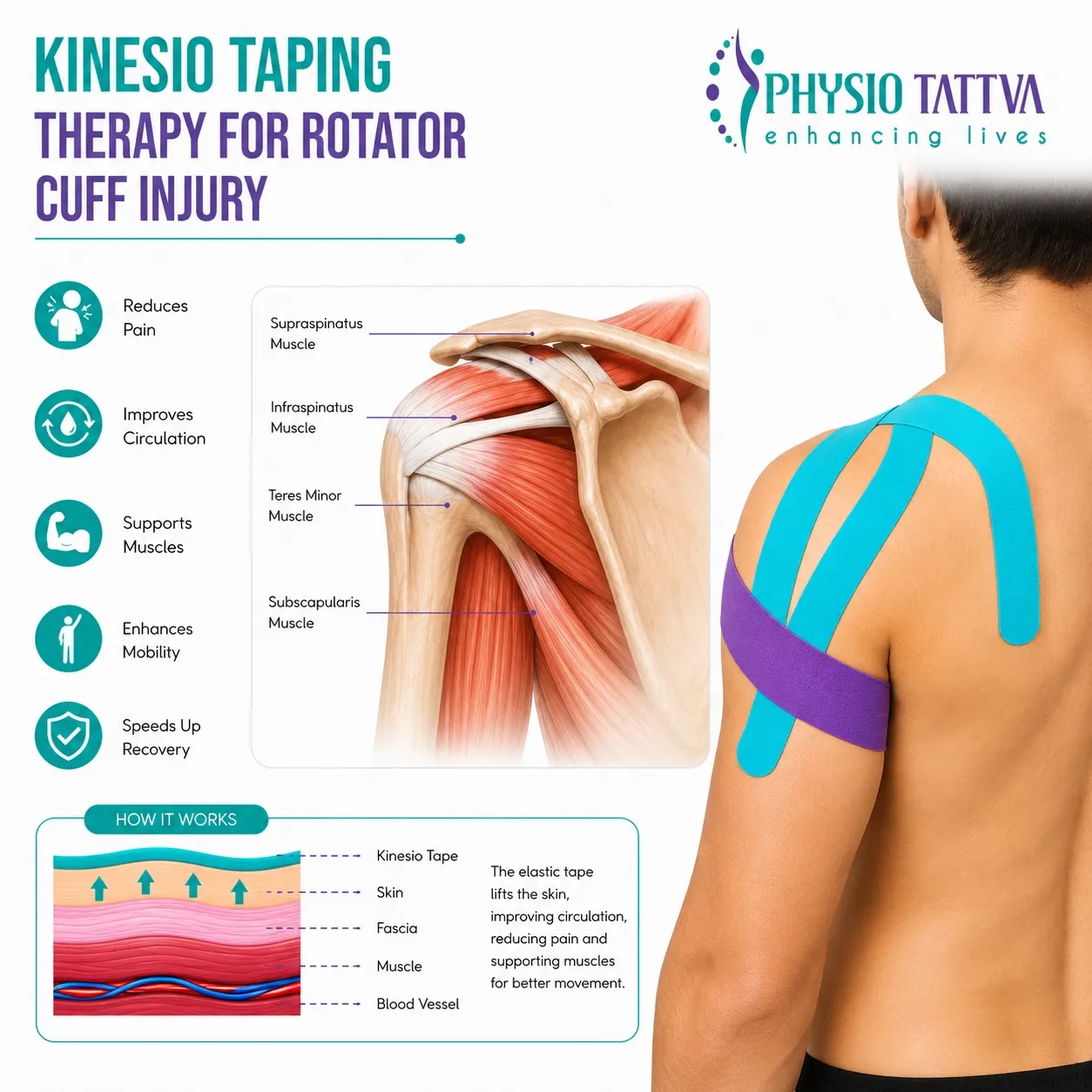
The rotator cuff isn't a single part but a group of four muscles and their tendons that surround the shoulder joint. Their job is crucial: to stabilize the head of the upper arm bone (humerus) within the shallow socket of the shoulder and to control the shoulder's rotation and elevation.
An injury can occur from:
- Acute Trauma: A fall onto an outstretched arm or a sudden, heavy lift.
- Repetitive Overuse: Common in sports like swimming, tennis, and baseball, or jobs that require repeated overhead motion.
- Degenerative Wear and Tear: Tendons can fray and thin with age, making them more susceptible to injury.
Symptoms typically include a dull ache deep in the shoulder, pain when lifting or lowering the arm, weakness, and difficulty sleeping on the affected side.
How Kinesio Taping Works: The Science Behind the Technique
Kinesio tape (or KT tape) is not your average athletic tape. It’s a flexible, elastic cotton tape with an acrylic adhesive, designed to mimic the elasticity of human skin. Instead of rigidly restricting motion, it works with the body to provide dynamic support.
When applied to the skin over an injured area, Kinesio tape works through several mechanisms:
- Decompression and Space: The tape gently lifts the skin, creating microscopic space between the skin and the underlying tissues. This decompression reduces pressure on pain receptors and creates more room for blood and lymphatic fluid to flow, helping to decrease swelling and inflammation.
- Neurological Feedback (Proprioception): The sensation of the tape on your skin continually stimulates nerve endings, making you more aware of your shoulder's position. This enhanced feedback loop helps your brain better control the joint, preventing compensatory movements that could cause further injury.
- Pain Gating: The light tactile sensation from the tape can "distract" the brain. According to the Gate Control Theory of Pain, non-painful stimuli (like the tape) can close the nerve "gates" to painful stimuli, effectively reducing the perception of pain.
- Structural Support: While flexible, the tape provides light structural support to the rotator cuff muscles and tendons, helping to offload stress and prevent over-stretching or over-contraction during movement.
Key Benefits of Kinesio Taping for Rotator Cuff Injuries
When used correctly as part of a physiotherapy-led rehabilitation program, Kinesio taping therapy provides targeted support to the injured shoulder. These benefits focus on pain relief, muscle function, and safe movement during recovery:
- Significant Pain Relief: By decompressing tissue and providing pain-gating signals, many users experience immediate pain reduction.
- Reduced Swelling and Inflammation: Improved lymphatic drainage helps clear out inflammatory byproducts more efficiently.
- Improved Muscle Function: The tape can be applied to either facilitate (assist) weak muscles or inhibit (relax) overused, tight muscles.
- Increased Functional Range of Motion: With reduced pain and better support, you can often move your shoulder more freely and confidently.
- Aids the Healing Process: By creating a healthier environment for the tissue and allowing for gentle, controlled movement, the tape supports the body's natural healing cycle.
Common Kinesio Taping Techniques for Rotator Cuff Injury
Disclaimer: The following are for informational purposes only. For best results and to ensure you are taping for your specific condition, it is highly recommended to consult a physical therapist or a certified Kinesio Taping practitioner.
General Application Tips:
- Skin must be clean, dry, and free of oils or lotions.
- Round the corners of your tape strips to prevent peeling.
- The first and last inch of tape (the "anchors") should be applied with zero stretch.
- Rub the tape after application to activate the heat-sensitive adhesive.
Technique 1: Decompression for the Point of Pain (The "Star" or "Asterisk")
This technique is excellent for localized pain at the front or side of the shoulder.
- Find the Pain: Locate the most tender spot on your shoulder with your finger.
- Cut Strips: Cut 2-3 strips of tape, each about 4-6 inches long.
- Apply First Strip: Tear the backing paper in the middle of one strip. With about 25-50% stretch, apply the center of the tape directly over the point of pain. Lay the ends down with no stretch.
- Create the Star: Apply the next 1-2 strips in the same manner, crossing over the first strip to form a "star" or "asterisk" pattern. This lifts the skin directly over the inflamed area.
Technique 2: Supraspinatus Tendon Support
The supraspinatus is the most commonly injured rotator cuff tendon. This application helps offload it.
- Positioning: Sit down and place the hand of your injured arm on your opposite hip. This exposes the top of the shoulder.
- Anchor: Take a full strip of tape. Anchor the first inch with no stretch just behind your collarbone.
- Apply: With about 25% stretch, guide the tape along the top of the shoulder blade, following the muscle towards the outside point of your shoulder. Lay the last inch down with no stretch.
- Decompression (Optional): You can add a shorter, decompressive strip directly over the point of the shoulder (where the tendon attaches), as described in Technique 1.
Technique 3: Postural and External Rotation Support
Poor posture (rounded shoulders) can worsen rotator cuff pain. This technique gently encourages better shoulder positioning.
- Anchor: Sit up straight. Anchor a full strip of tape on the front of your shoulder.
- Apply: With about 50% stretch, pull the tape diagonally across the front of the shoulder, over the top, and down toward the middle of your shoulder blade. The tension should create a gentle "pulling back" sensation.
- Secure: Lay the final anchor down on your back with no stretch.
Taping is a Tool, Not a Cure
It is vital to remember that Kinesio taping therapy for a rotator cuff injury is most effective when used as part of a comprehensive rehabilitation plan. It works best in conjunction with:
- Professional Diagnosis: See a doctor or physical therapist to confirm the injury and its severity.
- Physical Therapy: A targeted program of stretching and strengthening exercises is essential for long-term recovery.
- Rest and Activity Modification: Avoid activities that cause sharp pain.
- Ice or Heat: Use ice to manage acute inflammation and heat to relax tight muscles.
Enhancing Shoulder Recovery with Kinesio Taping Therapy
Kinesio taping therapy for a rotator cuff injury is a safe, effective, and evidence-supported method for managing pain, reducing inflammation, and supporting the shoulder through the healing process. By providing decompression, proprioceptive feedback, and gentle support, KT tape empowers you to stay active and take control of your recovery. For the best outcome, always combine taping with a professionally guided rehabilitation program tailored to your specific needs.
At Physiotattva physiotherapy clinics in Bangalore and Hyderabad, you receive personalised care tailored to your specific needs, ensuring effective results and comfort throughout your journey to recovery.
Don’t wait to start your recovery! Get in touch with Physiotattva for more details! Contact us at +91 89510 47001.
Why Physiotattva?
22+
50,000+
95%
200+
25+
4.8
Cities We Serve

Bangalore
At Physio Tattva, we are committed to bring access to quality physio care through ultra-modern clinics and high-skilled practitioners to all.
.webp)
Hyderabad
At Physio Tattva, we are committed to bring access to quality physio care through ultra-modern clinics and high-skilled practitioners to all.
.webp)
Vishakhapatnam
At Physio Tattva, we are committed to bring access to quality physio care through ultra-modern clinics and high-skilled practitioners to all.
Core Treatments
Core Conditions
Core Symptoms
Frequently Asked Questions
How long will the Kinesio tape stay on my shoulder?

Is Kinesio taping a standalone treatment for a rotator cuff injury?
Can Kinesio taping fix a complete rotator cuff tear?






%20(1)-p-3200.jpeg)


.jpg)
.webp)
.webp)
.webp)