




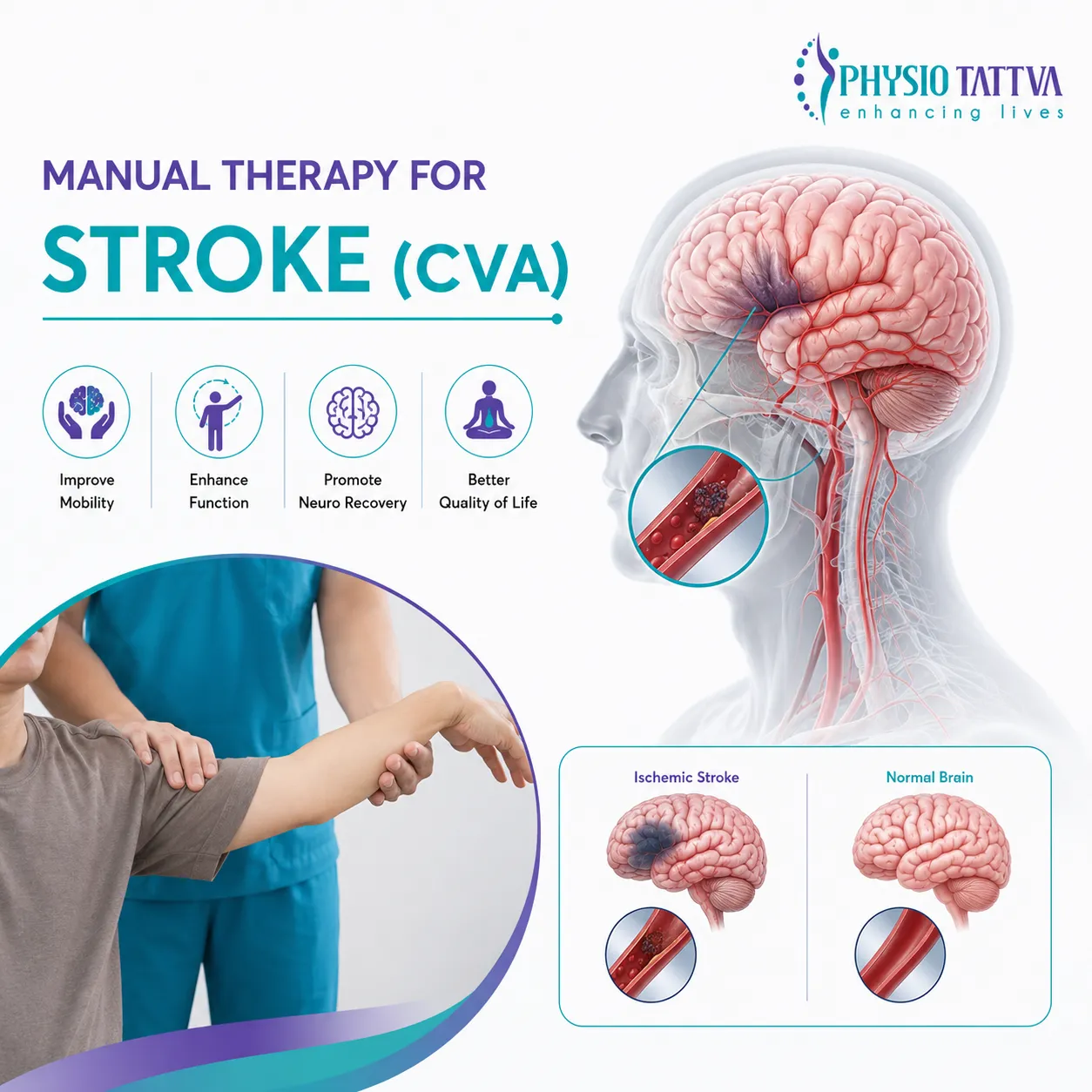
A stroke (Cerebrovascular Accident - CVA) can leave lasting physical impairments, affecting mobility, muscle tone, and sensory awareness. Recovery often involves a combination of therapies to address these issues. One such therapy is manual therapy, a hands-on treatment approach that focuses on improving movement, reducing spasticity, and enhancing muscle function.
In this article, we will explore how manual therapy plays a crucial role in stroke rehabilitation. We’ll delve into its primary goals, the key techniques used, and the benefits it offers in restoring independence and improving quality of life after a stroke. By understanding these methods, patients and healthcare providers can make informed decisions to support effective recovery.
What is Manual Therapy in the Context of Stroke Rehabilitation?
Manual therapy is a hands-on clinical approach that focuses on diagnosing and treating soft tissues and joint structures. In the context of stroke rehabilitation, it is an essential tool for addressing the secondary effects of a stroke, rather than treating the brain injury itself.
This therapy aims to improve mobility, reduce muscle tone, and facilitate overall motor recovery. Here’s how it applies to stroke rehabilitation:
- Definition: Manual therapy uses skilled, hands-on techniques to diagnose and treat soft tissues and joint structures.
- Application in Stroke (CVA): In stroke rehab, manual therapy doesn’t aim to "cure" the brain injury but focuses on alleviating neuromuscular and musculoskeletal impairments caused by the brain lesion.
- Core Principle: It serves as a preparatory tool to normalize muscle tone, improve tissue mobility, and provide sensory input. These improvements enhance the effectiveness of subsequent therapeutic exercises and functional training. Manual therapy is a critical part of a comprehensive rehabilitation program, not a standalone treatment.
Primary Goals of Manual Therapy for Stroke Patients
Manual therapy is used to address the common physical consequences of a stroke. It targets various impairments that affect movement, muscle tone, and overall recovery. The primary goals of manual therapy in stroke rehabilitation include:
Managing Abnormal Muscle Tone
Manual therapy techniques help to regulate muscle tone, which is often disrupted after a stroke. This includes:
- Reducing Spasticity/Hypertonicity: Inhibitory techniques temporarily reduce muscle overactivity, decreasing stiffness and allowing for more controlled movement.
- Increasing Tone in Flaccid Muscles: Facilitatory techniques provide sensory input to stimulate hypotonic or flaccid muscles, "waking them up" and encouraging movement.
Improving Range of Motion (ROM) and Preventing Contractures
Maintaining joint flexibility and preventing immobility are key goals in stroke recovery:
- Passive and Active-Assisted Stretching: These techniques help maintain joint and muscle flexibility, preventing contractures that can limit movement.
- Joint Mobilization: This technique helps address stiffness in joints that have become immobile due to weakness or spasticity, improving their range of motion.
Enhancing Proprioception and Sensory Awareness
Manual therapy provides important sensory feedback to the brain, which is crucial for stroke recovery:
- Sensory Input: The hands-on approach gives the brain crucial information about limb position, movement, and pressure. This process helps "re-map" the affected side of the body, aiding in cortical reorganization.
Reducing Pain
Manual therapy also plays a key role in managing pain that results from the effects of stroke:
- Pain Relief: Techniques address pain caused by joint stiffness, muscle shortening, or compensatory overuse of other body parts (e.g., shoulder pain in the hemiplegic arm).
Facilitating Normal Movement Patterns
Manual therapy techniques assist in improving functional movement:
- Techniques like PNF and NDT: These guide the patient through more efficient and functional movement patterns, helping to reduce compensatory strategies that may develop due to muscle weakness or spasticity.
Managing Edema
Swelling is a common issue in stroke patients, especially in the affected limb:
- Manual Lymphatic Drainage: This technique helps reduce swelling in a dependent, paretic limb, promoting fluid drainage and alleviating discomfort.
Key Manual Therapy Techniques Used for Stroke (CVA)
These are the core techniques used in manual therapy to assist stroke rehabilitation. Each technique serves a specific purpose in addressing the various impairments caused by a stroke.
Soft Tissue Mobilization (STM)
Soft Tissue Mobilization is a broad category of therapeutic massage techniques, including effleurage, petrissage, and friction. It focuses on improving soft tissue health and mobility.
Primary Goals in Stroke Rehab:
- Reduce spasticity and muscle guarding.
- Improve circulation and tissue extensibility.
- Decrease pain and provide calming sensory input.
Joint Mobilization
Joint mobilization involves skilled, passive movements of a joint at varying speeds and amplitudes (Grades I-IV) to improve joint function.
Primary Goals in Stroke Rehab:
- Increase joint range of motion (ROM) by stretching the joint capsule.
- Reduce pain (Grade I/II for neurophysiological effect).
- Improve joint mechanics to allow for better functional movement.
Myofascial Release (MFR)
This technique involves applying gentle, sustained pressure to the myofascial connective tissue to eliminate restrictions that limit movement.
Primary Goals in Stroke Rehab:
- Release fascial adhesions contributing to stiffness and pain.
- Improve overall tissue mobility and postural alignment.
Proprioceptive Neuromuscular Facilitation (PNF)
PNF uses diagonal and spiral patterns of movement combined with specific sensory cues like resistance, stretch, and verbal commands to stimulate motor function.
Primary Goals in Stroke Rehab:
- Facilitate desired muscle activation and inhibit spasticity.
- Improve motor control, strength, and endurance.
- Re-educate functional movement patterns (e.g., rolling, reaching).
Neuro-Developmental Treatment (NDT) / Bobath Concept
NDT is a problem-solving approach using "handling" techniques to inhibit abnormal muscle tone and facilitate normal posture and movement patterns.
Primary Goals in Stroke Rehab:
- Normalise muscle tone as a prerequisite for movement.
- Inhibit primitive reflexes and abnormal movement synergies.
- Facilitate active, functional movements in a more typical sequence.
Manual Lymphatic Drainage (MLD)
MLD uses gentle, rhythmic techniques to encourage the natural drainage of lymph, which helps eliminate waste products from tissues.
Primary Goals in Stroke Rehab: Reduce edema (swelling) in a flaccid or dependent limb, which can be painful and limit movement.
Strain-Counterstrain
Strain-Counterstrain is a gentle positional release technique that places the affected muscle in a position of greatest ease to "reset" its neural drive.
Primary Goals in Stroke Rehab: Decrease muscle hypertonicity and tender points with minimal discomfort for the patient.
How Manual Therapy Works in Stroke Rehabilitation: The Mechanism of Action
Manual therapy affects the body through both neurological and biomechanical mechanisms, improving movement, reducing pain, and enhancing tissue recovery. These two aspects work together to facilitate recovery in stroke patients.
Neurological Effects
The sensory input from the therapist’s hands (touch, pressure, and stretch) travels to the brain, triggering several beneficial responses:
- Influence Neuroplasticity: The sensory feedback helps the brain reorganize and create a template for correct movement and sensation. This aids in functional recovery and motor control.
- Inhibit Spasticity: Techniques such as prolonged stretching or deep pressure activate the Golgi Tendon Organ (GTO), which has an inhibitory effect on overactive muscles, reducing spasticity.
- Reduce Pain: Manual therapy activates the gate control theory of pain, where non-painful sensory input closes the nerve "gates" to painful stimuli, effectively reducing pain.
Biomechanical Effects
In addition to neurological effects, manual therapy has biomechanical benefits, improving physical function:
- Breaks Down Adhesions: Manual techniques help break down adhesions in muscles, fascia, and joint capsules, improving tissue mobility.
- Elongates Shortened Tissues: Techniques like stretching help lengthen tissues that may have shortened, such as in contractures, improving flexibility and movement.
- Improves Fluid Dynamics: Manual therapy promotes better blood flow and lymphatic drainage, aiding in tissue recovery and reducing swelling.
Important Considerations and Contraindications for Manual Therapy
Manual therapy is a skilled treatment and must be performed by a qualified professional. It should always be part of an integrated rehabilitation plan to achieve the best results.
- It Must Be Integrated: Manual therapy should be combined with active movement, therapeutic exercises, and functional tasks to solidify recovery gains and improve overall function.
- Patient-Specific: Techniques must be tailored based on the patient’s specific condition (e.g., spastic vs. flaccid, acute vs. chronic stage).
Contraindications/Precautions: Manual therapy should be used cautiously or avoided in the following conditions:
- Deep Vein Thrombosis (DVT): Mobilizing a limb with DVT can risk clot dislodgement, causing serious complications.
- Unstable Fractures or Severe Osteoporosis: Avoid manual therapy on unstable joints or bones weakened by osteoporosis.
- Open Wounds or Acute Skin Infections: Avoid therapy on areas with open wounds or active skin infections.
- Uncontrolled Hypertension: High blood pressure can increase the risk of complications during manual therapy.
- Acute Inflammation or Hematoma: Manual therapy may worsen acute inflammation or bruising in the affected area.
- Shoulder Subluxation: Handle with care; aggressive mobilization should be avoided to prevent further joint damage.
Rebuild Strength and Mobility After Stroke with Manual Therapy at Physiotattva
Manual therapy is an essential and effective tool in stroke rehabilitation. It helps address secondary impairments like spasticity, limited range of motion, and poor sensory awareness, facilitating more effective functional training. When applied by a skilled therapist as part of a comprehensive, personalized rehabilitation plan, manual therapy plays a crucial role in improving motor recovery, enhancing independence, and significantly boosting overall quality of life. By incorporating manual therapy into stroke recovery, patients can regain mobility, strength, and confidence on their path to rehabilitation.
At Physiotattva physiotherapy clinics in Bangalore and Hyderabad, you receive personalised care tailored to your specific needs, ensuring effective results and comfort throughout your journey to recovery.
Don’t wait to start your recovery! Get in touch with Physiotattva for more details! Contact us at +91 89510 47001.
Why Physiotattva?
22+
50,000+
95%
200+
25+
4.8
Cities We Serve

Bangalore
At Physio Tattva, we are committed to bring access to quality physio care through ultra-modern clinics and high-skilled practitioners to all.
.webp)
Hyderabad
At Physio Tattva, we are committed to bring access to quality physio care through ultra-modern clinics and high-skilled practitioners to all.
.webp)
Vishakhapatnam
At Physio Tattva, we are committed to bring access to quality physio care through ultra-modern clinics and high-skilled practitioners to all.
Core Treatments
Core Conditions
Core Symptoms
Frequently Asked Questions
Is manual therapy painful for stroke patients?

How soon after a stroke can I start manual therapy?
What's the difference between manual therapy and a regular massage?




%20(1)-p-3200.jpeg)


.jpg)
.webp)
.webp)
.webp)