





Nagging knee pain that feels tender, swollen, and warm to the touch can bring your daily activities to a grinding halt. If this sounds familiar, you might be dealing with knee bursitis. While rest and ice are foundational, many are finding remarkable relief and support through a non-invasive, drug-free method such as, Kinesio taping therapy for knee bursitis.
This article will walk you through what knee bursitis is, how Kinesio tape works its magic, and step-by-step instructions for common application techniques to help you get back on your feet.
What Is Knee Bursitis?
Your knee joint is cushioned by small, fluid-filled sacs called bursae (singular: bursa). These sacs act like tiny pillows, reducing friction between your bones, tendons, and muscles.
Knee bursitis occurs when one or more of these bursae become inflamed. The most commonly affected are:
- Prepatellar bursitis: Inflammation of the bursa on top of the kneecap (patella). Often called "housemaid's knee" or "carpet layer's knee."
- Infrapatellar bursitis: Inflammation below the kneecap.
- Pes anserine bursitis: Inflammation on the inner side of your knee, just below the joint.
This inflammation leads to the classic symptoms of pain, localised swelling, tenderness, and sometimes redness or warmth. It's often caused by repetitive pressure, overuse, a direct blow to the knee, or an underlying condition like arthritis.
How Can Kinesio Taping Therapy Help with Knee Bursitis?
Kinesio tape (or kinesiology tape) isn't your typical rigid athletic tape. It's a highly elastic, breathable cotton tape with an acrylic adhesive. Its unique properties, designed to mimic the elasticity of human skin, make it a powerful tool for therapeutic purposes.
When applied correctly for knee bursitis, Kinesio tape works in four primary ways:
- Pain Decompression: The tape gently lifts the skin away from the underlying tissue. This microscopic lift creates space, which reduces pressure on pain receptors located just beneath the skin, providing immediate and significant pain relief.
- Swelling and Inflammation Reduction: By creating space, the tape also improves circulation and opens up lymphatic drainage pathways. This allows excess fluid and inflammatory byproducts to be flushed away from the inflamed bursa more efficiently, visibly reducing swelling.
- Proprioceptive Support: The tape on your skin provides continuous sensory feedback to your brain (proprioception). This feedback makes you more aware of your knee's position, encouraging better movement patterns and stability without restricting your range of motion.
- Inhibition of Overactive Muscles: Taping can help relax muscles around the knee that may be in spasm or overworking due to the injury, further reducing strain on the joint.
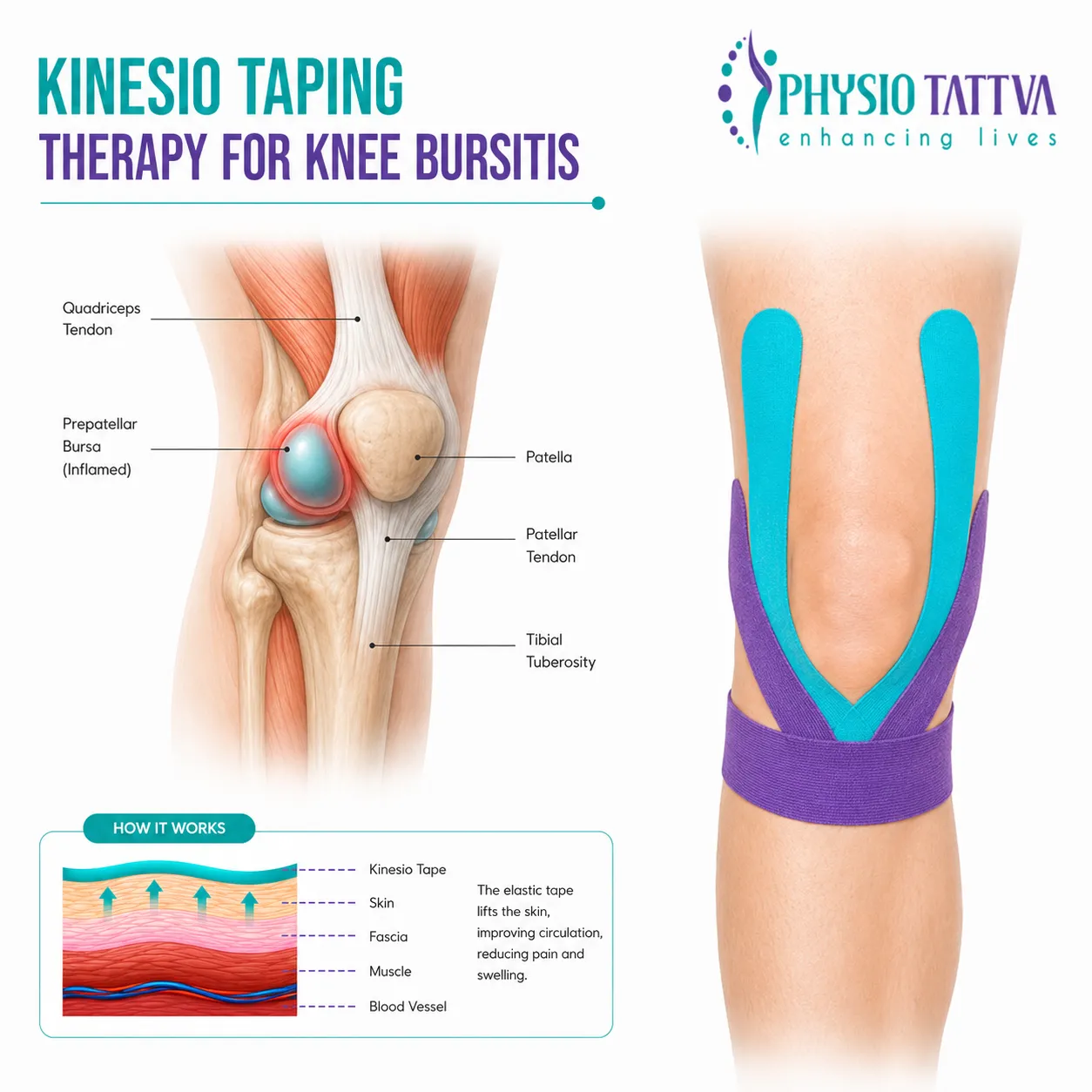
Kinesio Taping Application for Knee Bursitis: Step-by-Step
While it's always best to have a physical therapist or trained professional apply the tape for the first time, you can learn to do it yourself for ongoing support.
Disclaimer: This information is for educational purposes only. Always consult with a healthcare professional to get an accurate diagnosis and personalized treatment plan. If you experience numbness, tingling, or increased pain, remove the tape immediately.
Preparation is Key
Taking a few moments to prepare the skin properly helps ensure better tape adhesion, improved comfort, and longer-lasting results from Kinesio taping. Proper preparation also reduces the risk of irritation and premature peeling:
- Clean and Dry Skin: The area must be free of oils, lotions, and sweat. Use rubbing alcohol to clean the skin and let it dry completely.
- Trim Hair: For best adhesion and painless removal, trim any significant hair in the area.
- Round the Corners: Cut the corners of your tape strips into a rounded shape. This prevents them from catching on clothing and peeling off prematurely.
- "Rip, Don't Cut": When applying, tear the paper backing, not the tape itself.
Technique 1: The Swelling Reduction "Fan" (for an Inflamed Bursa)
This technique is excellent for directly targeting swelling and promoting lymphatic drainage.
- Measure and Cut: Cut a strip of tape long enough to stretch over the swollen area. Keep about 2 inches on one end as the "anchor" and cut the rest of the strip lengthwise into 4-5 smaller "tails," creating a fan or octopus shape.
- Position the Knee: Sit with your knee bent at about a 90-degree angle.
- Place the Anchor: Apply the solid anchor end of the tape without any stretch to an area just above or to the side of the most swollen part of your knee.
- Apply the Tails: One by one, gently remove the paper backing from each tail. Apply them with very light to no stretch directly over the swollen bursa, fanning them out to cover the entire area.
- Activate: Rub the entire application vigorously for a few seconds to activate the heat-sensitive adhesive.
Technique 2: The Donut Hole Decompression
This method is designed to create a decompressed space directly over the painful bursa, helping to reduce pressure and improve comfort during movement. Note that accurate placement is important for effective results, so take your time during application:
- Measure and Cut: You will need two I-strips, each about 6-8 inches long.
- Position the Knee: Sit with your knee bent to 90 degrees.
- Apply the First Strip: Tear the paper backing in the middle of the first strip. Applying a 25-50% stretch, place the center of the tape just below the most painful or swollen point. Lay down the ends (anchors) with no stretch.
- Apply the Second Strip: Repeat the process with the second strip, this time placing it just above the painful point. The two strips should form a frame or "donut hole" around the bursa.
- Activate: Rub the tape to secure the adhesive.
Integrating Kinesio Taping into a Complete Recovery Plan
Kinesio taping therapy for knee bursitis is a valuable supportive tool, but the best results are achieved when it is combined with other evidence-based treatments. Using taping as part of a structured recovery plan helps address both symptoms and underlying causes, supporting a more complete and lasting recovery:
- R.I.C.E.: Rest, Ice, Compression, and Elevation, especially in the first 48-72 hours.
- Physical Therapy: A therapist can provide targeted exercises to strengthen the muscles supporting your knee (like the quadriceps and hamstrings) and improve flexibility, addressing the root cause of the issue.
- Activity Modification: Temporarily avoid activities that put direct pressure on your knee (like kneeling) or involve repetitive bending.
- Anti-inflammatory Measures: As recommended by your doctor, this may include over-the-counter NSAIDs.
Effective Knee Bursitis Management Through Physiotherapy at Physiotattva
Knee bursitis can be painful and disruptive, but effective management is possible with the right approach. Kinesio taping therapy for knee bursitis offers a safe, non-invasive way to reduce pain, control swelling, and support natural movement without restricting activity. By improving circulation, enhancing proprioception, and gently unloading irritated tissues, taping creates a better environment for healing. However, it works best when combined with physiotherapy, activity modification, and appropriate inflammation control. With proper application and professional guidance, Kinesio taping can play a valuable role in recovery, helping you move more comfortably, regain confidence, and return to daily activities with greater ease and long-term joint protection and functional stability.
At Physiotattva physiotherapy clinics in Bangalore and Hyderabad, you receive personalised care tailored to your specific needs, ensuring effective results and comfort throughout your journey to recovery.
Don’t wait to start your recovery! Get in touch with Physiotattva for more details! Contact us at +91 89510 47001.
Why Physiotattva?
22+
50,000+
95%
200+
25+
4.8
Cities We Serve

Bangalore
At Physio Tattva, we are committed to bring access to quality physio care through ultra-modern clinics and high-skilled practitioners to all.
.webp)
Hyderabad
At Physio Tattva, we are committed to bring access to quality physio care through ultra-modern clinics and high-skilled practitioners to all.
.webp)
Vishakhapatnam
At Physio Tattva, we are committed to bring access to quality physio care through ultra-modern clinics and high-skilled practitioners to all.


%20(1)-p-3200.jpeg)

.jpg)
.webp)
.webp)
.webp)