




Living with osteoporosis often involves managing ongoing pain, stiffness, and discomfort caused by postural changes and muscle strain. While medical treatment addresses bone strength, hot and cold therapy for osteoporosis offers a safe, non-invasive way to relieve daily symptoms.
This article explains how heat and cold therapy can be used effectively to manage osteoporosis-related pain and support movement.
Understanding the Role of Heat Therapy (Thermotherapy)
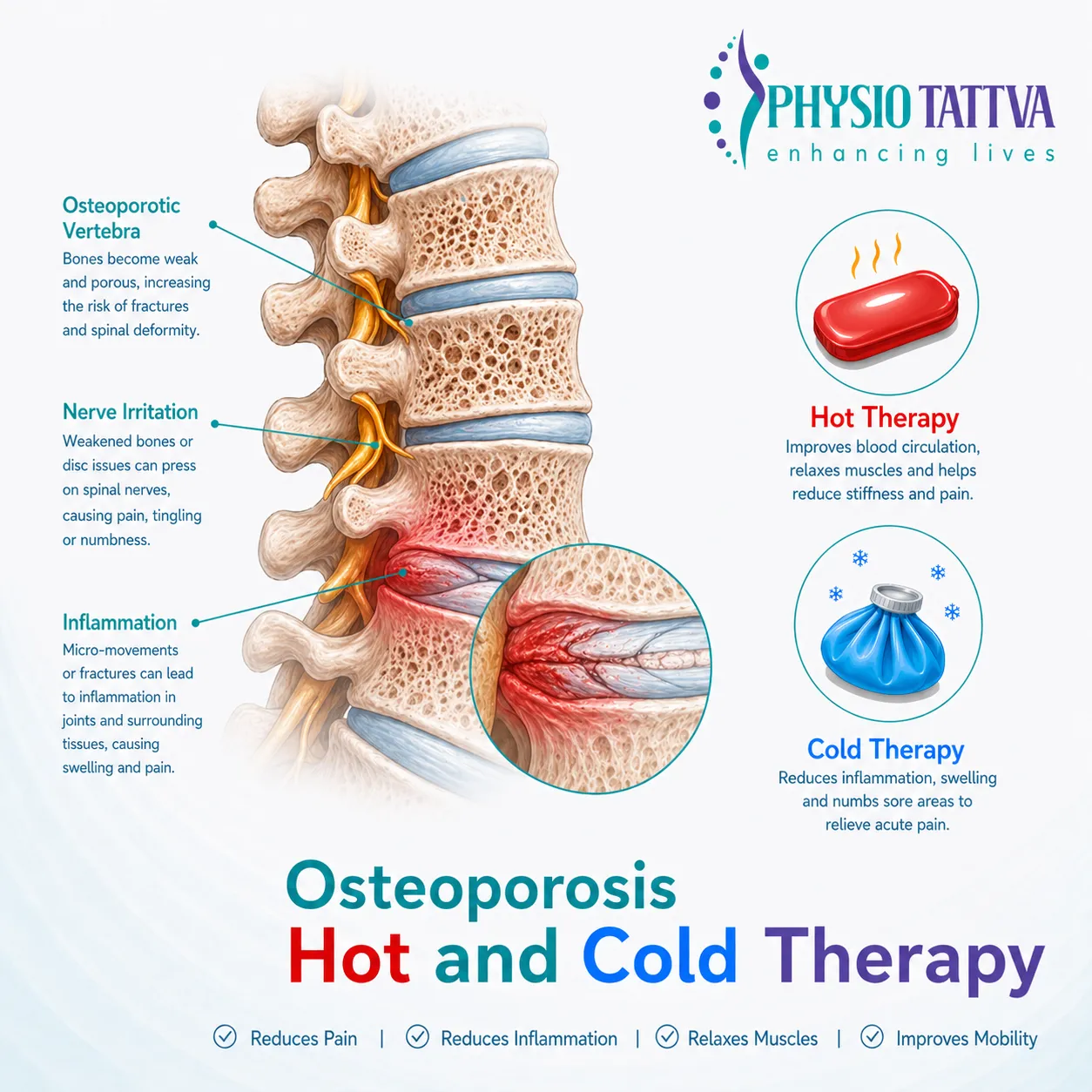
Heat therapy works by increasing blood flow (vasodilation) to a specific area. This enhanced circulation delivers more oxygen and nutrients to the tissues, which can help heal damaged tissue and relax sore muscles.
How Heat Therapy Helps with Osteoporosis Symptoms
Heat therapy is especially useful for easing muscle-related discomfort that often accompanies osteoporosis. It works by improving circulation and relaxing overworked soft tissues, which helps reduce daily pain and stiffness.
- Reduces Muscle Stiffness: Osteoporosis can lead to changes in posture (like a stooped back, or kyphosis), which puts a chronic strain on back and neck muscles. Heat helps relax these tight, overworked muscles, reducing stiffness, especially in the morning or after periods of inactivity.
- Decreases Chronic Pain: For persistent, dull aches in the back, hips, or joints that are muscular in origin, heat can provide significant comfort by soothing tense muscle fibers.
- Improves Flexibility: Applying heat before gentle stretching or physical therapy can warm up the muscles, making them more pliable and reducing the risk of strain during exercise.
When to Use Heat?
Heat therapy is most effective in specific situations where muscles feel tight rather than inflamed.
- For chronic muscle pain and aches.
- To relieve general stiffness in the back, neck, or joints.
- Before performing gentle, doctor-approved exercises or stretching.
How to Apply Heat Safely?
Using heat correctly is essential to gain benefits while avoiding skin irritation or burns.
- Dry Heat: Electric heating pads, heated gel packs.
- Moist Heat: Warm, damp towels, warm baths, or showers. Many people find moist heat to be more effective at penetrating muscle tissue.
- Duration: Apply for 15-20 minutes at a time.
- Protection: Always place a towel or cloth barrier between the heat source and your skin to prevent burns. Never apply a heating pad directly to the skin or fall asleep while using one.
Understanding the Role of Cold Therapy (Cryotherapy)
Cold therapy works by constricting blood vessels (vasoconstriction). This process reduces blood flow to an area, which helps decrease inflammation, swelling, and nerve activity, providing a temporary numbing effect.
How Cold Therapy Helps with Osteoporosis Symptoms?
Cold therapy is particularly effective for managing sudden pain, swelling, and inflammation that may occur with minor injuries or activity-related flare-ups in people with osteoporosis.
- Reduces Acute Inflammation & Swelling: If you experience a minor fall or overexert yourself during activity, cold therapy is your first line of defense. It can minimize swelling and bruising around a painful joint or muscle.
- Numbs Acute Pain: Cold is an excellent analgesic (pain-reliever). It can numb the sharp pain associated with an acute injury or flare-up.
- Soothes Post-Exercise Soreness: After physical therapy or a new exercise, applying cold can help reduce the inflammation and discomfort that may follow.
When to Use Cold?
Cold therapy is most appropriate during phases where inflammation and tenderness are present.
- Immediately after an acute injury (like a bump or mild muscle strain) to reduce swelling.
- For areas that are visibly swollen, red, or warm to the touch.
- After activities or exercises that cause a flare-up of pain and inflammation.
How to Apply Cold Safely?
Correct application is essential to avoid skin irritation or nerve damage while maximising pain relief.
- Tools: Ice packs, frozen gel packs, or even a bag of frozen vegetables.
- Duration: Apply for 15-20 minutes at a time. Leaving ice on for too long can cause skin or nerve damage.
- Protection: Always wrap the cold pack in a thin towel or cloth to protect your skin from ice burn.
- Post-Application: Allow your skin to return to normal temperature before reapplying.
Important Safety Precautions for Hot and Cold Therapy in Osteoporosis
Always consult your doctor or physical therapist before starting any new treatment, including hot and cold therapy for osteoporosis. They can provide personalized advice based on your health status.
- Protect Your Skin: Never apply a very hot or frozen pack directly to your skin. Use a protective barrier like a towel.
- Mind the Time: Limit applications to 15-20 minutes to prevent skin damage, burns, or frostbite.
- Check for Comorbidities: If you have diabetes, peripheral neuropathy, or any condition that causes decreased sensation, be extremely cautious, as you may not feel if the therapy is too hot or cold.
- Avoid Certain Areas: Do not apply heat or cold to open wounds, infected skin, or areas with poor circulation.
- Listen to Your Body: If the therapy seems to be making your pain worse, stop immediately.
What Hot and Cold Therapy Cannot Do for Osteoporosis?
While hot and cold therapy for osteoporosis can be extremely helpful for managing pain, stiffness, and muscle discomfort, it is important to have clear and realistic expectations about its role. These therapies are supportive, not curative, and should always be used alongside proper medical care.
- It does not improve, rebuild, or restore bone density weakened by osteoporosis.
- It does not prevent fractures or protect fragile bones from injury.
- It is not a replacement for essential osteoporosis treatments such as prescribed medications, calcium and Vitamin D supplementation, or doctor-approved weight-bearing and strengthening exercises.
Improving Quality of Life While Living with Osteoporosis at Physiotattva
Hot and cold therapy for osteoporosis is a simple yet powerful component of a comprehensive pain management plan. By understanding when to use heat for stiffness and chronic aches and when to use cold for acute pain and inflammation, you can gain greater control over your symptoms. It empowers you to manage discomfort, which in turn helps you stay active, participate in your prescribed exercises, and maintain a better quality of life while living with osteoporosis.
At Physiotattva physiotherapy clinics in Bangalore and Hyderabad, you receive personalised care tailored to your specific needs, ensuring effective results and comfort throughout your journey to recovery.
Don’t wait to start your recovery! Get in touch with Physiotattva for more details! Contact us at +91 89510 47001.
Why Physiotattva?
22+
50,000+
95%
200+
25+
4.8
Cities We Serve

Bangalore
At Physio Tattva, we are committed to bring access to quality physio care through ultra-modern clinics and high-skilled practitioners to all.
.webp)
Hyderabad
At Physio Tattva, we are committed to bring access to quality physio care through ultra-modern clinics and high-skilled practitioners to all.
.webp)
Vishakhapatnam
At Physio Tattva, we are committed to bring access to quality physio care through ultra-modern clinics and high-skilled practitioners to all.
Core Treatments
Core Conditions
Core Symptoms
Frequently Asked Questions
Is hot and cold therapy safe for people with osteoporosis?

When should heat be used for osteoporosis-related pain?
When is cold therapy more appropriate?
Can hot and cold therapy improve bone density?





%20(1)-p-3200.jpeg)


.jpg)
.webp)
.webp)
.webp)