





That persistent tingling, numbness, and aching pain in your wrist and hand, if you're one of the millions suffering from Carpal Tunnel Syndrome (CTS), you know how disruptive it can be. Simple tasks like typing, gripping a coffee cup, or even sleeping can become a painful challenge.
While traditional treatments like wrist splints, steroid injections, and surgery have their place, many are searching for safer, non-invasive, and effective alternatives. This is where pulsed electromagnetic fields therapy for Carpal Tunnel Syndrome (CTS) emerges as a promising, science-backed solution.
This article will explore how PEMF therapy works to address the root causes of CTS, offering a path toward lasting relief without drugs or surgery.
What Is Carpal Tunnel Syndrome?
Before diving into the solution, it's essential to understand the problem. The carpal tunnel is a narrow passageway in your wrist, formed by bones and ligaments. The median nerve, which controls sensation and movement in your thumb and first three fingers, runs through this tunnel.
Carpal Tunnel Syndrome occurs when this tunnel narrows or the tissues surrounding the nerve become swollen, placing pressure on the median nerve. This compression leads to the classic symptoms:
- Pain, numbness, and tingling in the hand and fingers
- A feeling of weakness in the hand and a tendency to drop objects
- Pain that radiates up the arm
- Symptoms that often worsen at night
The Limitations of Conventional CTS Treatments
Many people with Carpal Tunnel Syndrome initially rely on conventional treatment options to manage symptoms and maintain daily function. While these approaches can be helpful in certain stages, they often provide only short-term relief and may not address the underlying causes of the condition.
- Wrist Splints: Help to keep the wrist in a neutral position, but don't address the underlying inflammation.
- Corticosteroid Injections: Can provide temporary relief by reducing swelling, but the effects often wear off, and repeated injections can weaken tendons.
- Surgery (Carpal Tunnel Release): An effective but invasive option that involves cutting the ligament to relieve pressure on the nerve. It comes with risks, a significant recovery period, and is typically a last resort.
In many cases, these treatments focus on controlling symptoms rather than correcting the cellular and inflammatory dysfunction contributing to ongoing pain and nerve compression.
Why PEMF Therapy Is Emerging as a CTS Treatment Option
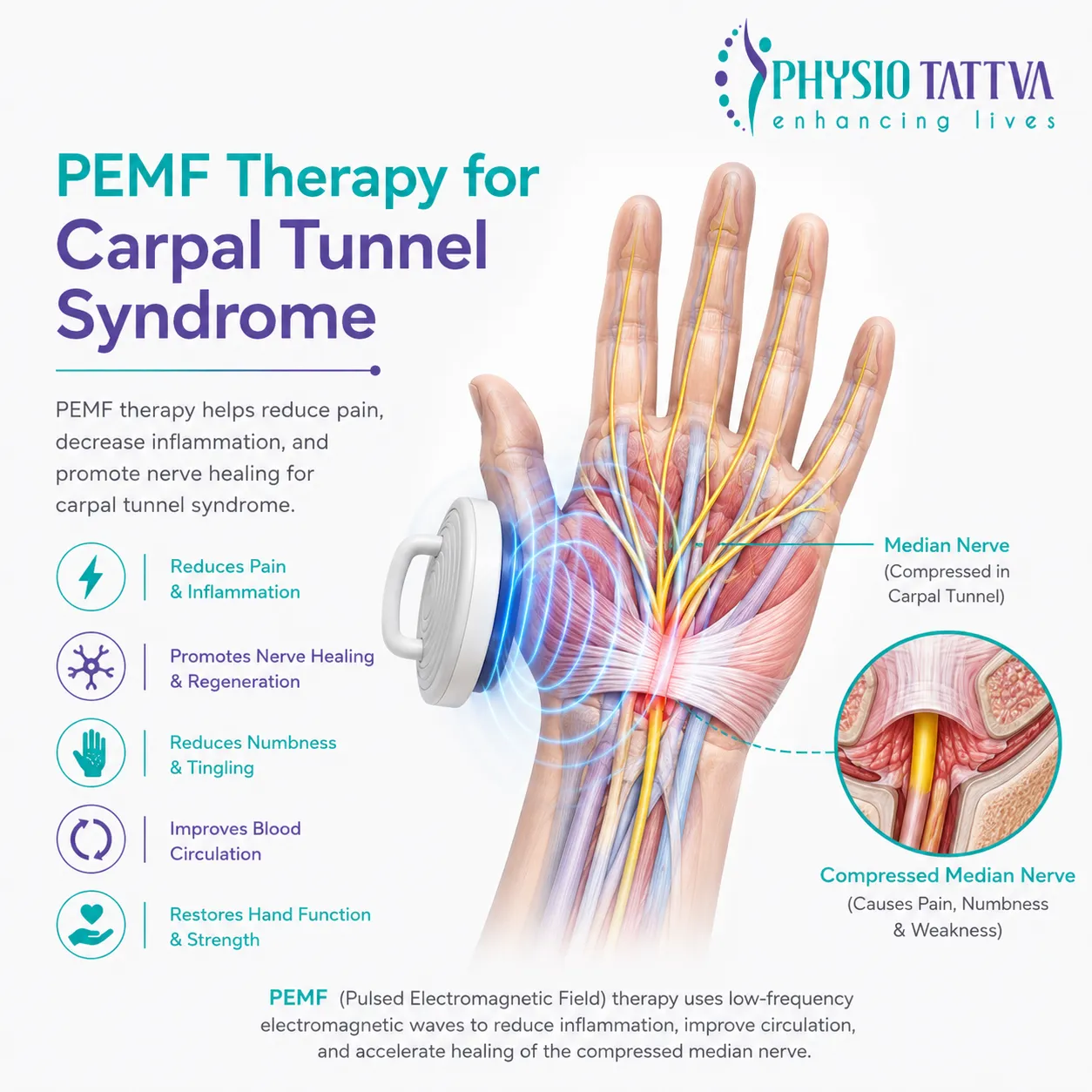
Pulsed Electromagnetic Fields (PEMF) therapy is gaining attention as a modern, non-invasive approach for managing Carpal Tunnel Syndrome. It uses low-frequency, pulsed magnetic fields to stimulate cellular activity and support the body’s natural healing processes. When tissues are inflamed or injured, their normal electrical balance is disrupted, which slows recovery and prolongs pain.
PEMF therapy works by restoring this cellular balance, helping tissues function and repair more efficiently. This cellular-level action makes PEMF particularly useful for conditions like CTS, where inflammation and nerve irritation play a central role.
- Supports Cellular Energy Production: Helps restore healthy electrical activity within cells, improving their ability to heal
- Reduces Inflammation Naturally: Encourages movement of fluids and ions, easing swelling around the median nerve
- Enhances Tissue Repair: Promotes better oxygen and nutrient delivery to affected nerves and soft tissues
- Non-Invasive and Drug-Free: Provides therapeutic benefits without injections, medication, or surgery
How PEMF Therapy Works for Carpal Tunnel Syndrome
When applied to the wrist and hand, PEMF therapy directly targets the underlying causes of carpal tunnel pain and dysfunction in several key ways:
Reduces Inflammation and Swelling
This is the primary mechanism of action for CTS. PEMF pulses help to improve the transport of ions across cell membranes, which actively pushes out the fluid and inflammatory mediators causing the swelling. By reducing this swelling, pressure on the median nerve is directly alleviated.
Enhances Blood Circulation
The magnetic fields increase blood flow to the affected area. Improved circulation delivers more oxygen and essential nutrients to the damaged nerve and surrounding tissues while more efficiently removing metabolic waste. This process accelerates healing and repair.
Promotes Nerve Repair and Regeneration
Research has shown that PEMF can stimulate the production of proteins essential for nerve growth and repair. For CTS sufferers, this means PEMF can help heal the compressed and damaged median nerve, restoring its proper function over time.
Provides Natural, Drug-Free Pain Relief
PEMF therapy has been shown to stimulate the production of endorphins, the body's natural painkillers. It also helps to interrupt the pain signals being sent from the median nerve to the brain, providing significant relief without the side effects of pain medication.
Key Benefits of Using PEMF Therapy for CTS
PEMF therapy offers a unique combination of safety, convenience, and therapeutic effectiveness, making it an attractive option for individuals seeking non-invasive management of Carpal Tunnel Syndrome. By working at a cellular level, it not only helps control symptoms but also supports the body’s natural healing mechanisms.
- Non-Invasive and Safe: No needles, no incisions, and no downtime. PEMF is a gentle therapy with a very high safety profile.
- Targets the Root Cause: Unlike medications that just mask pain, PEMF works at a cellular level to reduce inflammation and promote actual healing.
- Drug-Free Management: A perfect option for those looking to avoid the side effects and dependency associated with long-term use of pain relievers or steroids.
- Convenient At-Home Treatment: Many modern PEMF devices are portable and designed for easy use at home, allowing for consistent and convenient treatment sessions.
- Complements Other Therapies: PEMF can be safely used alongside other treatments like physical therapy, stretching, and even wrist splinting to enhance overall results.
Scientific Evidence Supporting PEMF Therapy for CTS
A growing body of clinical research supports the use of pulsed electromagnetic fields therapy for carpal tunnel syndrome cts. Studies have demonstrated that patients undergoing PEMF therapy reported significant reductions in pain, improved nerve conduction velocity (a measure of nerve health), and increased grip strength compared to placebo groups. This evidence solidifies its position as a legitimate therapeutic modality, not just a wellness trend.
How to Use a PEMF Device for Carpal Tunnel
Using a PEMF device for Carpal Tunnel Syndrome is simple and can be easily incorporated into your daily routine. When used correctly and consistently, PEMF therapy can help reduce pain, support nerve healing, and enhance the benefits of other treatments. Always follow your device manufacturer’s guidelines or your physiotherapist’s recommendations for safe use.
- Position the Applicator: Place the device on the palm side of your wrist, directly over the carpal tunnel.
- Select the Program: Follow the device's instructions for the appropriate frequency and intensity setting for nerve pain and inflammation.
- Treatment Duration: Sessions typically last between 15-30 minutes.
- Consistency is Key: For best results, treatments should be performed 1-2 times daily, especially during the initial phase of therapy.
Expert-Led PEMF Therapy for Carpal Tunnel Syndrome at Physiotattva
Living with Carpal Tunnel Syndrome can limit even the simplest daily activities, but effective, non-invasive options are available. Pulsed electromagnetic fields (PEMF) therapy for Carpal Tunnel Syndrome supports the body’s natural healing processes by reducing inflammation, easing nerve compression, and improving wrist and hand function. By working at a cellular level, PEMF therapy offers more than short-term symptom control; it promotes long-term recovery. If you’re seeking a drug-free approach to managing CTS, consulting a healthcare professional can help determine whether PEMF therapy is the right step forward.
At Physiotattva physiotherapy clinics in Bangalore, Hyderabad and Vizag you receive personalised care tailored to your specific needs, ensuring effective results and comfort throughout your journey to recovery.
Don’t wait to start your recovery! Get in touch with Physiotattva for more details! Contact us at +91 89510 47001.
Why Physiotattva?
22+
50,000+
95%
200+
25+
4.8
Cities We Serve

Bangalore
At Physio Tattva, we are committed to bring access to quality physio care through ultra-modern clinics and high-skilled practitioners to all.
.webp)
Hyderabad
At Physio Tattva, we are committed to bring access to quality physio care through ultra-modern clinics and high-skilled practitioners to all.
.webp)
Vishakhapatnam
At Physio Tattva, we are committed to bring access to quality physio care through ultra-modern clinics and high-skilled practitioners to all.
Core Treatments
Core Conditions
Core Symptoms
Frequently Asked Questions
How many PEMF sessions are needed for Carpal Tunnel Syndrome?

Is PEMF therapy painful, or are there side effects?
Can PEMF therapy prevent the need for CTS surgery?
Who is not a candidate for PEMF therapy?
What other treatments does Physiotattva combine with PEMF for CTS?






%20(1)-p-3200.jpeg)


.jpg)
.webp)
.webp)
.webp)