




Degenerative Disc Disease (DDD) is a common condition that can cause significant back or neck pain, stiffness, and reduced quality of life. While the name sounds alarming, it’s not technically a "disease" but rather a natural process of wear and tear on the spinal discs as we age.
Fortunately, conservative treatments are highly effective for managing DDD symptoms, and manual therapy is a cornerstone of this approach. This article will explore what manual therapy is, how it works for DDD, and what you can expect from treatment.
What Is Degenerative Disc Disease?
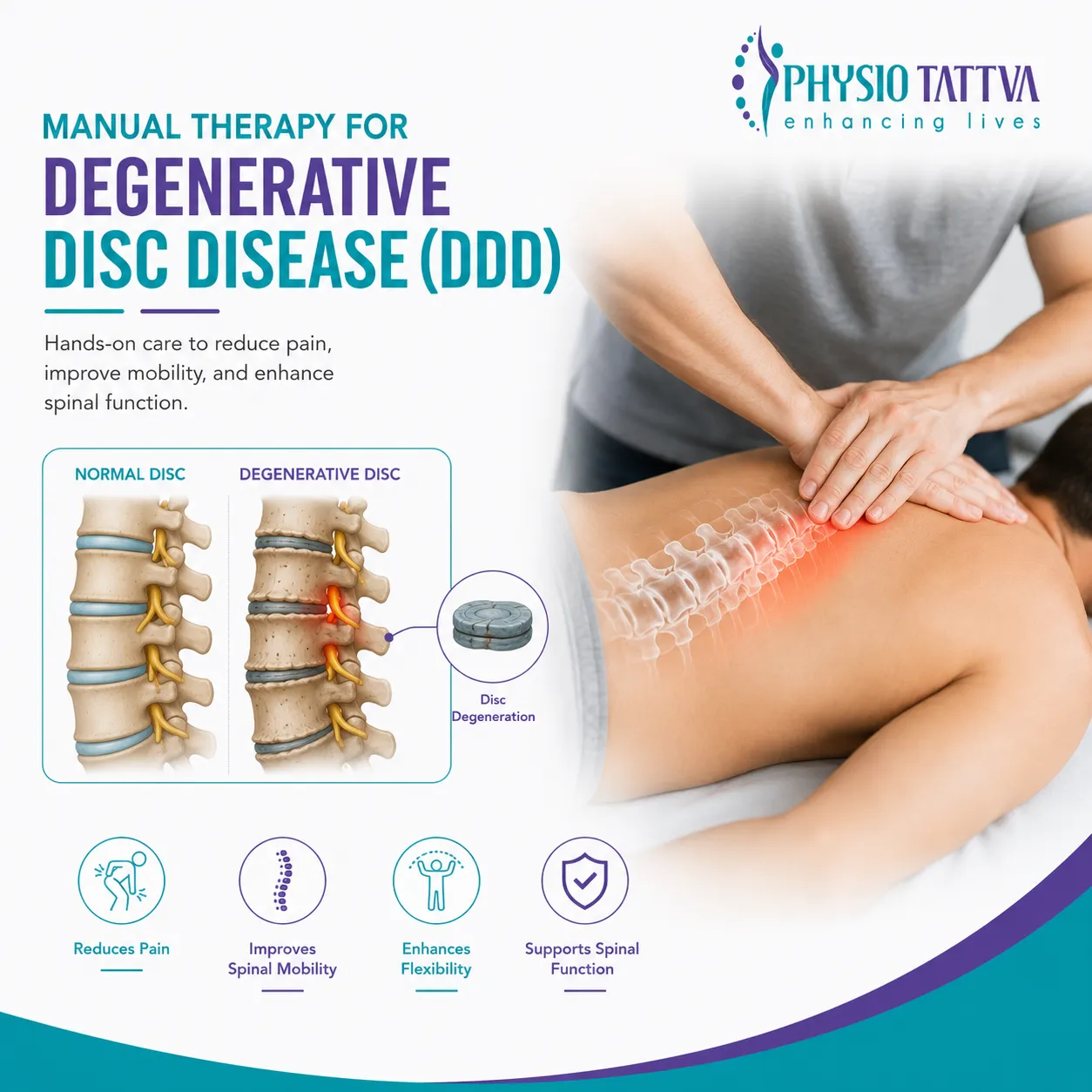
Your spinal discs act as shock-absorbing cushions between your vertebrae. Over time, these discs can lose water content, become thinner, and develop tiny tears. This process can lead to:
- Pain: From inflammatory proteins inside the disc or from stressed surrounding joints and muscles.
- Stiffness: Reduced disc height means less space between vertebrae, limiting spinal mobility.
- Nerve Irritation: A thinning or bulging disc can sometimes press on nearby nerve roots, causing radiating pain (like sciatica), numbness, or weakness.
- Muscle Spasms: Muscles around the affected area often tighten up to protect the spine, which becomes a secondary source of pain.
What is Manual Therapy?
Manual therapy is a specialised, hands-on approach used by physical therapists, chiropractors, and osteopathic physicians to diagnose and treat musculoskeletal conditions. It involves using skilled hand movements to assess and treat soft tissues and joint structures with the goal of:
- Reducing pain
- Improving range of motion
- Reducing or eliminating soft tissue inflammation
- Inducing relaxation
- Improving tissue repair and function
How Manual Therapy Specifically Helps with Degenerative Disc Disease?
Manual therapy does not "cure" the degeneration or reverse the aging process of the disc. Instead, it is highly effective at treating the consequences and symptoms of DDD.
- Pain Relief: Gentle mobilization and soft tissue techniques can help calm irritated nerves, reduce muscle guarding, and stimulate the release of natural pain-relieving chemicals (endorphins).
- Improved Mobility: DDD often causes stiffness not just at the affected disc but in the spinal segments above and below it. Manual therapy can restore motion to these "stuck" joints, taking pressure off the degenerated level.
- Reduced Muscle Tension and Spasms: Chronic pain from DDD leads to protective muscle tightening. Techniques like myofascial release and trigger point therapy directly address this muscular pain, providing immediate relief.
- Enhanced Circulation: By mobilizing tissues, manual therapy helps improve blood flow. This brings vital oxygen and nutrients to the affected area and flushes out inflammatory byproducts, promoting a healthier environment for the tissues.
- Improved Joint Mechanics: Therapists can correct dysfunctional movement patterns that are contributing to excess stress on the degenerated disc.
Common Manual Therapy Techniques Used for DDD
A therapist will use a combination of techniques based on a thorough physical evaluation. These may include:
Soft Tissue Mobilization
This category focuses on muscles, ligaments, and fascia (the connective tissue surrounding muscles).
- Myofascial Release: Applying sustained, gentle pressure to release restrictions in the connective tissue. This is excellent for relieving generalized stiffness and achiness.
- Trigger Point Therapy: Applying direct pressure to specific, hyper-irritable "knots" in the muscle tissue to release tension and reduce referred pain.
- Therapeutic Massage: Used to reduce muscle spasms, improve circulation, and promote overall relaxation.
Joint-Based Techniques
This category focuses on restoring motion to the spinal joints (facet joints).
- Joint Mobilization: Slow, passive movements of a spinal joint within its normal range of motion. The therapist applies graded pressure to "un-stick" a stiff joint and improve its mobility. This is a very common and gentle technique for DDD.
- Spinal Manipulation (or an "Adjustment"): A high-velocity, low-amplitude (HVLA) thrust applied to a joint to restore motion. This is most commonly performed by chiropractors and some specialized physical therapists. It may not be suitable for all cases of DDD, especially if there is significant instability or advanced osteoporosis.
- Flexion-Distraction / Spinal Decompression: A specialised technique, often using a segmented table, where the therapist gently "pumps" the spine. This creates a negative pressure within the disc, helping to draw in nutrients and reduce pressure on nerves. It is particularly effective for lower back DDD.
Muscle Energy Techniques (MET)
You will actively participate in this technique. The therapist positions you and asks you to gently contract a specific muscle against their resistance. When you relax, the therapist can gently stretch the joint further, helping to lengthen tight muscles and improve joint mobility.
Who Provides Manual Therapy for DDD?
Manual therapy for Degenerative Disc Disease (DDD) is typically provided by healthcare professionals trained in specific hands-on techniques. These experts use manual therapy to manage pain, improve mobility, and support overall healing. The following professionals are commonly involved in providing manual therapy:
- Physical Therapists (PTs): Especially those with certifications like Orthopaedic Clinical Specialist (OCS) or who are Fellows of the American Academy of Orthopaedic Manual Physical Therapists (FAAOMPT). PTs integrate manual therapy with therapeutic exercise and education.
- Chiropractors (DCs): Experts in spinal manipulation, many also use soft tissue techniques and flexion-distraction as part of a comprehensive treatment plan.
- Osteopathic Physicians (DOs): These medical doctors are trained in Osteopathic Manipulative Treatment (OMT), a form of manual therapy used to diagnose and treat a wide range of conditions.
Important Considerations for Manual Therapy in Degenerative Disc Disease
While generally safe and effective, manual therapy is not appropriate for everyone. A thorough assessment is crucial. Contraindications include:
- Severe osteoporosis
- Spinal instability
- Spinal fracture, tumor, or infection
- Certain types of disc herniations with severe nerve compression (e.g., Cauda Equina Syndrome)
- Vertebral artery issues (for neck treatments)
Manual Therapy is Not a Standalone Fix. For long-term success, manual therapy for DDD must be combined with a therapeutic exercise program focused on:
- Core Stability: Strengthening the deep abdominal and back muscles to support the spine.
- Flexibility: Gentle stretching for tight muscles like the hamstrings and hip flexors.
- Postural Education: Learning proper body mechanics for sitting, lifting, and daily activities.
Experience Relief from Degenerative Disc Disease at Physiotattva
Manual therapy is a highly effective, non-invasive treatment for managing the pain and stiffness associated with Degenerative Disc Disease. By addressing both joint restrictions and muscular tension, it can significantly improve function and quality of life. When performed by a qualified professional as part of a comprehensive plan that includes targeted exercise and education, it empowers you to take control of your symptoms and stay active.
If you are struggling with DDD, consult a qualified physical therapist, chiropractor, or osteopathic physician to see if you are a good candidate for manual therapy.
At Physiotattva physiotherapy clinics in Bangalore and Hyderabad, you receive personalised care tailored to your specific needs, ensuring effective results and comfort throughout your journey to recovery.
Don’t wait to start your recovery! Get in touch with Physiotattva for more details! Contact us at +91 89510 47001.
Why Physiotattva?
22+
50,000+
95%
200+
25+
4.8
Cities We Serve

Bangalore
At Physio Tattva, we are committed to bring access to quality physio care through ultra-modern clinics and high-skilled practitioners to all.
.webp)
Hyderabad
At Physio Tattva, we are committed to bring access to quality physio care through ultra-modern clinics and high-skilled practitioners to all.
.webp)
Vishakhapatnam
At Physio Tattva, we are committed to bring access to quality physio care through ultra-modern clinics and high-skilled practitioners to all.
Core Treatments
Core Conditions
Core Symptoms
Frequently Asked Questions
Is manual therapy painful?

How many manual therapy sessions will I need for my DDD?
Can manual therapy cure my Degenerative Disc Disease?
Is manual therapy safe for a degenerated disc?





%20(1)-p-3200.jpeg)


.jpg)
.webp)
.webp)
.webp)