




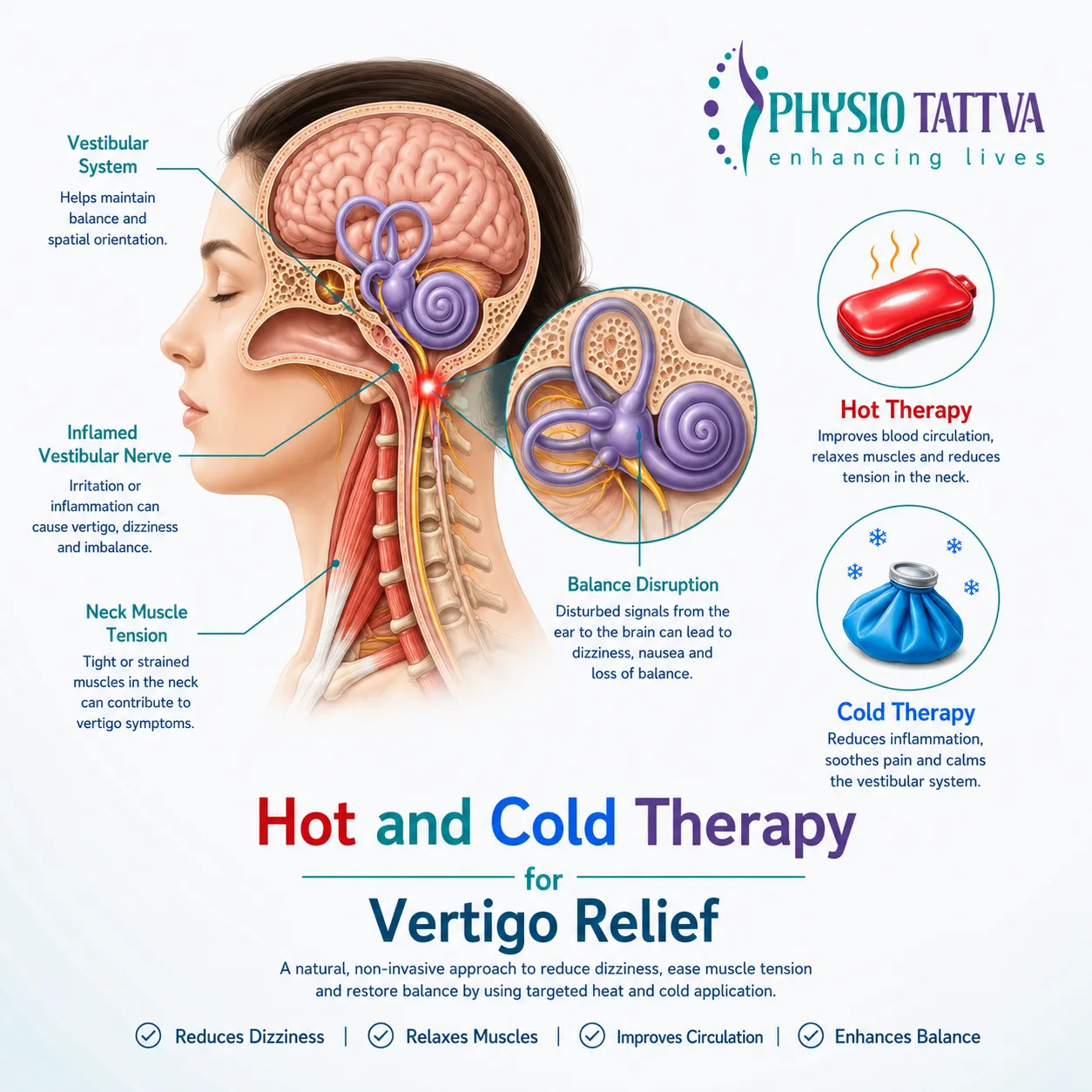
Vertigo can make even simple movements feel overwhelming, creating a sudden sense that the room is spinning or shifting. During these episodes, many people look for safe, at-home ways to ease discomfort and regain stability. One commonly suggested option is hot and cold therapy.
While heat and ice do not treat the root cause of most types of vertigo, they can play a valuable supportive role. These therapies are especially helpful when vertigo is linked to neck tension, muscle stiffness, or inflammation- factors often seen in cervicogenic dizziness. This article explains how hot and cold therapy may help manage vertigo-related symptoms, their limitations, and when medical evaluation is essential.
Understanding Vertigo: Why It’s Not the Same as Dizziness
First, it's important to understand that vertigo is a symptom, not a disease. It's the specific sensation that you, or the environment around you, are moving or spinning. The most common causes originate in the inner ear or the brain.
Vertigo can develop due to several underlying conditions, including:
- Benign Paroxysmal Positional Vertigo (BPPV): Tiny calcium crystals in the inner ear become dislodged.
- Meniere's Disease: A disorder caused by fluid buildup in the inner ear.
- Vestibular Neuritis or Labyrinthitis: Inflammation of the inner ear or the vestibular nerve, often due to a viral infection.
- Cervicogenic Dizziness: Dizziness or a sense of unsteadiness originating from neck problems, like injury or muscle tension.
How Hot Therapy (Warm Compresses) Can Help?
Hot therapy, or thermotherapy, works by promoting vasodilation—the widening of blood vessels. This increases blood flow to the targeted area.
When applied correctly, heat therapy offers several benefits for vertigo-related symptoms:
- Relaxes Tense Neck Muscles: The primary way heat helps is by alleviating cervicogenic dizziness. Tight, stiff muscles in the neck and shoulders can send incorrect positional signals to the brain, contributing to a sense of unsteadiness and dizziness. A warm compress can soothe this tension.
- Reduces Chronic Pain: If your vertigo is exacerbated by chronic neck ache or stiffness, heat can provide significant comfort.
- Improves Circulation: Increased blood flow can help deliver oxygen and nutrients to tissues, aiding in recovery from muscle strain.
To use heat therapy safely and effectively for neck tension, follow these steps:
- Choose Your Tool: You can use a moist towel heated in the microwave, a commercial heating pad, or a hot water bottle. Moist heat is often more effective.
- Protect Your Skin: Always wrap the heat source in a thin towel to prevent burns.
- Positioning: Lie down comfortably and place the warm compress on the back of your neck and across your upper shoulders.
- Duration: Apply for 15-20 minutes at a time. You can repeat this several times a day.
How Cold Therapy (Ice Packs) Can Help?
Cold therapy, or cryotherapy, works by causing vasoconstriction—the narrowing of blood vessels. This is most useful for acute issues.
Primary Benefits for Vertigo-Related Symptoms:
- Reduces Inflammation: If your neck pain and associated dizziness are from an acute injury (like whiplash) or a flare-up of inflammation, an ice pack is your best choice. Cold numbs the area and reduces swelling.
- Numbs Sharp Pain: The numbing effect of cold can provide immediate, temporary relief from sharp neck pain that might be triggering your dizziness.
- Potentially Reduces Nerve Inflammation: While applying an ice pack to your neck won't directly reach the vestibular nerve, it can help reduce overall inflammation in the head and neck area, which may offer some minor, indirect relief during a bout of vestibular neuritis.
How to Use a Cold Compress for Neck Pain:
- Choose Your Tool: Use a gel ice pack, a bag of frozen vegetables, or ice cubes in a plastic bag.
- Protect Your Skin: Wrap the cold pack in a light cloth or paper towel to prevent ice burn.
- Positioning: Apply the pack to the specific area of pain or inflammation on your neck.
- Duration: Apply for 10-15 minutes at a time. Wait at least an hour before reapplying.
What Hot and Cold Therapy Cannot Do for Vertigo?
It’s important to set realistic expectations, as hot and cold therapy is primarily used to manage symptoms and provide comfort, rather than cure vertigo itself.
- It Cannot Fix BPPV: Vertigo from BPPV is caused by displaced crystals in your inner ear. An ice pack or heating pad cannot move them back into place. For this, you need canalith repositioning procedures like the Epley Maneuver.
- It Cannot Cure Meniere's Disease: Meniere's is a chronic condition related to inner ear fluid. While managing stress-related neck tension can help, heat/cold therapy doesn't address the underlying fluid imbalance.
- It is Not a Primary Treatment for Vestibular Neuritis: While cold may offer minor relief from inflammation, the primary treatments are rest, medication, and Vestibular Rehabilitation Therapy (VRT).
When to See a Doctor for Vertigo Symptoms?
While hot and cold therapy can be a safe supportive tool, vertigo can sometimes be a sign of a serious medical condition. Always see a doctor for an accurate diagnosis, especially if your vertigo is new.
Seek immediate medical attention if your vertigo is accompanied by any of the following "red flag" symptoms:
- Sudden, severe headache
- Double vision or vision loss
- Slurred speech or difficulty speaking
- Numbness or weakness in the face, arms, or legs
- Difficulty walking or loss of coordination
- Fever
- Fainting
Supporting Vertigo Relief with Hot and Cold Therapy with Physiotattva
Hot and cold therapy for vertigo is best understood as an effective way to manage a common trigger, neck pain, and muscle tension. If you suffer from cervicogenic dizziness or find that stress-induced neck tightness makes your vertigo worse, a warm compress could become your best friend. For acute neck injuries contributing to dizziness, an ice pack is the way to go.
However, remember that this is a complementary therapy. A proper diagnosis from a healthcare professional is the most critical step to finding lasting relief. Combine these simple home remedies with proven medical treatments to build a comprehensive plan for managing your vertigo and reclaiming your balance.
At Physiotattva physiotherapy clinics in Bangalore and Hyderabad, you receive personalised care tailored to your specific needs, ensuring effective results and comfort throughout your journey to recovery.
Don’t wait to start your recovery! Get in touch with Physiotattva for more details! Contact us at +91 89510 47001.
Why Physiotattva?
22+
50,000+
95%
200+
25+
4.8
Cities We Serve

Bangalore
At Physio Tattva, we are committed to bring access to quality physio care through ultra-modern clinics and high-skilled practitioners to all.
.webp)
Hyderabad
At Physio Tattva, we are committed to bring access to quality physio care through ultra-modern clinics and high-skilled practitioners to all.
.webp)
Vishakhapatnam
At Physio Tattva, we are committed to bring access to quality physio care through ultra-modern clinics and high-skilled practitioners to all.
Core Treatments
Core Conditions
Core Symptoms
Frequently Asked Questions
Can I apply heat or ice directly to my ear for vertigo?

How quickly will hot and cold therapy work for vertigo?
Is this therapy effective for all types of vertigo?
Can I use hot and cold therapy at the same time?
What is Vestibular Rehabilitation Therapy (VRT) and how is it different?






%20(1)-p-3200.jpeg)


.jpg)
.webp)
.webp)
.webp)