




If you're struggling with the sharp, radiating pain of sciatica, you know how desperate you can be for relief. While medical treatment is essential for addressing the root cause, one of the most effective and accessible at-home management techniques is hot and cold therapy for sciatica.
This simple, dual-pronged approach can significantly reduce pain, inflammation, and muscle spasms. But the key to success is knowing when to use ice and when to use heat. Using the wrong one at the wrong time can be ineffective or even make your symptoms worse.
Here’s everything you need to know to use hot and cold therapy for your sciatica pain effectively.
The Golden Rule of Hot and Cold Therapy for Sciatica
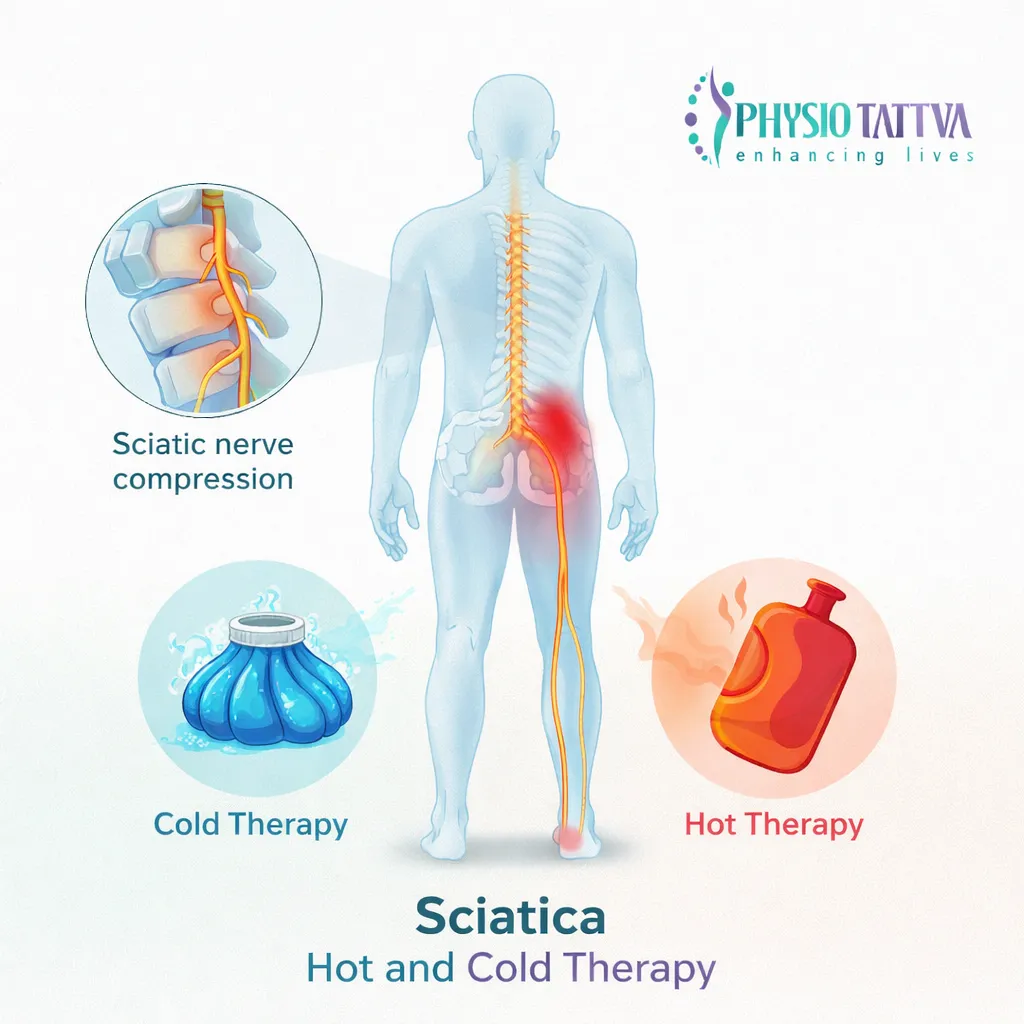
When using hot and cold therapy for sciatica, timing is critical. Applying the right therapy at the right stage of pain can significantly improve relief, while incorrect use may delay recovery or worsen symptoms. The general rule is simple: cold first, then heat.
- Cold Therapy (Cryotherapy): Use for the first 48-72 hours of a new or acute flare-up.
- Hot Therapy (Thermotherapy): Use after the initial 72-hour period or for chronic, ongoing stiffness and pain.
By following this simple rule, hot and cold therapy for sciatica can be used safely and effectively as part of a broader pain management plan.
When to Use Cold Therapy (Cryotherapy) for Sciatica?
Think of cold therapy as your emergency responder. When sciatica flares up, it’s often due to acute inflammation around the sciatic nerve root in your lower back.
How It Works: Applying an ice pack for sciatica causes vasoconstriction (the tightening of blood vessels). This process:
- Reduces Inflammation: Slows down the flow of blood and inflammatory agents to the irritated area.
- Numbs the Pain: Acts as a local anesthetic, temporarily blocking pain signals to the brain.
- Decreases Swelling: Minimizes fluid buildup around the nerve.
Best For: Cold therapy is most effective during periods of acute inflammation and sudden symptom flare-ups.
- The first 2-3 days of a new sciatic episode.
- Immediately after an activity that aggravates your pain (e.g., a long car ride, lifting something).
How to Apply: Proper application ensures maximum pain relief while protecting the skin and surrounding tissues.
- Choose Your Tool: Use a commercial gel pack, a bag of frozen peas, or ice cubes in a sealed bag.
- Protect Your Skin: Never place ice directly on your skin. Wrap the pack in a thin towel or cloth.
- Positioning: Place the pack directly over the source of the pain, which is typically your lower back or gluteal area (buttocks), not down your leg.
- Duration: Apply for 15-20 minutes at a time.
- Frequency: Repeat every 2-3 hours as needed during the acute phase.
When to Use Hot Therapy (Thermotherapy) for Sciatica?
After the initial wave of inflammation has subsided, heat becomes your best friend. Its primary role is to soothe and relax the tight muscles that are often spasming and contributing to the pain.
How It Works: Using a heating pad for sciatica pain causes vasodilation (the widening of blood vessels). This process:
- Stimulates Blood Flow: Increases the circulation of oxygen and nutrients to the sore tissues, promoting healing.
- Relaxes Tight Muscles: Reduces muscle spasms and stiffness that may be compressing the nerve.
- Improves Flexibility: Warms up tissues, making them more pliable and receptive to gentle stretching.
Best For: Heat therapy is most effective when inflammation has settled, and muscle tightness is the primary source of discomfort.
- Chronic or recurring sciatica pain (after the first 72 hours).
- Relieving morning stiffness.
- Warming up muscles before gentle stretching or light activity.
How to Apply: Using heat correctly helps relax muscles, improve circulation, and prepare the body for movement.
- Choose Your Tool: Use an electric heating pad, a moist heat pack, a warm towel, a hot water bottle, or take a warm bath/shower.
- Protect Your Skin: Use a low-to-medium setting on heating pads and place a layer of cloth between the heat source and your skin to prevent burns.
- Positioning: Apply the heat to your lower back or gluteal area to relax the surrounding muscles.
- Duration: Apply for 15-20 minutes. A warm bath can last for 20-30 minutes.
- Frequency: Use as needed, especially before activities that require movement.
The Power of Contrast Therapy: Alternating Heat and Cold for Sciatica
For lingering pain that isn’t acutely inflamed but isn't fully resolved, alternating heat and cold for sciatica can be highly effective. This creates a "pumping" action in the circulatory system.
How It Works: The heat draws blood into the area, and the cold pushes it out. This cycle helps to flush out inflammation and bring in fresh, healing blood flow.
How to Apply: There are several methods, but a simple one is:
- Start with 15 minutes of heat to warm up the muscles.
- Follow immediately with 15 minutes of cold to reduce any underlying inflammation.
Always end the session with cold therapy to ensure inflammation is minimized.
Essential Safety Guidelines for Hot and Cold Therapy
Hot and cold therapy for sciatica is generally safe when used correctly, but improper application can lead to skin injury or worsen symptoms. Following these precautions helps ensure effective pain relief while protecting your skin, nerves, and overall health.
- Always Use a Barrier: Never apply ice packs or heating pads directly to your skin.
- Limit Your Time: Stick to 15-20 minute sessions to prevent skin damage, frostbite, or burns.
- Don't Fall Asleep: Never fall asleep with an electric heating pad turned on.
- Listen to Your Body: If either therapy increases your pain, stop immediately.
- Medical Conditions: If you have diabetes, circulatory problems, vascular disease, or decreased skin sensation (neuropathy), talk to your doctor before trying hot or cold therapy, as you may have a higher risk of injury.
Beyond Hot and Cold: When to Consult a Doctor
While hot and cold therapy for sciatica can help manage pain and discomfort, it does not treat the underlying cause of the condition. Sciatic pain often results from structural or neurological issues that require proper diagnosis and targeted treatment. Consulting a healthcare professional ensures that serious conditions are identified early and managed appropriately.
Consult a doctor or physiotherapist if:
- Your pain is severe, constant, or progressively worsening.
- At-home treatment provides no noticeable relief after one week.
- You experience increasing weakness, numbness, or tingling in your leg or foot.
Seek emergency medical attention immediately if you experience loss of bladder or bowel control, which may indicate a serious condition such as Cauda Equina Syndrome.
Supporting Safe and Effective Sciatica Recovery with Physiotattva
Managing sciatic pain often requires a combination of timely symptom relief and professional guidance. Simple at-home strategies can play a valuable role in easing discomfort, reducing stiffness, and supporting daily movement when applied correctly. However, long-term recovery depends on understanding the source of the pain and addressing it through appropriate care. When combined with expert physiotherapy assessment and targeted treatment, these supportive measures can help improve mobility, prevent flare-ups, and support a safer, more sustainable return to everyday activities.
At Physiotattva physiotherapy clinics in Bangalore and Hyderabad, you receive personalised care tailored to your specific needs, ensuring effective results and comfort throughout your journey to recovery.
Don’t wait to start your recovery! Get in touch with Physiotattva for more details! Contact us at +91 89510 47001.
Why Physiotattva?
22+
50,000+
95%
200+
25+
4.8
Cities We Serve

Bangalore
At Physio Tattva, we are committed to bring access to quality physio care through ultra-modern clinics and high-skilled practitioners to all.
.webp)
Hyderabad
At Physio Tattva, we are committed to bring access to quality physio care through ultra-modern clinics and high-skilled practitioners to all.
.webp)
Vishakhapatnam
At Physio Tattva, we are committed to bring access to quality physio care through ultra-modern clinics and high-skilled practitioners to all.






%20(1)-p-3200.jpeg)


.jpg)
.webp)
.webp)
.webp)