




Knee bursitis is a common and painful condition that can significantly limit mobility and daily activities. While rest and ice are primary first-line treatments, manual therapy for knee bursitis is a crucial component of a comprehensive physical therapy plan. It focuses on addressing the root biomechanical causes of the inflammation, not just the symptoms.
This article will break down what manual therapy is, its goals, the specific techniques used, and how it fits into a holistic treatment approach.
What is Knee Bursitis?
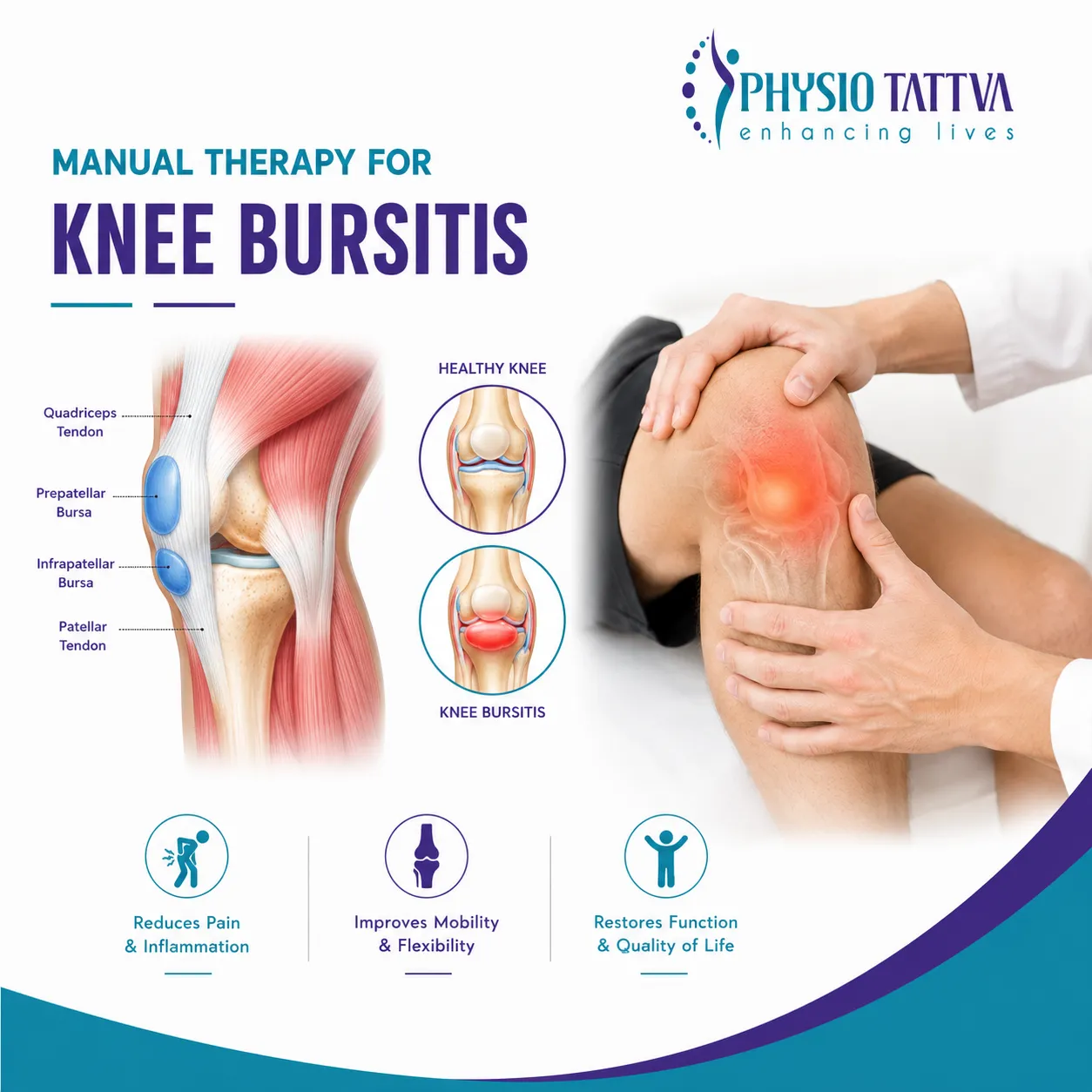
Knee bursitis is the inflammation of a bursa, a small, fluid-filled sac that acts as a cushion between bones, tendons, and muscles near the knee joint. This inflammation leads to pain, swelling, and tenderness. The most common types of knee bursitis include:
- Prepatellar Bursitis: Inflammation of the bursa at the front of the kneecap (patella). Often called "housemaid's knee" or "carpenter's knee."
- Pes Anserine Bursitis: Inflammation of the bursa on the inner side of the knee, just below the joint. Common in runners, individuals with osteoarthritis, and those with tight hamstring muscles.
- Infrapatellar Bursitis: Inflammation of the bursa located just below the kneecap.
What is Manual Therapy?
Manual therapy refers to specialized, "hands-on" techniques used by qualified practitioners like physical therapists, chiropractors, and osteopaths. These techniques are used to diagnose and treat soft tissue and joint restrictions, with the goal of reducing pain, improving range of motion, and restoring normal function.
The Goals of Manual Therapy for Knee Bursitis
When applied to knee bursitis, manual therapy is not just about rubbing the sore spot. It’s a strategic approach with several key objectives:
- Reduce Pain and Inflammation: By improving local circulation and promoting lymphatic drainage, manual therapy can help flush out inflammatory byproducts and reduce swelling.
- Correct Biomechanical Imbalances: Bursitis is often a symptom of an underlying mechanical issue. Manual therapy addresses the tight muscles, fascial restrictions, and joint dysfunctions that place excessive stress on the bursa.
- Improve Range of Motion: Pain and swelling can cause the knee joint to stiffen. Gentle mobilization techniques restore normal joint movement (arthrokinematics) and flexibility.
- Enhance Tissue Healing: By releasing tension in surrounding muscles and improving blood flow, manual therapy ensures that the muscles and tendons are functioning optimally, which reduces strain on the bursa and supports the healing process.
Common Manual Therapy Techniques for Knee Bursitis
Manual therapy techniques are chosen after a careful assessment of your knee and movement patterns. Rather than applying pressure directly on the inflamed bursa, treatment is directed at nearby muscles and tissues that contribute to stress and irritation around the knee.
Soft Tissue Mobilization (STM) / Therapeutic Massage
This is a cornerstone of treatment. The therapist applies pressure to muscles, ligaments, and fascia around the knee.
- Application: Focuses on tight muscles that may be compressing the bursa, such as the quadriceps, hamstrings, IT band, and calf muscles.
- Purpose: To release muscle tension, break down minor adhesions (scar tissue), and improve blood flow. For pes anserine bursitis, releasing tension in the hamstrings and adductor muscles is critical.
Myofascial Release
This technique involves applying gentle, sustained pressure to the fascia—the connective tissue web that surrounds muscles.
- Application: The therapist will identify fascial restrictions around the thigh, knee, and lower leg that are limiting normal movement.
- Purpose: To release these restrictions, improving the overall mechanics of the lower limb and reducing abnormal pulling forces on the knee.
Trigger Point Therapy
Trigger points are hyperirritable "knots" in a tight band of muscle that can cause localized and referred pain.
- Application: The therapist will locate and apply sustained pressure to trigger points in muscles like the quadriceps (vastus medialis), hamstrings, or popliteus.
- Purpose: Releasing these points can instantly reduce muscle tension and decrease pain signals that contribute to the overall discomfort around the knee.
Joint Mobilisation
These are gentle, passive movements performed by the therapist on the knee's joint surfaces.
- Application: The therapist may perform mobilizations on the patellofemoral joint (kneecap) or the tibiofemoral joint (main knee joint). Gentle traction may also be applied.
- Purpose: To improve joint gliding, reduce stiffness, and restore normal arthrokinematics. This is especially helpful if movement has been limited due to pain and swelling.
Muscle Energy Techniques (MET)
MET uses a patient's own muscle contractions to relax and lengthen a tight muscle.
- Application: For a tight hamstring, the therapist will position the leg and ask the patient to gently push against their hand for a few seconds, then relax, allowing the therapist to guide the muscle into a deeper stretch.
- Purpose: MET is a very gentle and effective way to increase muscle length and reduce protective muscle guarding without being overly aggressive.
Integrating Manual Therapy into a Comprehensive Treatment Plan
Manual therapy is most effective when it is part of a holistic physical therapy program. A complete plan will also include:
- Therapeutic Exercise: This is essential for a long-term solution. Your therapist will prescribe specific exercises to:
- Strengthen weak muscles (e.g., gluteus medius, VMO in the quadriceps, core muscles).
- Stretch tight muscles identified during the manual therapy assessment (e.g., hamstrings, hip flexors, IT band).
- Patient Education: Understanding which activities to avoid (like prolonged kneeling or deep squatting) and how to modify movements is critical for preventing recurrence.
- Modalities: Therapists may use ice, ultrasound, or electrical stimulation to help manage acute pain and inflammation.
- Taping: Kinesiology taping can be used to provide support, reduce swelling (via lymphatic drainage channels), or inhibit overactive muscles.
Key Considerations Before Starting Manual Therapy for Knee Bursitis
Before beginning manual therapy for knee bursitis, it is important to keep certain clinical factors in mind to ensure the treatment is safe, effective, and appropriately timed. Understanding these considerations helps guide expectations and supports better outcomes:
- Get a Proper Diagnosis: Knee pain can have many causes (meniscus tears, ligament sprains, arthritis). It is vital to get an accurate diagnosis from a healthcare professional before starting any treatment.
- Avoid in Acute Phase: Direct, deep manual therapy on a very hot, swollen, and acutely painful bursa is contraindicated. In this phase, gentle techniques aimed at drainage and treating distant contributing areas are more appropriate.
- Pain is a Guide: Manual therapy for bursitis should not be excruciating. There may be some discomfort as tight tissues are released, but it should be within a tolerable range. Always communicate with your therapist.
Restoring Knee Function Through Expert Manual Therapy at Physiotattva
Manual therapy for knee bursitis plays a vital role in reducing pain, restoring movement, and addressing the underlying biomechanical factors that contribute to inflammation. By focusing on surrounding muscles, fascia, and joint mechanics, this hands-on approach supports natural healing rather than simply masking symptoms. When combined with therapeutic exercises, patient education, and appropriate modalities, manual therapy can deliver long-term relief and help prevent recurrence. A personalised physiotherapy plan ensures treatment is safe, well-timed, and aligned with individual needs, supporting a confident return to daily activities and improved knee function.
At Physiotattva physiotherapy clinics in Bangalore and Hyderabad, you receive personalised care tailored to your specific needs, ensuring effective results and comfort throughout your journey to recovery.
Don’t wait to start your recovery! Get in touch with Physiotattva for more details! Contact us at +91 89510 47001.
Why Physiotattva?
22+
50,000+
95%
200+
25+
4.8
Cities We Serve

Bangalore
At Physio Tattva, we are committed to bring access to quality physio care through ultra-modern clinics and high-skilled practitioners to all.
.webp)
Hyderabad
At Physio Tattva, we are committed to bring access to quality physio care through ultra-modern clinics and high-skilled practitioners to all.
.webp)
Vishakhapatnam
At Physio Tattva, we are committed to bring access to quality physio care through ultra-modern clinics and high-skilled practitioners to all.
Core Treatments
Core Conditions
Core Symptoms
Frequently Asked Questions
Is manual therapy for knee bursitis painful?

How many sessions will I need to see results?
Can I exercise while receiving manual therapy?
Is manual therapy better than just resting or taking pain medication?


%20(1)-p-3200.jpeg)

.jpg)
.webp)
.webp)
.webp)