





Numbness, tingling, and shooting pain in the hand or wrist are common signs of Carpal Tunnel Syndrome (CTS) and can interfere with everyday tasks. While braces and surgery are common options, many people prefer non-invasive care. Kinesio taping therapy for Carpal Tunnel Syndrome (CTS) offers a simple, drug-free way to support pain relief, reduce strain, and improve hand function.
This article will explain how Kinesio taping works, its benefits for CTS, and proper application techniques.
What Is Carpal Tunnel Syndrome?
Before we dive into the solution, it's important to understand the problem. Carpal Tunnel Syndrome occurs when the median nerve, which runs from your forearm into your hand, becomes compressed or squeezed at the wrist. This nerve controls sensation in your thumb and first three fingers.
Common symptoms include:
- Numbness, tingling, or burning in the thumb, index, middle, and ring fingers.
- Pain or discomfort in the wrist and hand.
- Weakness in the hand and a tendency to drop objects.
- Pain that radiates up the arm.
How Does Kinesio Taping Therapy Work for CTS?
Unlike traditional athletic tape that restricts movement, Kinesio tape is a flexible, elastic tape designed to mimic the skin's elasticity. When applied correctly over the carpal tunnel area, it works in several ways:
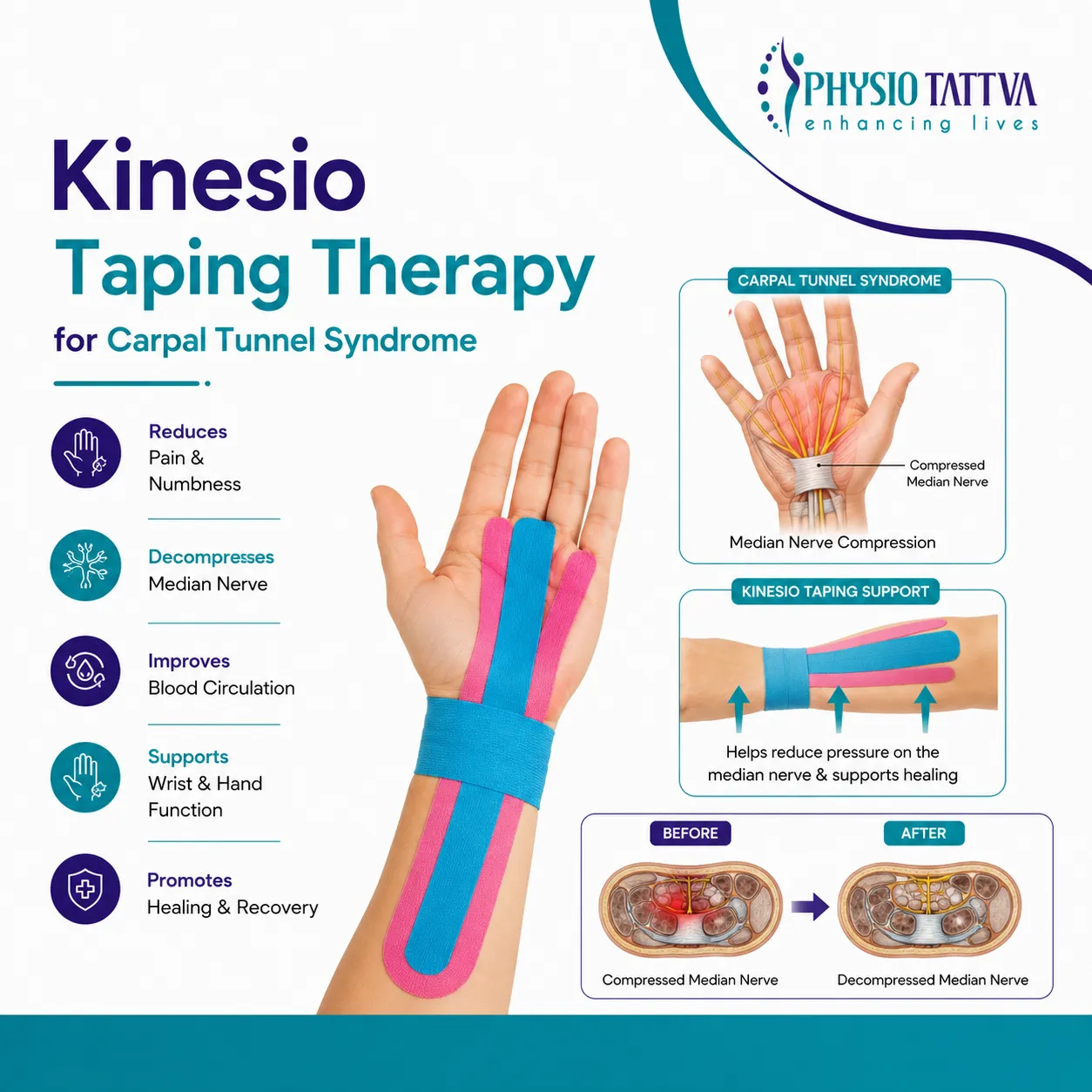
- Decompresses the Area: The tape gently lifts the skin, creating microscopic space between the skin and the underlying tissues. This lift helps reduce pressure on the carpal tunnel, giving the median nerve more room and alleviating compression.
- Improves Circulation: By creating this space, the tape enhances both blood flow and lymphatic drainage. Better circulation brings oxygen-rich blood to the area to promote healing and helps flush out inflammatory waste products.
- Provides Neurological Feedback (Proprioception): The sensation of the tape on your skin makes you more aware of your wrist's position. This can help you unconsciously avoid the awkward wrist postures that aggravate CTS symptoms.
- Reduces Pain: By decompressing the nerve and reducing inflammation, Kinesio tape directly helps to mitigate the pain signals being sent to the brain.
Key Benefits of Using KT Tape for Carpal Tunnel Relief
Kinesio taping is widely used in physiotherapy to support joints, muscles, and nerves without restricting movement. For individuals with Carpal Tunnel Syndrome, KT tape helps reduce strain on the wrist, improve circulation, and provide ongoing support during daily activities. When applied correctly, it can play an effective role in managing symptoms and supporting recovery.
- Non-Invasive and Drug-Free: Kinesio taping offers a safe, medication-free option for managing carpal tunnel symptoms. It can be used on its own or alongside other treatments without the risks associated with long-term medication use or invasive procedures.
- Provides 24/7 Support: KT tape can be worn continuously for 3-5 days, even during showers and sleep. This allows it to provide consistent support and symptom relief throughout the day and night, including during repetitive hand or wrist movements.
- Maintains Range of Motion: Unlike rigid wrist braces, KT tape supports the wrist and forearm without restricting natural movement. This helps reduce strain on the median nerve while allowing you to continue most daily activities comfortably.
- Targets Inflammation: By gently lifting the skin, KT tape helps improve circulation and lymphatic drainage around the wrist. This can reduce swelling and pressure on the median nerve, easing pain, numbness, and tingling over time.
How to Apply Kinesio Tape for Carpal Tunnel Syndrome (Step-by-Step)
Proper application is key to getting the most benefit from Kinesio taping for Carpal Tunnel Syndrome. When applied correctly, KT tape can help reduce pressure on the median nerve, support the wrist, and improve comfort during daily activities. The following step-by-step methods outline commonly used taping techniques for symptom relief.
Method 1: The Decompression "Fan" or "Web"
This method is excellent for lifting the skin directly over the carpal tunnel.
- Step 1: Preparation. Clean your wrist and forearm with rubbing alcohol to remove oils. Ensure the area is completely dry.
- Step 2: Measure & Cut. Take one piece of KT tape about 4-6 inches long. Cut it into a "fan" by making 3-4 narrow "tentacles," leaving a solid 1-2 inch base at one end. Round all the corners to prevent peeling.
- Step 3: Apply the Anchor. Flex your wrist downward (as if pointing your fingers to the floor). Place the solid base of the tape on the back of your hand, just below the knuckles, with no stretch.
- Step 4: Apply the "Tentacles." One by one, apply the narrow strips across the front of your wrist over the carpal tunnel area. Use a very light (about 15-25%) stretch on each strip, fanning them out slightly. The ends should be laid down with zero stretch.
- Step 5: Activate. Rub the tape gently to activate the heat-sensitive adhesive.
Method 2: Wrist and Forearm Support
This method provides support and reduces strain on the forearm muscles that contribute to wrist tension.
- Step 1: The Wrist Strip. Cut a full-width strip of tape long enough to wrap about 75% of the way around your wrist. Apply it directly over the carpal tunnel on the front of your wrist with a 50% stretch. Lay the ends down with no stretch.
- Step 2: The Forearm Strip. Cut a longer strip running from the base of your palm to just below your elbow.
- Anchor: Make a fist and flex your wrist down. Anchor the tape at the base of your palm (near the wrist crease) with no stretch.
- Application: Run the tape up the center of your forearm towards your elbow with a light 25% stretch. Lay the final two inches down with no stretch.
- Step 3: Activate. Rub all pieces of the tape to secure the adhesive.
Combining Taping with Other Carpal Tunnel Treatments
For the most effective and long-lasting relief, Kinesio taping therapy for Carpal Tunnel Syndrome should be used as part of a comprehensive treatment approach rather than as a standalone solution. Combining taping with other evidence-based strategies helps address both symptom relief and the underlying causes of nerve compression. This integrated approach may include:
- Ergonomic Adjustments: Improving workstation setup is essential, especially for individuals who spend long hours typing or using handheld devices. Adjusting keyboard height, mouse position, and chair support helps keep the wrists in a neutral position, reducing repetitive strain on the median nerve.
- Stretching and Exercises: Gentle wrist stretches, tendon gliding, and nerve-gliding exercises help maintain flexibility and reduce nerve irritation. These exercises support circulation, improve mobility, and complement the effects of Kinesio taping.
- Professional Care: A physical or occupational therapist can assess wrist mechanics, posture, and activity patterns to design a personalized treatment plan. Professional guidance ensures correct taping techniques and helps progress care safely.
- Wrist Braces: Using a wrist brace, particularly at night, helps prevent excessive wrist bending during sleep. When combined with Kinesio taping during the day, bracing can provide continuous support and symptom control.
Expert Carpal Tunnel Care with Kinesio Taping at Physiotattva
Kinesio taping therapy for Carpal Tunnel Syndrome (CTS) helps reduce nerve pressure, ease pain, and support wrist function without limiting movement. When combined with physiotherapy, ergonomic changes, and exercises, it can be a safe and effective way to manage symptoms and improve daily comfort.
At Physiotattva physiotherapy clinics in Bangalore, Hyderabad and Vizag you receive personalised care tailored to your specific needs, ensuring effective results and comfort throughout your journey to recovery.
Don’t wait to start your recovery! Get in touch with Physiotattva for more details! Contact us at +91 89510 47001.
Why Physiotattva?
22+
50,000+
95%
200+
25+
4.8
Cities We Serve

Bangalore
At Physio Tattva, we are committed to bring access to quality physio care through ultra-modern clinics and high-skilled practitioners to all.
.webp)
Hyderabad
At Physio Tattva, we are committed to bring access to quality physio care through ultra-modern clinics and high-skilled practitioners to all.
.webp)
Vishakhapatnam
At Physio Tattva, we are committed to bring access to quality physio care through ultra-modern clinics and high-skilled practitioners to all.
Core Treatments
Core Conditions
Core Symptoms
Frequently Asked Questions
How long should I wear Kinesio tape for CTS?

Is Kinesio taping a permanent cure for Carpal Tunnel Syndrome?
Can I apply the tape myself at home?
Are there any side effects of Kinesio taping for CTS?






%20(1)-p-3200.jpeg)


.jpg)
.webp)
.webp)
.webp)