




Waking up with facial drooping and loss of muscle control can be alarming. Bell's palsy, causing sudden facial paralysis, can be both emotionally and socially challenging. While traditional treatments like steroids and physical therapy are common, many are turning to complementary therapies to aid recovery.
Pulsed Electromagnetic Fields (PEMF) therapy is a promising non-invasive option. This guide will cover what PEMF therapy is, how it works for Bell's palsy, and what to expect from this treatment. In this article, we’ll explore how PEMF therapy can support your recovery journey.
What Is Bell's Palsy?
Bell's palsy is an unexplained episode of facial muscle weakness or paralysis. It occurs when the 7th cranial nerve (the facial nerve), which controls the muscles on one side of your face, becomes inflamed, swollen, or compressed.
Symptoms can include:
- Sudden drooping on one side of the face (mild to severe)
- Difficulty closing an eye or smiling
- Drooling
- Pain around the jaw or behind the ear
- Loss of taste
While most people recover fully over time, the recovery process can be slow and, for some, incomplete. This is why exploring supportive therapies is crucial.
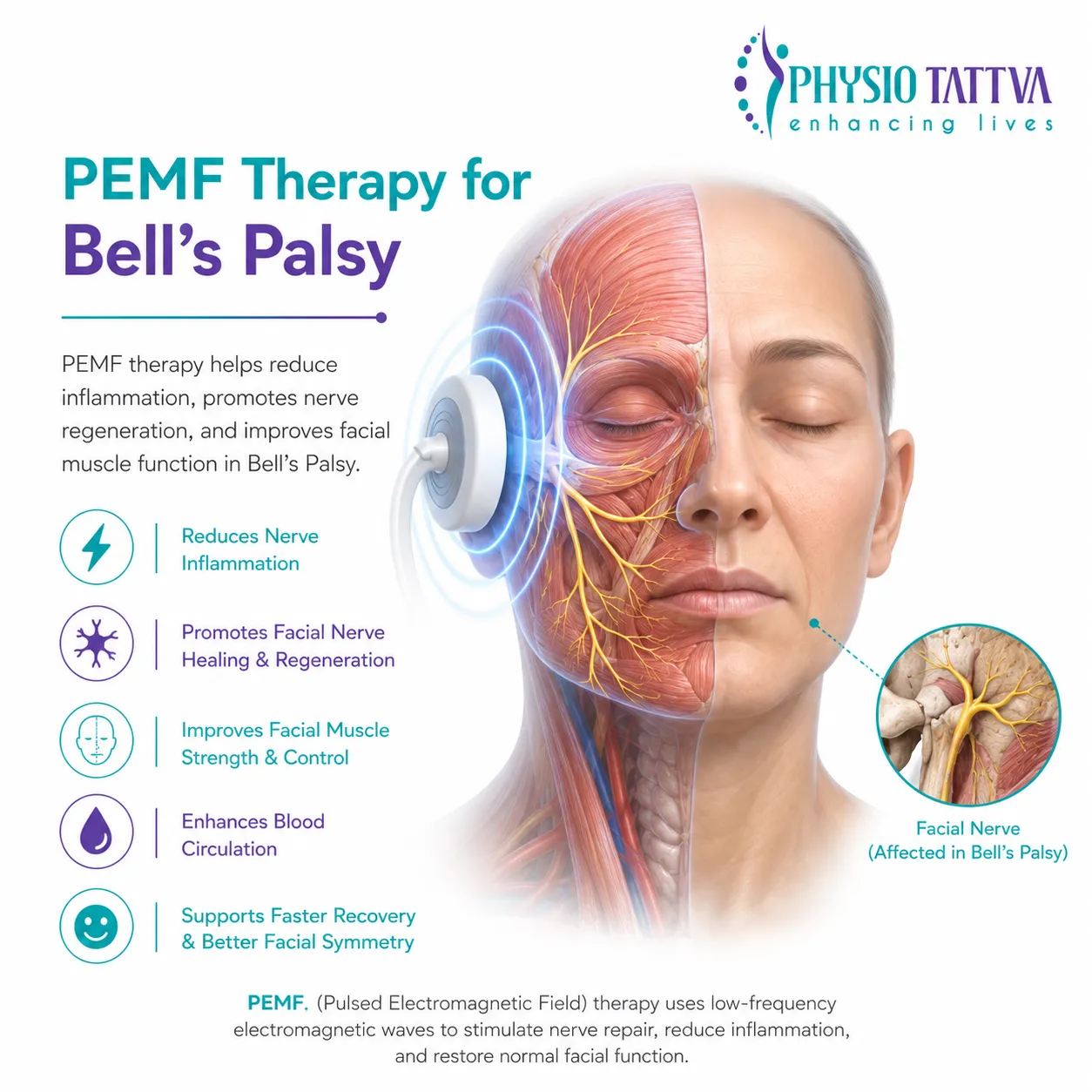
What is Pulsed Electromagnetic Fields (PEMF) Therapy?
Pulsed Electromagnetic Fields (PEMF) therapy isn't new; it has been used for decades to promote bone healing, reduce inflammation, and manage pain. The therapy uses devices that emit low-frequency electromagnetic fields in short bursts or "pulses."
Think of it like a "battery charger" for your cells. These energy waves pass harmlessly through the body, stimulating cell metabolism, improving circulation, and encouraging the body's natural repair processes. It is a painless, non-invasive therapy with a growing body of research supporting its regenerative capabilities.
How PEMF Therapy Supports Recovery from Bell's Palsy
The effectiveness of PEMF therapy for Bell's palsy lies in its ability to address the root cause of the condition: nerve inflammation and damage. Here’s how it works on a cellular level to promote facial nerve regeneration.
Reducing Inflammation and Swelling
The primary cause of Bell's palsy is the inflammation of the facial nerve. PEMF therapy has powerful anti-inflammatory effects. It helps increase blood flow and lymphatic drainage in the affected area, which carries away inflammatory byproducts and reduces the swelling that is compressing the nerve. Unpinching the nerve is the first critical step toward recovery.
Promoting Nerve Regeneration
This is the most exciting benefit. For the face to regain function, the damaged facial nerve needs to repair itself. PEMF therapy has been shown in studies to stimulate cellular repair mechanisms, including:
- Increased ATP Production: ATP is the energy currency of your cells. More energy means nerve cells have the fuel they need to repair and regenerate.
- Enhanced Protein Synthesis: Nerves require specific proteins to rebuild their protective myelin sheath and axon structures. PEMF can help speed up this process.
By creating an optimal environment for repair, PEMF therapy for Bell's palsy may help shorten the recovery timeline.
Improving Circulation
Healthy nerves need a steady supply of oxygen and nutrients. PEMF therapy improves microcirculation, ensuring that the damaged facial nerve receives the essential resources it needs to heal efficiently.
Key Benefits of Using PEMF Therapy for Bell's Palsy
PEMF therapy offers several key benefits for individuals recovering from Bell's Palsy. By addressing the root causes of the condition, such as inflammation and nerve damage, PEMF can enhance the body’s natural healing processes. Here are some of the key advantages of using PEMF therapy:
- Potentially Faster Recovery: By targeting inflammation and promoting nerve repair, PEMF may speed up the healing process compared to waiting alone.
- Non-Invasive and Safe: The therapy is painless, requires no needles or surgery, and has an excellent safety profile for most people.
- Reduces Reliance on Medication: While not a replacement for prescribed steroids, PEMF can help manage inflammation and pain, potentially reducing the need for long-term use of other medications.
- Complements Other Treatments: PEMF works synergistically with other treatments like physical therapy, facial exercises, and acupuncture by enhancing the body's ability to respond to them.
What Does a PEMF Session for Bell's Palsy Involve?
A typical session is simple and relaxing. You will either lie on a PEMF mat or have a smaller applicator placed near the affected side of your head and neck (specifically around the mastoid bone behind the ear, where the facial nerve exits the skull).
- Duration: Sessions usually last from 20 to 60 minutes.
- Frequency: For an acute condition like Bell's palsy, daily sessions are often recommended, at least initially.
- Sensation: You will feel little to nothing during the session, though some report a gentle warmth or tingling.
Consistency is key. The cumulative effect of regular sessions is what helps create lasting change at the cellular level.
Take the Next Step in Your Recovery with Physiotattva
Incorporating PEMF therapy into your Bell's Palsy treatment plan can offer significant benefits. By reducing inflammation, promoting nerve regeneration, and improving circulation, it can accelerate recovery and decrease dependence on medications. While it is not a replacement for conventional treatments, PEMF therapy can work synergistically with other therapies to enhance healing. If you're seeking a non-invasive solution to support your recovery, speak with your healthcare provider about how PEMF therapy can play a vital role in your treatment strategy.
At Physiotattva physiotherapy clinics in Bangalore, Hyderabad and Vizag you receive personalised care tailored to your specific needs, ensuring effective results and comfort throughout your journey to recovery.
Don’t wait to start your recovery! Get in touch with Physiotattva for more details! Contact us at +91 89510 47001.
Why Physiotattva?
22+
50,000+
95%
200+
25+
4.8
Cities We Serve

Bangalore
At Physio Tattva, we are committed to bring access to quality physio care through ultra-modern clinics and high-skilled practitioners to all.
.webp)
Hyderabad
At Physio Tattva, we are committed to bring access to quality physio care through ultra-modern clinics and high-skilled practitioners to all.
.webp)
Vishakhapatnam
At Physio Tattva, we are committed to bring access to quality physio care through ultra-modern clinics and high-skilled practitioners to all.
Core Treatments
Core Conditions
Core Symptoms
Frequently Asked Questions
Is PEMF therapy for Bell's palsy safe?

How long until I see results for my Bell's palsy?
Can I use a home PEMF device for Bell's palsy?
Is PEMF Therapy a standalone treatment?





%20(1)-p-3200.jpeg)


.jpg)
.webp)
.webp)
.webp)