




Kinesio taping therapy for spinal stenosis is a supportive, non-invasive physiotherapy technique designed to reduce pain, improve posture, and enhance mobility. By providing gentle muscle support and sensory feedback, Kinesio taping for spinal stenosis helps patients move more comfortably and tolerate daily activities and rehabilitation exercises.
This article discusses how Kinesio taping works, its benefits, and when it can be used as part of a structured physiotherapy plan
Core Principles of Spinal Stenosis and Kinesio Taping
Before exploring how Kinesio taping supports spinal stenosis management, it is important to understand the key concepts behind the condition itself and the therapeutic role of Kinesio taping within physiotherapy care.
Spinal Stenosis
A condition characterised by the narrowing of the spinal canal, which contains the spinal cord and nerve roots. This narrowing puts pressure on the nerves, causing symptoms like pain, numbness, tingling, and weakness, typically in the lower back, buttocks, and legs (lumbar stenosis) or neck, shoulders, and arms (cervical stenosis). Symptoms are often worse with standing or walking and relieved by sitting or leaning forward (flexion-based relief).
Kinesio Taping (Kinesiology Tape / KT Tape)
An elastic therapeutic tape made of breathable cotton with a medical-grade acrylic adhesive. Unlike rigid athletic tape, it is designed to mimic the elasticity of human skin, allowing for a full range of motion. Its primary function is not to brace a joint but to facilitate the body's natural healing process while providing support and stability.
How Kinesio Taping Can Help with Spinal Stenosis?
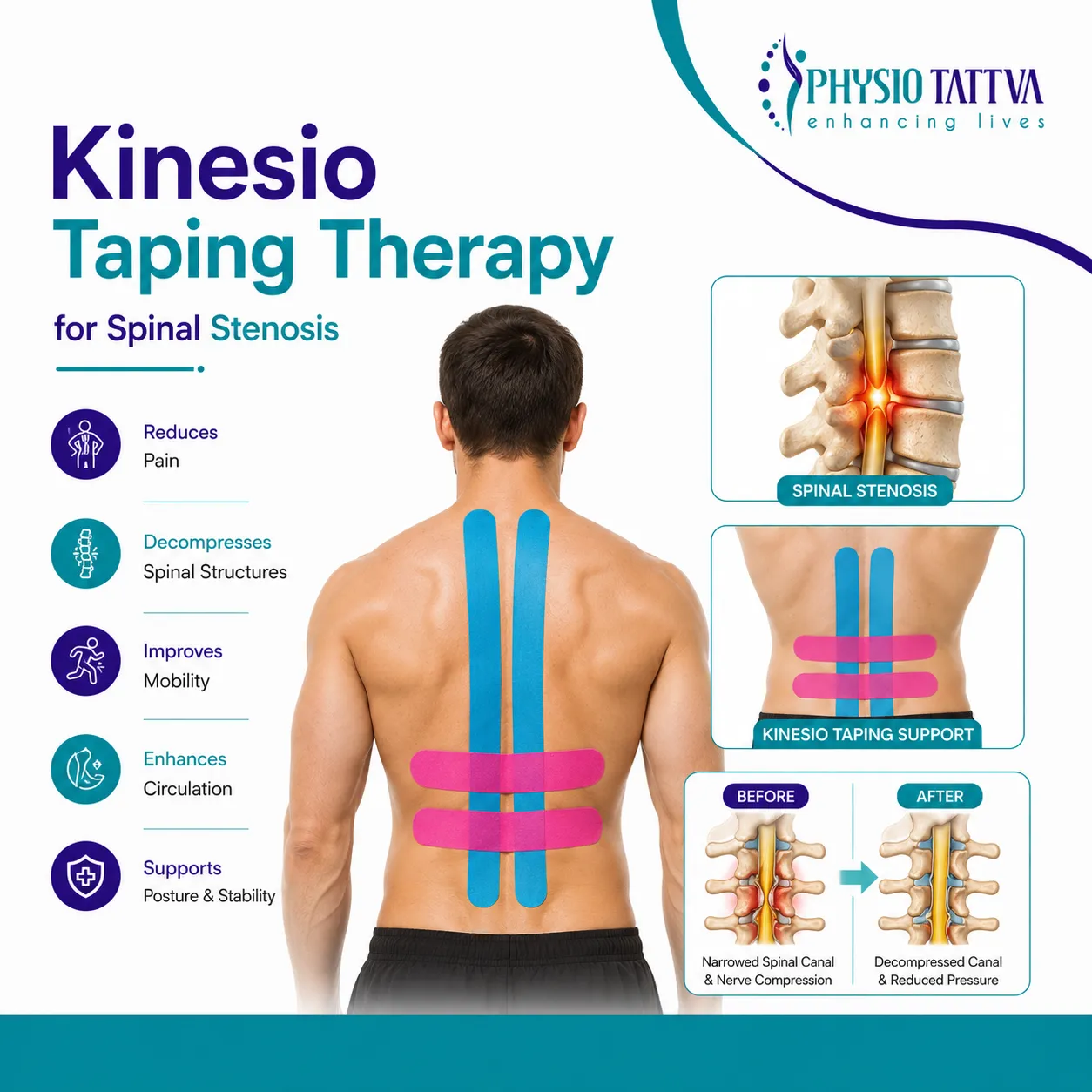
Kinesio taping plays a supportive role in managing spinal stenosis by addressing pain, muscle dysfunction, posture, and movement patterns. While it does not correct the structural narrowing of the spinal canal, it helps reduce symptom severity and improves functional comfort when used alongside physiotherapy and exercise-based rehabilitation.
Pain Relief (Neurological Effect)
Kinesio taping helps modulate pain signals through gentle sensory stimulation of the skin.
- The tape slightly lifts the skin, creating a microscopic space between the skin and underlying tissues.
- This decompression may reduce pressure on superficial pain receptors (nociceptors).
- Based on the Gate Control Theory of Pain, sensory input from the tape can interfere with pain signals travelling to the brain, helping reduce perceived discomfort.
Muscle Support and Re-education
Kinesio taping assists in normalising muscle activity around the spine by influencing how muscles activate and relax.
- Inhibition of Overactive Muscles: Patients with spinal stenosis often have tight, spasming paraspinal muscles (the muscles running alongside the spine) as the body tries to protect the area. Applying the tape with a specific direction and light stretch can help inhibit these overworked muscles, reducing tension and pain.
- Facilitation of Weak Muscles: Chronic pain and altered posture often lead to weak core and gluteal muscles. Taping can provide proprioceptive feedback to "wake up" these underactive muscles, encouraging their engagement during movement and physical therapy.
Decompression and Improved Fluid Dynamics
This mechanism focuses on reducing tissue congestion and supporting natural healing around the spine.
- Supports tissue health by improving local circulation in the affected spinal region.
- The gentle lifting effect of the tape promotes lymphatic drainage and blood flow beneath the skin.
- Helps reduce local inflammation, swelling, and tissue sensitivity that contribute to pain and discomfort.
Postural Correction and Proprioceptive Feedback
Postural awareness is especially important in spinal stenosis symptom management.
- Many individuals experience relief in slight spinal flexion.
- Taping provides a gentle tactile reminder that discourages excessive lumbar arching.
- This feedback helps maintain a more neutral or flexed posture, keeping the spinal canal slightly more open during movement and activity.
Common Kinesio Taping Applications for Lumbar Spinal Stenosis
Kinesio taping techniques for lumbar spinal stenosis are selected based on pain location, posture, muscle tension, and movement patterns. These applications aim to reduce discomfort, improve posture, and support functional movement during daily activities.
Important Disclaimer: These techniques should only be applied by a trained healthcare professional such as a physiotherapist or chiropractor certified in Kinesio taping. The descriptions below are for educational purposes, and applications must always be tailored to individual anatomy and symptoms.
Overall Goal of Taping
The primary objectives of Kinesio taping for lumbar spinal stenosis are to support symptom relief and promote safer movement by:
- Reducing pain and overall discomfort
- Inhibiting tight or overactive back extensor muscles
- Providing postural feedback to help maintain a neutral or slightly flexed lumbar position
Low Back Decompression “Star” or “Box” Technique
This application targets focal pain and pressure in the lower back and is commonly used when symptoms are localised to a specific lumbar segment.
Purpose
This technique is designed to achieve the following therapeutic goal:
- To decompress the most painful or sensitive area of the lumbar spine
Application Method
The taping is applied in a step-by-step manner to maximise skin lifting and sensory feedback:
- The patient bends forward to stretch the skin over the lower back
- Three to four “I” strips are placed over the point of maximum pain in a star, asterisk, or box pattern
- The middle portion of each strip is applied with moderate stretch (approximately 50–75%)
- The ends (anchors) are applied with no stretch
- When the patient stands upright, visible wrinkling of the tape indicates effective skin lifting
Paraspinal Muscle Inhibition Technique
This method focuses on calming overactive muscles that contribute to stiffness and protective guarding along the spine.
Purpose
The goal of this application is to:
- Decrease spasm and overactivity in the erector spinae muscles
Application Method
The tape is applied with minimal tension to encourage muscle relaxation:
- Two long “I” strips are used
- The patient bends forward during application
- Tape is applied from the top of the buttocks (PSIS) upward along both sides of the spine toward the mid-back
- Very light stretch (15–25%) is applied from insertion to origin to promote muscle inhibition
Postural Support for Anterior Pelvic Tilt Correction
This application provides continuous proprioceptive feedback to discourage excessive lumbar arching during movement.
Purpose
This technique aims to:
- Encourage a more neutral pelvic and spinal position during standing and walking
Application Method
The taping pattern is designed to create a gentle corrective pull:
- Two long “I” strips are applied
- Tape starts at the lower back over the muscles being inhibited
- It wraps around the side of the trunk below the ribs
- The tape is anchored on the front of the pelvis near the ASIS
- Moderate stretch (around 50%) is applied across the side of the body to create a gentle postural cue
Benefits and Limitations of Kinesio Taping for Spinal Stenosis
Kinesio taping is widely used as a supportive physiotherapy technique for managing spinal stenosis symptoms. While it offers several functional and comfort-related benefits, it is important to understand both its advantages and its role within a broader treatment plan.
Key Benefits of Kinesio Taping Therapy
When applied correctly by a trained physiotherapist, Kinesio taping can provide ongoing support during daily activities and rehabilitation.
- Non-invasive and drug-free pain management.
- Provides continuous support and therapeutic benefit for 3-5 days per application.
- Can improve tolerance to physical therapy and daily activities.
- Enhances body awareness (proprioception) to improve posture.
- Water-resistant, allowing for showering and normal daily life.
Important Limitations to Be Aware Of
While beneficial, Kinesio taping has clear limitations and should not be viewed as a standalone solution.
- It is not a cure. It does not change the physical narrowing of the spinal canal.
- Effectiveness can vary significantly between individuals.
- Improper application can be ineffective or cause skin irritation.
- It is most effective as part of a comprehensive treatment plan including physical therapy, targeted exercises (especially flexion-based), and patient education.
Moving Forward with Kinesio Taping at Physiotattva
Kinesio taping therapy plays an important supportive role in the multidisciplinary management of spinal stenosis. By helping reduce pain, easing muscle tension, and improving postural awareness, it can enhance comfort, mobility, and participation in daily activities and rehabilitation exercises. While it does not correct the underlying spinal narrowing, its benefits are maximised when applied correctly by a trained physiotherapist. For safe and effective results, Kinesio taping should always be part of a comprehensive, personalised treatment plan based on proper clinical assessment.
At Physiotattva physiotherapy clinics in Bangalore, Hyderabad and Vizag you receive personalised care tailored to your specific needs, ensuring effective results and comfort throughout your journey to recovery.
Don’t wait to start your recovery! Get in touch with Physiotattva for more details! Contact us at +91 89510 47001.
Why Physiotattva?
22+
50,000+
95%
200+
25+
4.8
Cities We Serve

Bangalore
At Physio Tattva, we are committed to bring access to quality physio care through ultra-modern clinics and high-skilled practitioners to all.
.webp)
Hyderabad
At Physio Tattva, we are committed to bring access to quality physio care through ultra-modern clinics and high-skilled practitioners to all.
.webp)
Vishakhapatnam
At Physio Tattva, we are committed to bring access to quality physio care through ultra-modern clinics and high-skilled practitioners to all.
Core Treatments
Core Conditions
Core Symptoms
Frequently Asked Questions
Can Kinesio taping cure my spinal stenosis?

How long does the tape stay on, and can I shower with it?
Can I buy Kinesio tape and apply it myself?
Are there any side effects of Kinesio Taping for Spinal Stenosis?






%20(1)-p-3200.jpeg)


.jpg)
.webp)
.webp)
.webp)