





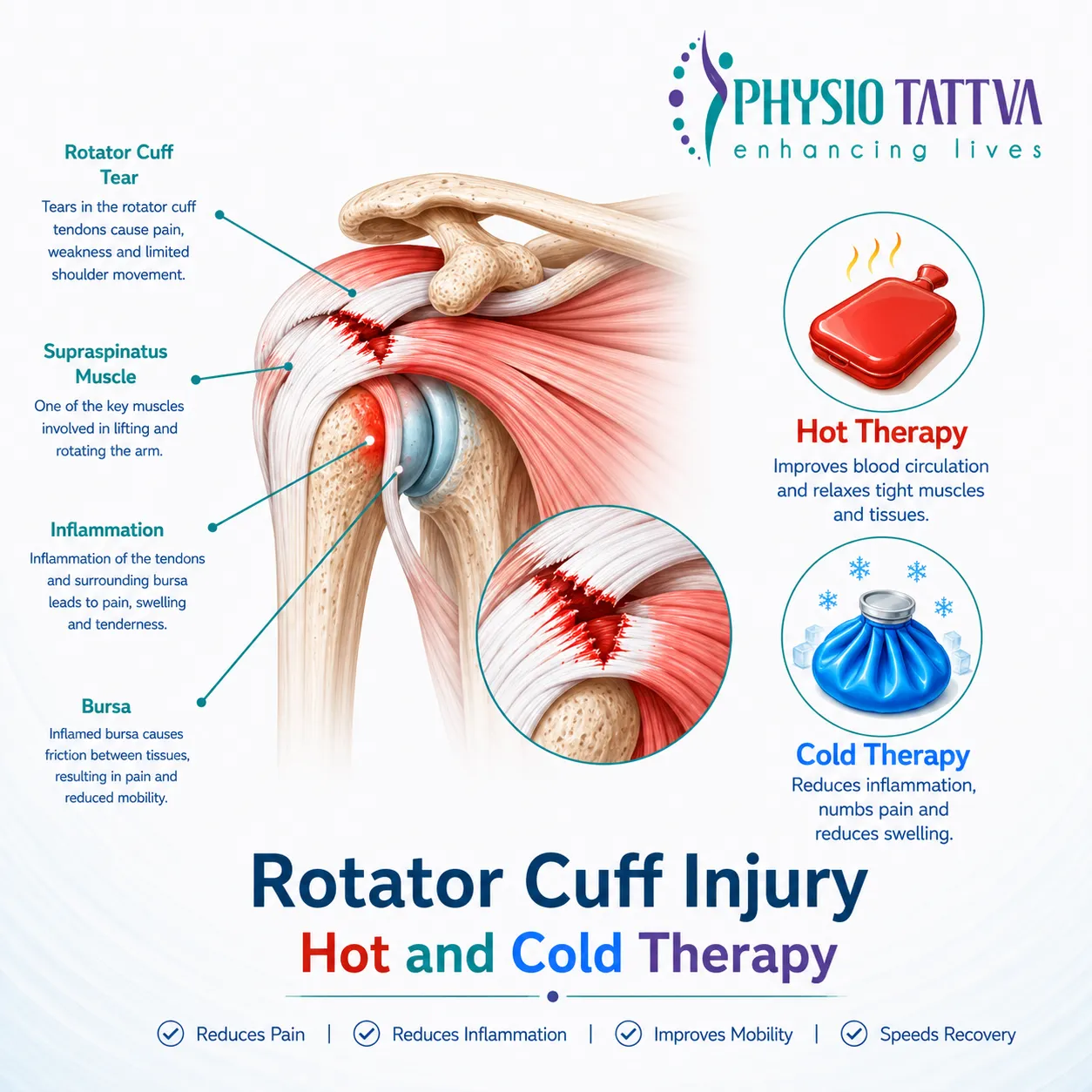
Hot and cold therapy (also known as thermotherapy and cryotherapy, respectively) are simple, effective, and inexpensive ways to manage the pain and inflammation associated with a rotator cuff injury. However, knowing when and how to use each is crucial for effective relief and to avoid making the injury worse.
The key is to match the therapy to the stage of your injury: use cold for acute inflammation and heat for chronic stiffness.
Cold Therapy (Cryotherapy): For Acute Pain and Inflammation
Cold therapy plays a crucial role in the early management of rotator cuff injuries, particularly when pain and swelling are most intense. When applied correctly, it helps calm irritated tissues and protect the shoulder during the initial healing phase.
What It Does?
Cold therapy works by influencing blood flow and nerve activity in the injured area, helping control both inflammation and pain:
- Reduces Inflammation: Constricts blood vessels (vasoconstriction), which limits the amount of swelling in the injured area.
- Numbs Pain: Acts as a local anesthetic, providing temporary but significant pain relief by slowing down nerve signals.
- Minimizes Bruising: Reduced blood flow helps to limit internal bleeding and bruising.
When to Use Cold Therapy?
Knowing when to apply cold therapy ensures maximum benefit and prevents unnecessary irritation:
- Acute Phase (First 24-72 hours): Immediately following the injury or the onset of sharp pain.
- After Activity: Following physical therapy, exercise, or any activity that aggravates your shoulder and causes a flare-up of pain or swelling.
- If You See Swelling: If the shoulder area is visibly swollen or feels puffy and warm to the touch.
How to Apply Cold Therapy?
Using cold therapy correctly is essential to avoid skin or nerve damage while achieving effective relief:
- Tools: Use a commercial ice pack, a bag of frozen peas, or ice cubes in a sealed plastic bag.
- Protect Your Skin: Never apply ice directly to your skin. Always wrap the ice pack in a thin, dry towel or cloth.
- Duration: Apply for 15-20 minutes at a time. Any longer can risk skin or nerve damage (like frostbite).
- Frequency: You can apply cold every 2 to 4 hours during the acute phase.
Mnemonic to Remember: ICE = Injury, Cold, Early.
Hot Therapy (Thermotherapy): For Stiffness and Chronic Aches
Heat therapy is most useful once the initial inflammation has settled and the shoulder feels tight or stiff rather than swollen. When applied at the right time, heat helps relax muscles, improve circulation, and prepare the shoulder for movement and rehabilitation.
What It Does?
Heat therapy works by increasing blood flow and tissue elasticity, helping the shoulder move more comfortably:
- Increases Blood Flow: Dilates blood vessels (vasodilation), which brings more oxygen and nutrients to the injured tissues, promoting healing.
- Reduces Muscle Stiffness: Relaxes tight muscles and decreases joint stiffness, improving your range of motion.
- Soothes Aching Pain: Provides comfort for dull, persistent, and chronic pain.
When to Use Hot Therapy?
Using heat at the correct stage of recovery ensures comfort without worsening inflammation:
- Chronic Phase (After 72 hours): Once the initial swelling and sharp pain have gone down.
- Before Stretching or Rehab Exercises: Applying heat for 10-15 minutes before activity can warm up the rotator cuff muscles, making them more flexible and reducing the risk of re-injury.
- To Relieve General Stiffness: Use it for morning stiffness or a dull, achy pain that has lingered for days or weeks.
Important: Do not apply heat to a new, acutely inflamed injury, as it can increase swelling and make the pain worse.
How to Apply Hot Therapy?
Proper application is important to gain benefits while protecting the skin:
- Tools: Use a heating pad, a moist warm towel, a reusable heat pack, or take a warm shower or bath. (Moist heat is often considered more effective than dry heat.)
- Protect Your Skin: Ensure the heat source is warm, not scalding hot. Use a towel as a barrier if using a heating pad to prevent burns.
- Duration: Apply for 15-20 minutes at a time.
- Safety: Never fall asleep with an electric heating pad turned on.
Mnemonic to Remember: HEAT = Healing, Elasticity, After Three days.
Advanced Technique: Contrast Therapy in Rotator Cuff Rehabilitation
Contrast therapy is an advanced recovery technique that combines both heat and cold therapy in a structured sequence. It is especially useful during the sub-acute phase of a rotator cuff injury, when swelling has reduced but has not fully resolved.
Contrast therapy works by alternating between warmth and cold, creating a natural “pumping” action in the blood vessels. This process helps stimulate circulation, flush out residual swelling, and support tissue healing without overstressing the shoulder.
How to Do Contrast Therapy?
To apply contrast therapy safely and effectively, follow these steps:
- Start with Heat: Apply heat for 3 minutes to relax muscles and improve blood flow.
- Switch to Cold: Immediately follow with 1 minute of cold therapy to control inflammation.
- Repeat the Cycle: Continue alternating heat and cold for a total of 3-5 cycles.
- End with Cold: Always finish with cold therapy if inflammation or swelling is still present.
Contrast therapy should be used thoughtfully and ideally under physiotherapy guidance to ensure it matches your stage of recovery and overall rehabilitation plan.
When to Seek Medical Care While Using Hot and Cold Therapy for Rotator Cuff Injury
While hot and cold therapy for rotator cuff injury is excellent for symptom management, it is not a cure. It is essential to get a proper diagnosis from a healthcare professional (like a doctor or physical therapist).
Seek immediate medical attention if:
- You experienced a significant trauma or heard a "pop" or tearing sensation.
- You are unable to lift your arm.
- The pain is severe, constant, or waking you up at night.
- You have numbness or tingling down your arm.
- There is no improvement after several days of self-care.
A professional can diagnose the severity of your rotator cuff injury (e.g., tendinitis vs. a full tear) and create a proper rehabilitation plan, which will likely include specific exercises in addition to hot and cold therapy.
Using Hot and Cold Therapy Safely for Rotator Cuff Recovery
Hot and cold therapy for rotator cuff injury can effectively reduce pain, swelling, and stiffness when used correctly. Cold helps in the early stage, heat supports later recovery, and both work best alongside physiotherapy. If symptoms persist or movement is limited, professional assessment is essential for safe and complete recovery.
At Physiotattva physiotherapy clinics in Bangalore and Hyderabad, you receive personalised care tailored to your specific needs, ensuring effective results and comfort throughout your journey to recovery.
Don’t wait to start your recovery! Get in touch with Physiotattva for more details! Contact us at +91 89510 47001.
Why Physiotattva?
22+
50,000+
95%
200+
25+
4.8
Cities We Serve

Bangalore
At Physio Tattva, we are committed to bring access to quality physio care through ultra-modern clinics and high-skilled practitioners to all.
.webp)
Hyderabad
At Physio Tattva, we are committed to bring access to quality physio care through ultra-modern clinics and high-skilled practitioners to all.
.webp)
Vishakhapatnam
At Physio Tattva, we are committed to bring access to quality physio care through ultra-modern clinics and high-skilled practitioners to all.
Core Treatments
Core Conditions
Core Symptoms
Frequently Asked Questions
Can I alternate between hot and cold therapy?

Should I use heat or ice for my rotator cuff injury before bed?
Is it okay to use pain-relief gels along with hot or cold packs?
For a confirmed rotator cuff tear, is heat or ice better?






%20(1)-p-3200.jpeg)


.jpg)
.webp)
.webp)
.webp)