




Dry needling therapy effectively targets muscle pain and tension caused by spinal stenosis. While it won’t cure the condition, it helps manage pain, reduce stiffness, and improve mobility. By deactivating trigger points and enhancing circulation, dry needling plays a key role in symptom relief.
In this article, we’ll explore how dry needling can help with spinal stenosis and what you can expect from treatment.
Understanding the Basics of Spinal Stenosis and Dry Needling
To manage spinal stenosis effectively, it’s important to understand its underlying causes and symptoms. Dry needling therapy is a promising approach to address the muscle pain and dysfunction associated with this condition. Let’s break down the key concepts of both.
What is Spinal Stenosis?
Spinal stenosis is the narrowing of spaces within the spine, most commonly in the lumbar (lower back) or cervical (neck) regions. This narrowing can put pressure on the nerves that travel through the spine, including the spinal cord itself.
Analogy
Imagine spinal stenosis as a permanent kink in a garden hose. Just like how the kink limits the water flow, the narrowing of the spine compresses nerve signals, leading to pain, numbness, and other symptoms that disrupt normal bodily functions.
Common Symptoms of Spinal Stenosis
Here are some of the typical symptoms you might experience if you suffer from spinal stenosis:
- Pain in the back, buttocks, or legs (for lumbar stenosis) or neck, shoulders, and arms (for cervical stenosis).
- Numbness, tingling, or a "pins and needles" sensation.
- Muscle weakness or cramping.
- Pain that worsens with standing or walking, often relieved by sitting or leaning forward (known as the "shopping cart sign").
What is Dry Needling Therapy?
Dry needling is a modern, science-based treatment method aimed at relieving muscle pain and dysfunction. Let's look at how this technique works and why it's effective for conditions like spinal stenosis.
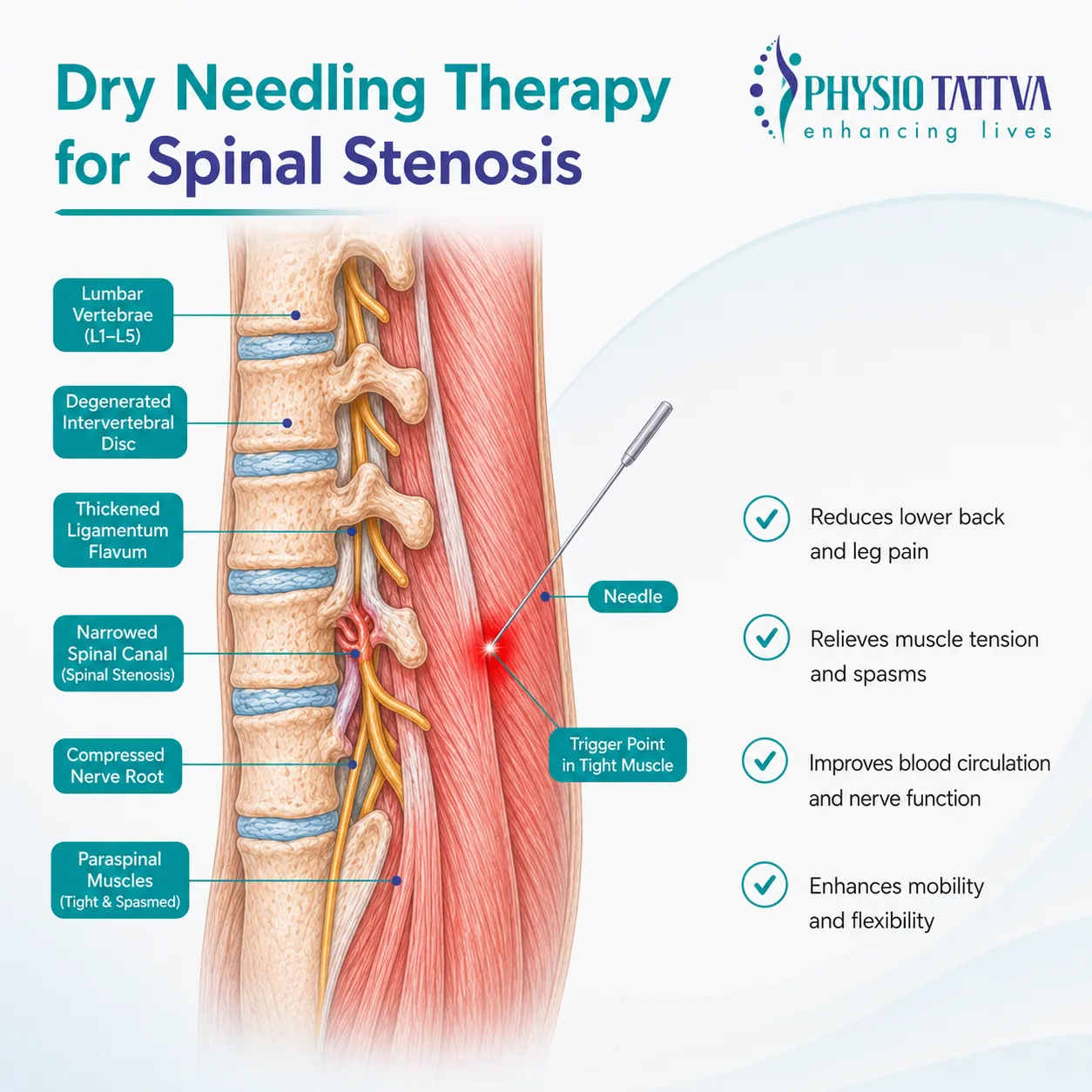
Dry needling involves inserting thin, solid filiform needles (similar to acupuncture needles) directly into myofascial trigger points to relieve pain and muscle tension.
Key Difference Between Dry Needling and Acupuncture
Unlike acupuncture, which focuses on balancing energy flow (Qi) along meridians, dry needling is rooted in Western neuroanatomy and modern science. It specifically targets muscle pain and dysfunction by stimulating trigger points, offering a direct and scientifically supported approach to healing.
How Dry Needling Addresses Spinal Stenosis Symptoms
Dry needling does not reverse the narrowing of the spinal canal. Instead, it addresses the secondary muscular problems that arise from spinal stenosis, which are often the primary source of a patient's pain and functional limitations.
Here’s the mechanism of action:
Step 1: The Problem Cycle of Stenosis
Nerve compression from stenosis causes pain signals. In response, the muscles surrounding the spine and in the affected limbs reflexively tighten and "guard" the area. This chronic guarding leads to:
- Development of Myofascial Trigger Points: These are hyper-irritable "knots" in the muscle that are painful to the touch and can refer pain to other areas.
- Reduced Blood Flow: Chronically tight muscles have poor circulation, leading to an accumulation of metabolic waste and a lack of oxygen.
- Compensatory Movement Patterns: To avoid pain, you change how you walk, stand, and move, which overloads other muscles and creates even more trigger points and dysfunction.
Step 2: How Dry Needling Intervenes
Dry needling works by targeting specific muscle areas to relieve pain and tension. Here's how it helps address the muscular issues caused by spinal stenosis:
Deactivating Trigger Points
When the needle is inserted into a trigger point, it often elicits a "local twitch response"—an involuntary muscle contraction followed by immediate relaxation. This action effectively "resets" the muscle, breaking the cycle of tightness and deactivating the pain-producing knot.
- Target Muscles for Lumbar Stenosis: Gluteus medius/minimus, quadratus lumborum (QL), and spinal erectors.
- Target Muscles for Cervical Stenosis: Upper trapezius, levator scapulae, and deep neck flexors.
Pain Modulation
Dry needling also helps modulate pain through the following mechanisms:
- Gate Control Theory: The sensation of the needle stimulates nerve fibers that send a signal to the brain, which can "close the gate" on the deeper, chronic pain signals from the stenosis. It essentially distracts the nervous system.
- Endorphin Release: The treatment stimulates the body to release its own natural painkillers (endorphins and enkephalins), providing systemic pain relief.
Improving Blood Flow & Healing
The micro-trauma caused by the needle signals the body to increase blood flow to the targeted area. This flushes out inflammatory chemicals and delivers oxygen and nutrients, promoting tissue healing.
Restoring Muscle Function
By releasing muscle tension and deactivating trigger points, dry needling helps restore the muscle’s normal length and function. This allows the patient to engage more effectively in therapeutic exercises that provide long-term stability and relief.
Is Dry Needling a Standalone Treatment for Spinal Stenosis?
While dry needling can offer significant relief, it works best when integrated into a comprehensive physical therapy plan. It creates a "window of opportunity" to address muscle tension and pain, allowing you to perform essential exercises for long-term relief.
- Dry Needling: Provides rapid pain and tension relief.
- Therapeutic Window: This relief allows you to perform critical exercises (like core strengthening, stretching, and postural correction) with less pain and better form.
- Long-Term Solution: The exercises are what provide lasting strength, stability, and control over your symptoms.
A complete treatment plan often includes:
- Manual Therapy: Joint mobilizations and soft tissue work.
- Therapeutic Exercise: Core strengthening, flexibility programs, and nerve glides.
- Patient Education: Instruction on posture, body mechanics, and pain-management strategies.
Who is a Good Candidate for Dry Needling Therapy for Spinal Stenosis?
Dry needling can be highly effective for individuals suffering from spinal stenosis with a muscular component. Here’s who may benefit from this treatment:
- If you're experiencing significant muscle pain, tightness, or spasms that accompany spinal stenosis.
- If your pain is more muscular than nerve-related and responds to muscle-focused treatments.
- If you want to reduce your reliance on pain medication and improve functional mobility.
- If you’ve reached a plateau in your physical therapy due to muscle pain and guarding, it is making it difficult to progress.
Contraindications for Dry Needling Therapy in Spinal Stenosis Treatment
While dry needling therapy can be an effective tool for managing spinal stenosis, it’s not suitable for everyone. There are certain conditions where it should be avoided due to safety concerns. It’s important to refrain from dry needling if you experience any of the following:
- Needle phobia: A significant fear or discomfort with needles can make dry needling an inappropriate choice.
- Active infection or skin lesions at the treatment site: Dry needling should not be performed on areas with infections or damaged skin, as it could worsen the condition.
- Pregnancy: Especially during the first trimester or over certain areas, dry needling may pose risks, so it's important to consult a healthcare provider.
- Bleeding disorders or the use of high-dose blood thinners: These can increase the risk of bleeding or bruising during or after treatment.
- Compromised immune system: Individuals with a weakened immune system should avoid dry needling, as it may impact healing and increase susceptibility to complications.
Before beginning dry needling therapy, consult with your healthcare provider to determine if it’s the right treatment for you.
What to Expect During Dry Needling Therapy for Spinal Stenosis
When undergoing dry needling therapy for spinal stenosis, patients can anticipate the following:
- Initial Assessment: Your therapist will evaluate your condition to determine the best areas to target.
- Needle Insertion: The insertion of needles may cause a twitch response or a deep ache, which is a sign of effective muscle release.
- Post-Treatment Soreness: Similar to the discomfort felt after a workout, soreness is common but should subside within 24-48 hours.
- Post-Treatment Care: To support recovery, your therapist may recommend hydration, heat application, and gentle stretching to enhance the treatment’s effectiveness.
Get Personalised Spinal Stenosis Care at Physiotattva
Dry needling therapy offers a targeted, non-invasive approach to managing spinal stenosis symptoms. By addressing muscle tightness, spasms, and trigger points, it can provide significant relief, improve mobility, and support overall treatment goals. While not a cure for spinal stenosis, dry needling plays a crucial role in enhancing physical therapy outcomes and reducing pain. If you’re experiencing muscle-related discomfort due to spinal stenosis, consult with a qualified therapist to explore whether dry needling can help improve your quality of life.
At Physiotattva physiotherapy clinics in Bangalore, Hyderabad and Vizag you receive personalised care tailored to your specific needs, ensuring effective results and comfort throughout your journey to recovery.
Don’t wait to start your recovery! Get in touch with Physiotattva for more details! Contact us at +91 89510 47001.
Why Physiotattva?
22+
50,000+
95%
200+
25+
4.8
Cities We Serve

Bangalore
At Physio Tattva, we are committed to bring access to quality physio care through ultra-modern clinics and high-skilled practitioners to all.
.webp)
Hyderabad
At Physio Tattva, we are committed to bring access to quality physio care through ultra-modern clinics and high-skilled practitioners to all.
.webp)
Vishakhapatnam
At Physio Tattva, we are committed to bring access to quality physio care through ultra-modern clinics and high-skilled practitioners to all.
Core Treatments
Core Conditions
Core Symptoms
Frequently Asked Questions
Is dry needling painful?

How many dry needling sessions will I need?
Is dry needling safe for spinal stenosis?
What are the side effects of dry needling?






%20(1)-p-3200.jpeg)


.jpg)
.webp)
.webp)
.webp)