




Hot and cold therapy offers an effective, accessible, and non-invasive solution for managing the pain, inflammation, and stiffness caused by tennis elbow (lateral epicondylitis). Understanding when and how to use each therapy is key to achieving optimal relief and promoting faster recovery.
This article will explore the best techniques for using hot and cold therapy, along with expert advice on how to incorporate them into your recovery plan.
Understanding the Goal of Hot and Cold Therapy
Each therapy serves a unique purpose in managing tennis elbow pain and promoting healing. Knowing when to use cold therapy and when to apply heat can make a significant difference in your recovery process. Below, we explain the goals of each therapy and how they work to alleviate pain and discomfort.
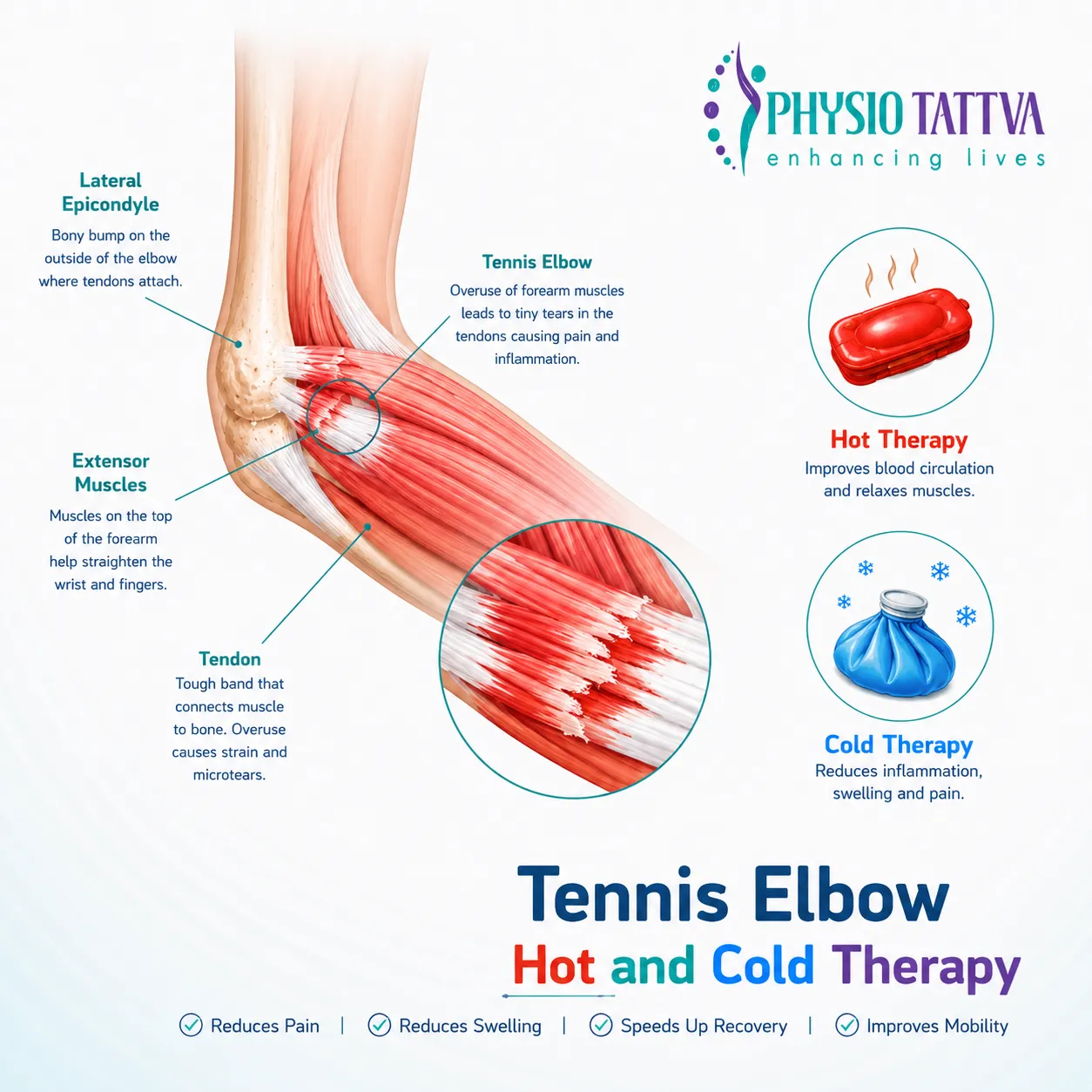
Cold Therapy (Cryotherapy)
The primary goal is to reduce inflammation and numb pain. It works by constricting blood vessels (vasoconstriction), which limits blood flow to the area. This helps decrease swelling and dulls nerve endings, providing immediate pain relief.
Heat Therapy (Thermotherapy)
The primary goal is to increase circulation and relax muscles. It works by dilating blood vessels (vasodilation), which brings more oxygen and nutrient-rich blood to the tissues. This helps soothe stiffness, ease muscle tension, and promote long-term healing.
When to Use Cold Therapy (Ice)?
Cold therapy is most effective during the acute phase of your injury or after any activity that triggers a flare-up. It helps to manage pain, reduce swelling, and prevent further inflammation. Applying ice can significantly aid in the early stages of recovery. Use ice therapy when you experience:
- Sharp, acute pain on the outside of the elbow
- Noticeable swelling or puffiness around the elbow joint
- The area feels warm to the touch, indicating active inflammation
- Immediately following an activity that aggravates the elbow (e.g., playing tennis, gardening, or using tools)
- Within the first 48-72 hours of a new injury or significant flare-up, as this is when inflammation is most prominent and needs to be controlled for optimal healing
How to Apply Cold Therapy?
When applying cold therapy, it's important to use the right tools and follow proper techniques to ensure safety and effectiveness. Cold therapy can provide immediate relief by reducing swelling and numbing the pain, but it must be applied correctly to avoid injury. Here’s how to properly apply ice for tennis elbow:
- Tool: Use a gel ice pack, a bag of frozen peas, or ice cubes in a plastic bag. These options retain cold for an extended period and conform to the shape of the elbow.
- Barrier: Always wrap the ice pack in a thin, dry towel or cloth. Never apply ice directly to the skin to prevent ice burn or frostbite.
- Placement: Place the cold pack directly over the most painful point on the outside of your elbow. Ensure it covers the entire affected area.
- Duration: Apply for 15-20 minutes at a time. Avoid exceeding this time to prevent damage to your skin and nerves.
- Frequency: Repeat every 2-3 hours as needed during a flare-up, especially within the first 48-72 hours, to control inflammation and pain.
When to Use Heat Therapy?
Heat therapy is most effective for managing chronic stiffness and muscle soreness once the initial acute inflammation has subsided. It's particularly beneficial for warming up the area before activity to prepare muscles and joints for movement. Use heat therapy when you experience:
- Dull, aching pain and general muscle soreness in the forearm, especially after long periods of use
- Stiffness in the elbow and forearm, particularly in the morning or after inactivity
- Before stretching or light exercise, to increase flexibility, improve blood flow, and reduce the risk of re-injury
- When there is no significant swelling or inflammation present, typically 72+ hours after the initial injury or flare-up
Disclaimer: Do not use heat on a new, acute injury, as it can worsen inflammation and swelling by increasing blood flow to the affected area. Always wait for the initial inflammation to subside before using heat therapy.
How to Apply Heat Therapy?
When applying heat therapy, it's important to use the right tools and techniques to ensure comfort and safety. Heat can help soothe stiffness, reduce muscle tension, and increase circulation to promote healing. Follow these steps to apply heat therapy effectively:
- Tool: Use a moist heating pad, a warm, damp towel, a hot water bottle, or a reusable heat pack. Moist heat often penetrates deeper into the muscles compared to dry heat, providing more effective relief.
- Temperature: The temperature should be comfortably warm, not hot enough to cause burns or discomfort. Always test the heat source before applying it to your skin.
- Placement: Wrap the heat source around the elbow and forearm muscles, ensuring it covers the entire affected area.
- Duration: Apply for 15-20 minutes at a time to avoid overheating the skin and muscles.
- Frequency: Use once or twice a day, especially before activities that require using your arm, to help improve flexibility and prevent injury.
Advanced Technique: Contrast Therapy (Alternating Hot and Cold)
Contrast therapy is a highly effective technique once the initial acute phase (48-72 hours) has passed, especially when there is still lingering swelling and stiffness. The alternating hot and cold applications create a "pumping" action, which helps flush out inflammation and promote healing.
How to Apply Contrast Therapy?
Contrast therapy involves alternating between hot and cold to create a "pumping" effect that can help reduce inflammation, increase circulation, and promote faster recovery. Follow these steps to apply contrast therapy effectively:
- Start with Heat: Apply heat for 3 minutes to increase blood flow to the area.
- Switch to Cold: Immediately switch to a cold pack for 1 minute to reduce inflammation.
- Repeat: Alternate between heat and cold for 4-5 cycles.
- End with Cold: Always finish with cold therapy to minimize any remaining inflammation and promote recovery.
Benefits of Contrast Therapy
Contrast therapy offers a variety of advantages in treating tennis elbow. This technique not only accelerates healing but also enhances muscle flexibility and reduces discomfort. Here's how contrast therapy can benefit you:
- Reduces inflammation by stimulating blood flow and improving circulation.
- Helps alleviate muscle stiffness and soreness, promoting flexibility.
- Accelerates the healing process by boosting nutrient and oxygen delivery to tissues.
- Enhances the effectiveness of other treatments like manual therapy or stretching.
- Provides relief from chronic pain while aiding in tissue repair and regeneration.
Important Safety Precautions for Hot and Cold Therapy
While hot and cold therapy can be highly effective, it’s essential to use these treatments safely to avoid injury. Follow these key safety precautions to ensure you’re using hot and cold therapy effectively and without harm:
- Protect Your Skin: Always use a barrier (like a towel) between the pack and your skin.
- Limit Duration: Do not apply either hot or cold for more than 20 minutes at a time to avoid damaging skin and nerves.
- Listen to Your Body: If a therapy increases your pain, stop immediately.
- Check for Medical Conditions: If you have diabetes, poor circulation, nerve damage (neuropathy), or a cardiovascular condition, consult a doctor before using hot or cold therapy.
- Do Not Use on Open Wounds: Avoid applying packs to broken or irritated skin.
Complementary Treatments
Hot and cold therapy are excellent for managing symptoms, but they should be part of a broader treatment plan that may include:
- Rest: Avoid the activities that cause pain.
- Stretching: Gentle wrist extensor and flexor stretches.
- Strengthening: Eccentric strengthening exercises for the forearm are highly effective.
- Tennis Elbow Brace/Strap: A counterforce brace can reduce strain on the tendon.
- Professional Guidance: Consult a physical therapist or doctor for a formal diagnosis and a tailored rehabilitation program.
Regain Mobility with Hot and Cold Therapy at Physiotattva
Hot and cold therapy is a simple yet highly effective way to manage tennis elbow pain, reduce inflammation, and promote healing. By understanding when and how to use each therapy, cold for acute pain and inflammation, and heat for chronic stiffness and soreness, you can maximise their benefits. Additionally, integrating contrast therapy can further enhance circulation and accelerate recovery.
However, it's essential to follow safety guidelines to prevent injury and ensure the treatments are effective. If you have any underlying medical conditions, always consult with a healthcare provider before using hot or cold therapy. With the right approach, these therapies can be an important part of your recovery plan, helping you regain mobility and get back to your daily activities with less pain and more flexibility.
At Physiotattva physiotherapy clinics in Bangalore and Hyderabad, you receive personalised care tailored to your specific needs, ensuring effective results and comfort throughout your journey to recovery.
Don’t wait to start your recovery! Get in touch with Physiotattva for more details! Contact us at +91 89510 47001.
Why Physiotattva?
22+
50,000+
95%
200+
25+
4.8
Cities We Serve

Bangalore
At Physio Tattva, we are committed to bring access to quality physio care through ultra-modern clinics and high-skilled practitioners to all.
.webp)
Hyderabad
At Physio Tattva, we are committed to bring access to quality physio care through ultra-modern clinics and high-skilled practitioners to all.
.webp)
Vishakhapatnam
At Physio Tattva, we are committed to bring access to quality physio care through ultra-modern clinics and high-skilled practitioners to all.
Core Treatments
Core Conditions
Core Symptoms
Frequently Asked Questions
Can I use both hot and cold therapy on the same day for my tennis elbow?

Should I do exercises after applying heat or cold?
What happens if I use heat on a fresh tennis elbow injury?
Besides hot and cold therapy, what is the single most important thing I can do for tennis elbow at home?
How can a physiotherapist at Physiotattva provide a more effective solution than just hot and cold packs?





%20(1)-p-3200.jpeg)


.jpg)
.webp)
.webp)
.webp)