





If you're struggling with the nagging pain on the outside of your elbow known as Tennis Elbow, you've likely explored various treatments. One highly effective, non-invasive option is Kinesio taping therapy for Tennis elbow. This method uses specialised elastic tape to relieve pain, reduce strain on injured tissues, and support your muscles without restricting your range of motion.
This article will walk you through what Kinesio taping is, how it works for lateral epicondylitis, and provide step-by-step instructions for common application techniques.
What is Tennis Elbow (Lateral Epicondylitis)?
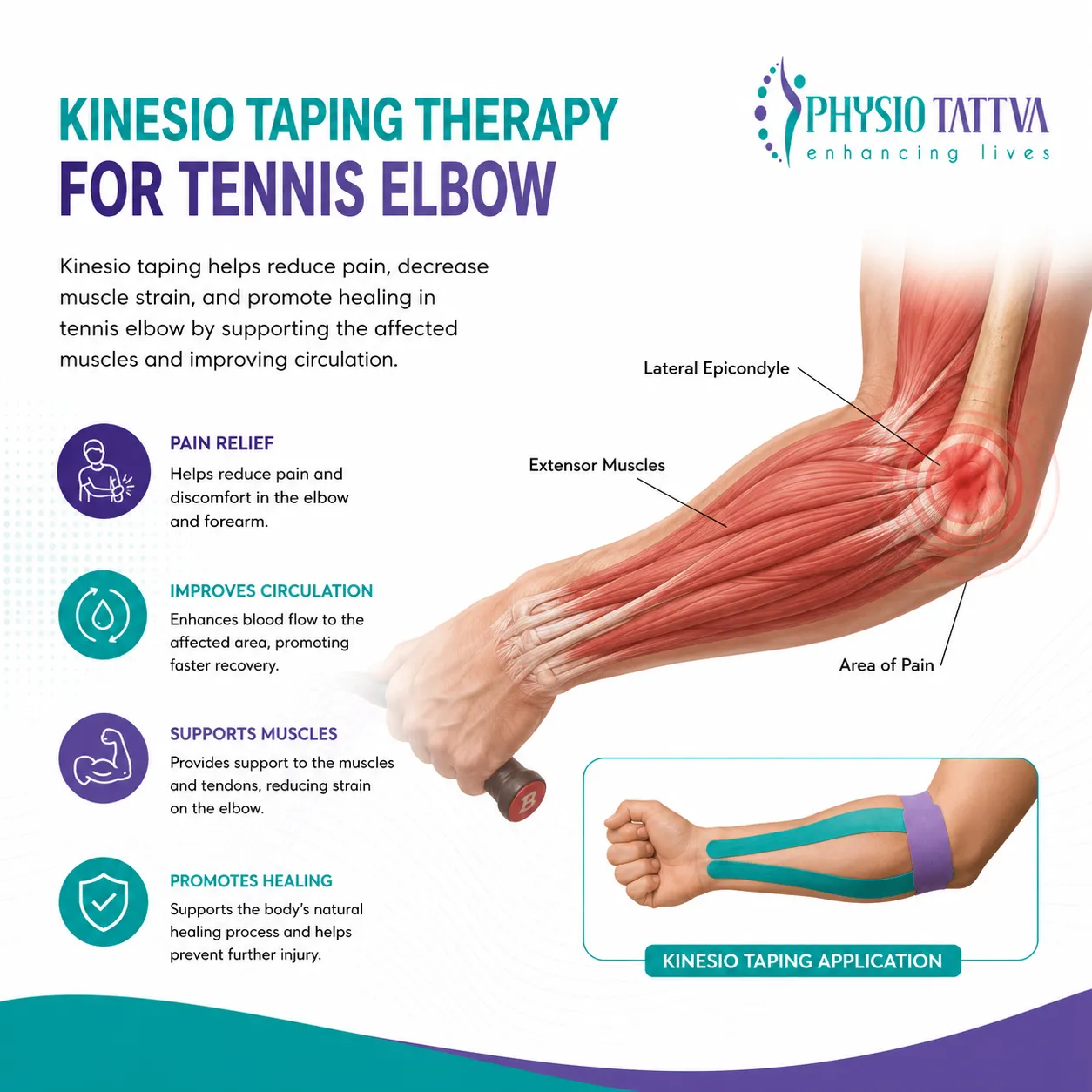
Tennis elbow, or lateral epicondylitis, isn't just for tennis players. It's an overuse injury caused by repetitive strain on the forearm's extensor muscles, which attach to the bony bump on the outside of your elbow (the lateral epicondyle). This leads to inflammation, micro-tears, and pain, especially when gripping, lifting, or twisting your wrist.
How Does Kinesio Taping Help Tennis Elbow?
Kinesio taping therapy supports recovery from tennis elbow by addressing pain, muscle overload, and movement control at multiple levels. Rather than restricting motion, it works with the body’s natural healing processes to reduce strain on irritated tissues and improve functional support during daily activities. Its benefits are achieved through several key mechanisms:
- Pain Relief (Decompression): When applied correctly, the tape gently lifts the skin. This creates a microscopic space between the skin and the underlying tissues, reducing pressure on pain receptors and improving lymphatic drainage to decrease swelling.
- Muscle Inhibition: For an overuse injury like tennis elbow, the goal is often to calm down, or "inhibit," the overworked forearm muscles. A specific taping direction and tension can send signals to the nervous system to reduce muscle firing, giving the tendons a chance to rest and heal.
- Structural Support: The tape provides gentle support to the wrist and forearm, which can help offload the stressed tendons at the elbow. This is especially helpful during activities that would normally trigger pain.
- Improved Proprioception: The tape on your skin increases your brain's awareness of your arm's position. This enhanced feedback can help you unconsciously avoid poor movements and postures that aggravate the condition.
Step-by-Step Kinesio Taping Application for Tennis Elbow
Here are two of the most common and effective techniques. For best results, have someone assist you, although self-application is possible.
Essential Preparation Before Kinesio Taping: Proper skin preparation plays an important role in comfort, adhesion, and overall effectiveness of the taping application. Taking a few moments to prepare the area helps the tape stay in place and work as intended:
- Clean and Dry Skin: Wash the area with soap and water or rubbing alcohol to remove oils and lotions. Ensure the skin is completely dry.
- Trim Hair: For better adhesion and painless removal, trim any dense hair in the application area.
- Round the Corners: Cut the corners of your tape strips into a rounded shape. This prevents the edges from catching on clothing and peeling off prematurely.
- Don't Touch the Adhesive: Handle the tape from the backing paper as much as possible.
Technique 1: The "Inhibition" Y-Strip
This is the most classic and widely used Kinesio taping method for tennis elbow. It targets the overworked wrist extensor muscles.
What You Will Need
One Y-shaped strip of Kinesio tape
Step 1: Measure and Cut the Tape
Position your arm with the elbow straight and the wrist flexed downward, as if pointing your fingers toward the floor. This places the extensor muscles on stretch. Measure a strip of tape from the back of your wrist to just above the painful area on the outside of the elbow. Cut the strip, then split it lengthwise about two-thirds of the way to create a Y shape with two tails and a solid base. Round all corners to improve adhesion.
Step 2: Apply the Base
Tear the backing paper at the base of the Y-strip. Anchor this base to the back of your hand or wrist with no stretch applied to the tape.
Step 3: Apply the Tails
Keep the wrist flexed downward. Peel the backing off one tail and lay it along one side of the forearm muscle belly, guiding it toward the elbow using zero tension. Repeat the same process with the second tail on the opposite side of the muscle. The two tails should form a V shape that surrounds the main muscle belly, with the space between them passing over the most painful area. The ends of the tails should finish above the elbow joint.
Step 4: Activate the Adhesive
Rub the entire taped area firmly for 20 to 30 seconds. The heat generated by friction helps activate the medical-grade adhesive and improves tape adherence.
Technique 2: The "Pain Relief" Decompression Strip
This strip is applied directly over the point of maximum pain to lift the skin and reduce pressure. It can be used alone or in conjunction with the Y-Strip.
What You Will Need
One short I-shaped strip of Kinesio tape
Step 1: Measure and Cut the Tape
Cut a short strip of tape approximately 4 to 6 inches in length. Round the corners to improve adhesion and reduce edge lifting.
Step 2: Apply the Centre of the Tape
Identify the most tender spot on the outside of the elbow. Bend the elbow to around 90 degrees. Tear the backing paper in the centre of the tape strip. Holding both ends, apply a moderate stretch to the middle portion of the tape and place it directly over the point of pain.
Step 3: Apply the Ends
Lay down the final inch of tape at each end without any stretch. These sections act as anchors and help keep the tape secure.
Step 4: Activate the Adhesive
Rub the taped area firmly for several seconds to activate the medical-grade adhesive and ensure proper fixation.
Important Tips and Best Practices
Following a few practical guidelines can help ensure Kinesio taping is both safe and effective. These points help improve comfort, durability, and overall results when using taping as part of tennis elbow management:
- When to Apply: Apply the tape at least 30 minutes before activity or showering.
- Duration: Kinesio tape can typically be worn for 3-5 days. It is water-resistant.
- Removal: Remove the tape gently in the direction of hair growth. Soaking it in oil (baby oil, olive oil) or taking it off in a warm shower can make removal easier.
- Listen to Your Body: If the tape causes itching, skin irritation, numbness, or increased pain, remove it immediately.
- It's Not a Cure: Kinesio taping therapy for Tennis elbow is an excellent tool for managing symptoms, but it should be part of a comprehensive treatment plan that includes rest, ice, specific stretching, and strengthening exercises as recommended by a physical therapist or doctor.
By using these Kinesio taping techniques, you can effectively manage pain, support your healing tissues, and get back to your daily activities with greater comfort. Always consult a healthcare professional for an accurate diagnosis and a personalised treatment strategy.
Supporting Tennis Elbow Recovery with Kinesio Taping at Physiotattva
Kinesio taping therapy offers a practical, non-invasive way to manage tennis elbow pain while supporting movement and daily function. When applied correctly, it helps reduce strain, improve muscle control, and enhance comfort during recovery. However, taping works best when combined with targeted exercises, activity modification, and professional guidance. At Physiotattva, our physiotherapists assess the root cause of lateral epicondylitis and integrate taping into a personalised rehabilitation plan. This balanced approach supports healing, prevents recurrence, and helps you return to work, sport, and daily activities with confidence, safely and effectively, consistently over time.
At Physiotattva physiotherapy clinics in Bangalore and Hyderabad, you receive personalised care tailored to your specific needs, ensuring effective results and comfort throughout your journey to recovery.
Don’t wait to start your recovery! Get in touch with Physiotattva for more details! Contact us at +91 89510 47001.
Why Physiotattva?
22+
50,000+
95%
200+
25+
4.8
Cities We Serve

Bangalore
At Physio Tattva, we are committed to bring access to quality physio care through ultra-modern clinics and high-skilled practitioners to all.
.webp)
Hyderabad
At Physio Tattva, we are committed to bring access to quality physio care through ultra-modern clinics and high-skilled practitioners to all.
.webp)
Vishakhapatnam
At Physio Tattva, we are committed to bring access to quality physio care through ultra-modern clinics and high-skilled practitioners to all.
Core Treatments
Core Conditions
Core Symptoms
Frequently Asked Questions
How long does Kinesio tape for tennis elbow stay on?

Will the taping procedure hurt?
How soon will I feel relief from my tennis elbow pain after taping?
Can I be allergic to Kinesio tape?
Is Kinesio taping a substitute for my exercises?






%20(1)-p-3200.jpeg)


.jpg)
.webp)
.webp)
.webp)