




Vertigo, the unsettling sensation of spinning or dizziness, can be debilitating. While many assume medication is the only answer, a highly effective, non-invasive treatment exists for specific types of vertigo: manual therapy. This hands-on approach, performed by trained healthcare professionals, targets the root cause of the dizziness, often providing rapid and lasting relief.
This article will explore how manual therapy works for vertigo, the conditions it treats most effectively, the specific techniques used, and how to know if it's the right choice for you.
Understanding Vertigo: Why Accurate Diagnosis Matters
Before starting treatment, it’s important to recognise that vertigo is a symptom, not a diagnosis. Different conditions can cause vertigo, and while manual therapy can be highly effective for certain causes, it may be unsuitable for others. This makes an accurate diagnosis essential.
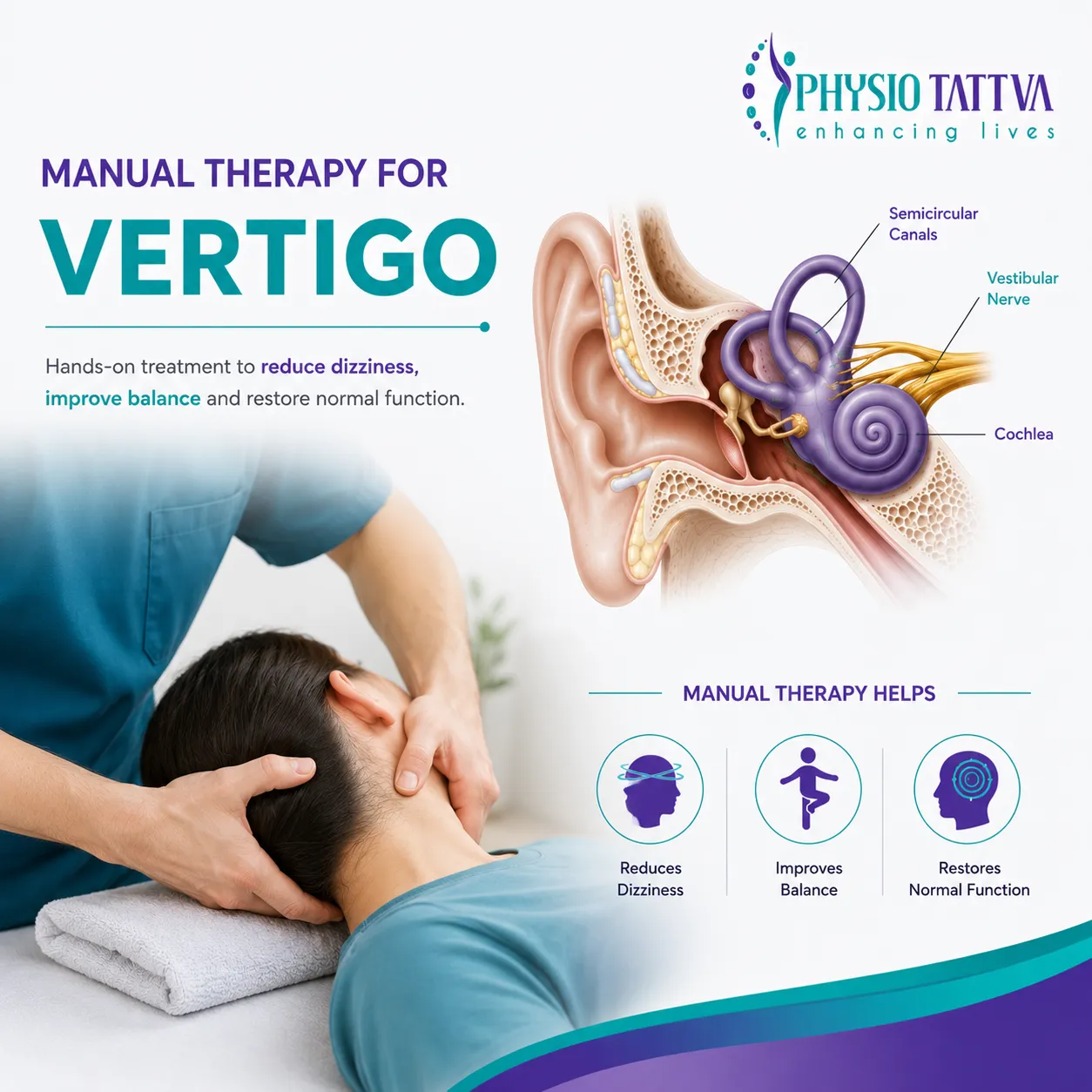
Types of Vertigo That Respond Well to Manual Therapy
Manual therapy is most effective for specific types of vertigo where physical structures play a direct role in triggering symptoms.
Benign Paroxysmal Positional Vertigo (BPPV)
This is one of the most common causes of vertigo and originates from a mechanical problem within the inner ear.
- Origin: Inner ear (peripheral vestibular system)
- Common cause: Dislodged calcium crystals (otoconia) moving into the wrong semicircular canal
- How manual therapy helps: Canalith repositioning manoeuvres guide the crystals back to their correct position, reducing spinning sensations
Cervicogenic Dizziness
This form of dizziness develops when problems in the neck interfere with balance signals sent to the brain.
- Origin: Neck (cervical spine)
- Common cause: Joint dysfunction, muscle tightness, or poor posture sends incorrect signals to the brain
- How manual therapy helps: Joint mobilisation, soft tissue techniques, and targeted exercises restore normal neck movement and sensory input
A Crucial Clinical Distinction
Manual therapy is not usually the primary treatment for vertigo caused by:
- Central nervous system conditions such as stroke or multiple sclerosis
- Meniere’s disease
- Vestibular neuritis or labyrinthitis
These conditions typically require medical or neurological management rather than physiotherapy-led manual treatment.
Why Diagnosis Comes First?
Because the success of any vertigo treatment depends entirely on identifying the underlying cause, a thorough clinical assessment is essential before beginning manual therapy. An accurate diagnosis helps rule out serious medical conditions, ensures patient safety, guides the selection of the most effective treatment approach, and leads to better, longer-lasting recovery outcomes.
Manual Therapy for BPPV: Treating the Root Cause of Vertigo
Manual therapy is considered the first-line treatment for BPPV because it directly addresses the mechanical cause of vertigo rather than just managing symptoms. BPPV is the most common cause of vertigo and leads to short, intense spinning episodes triggered by specific head movements such as rolling over in bed, looking up, or bending down.
Treatment Goals of Manual Therapy for BPPV
Understanding the treatment goal helps explain why manual therapy is so effective for BPPV.
- The aim of manual therapy for BPPV is to move the dislodged otoconia (calcium crystals) out of the fluid-filled semicircular canals and guide them back into the utricle, where they belong.
- These specialised techniques are known as Canalith Repositioning Manoeuvres (CRMs) and rely on precise positioning and gravity rather than force.
Common Manual Therapy Techniques for BPPV
Several well-established manual therapy techniques are used depending on the type and severity of BPPV.
- The Epley Maneuver: This is the gold standard for the most common form of BPPV (posterior canal). A therapist guides the patient through a series of four specific head and body positions, holding each for 30-60 seconds. This uses gravity to systematically "roll" the crystals out of the canal.
- The Semont (or Liberatory) Maneuver: An alternative to the Epley, this technique involves moving the patient rapidly from lying on one side to the other. It's particularly useful for a less common form of BPPV called cupulolithiasis.
- Brandt-Daroff Exercises: Often prescribed as a home exercise program after a successful maneuver or if maneuvers are not tolerated. These are habituation exercises that help the brain adapt to the abnormal signals, though they are less effective at resolving the root cause than CRMs.
Effectiveness: Clinical evidence consistently supports the effectiveness of manual therapy for BPPV. Canalith repositioning manoeuvres such as the Epley manoeuvre show success rates of over 80–90%, often resolving symptoms within just one or two treatment sessions.
Manual Therapy for Cervicogenic Dizziness: Neck-Related Balance Issues
Cervicogenic dizziness is closely linked to problems in the neck rather than the inner ear. It is often accompanied by neck pain, stiffness, reduced mobility, or a recent neck injury. Because its symptoms can overlap with other forms of vertigo, it is considered a diagnosis of exclusion, meaning other causes must be ruled out first. People typically describe this condition as a feeling of unsteadiness or lightheadedness rather than true spinning.
Treatment Goals for Cervicogenic Dizziness
Effective treatment focuses on correcting the source of faulty balance signals coming from the cervical spine.
- The primary goal is to restore normal movement in the neck, reduce excessive muscle tension, and improve proprioception, the body’s awareness of head and neck position in space.
- By improving how the neck communicates with the brain’s balance centres, symptoms of dizziness can gradually reduce.
Manual Therapy Techniques Used for Cervicogenic Dizziness
Manual therapy for cervicogenic dizziness combines hands-on treatment with movement-based retraining.
- Cervical Joint Mobilization/Manipulation: Gentle, hands-on movements (mobilization) or a quick, precise thrust (manipulation) applied to restricted joints in the neck to restore normal motion.
- Soft Tissue Therapy: Techniques like massage, myofascial release, and trigger point therapy are used to release tension in tight neck and shoulder muscles (e.g., suboccipitals, sternocleidomastoid, scalenes).
- Proprioceptive and Vestibular Exercises: Therapists will prescribe specific exercises to retrain the connection between the neck's sensory input and the brain's balance centers. This can include head-eye coordination drills and balance exercises.
Effectiveness: Manual therapy combined with therapeutic exercise is considered the leading treatment for cervicogenic dizziness, helping to reduce symptoms and improve function significantly.
Who Performs Manual Therapy for Vertigo?
Because manual therapy for vertigo requires precise assessment and technique, it is essential to seek care from a healthcare professional with specialised training in vestibular and/or orthopaedic manual therapy. Qualified providers typically include:
- Vestibular Physical Therapists: These are PTs with advanced certification in treating vestibular disorders like BPPV. They are experts in diagnosis (e.g., performing a Dix-Hallpike test) and treatment.
- Chiropractors: Many chiropractors have training in performing CRMs and treating cervicogenic dizziness through spinal manipulation and soft tissue work.
- Osteopathic Physicians (DOs): They are trained in osteopathic manipulative treatment (OMT), which can address musculoskeletal dysfunctions contributing to cervicogenic dizziness.
What to Expect During a Manual Therapy Appointment for Vertigo?
Knowing what happens during your appointment can help you feel more prepared and confident. A vertigo-focused manual therapy session is structured, thorough, and tailored to your specific symptoms and diagnosis.
- Thorough Assessment: The session will begin with a detailed history of your symptoms and a physical examination. For suspected BPPV, this will include tests like the Dix-Hallpike Test to provoke the vertigo and confirm the diagnosis and location of the crystals.
- Precise Treatment: Based on the diagnosis, the therapist will perform the appropriate maneuver (e.g., Epley) or neck-focused manual therapy.
- Immediate Feedback: With BPPV treatment, you may feel an intense but short-lived spell of vertigo during the maneuver itself—this is a sign it's working!
- Education and Home Program: You will receive post-treatment instructions (e.g., keeping your head upright for a few hours) and a home exercise program if needed.
Red Flags: When Vertigo Needs Immediate Medical Attention
While BPPV and cervicogenic dizziness are not life-threatening, vertigo can be a symptom of a serious neurological event like a stroke. Seek immediate medical care if your dizziness is accompanied by any of the following:
- The 5 D's: Dizziness (that's new or different), Diplopia (double vision), Dysphagia (trouble swallowing), Dysarthria (slurred speech), Drop attacks (sudden falls).
- The 3 N's: Nausea (severe), Numbness (in the face or extremities), Nystagmus (abnormal eye-flickering that is persistent).
- Sudden, severe headache ("worst headache of your life").
- Weakness on one side of the body.
Moving Forward with the Right Vertigo Care
Manual therapy can be highly effective for certain types of vertigo, especially BPPV and cervicogenic dizziness, by treating the underlying physical cause rather than just symptoms. With an accurate diagnosis and professional guidance, these hands-on techniques can help restore balance, reduce dizziness, and support long-term recovery safely.
At Physiotattva physiotherapy clinics in Bangalore and Hyderabad, you receive personalised care tailored to your specific needs, ensuring effective results and comfort throughout your journey to recovery.
Don’t wait to start your recovery! Get in touch with Physiotattva for more details! Contact us at +91 89510 47001.
Why Physiotattva?
22+
50,000+
95%
200+
25+
4.8
Cities We Serve

Bangalore
At Physio Tattva, we are committed to bring access to quality physio care through ultra-modern clinics and high-skilled practitioners to all.
.webp)
Hyderabad
At Physio Tattva, we are committed to bring access to quality physio care through ultra-modern clinics and high-skilled practitioners to all.
.webp)
Vishakhapatnam
At Physio Tattva, we are committed to bring access to quality physio care through ultra-modern clinics and high-skilled practitioners to all.
Core Treatments
Core Conditions
Core Symptoms
Frequently Asked Questions
Is manual therapy for vertigo painful?

How many manual therapy sessions will I need for vertigo?
Is this treatment safe?
Can I perform the Epley maneuver on myself at home?






%20(1)-p-3200.jpeg)


.jpg)
.webp)
.webp)
.webp)