





Osteoporosis is a progressive condition that weakens bones and increases fracture risk, often without early warning signs. As interest grows in safe, non-invasive therapies, Pulsed Electromagnetic Fields (PEMF) therapy has emerged as a promising complementary approach to support bone health and recovery.
This article explores how PEMF therapy works, the scientific rationale behind its use in osteoporosis, potential benefits, safety considerations, and who may benefit most from this therapy, helping you make informed decisions about long-term bone care.
Understanding Osteoporosis and the Need for New Treatment Approaches
Osteoporosis is often called a "silent disease" because it can progress without symptoms until a fracture occurs. It is a condition where bones become weak and brittle, characterized by low bone mass and the structural deterioration of bone tissue. This fragility dramatically increases the risk of fractures, particularly in the hip, spine, and wrist, which can lead to chronic pain, disability, and a loss of independence.
While conventional treatments like bisphosphonates, hormone therapies, and supplements are the frontline defense, they are not without challenges. Some patients experience significant side effects, such as gastrointestinal issues, while others struggle with the strict compliance required for medications to be effective. In this context, the medical community is continuously exploring innovative, complementary approaches. One of the most promising is Pulsed Electromagnetic Fields (PEMF) therapy, a non-invasive technology that aims to support the body's natural bone-building processes.
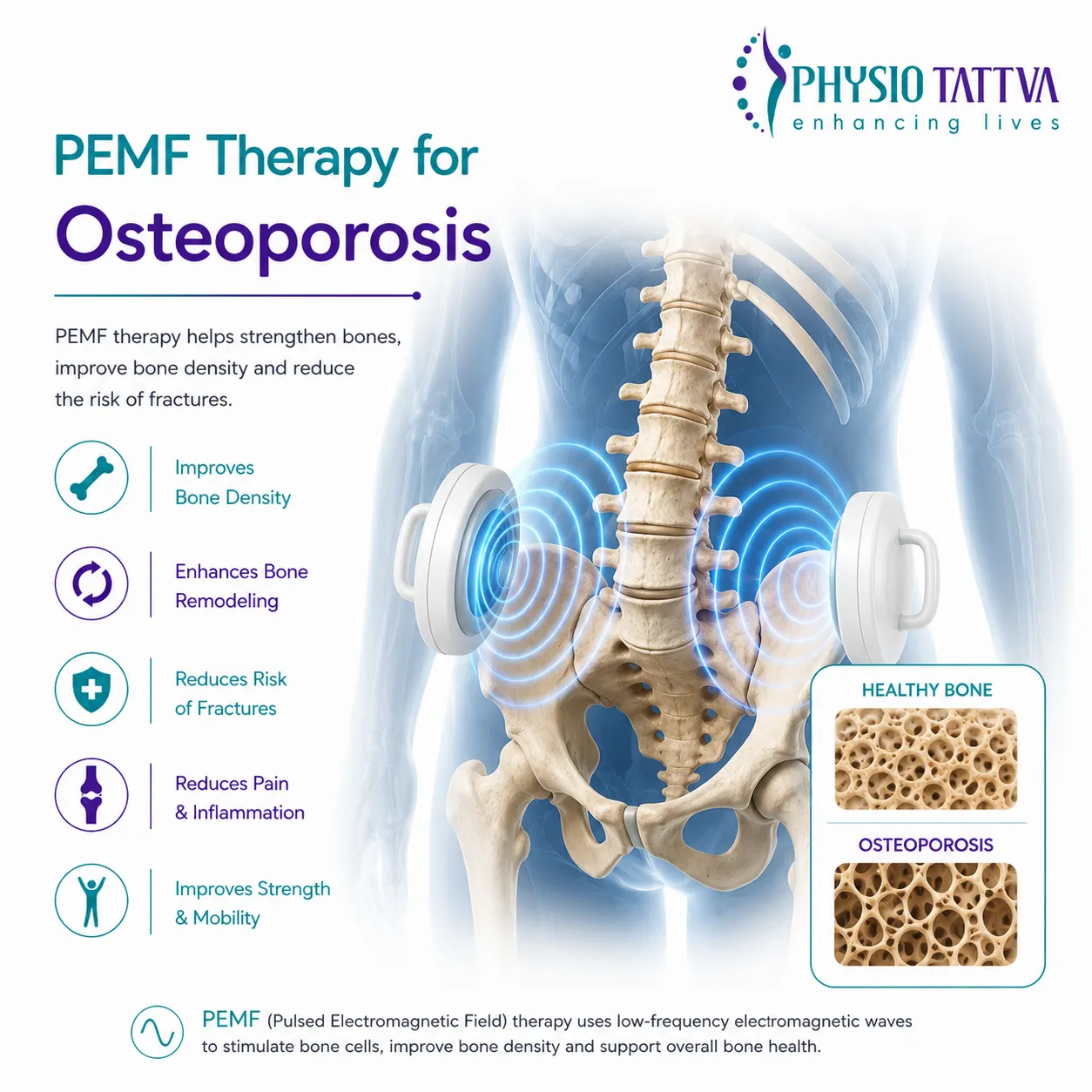
What is Pulsed Electromagnetic Fields (PEMF) Therapy?
In simple terms, PEMF therapy uses low-frequency, low-intensity electromagnetic fields delivered in short, targeted pulses to the body. These fields can penetrate deep into tissues, including bone, to stimulate cells at a metabolic level.
It's crucial to understand that this is not the same as the potentially harmful, high-frequency electromagnetic fields (EMFs) emitted from power lines, cell phones, or microwaves. PEMF is a safe, FDA-regulated therapeutic technology engineered for healing. In fact, its credibility in bone health is well-established; PEMF devices have been FDA-approved for decades to help heal non-union bone fractures (fractures that have failed to heal on their own), proving its ability to influence bone repair.
How Does PEMF Therapy Work for Osteoporosis?
This is where PEMF therapy gets fascinating. It works by bio-stimulation, encouraging the body’s own cells to perform their functions more effectively. Here’s a breakdown of the primary mechanisms:
- Stimulating Bone-Building Cells (Osteoblasts): Think of your bones as a worksite with a construction crew (osteoblasts) and a demolition crew (osteoclasts). In osteoporosis, the demolition crew is overactive. PEMF signals are believed to act like a foreman, encouraging the "construction crew" of osteoblasts to become more active, proliferate, and lay down new, healthy bone matrix.
- Inhibiting Bone-Resorbing Cells (Osteoclasts): At the same time, some research suggests that PEMF helps down-regulate the activity of the "demolition crew"—the osteoclasts that break down old bone tissue. By tipping this delicate balance in favor of bone formation over bone resorption, PEMF helps preserve and build bone density.
- The Piezoelectric Effect: This is a key principle. Bone is a piezoelectric material, meaning it generates a tiny electrical charge when it is put under mechanical stress, such as during weight-bearing exercise. This natural electrical signal is a trigger for bone to remodel and strengthen itself. PEMF therapy essentially mimics this effect, "tricking" the bone into initiating a healing and strengthening response without the need for intense physical impact.
- Improved Circulation & Nutrient Delivery: Healthy bone requires a steady supply of nutrients. PEMF has been shown to enhance microcirculation, improving blood flow and the oxygenation of tissues. This acts like an upgraded delivery service, bringing vital minerals like calcium and phosphorus directly to the bone tissue where they are needed most for repair and growth.
What Does the Scientific Evidence Say?
This section is crucial for understanding PEMF's current standing. It's important to maintain a balanced, evidence-based perspective.
- Summary of Findings: A growing body of research, primarily from in vitro (lab-based), animal, and small-scale human clinical trials, has shown promising results. Key findings include:
- Increases in Bone Mineral Density (BMD): Several studies have reported statistically significant increases in BMD, particularly in the lumbar spine and femoral neck—two areas highly vulnerable to osteoporotic fractures.
- Positive Changes in Bone Turnover Markers: Blood tests measuring biochemical markers have shown that PEMF can shift the balance towards bone formation and away from resorption.
- Synergistic Effects: PEMF therapy appears to work exceptionally well when used alongside traditional treatments. Studies combining PEMF with Vitamin D and calcium supplements have shown greater improvements in BMD than supplements alone.
- Limitations & Need for More Research: While the evidence is encouraging, it's important to acknowledge its limitations. Many human studies have been small, and the types of PEMF devices, frequencies, and treatment durations used have varied widely. Therefore, more large-scale, long-term, randomized controlled trials are needed to establish definitive treatment guidelines and confirm its efficacy for a broader population.
Potential Benefits of PEMF for Osteoporosis
When used as part of a structured bone health strategy, PEMF therapy offers several practical and patient-friendly benefits that make it a valuable supportive option for osteoporosis management:
- Non-Invasive and Safe: There are no needles, medications, or surgical procedures involved. PEMF therapy has an exceptionally high safety profile with minimal to no reported side effects.
- Complementary Approach: It is not an "either/or" choice. PEMF can be safely integrated with conventional medications, a bone-healthy diet, and an appropriate exercise regimen to create a comprehensive management plan.
- Pain Reduction: Beyond bone density, many users report a significant reduction in the chronic aches and joint pain that can be associated with osteoporosis and related degenerative conditions.
- At-Home Convenience: The technology has evolved significantly. Many modern PEMF systems are designed as user-friendly mats or localized applicators, allowing individuals to complete their daily sessions conveniently at home.
Who May Benefit Most from PEMF Therapy for Osteoporosis?
PEMF therapy may be suitable for a wide range of individuals who are concerned about maintaining or improving bone health, particularly when conventional approaches alone may not be sufficient. It is commonly considered for:
- Individuals diagnosed with osteopenia or osteoporosis, where early intervention or supportive therapy may help slow bone loss and support overall bone strength.
- Patients who cannot tolerate standard osteoporosis medications, or those who experience side effects or medical contraindications that limit long-term pharmaceutical use.
- People seeking a complementary, non-invasive approach to enhance their existing treatment plan alongside medication, nutrition, and exercise.
- Post-menopausal women, who face an increased risk of bone density loss due to hormonal changes and may benefit from proactive bone-supportive therapies.
- Individuals recovering from fragility fractures, where PEMF therapy may help support bone healing and improve recovery when used under professional guidance.
As with any therapy, suitability should always be determined in consultation with a healthcare professional who can assess individual health status and treatment goals.
Risks, Side Effects, and Contraindications of PEMF Therapy
PEMF therapy has been widely studied and is considered a safe, non-invasive treatment for most individuals. However, as with any therapeutic modality, it is important to understand potential side effects and situations where its use may not be appropriate.
Possible Side Effects: PEMF is generally considered very safe. The most common sensations reported are a slight tingling or warmth in the treatment area, which are temporary and harmless. Most users feel nothing at all.
Critical Contraindications (Do Not Use If): PEMF therapy should be avoided or used only under strict medical supervision in the following situations:
- You have an implanted electronic device, such as a pacemaker, defibrillator, or cochlear implant, as the magnetic field could interfere with its function.
- You are pregnant.
- You have a history of epilepsy (consult a doctor first, as a precaution).
- The therapy should not be applied directly over areas with active, untreated cancerous tumors.
How is PEMF Therapy Administered?
PEMF therapy is delivered in a structured, patient-friendly manner, with treatment protocols tailored to individual needs, treatment goals, and the area being addressed. The method of administration typically includes the following components:
- Devices: Therapy is delivered via various devices, including full-body mats that treat the entire system, or smaller pads, rings, and localized applicators designed to target specific areas like the spine or hip.
- Session Protocol: A typical protocol involves daily sessions, usually lasting between 20 and 60 minutes, depending on the device and the specific program.
- Consistency is Key: This cannot be overstated. PEMF is not a quick fix. Like exercise, its benefits for bone density are cumulative and result from consistent, long-term use. Meaningful changes in bone structure require a commitment of months, and sometimes years, of regular therapy.
A Holistic Approach to Osteoporosis Management at Physiotattva
Pulsed Electromagnetic Fields (PEMF) therapy offers a promising, science-backed complementary approach to osteoporosis management. As a safe and non-invasive modality, it works by stimulating the body’s natural healing mechanisms, supporting bone-forming cells, enhancing circulation, and replicating the beneficial signals generated during weight-bearing activity. While it is not a replacement for conventional treatment, PEMF can play a valuable supportive role in improving bone quality and long-term skeletal health. Always consult your healthcare provider before starting PEMF therapy to determine whether it aligns with your individual bone health needs and overall treatment plan.
At Physiotattva physiotherapy clinics in Bangalore and Hyderabad, you receive personalised care tailored to your specific needs, ensuring effective results and comfort throughout your journey to recovery.
Don’t wait to start your recovery! Get in touch with Physiotattva for more details! Contact us at +91 89510 47001.
Why Physiotattva?
22+
50,000+
95%
200+
25+
4.8
Cities We Serve

Bangalore
At Physio Tattva, we are committed to bring access to quality physio care through ultra-modern clinics and high-skilled practitioners to all.
.webp)
Hyderabad
At Physio Tattva, we are committed to bring access to quality physio care through ultra-modern clinics and high-skilled practitioners to all.
.webp)
Vishakhapatnam
At Physio Tattva, we are committed to bring access to quality physio care through ultra-modern clinics and high-skilled practitioners to all.
Core Treatments
Core Conditions
Core Symptoms
Frequently Asked Questions
Is PEMF therapy painful or safe?

How many sessions will I need to see results with PEMF Therapy?
Can PEMF therapy cure osteoporosis?






%20(1)-p-3200.jpeg)


.jpg)
.webp)
.webp)
.webp)