




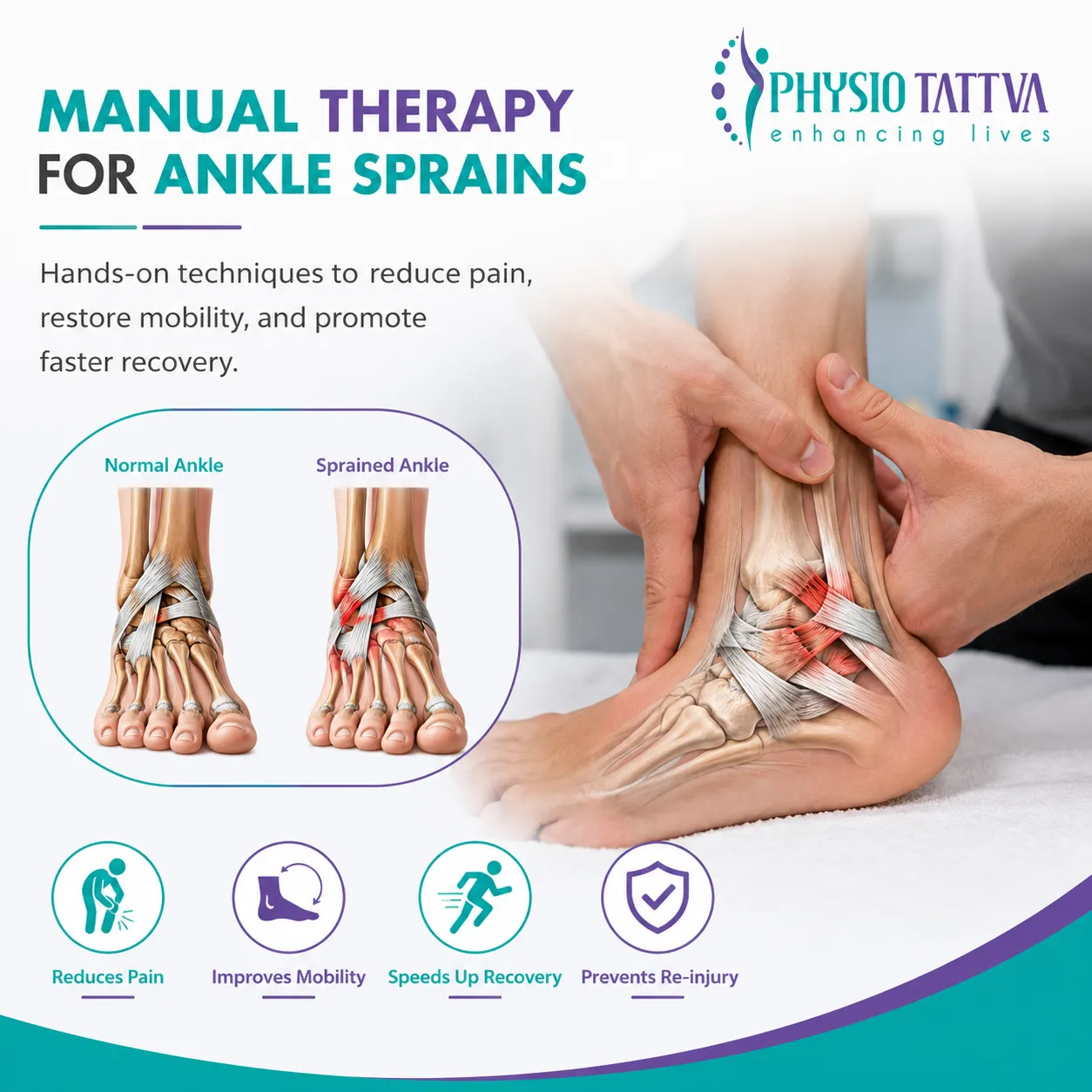
An ankle sprain is one of the most common musculoskeletal injuries, affecting everyone from elite athletes to individuals simply stepping off a curb incorrectly. While initial self-care steps like rest, ice, and elevation are crucial, professional intervention is often necessary for a full and speedy recovery. Manual therapy for an ankle sprain is a cornerstone of effective physical therapy, using skilled, hands-on techniques to accelerate healing and prevent long-term problems.
This article breaks down what manual therapy is, the specific techniques used for ankle sprains, and why it's so beneficial.
What is Manual Therapy and Why is it Essential for Ankle Sprains?
Manual therapy is a specialised form of physical therapy where clinicians use their hands to diagnose and treat musculoskeletal conditions. For an ankle sprain, which involves damage to ligaments and surrounding soft tissues, manual therapy aims to:
- Reduce Pain and Swelling: Gentle techniques can help calm irritated tissues and assist the body's natural lymphatic drainage system.
- Restore Range of Motion (ROM): After an injury, joints become stiff due to swelling, pain, and protective muscle guarding. Manual therapy directly addresses this stiffness.
- Improve Joint Mechanics: A sprain can alter the way the small bones of the ankle and foot move. Manual therapy helps restore normal, efficient biomechanics.
- Break Down Scar Tissue: As ligaments heal, they can form disorganised scar tissue, which is weaker and less flexible. Hands-on techniques can help model this tissue for better strength and function.
- Decrease Risk of Recurrence: By restoring full motion and function, manual therapy helps prevent chronic ankle instability, a common long-term consequence of poorly rehabilitated sprains.
Key Manual Therapy Techniques for Ankle Sprains
A physical therapist will use a combination of techniques, tailored to the severity of the sprain and the specific phase of healing (acute, subacute, or chronic).
Soft Tissue Mobilisation (STM) / Therapeutic Massage
This involves a variety of hands-on techniques applied to muscles, ligaments, and fascia around the ankle.
- Effleurage: Light, stroking movements used in the early stages to reduce swelling (edema) by pushing fluid towards the body's larger lymphatic ducts.
- Petrissage: Deeper, kneading techniques used to release muscle tension (e.g., in the calf and peroneal muscles, which often spasm after a sprain).
- Cross-Friction Massage: A specific, deep technique applied directly over the healing ligament (most commonly the Anterior Talofibular Ligament or ATFL). It helps break down adhesions and stimulate a more organized, stronger healing process. This is typically used after the initial inflammatory phase.
Joint Mobilisation
These are gentle, passive movements performed by the therapist to restore motion at the joints in the ankle and foot. Ankle sprains often cause stiffness in the talocrural joint (the main ankle joint) and the subtalar joint (below the ankle).
- What it is: The therapist applies slow, repetitive, rhythmic movements to the joint in specific directions.
- How it helps: It reduces pain through neurophysiological effects (calming the nervous system) and stretches the tight joint capsule to improve range of motion, particularly for dorsiflexion (bringing your foot up towards your shin).
- Graded Mobilizations: Therapists use a grading system (e.g., Maitland Grades I-V) to control the intensity.
- Grades I-II: Small, gentle movements used primarily for pain relief in the acute stage.
- Grades III-IV: Larger, more forceful movements to stretch tissues and increase range of motion in the subacute and chronic stages.
Manual Lymphatic Drainage (MLD)
MLD is a very light, specialised technique designed to reduce severe swelling and tissue congestion. Using gentle, rhythmic skin-stretching movements, the therapist stimulates lymph flow and encourages the reabsorption of excess lymphatic fluid. This technique is especially effective in the first few days after an injury, when inflammation and swelling are at their peak, helping reduce discomfort and support early healing.
Passive Range of Motion (PROM) and Stretching
In the early stages, you may be unable to move your ankle yourself due to pain. A therapist can perform Passive Range of Motion, gently moving your foot through its available range without you having to contract any muscles. This prevents stiffness, improves fluid circulation, and maintains joint health. As you heal, this may progress to manually applied stretches for the calf muscles (gastrocnemius and soleus).
Manipulation (High-Velocity, Low-Amplitude Thrust)
In certain cases, when ankle stiffness or joint restriction persists despite other manual therapy techniques, manipulation may be considered as part of advanced rehabilitation under strict clinical judgement.
- What it is: A quick, small movement (a "thrust") applied to a joint at the end of its range of motion. For the ankle, this is often used to address a specific positional fault or restriction that hasn't responded to mobilization.
- When it's used: This is an advanced technique and is NOT used in the acute phase of an ankle sprain. It may be appropriate in the later stages of rehab or for chronic ankle stiffness to achieve a final restoration of joint mobility. It should only be performed by a highly trained clinician.
Manual Therapy Across the Healing Phases
An ankle sprain does not heal in a single stage, and manual therapy must be carefully adapted to match the body’s natural healing timeline. As pain, swelling, and tissue repair progress, the type, intensity, and purpose of hands-on techniques change. This phase-specific approach ensures safe recovery, optimal tissue healing, and a gradual return to full ankle function without overloading injured structures.
Acute Phase (0–72 hours)
During the early stage of injury, the primary goal of manual therapy is to control inflammation and minimise discomfort while protecting healing tissues.
- Focus: Pain and swelling control
- Techniques: Gentle manual lymphatic drainage (MLD), light effleurage massage away from the injured site, and Grade I–II joint mobilisations to provide pain relief and reduce joint irritation.
Subacute Phase (3 days–3 weeks)
As swelling begins to settle and pain reduces, manual therapy shifts towards restoring movement and preventing stiffness.
- Focus: Restoring pain-free range of motion
- Techniques: Progression to more direct soft tissue techniques, Grade III–IV joint mobilisations to improve dorsiflexion and other ankle movements, and gentle cross-friction massage over the healing ligament.
Chronic / Remodeling Phase (3+ weeks)
In the later stages of recovery, manual therapy targets residual restrictions and prepares the ankle for full functional demands.
- Focus: Full function, tissue remodeling, and return to activity
- Techniques: Deep cross-friction massage, more aggressive joint mobilisations, and, where appropriate, joint manipulation to address any remaining stiffness or movement limitations.
Who Is Qualified to Perform Manual Therapy?
Manual therapy is a specialised and protected clinical skill that requires advanced knowledge of anatomy, biomechanics, and injury-specific healing processes. To ensure safety and effectiveness, it should only be performed by licensed healthcare professionals who have undergone formal training and postgraduate education in manual therapy techniques. Qualified providers typically include:
- Physical Therapists (Physiotherapists): Especially those with advanced certifications such as OCS (Orthopaedic Clinical Specialist) or FAAOMPT (Fellow of the American Academy of Orthopaedic Manual Physical Therapists), indicating specialised expertise in orthopaedic manual therapy.
- Osteopathic Physicians (DOs): Medical doctors trained in hands-on diagnostic and treatment techniques that focus on restoring joint and tissue function.
- Chiropractors: Clinicians with formal education in manual and spinal manipulation techniques, particularly for joint-related dysfunctions.
Choosing a trained professional ensures that manual therapy is applied appropriately, safely, and as part of a comprehensive rehabilitation plan tailored to the individual’s condition.
Restoring Ankle Strength and Mobility Through Manual Therapy
Manual therapy is a specialised, evidence-based approach that plays a vital role in ankle sprain rehabilitation. When delivered by qualified and properly trained professionals, it helps reduce pain, restore joint mobility, and support safe tissue healing. By addressing both joint mechanics and soft tissue restrictions, manual therapy complements exercise-based rehabilitation and contributes to faster recovery, improved ankle stability, and reduced risk of long-term complications or repeat injuries.
At Physiotattva physiotherapy clinics in Bangalore, Hyderabad, and Vizag you receive personalised care tailored to your specific needs, ensuring effective results and comfort throughout your journey to recovery.
Don’t wait to start your recovery! Get in touch with Physiotattva for more details! Contact us at +91 89510 47001.
Why Physiotattva?
22+
50,000+
95%
200+
25+
4.8
Cities We Serve

Bangalore
At Physio Tattva, we are committed to bring access to quality physio care through ultra-modern clinics and high-skilled practitioners to all.
.webp)
Hyderabad
At Physio Tattva, we are committed to bring access to quality physio care through ultra-modern clinics and high-skilled practitioners to all.
.webp)
Vishakhapatnam
At Physio Tattva, we are committed to bring access to quality physio care through ultra-modern clinics and high-skilled practitioners to all.
Core Treatments
Core Conditions
Core Symptoms
Frequently Asked Questions
What is manual therapy for an ankle sprain?

When is it safe to start manual therapy after an ankle sprain?
What are the main benefits of using manual therapy for an ankle sprain?
What should I expect during a manual therapy session for my ankle?
Is manual therapy enough on its own to heal an ankle sprain?


%20(1)-p-3200.jpeg)

.jpg)
.webp)
.webp)
.webp)