




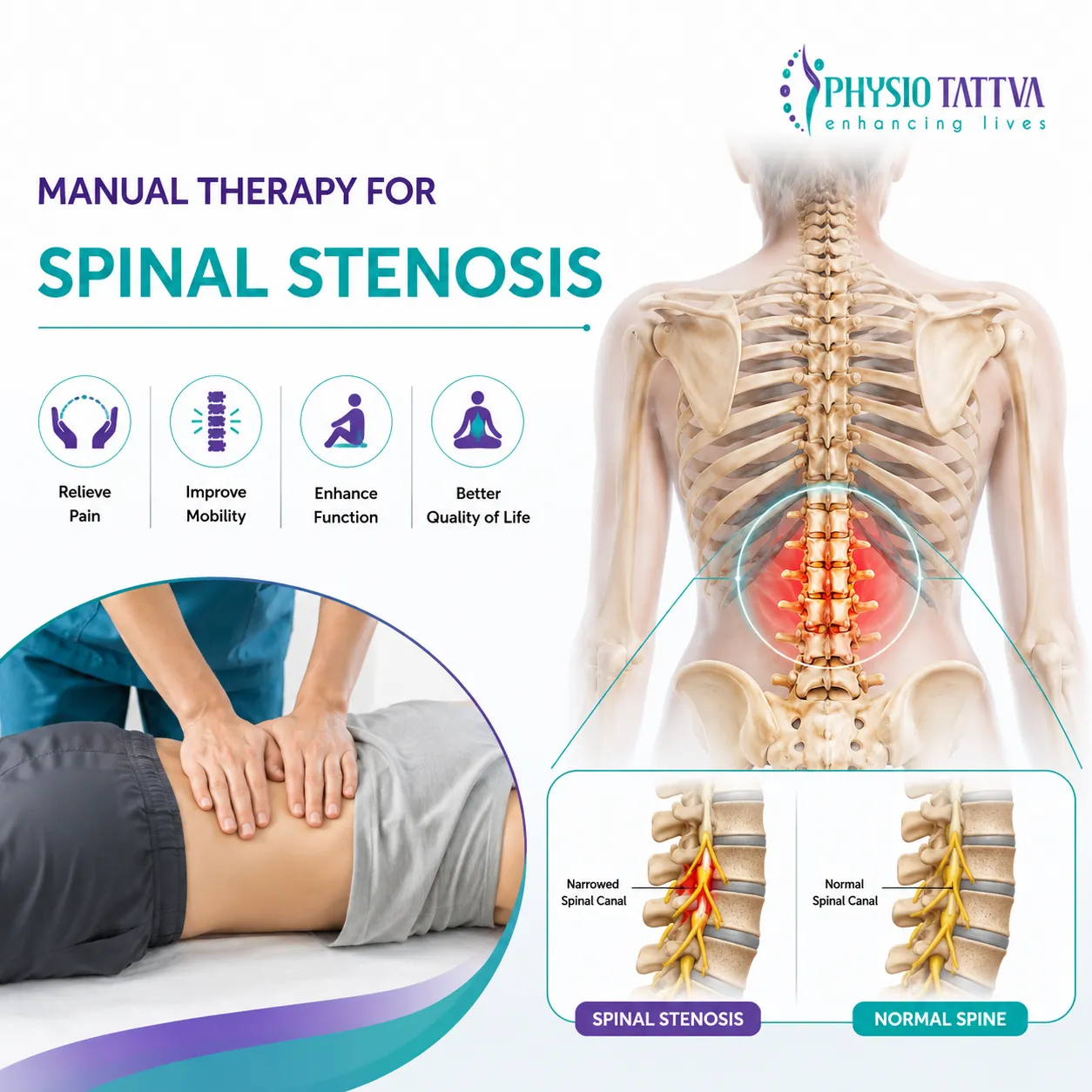
Spinal stenosis, a condition characterized by the narrowing of the spinal canal, can cause significant pain, numbness, and weakness in the back, neck, and extremities. While it's a structural issue that can't be "cured" non-surgically, its symptoms can be effectively managed. One of the cornerstone treatments in a conservative, non-surgical approach is manual therapy.
This article will break down what manual therapy for spinal stenosis involves, the techniques used, its benefits, and how it fits into a complete physical therapy plan.
Understanding Spinal Stenosis and Its Impact on Your Health
Spinal stenosis is a condition that can significantly affect your daily life, causing discomfort and limiting mobility. To fully understand how it impacts your body, it's important to recognise what’s happening within the spine and why the symptoms occur. Here's a closer look at the condition and its effects:
- What is Spinal Stenosis? It's the narrowing of the spaces within your spine, which can put pressure on the nerves that travel through it. It most often occurs in the lower back (lumbar spinal stenosis) or the neck (cervical spinal stenosis).
- Why Do Symptoms Occur? The symptoms aren't just from the bony narrowing. The compression leads to secondary issues that manual therapy directly targets:
- Inflammation of nerves and surrounding tissues.
- Stiffness in the spinal joints above and below the stenotic level.
- Muscle Spasms and Tightness as the body tries to "guard" the painful area.
- Poor Posture and altered movement patterns that further aggravate symptoms.
The Goal of Manual Therapy: Manual therapy does not widen the spinal canal. Instead, it works to alleviate these secondary problems, thereby reducing pain, improving mobility, and increasing overall function.
Core Manual Therapy Techniques for Spinal Stenosis
Manual therapy is a clinical approach utilising skilled, hands-on techniques to diagnose and treat soft tissues and joint structures. For spinal stenosis, a therapist will use specific techniques to achieve targeted goals.
Soft Tissue Mobilization
This is more than a general massage. It involves targeted pressure and strokes to address dysfunctional muscles and fascia (the connective tissue surrounding muscles).
- Techniques: Myofascial release, trigger point therapy, deep tissue massage.
- Why it Helps:
- Reduces muscle spasms in the back, glutes, and hips (for lumbar stenosis).
- Improves blood flow to the area, which can help reduce inflammation.
- Releases painful trigger points that can refer pain down the leg, mimicking sciatica.
Joint Mobilization
This involves gentle, passive movements of the spinal joints to restore normal motion.
- Technique: The therapist applies slow, rhythmic pressure to a specific spinal segment, guiding it through its available range of motion. This is different from a high-velocity chiropractic "adjustment."
- Why it Helps:
- Reduces stiffness in the joints around the narrowed segment, which can decrease overall stress on the area.
- Can provide temporary pain relief by stimulating mechanoreceptors (nerve endings that sense movement).
- Improves the mobility of the spine, making it easier to perform therapeutic exercises.
Flexion-Distraction
This technique is particularly effective for lumbar spinal stenosis. It is performed on a specialized table that gently flexes and stretches the lower spine.
- Technique: The patient lies face down on the table. The therapist applies gentle pressure to the affected spinal level while the lower section of the table drops down, creating a controlled, rhythmic flexion and decompression effect.
- Why it Helps:
- Increases the space in the spinal canal and the foramen (where nerve roots exit), temporarily decompressing the nerves.
- Reduces pressure on the spinal discs.
- Stretches tight ligaments and muscles contributing to the compression.
Nerve Mobilization (Neural Gliding or "Flossing")
When a nerve is compressed, it can become "stuck" or adhered to surrounding tissues. Nerve mobilization aims to gently restore its natural movement.
- Technique: The therapist guides the patient's limb through a specific sequence of movements designed to gently slide the nerve back and forth through its pathway.
- Why it Helps:
- Reduces nerve sensitivity and irritation.
- Improves nerve health by promoting blood flow within the nerve itself.
- Decreases radicular symptoms like tingling, numbness, or shooting pain in the arms or legs.
Manual Traction
A gentle, sustained pull is applied by the therapist to the spine.
- Technique: For lumbar stenosis, the therapist may gently pull on the legs or hips. For cervical stenosis, a gentle pull is applied to the head.
- Why it Helps:
- Creates a temporary decompression effect, relieving pressure on nerves.
- Stretches tight muscles and joint capsules.
Integrating Manual Therapy into a Comprehensive Treatment Plan
Manual therapy is most effective when it’s part of a broader physical therapy program for spinal stenosis. The hands-on work "prepares" the body for the most critical part of long-term management: therapeutic exercise. A comprehensive treatment plan includes the following elements:
Manual Therapy
Manual therapy is used to reduce pain, decrease stiffness, and improve mobility. It helps to relieve immediate discomfort and allows for better movement, providing the foundation for other therapeutic interventions.
Therapeutic Exercise
Therapeutic exercises are key to long-term success in managing spinal stenosis. These exercises help maintain mobility, strengthen muscles, and prevent further damage to the spine. Specific types of exercises include:
- Flexion-Based Exercises: For lumbar stenosis, exercises that encourage a forward bend (e.g., pelvic tilts, bringing knees to chest) can open the spinal canal and provide relief.
- Core Strengthening: Strengthening the core muscles provides stability to the spine, reducing stress on the stenotic segments and promoting better posture.
- Stretching: Focusing on tight hip flexors, hamstrings, and lower back muscles helps to alleviate tension that contributes to pain and stiffness.
Patient Education
Patient education plays an essential role in managing spinal stenosis. Understanding how to care for your body and adjust your daily activities can reduce strain on the spine and improve overall function.
- Postural Correction: Learning to stand and sit in ways that reduce spinal compression can significantly reduce symptoms.
- Activity Modification: Understanding which activities to avoid (e.g., prolonged standing/walking for lumbar stenosis) and how to modify others ensures that the spine remains protected throughout daily routines.
Relieve Pain and Improve Mobility with Manual Therapy with Physiotattva
Manual therapy is an effective treatment for managing spinal stenosis symptoms, such as pain, stiffness, and limited mobility. While it cannot cure the condition, it helps reduce discomfort and improve function by addressing issues like muscle spasms, joint stiffness, and nerve compression. When combined with therapeutic exercises and patient education, manual therapy supports long-term management and better spinal health. Consult a qualified professional at Physiotattva to determine if manual therapy is right for you.
At Physiotattva physiotherapy clinics in Bangalore, Hyderabad and Vizag you receive personalised care tailored to your specific needs, ensuring effective results and comfort throughout your journey to recovery.
Don’t wait to start your recovery! Get in touch with Physiotattva for more details! Contact us at +91 89510 47001.
Why Physiotattva?
22+
50,000+
95%
200+
25+
4.8
Cities We Serve

Bangalore
At Physio Tattva, we are committed to bring access to quality physio care through ultra-modern clinics and high-skilled practitioners to all.
.webp)
Hyderabad
At Physio Tattva, we are committed to bring access to quality physio care through ultra-modern clinics and high-skilled practitioners to all.
.webp)
Vishakhapatnam
At Physio Tattva, we are committed to bring access to quality physio care through ultra-modern clinics and high-skilled practitioners to all.
Core Treatments
Core Conditions
Core Symptoms
Frequently Asked Questions
Can manual therapy cure spinal stenosis?

Who is qualified to perform manual therapy for spinal stenosis?
Is manual therapy painful?
Are there any risks for manual therapy?



%20(1)-p-3200.jpeg)
.jpg)
.webp)
.webp)
.webp)