




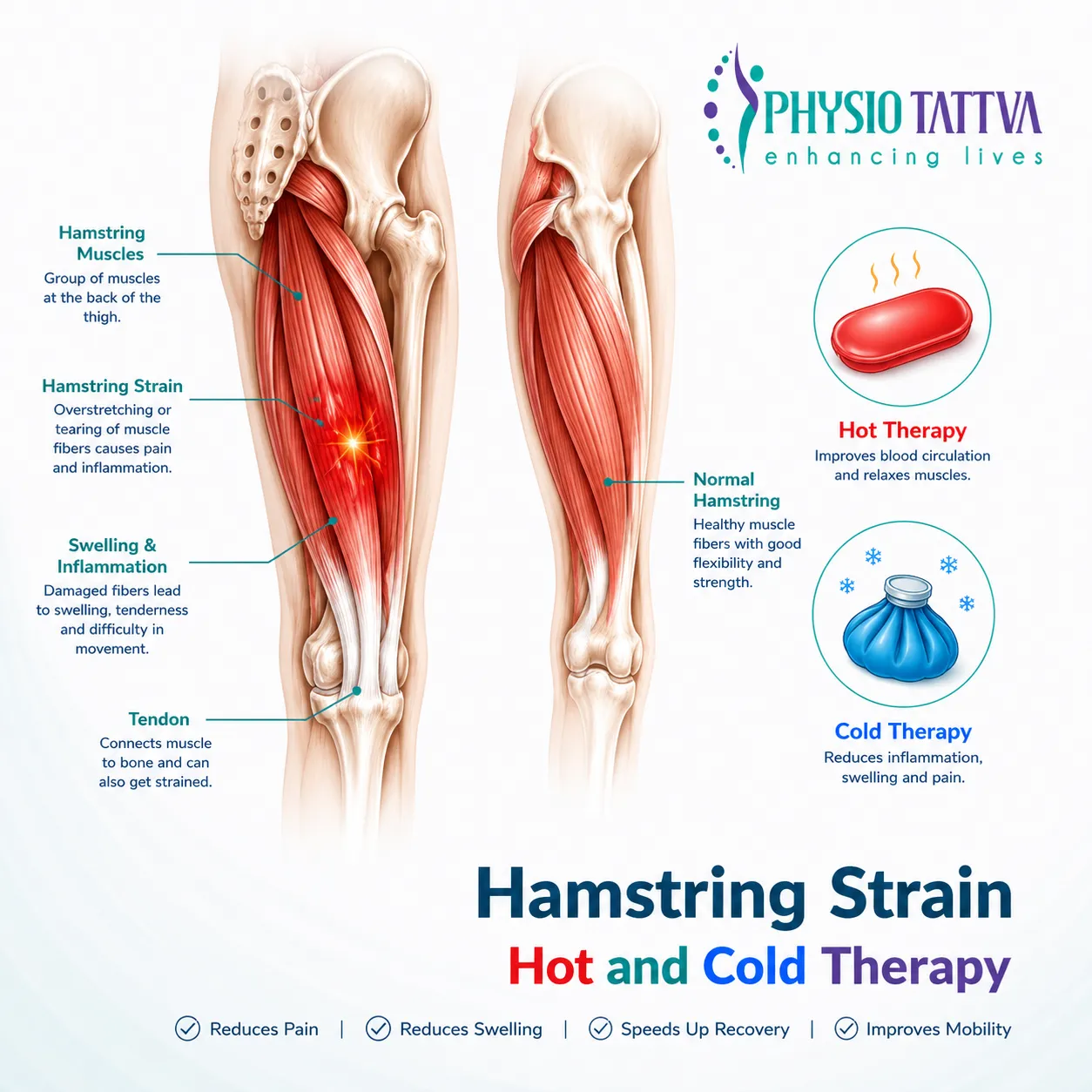
A hamstring strain, or a "pulled hamstring," is a common injury that can cause sharp pain and limit your mobility. One of the most effective, accessible, and affordable ways to manage the pain and accelerate healing is through hot and cold therapy. However, knowing when and why to use ice versus heat is critical for proper recovery. Using the wrong one at the wrong time can delay healing or even make the injury worse.
This article breaks down exactly how to use hot and cold therapy for your hamstring strain.
The Core Principle of Cold and Heat Therapy for Recovery
The core principle of using cold and heat therapy is simple: cold reduces, and heat increases.
- Cold therapy (Cryotherapy) works by constricting blood vessels, which reduces blood flow, numbs pain, and decreases inflammation and swelling. It’s most effective for acute injuries, helping to manage the initial pain and swelling right after the injury occurs.
- Heat therapy (Thermotherapy), on the other hand, expands blood vessels, improving blood flow and delivering oxygen and nutrients to the affected area. It helps to relax tight muscles and promotes tissue healing. Heat therapy is ideal for chronic stiffness, soreness, and pre-activity preparation, helping muscles loosen up before exercise or rehabilitation.
Understanding when and how to apply cold or heat is key to a faster and more effective recovery process, and it’s best used as part of a comprehensive rehabilitation plan.
Cold Therapy (Cryotherapy): Reducing Inflammation and Pain
Cold therapy constricts blood vessels, reducing blood flow to the affected area, numbing pain, and decreasing swelling. This is most beneficial during the acute phase of an injury, helping to manage initial swelling and discomfort.
Immediately after you strain your hamstring, your body’s inflammatory response kicks in. This causes swelling, pain, and redness. Your primary goal is to minimise this response.
Why Cold Therapy for Hamstring Strain?
Cold therapy offers several benefits, including:
- Reduces Swelling: By constricting blood vessels (vasoconstriction), ice limits the amount of fluid that rushes to the injured area.
- Numbs Pain: Cold acts as a natural analgesic, temporarily numbing the nerve endings in the area.
- Decreases Muscle Spasms: It helps to reduce the metabolic activity of the muscle tissue, calming spasms.
How to Apply Cold Therapy for Hamstring Injury
Here’s how to effectively apply cold therapy to manage your injury:
- Tool: Use an ice pack, a bag of frozen peas, or a bag filled with ice cubes.
- Protection: Always wrap the ice pack in a thin, dry towel or cloth. Never apply ice directly to the skin, as it can cause frostbite or skin damage.
- Positioning: Lie down and elevate your leg on pillows so your hamstring is higher than your heart. This helps gravity drain excess fluid.
- Duration: Apply the cold pack to the injured area for 15-20 minutes.
- Frequency: Repeat every 2-3 hours while you are awake for the first 48 hours.
Managing the Acute Phase with PRICE
In the first 48 hours after a hamstring strain, following the PRICE principle can help manage your recovery:
- Protection: Avoid activities that cause pain.
- Rest: Rest the leg as much as possible.
- Ice: Apply cold therapy as described above.
- Compression: Use a compression wrap around the thigh to help control swelling.
- Elevation: Keep the leg elevated.
Heat Therapy (Thermotherapy): Promoting Healing and Flexibility
Heat therapy works by expanding blood vessels, which increases blood flow to the injured area. This helps deliver oxygen and nutrients to promote healing, relax tight muscles, and reduce stiffness. It is particularly effective during the healing phase of an injury, helping to restore flexibility and relieve discomfort.
After the first 2-3 days, the initial inflammation and swelling should have peaked and started to subside. Now, your goal is to promote healing and restore flexibility. Heat therapy can be introduced at this stage to speed up the recovery process and improve the range of motion.
Why Heat Therapy for Hamstring Strain?
Heat therapy provides several benefits, including:
- Increases Blood Flow: Heat expands the blood vessels (vasodilation), bringing more oxygen- and nutrient-rich blood to the damaged muscle tissue, which speeds up the healing process.
- Reduces Stiffness: Heat increases the elasticity of muscle tissue, relieving stiffness and making the hamstring more flexible.
- Soothes Muscle Pain: The warmth provides comfort and helps to relax tight, sore muscles.
How to Apply Heat Therapy for Hamstring Injury
Here’s how to effectively apply heat therapy to your hamstring strain:
- Tool: Use a heating pad (on a low-to-medium setting), a hot water bottle, a warm damp towel, or take a warm bath.
- Protection: Ensure the heat source is not too hot to avoid burns. Use a towel as a barrier if needed. Never fall asleep with a heating pad on.
- Positioning: Apply the heat source to the injured area, ensuring it’s comfortably warm.
- Duration: Apply heat for 15-20 minutes at a time.
- Frequency: Use heat therapy before gentle stretching or light rehabilitation exercises to help loosen the muscle and prepare it for movement.
Managing the Healing Phase with Heat Therapy
After the first 72 hours, heat therapy becomes essential in the healing phase. Here’s how to use it effectively:
- Protection: Avoid any activities that cause discomfort.
- Rest: Allow the leg to rest and heal.
- Heat: Apply heat therapy as described above.
- Compression: Avoid compression during the heat therapy stage to allow better blood flow.
- Elevation: Elevate the leg when resting to help reduce any remaining swelling.
Advanced Technique: Contrast Therapy (Alternating Hot and Cold)
After the acute phase (72+ hours), some people find significant benefits from contrast therapy, particularly for persistent stiffness and swelling. This method alternates between hot and cold therapy, creating a "pumping" action in the blood vessels. This cycle helps stimulate circulation, reduce swelling, and promote tissue healing.
Why Contrast Therapy?
Contrast therapy utilises the rapid shift from heat (vasodilation) to cold (vasoconstriction), providing several key benefits:
- Flushes Out Waste Products: The heat expands the blood vessels, allowing waste products to be flushed out, while cold therapy constricts the vessels, helping to reduce swelling.
- Reduces Inflammation: The alternating temperatures help manage stubborn inflammation that doesn’t subside after the initial healing phase.
- Promotes Fresh Blood Flow: The back-and-forth action drives fresh, oxygenated blood into the tissue, promoting healing and muscle recovery.
How to Apply Contrast Therapy
Here’s how to effectively apply contrast therapy to your hamstring strain:
- Start with Heat: Begin with 3 minutes of heat (using a heating pad or hot towel).
- Follow with Cold: Immediately switch to 1 minute of cold (ice pack or cold compress).
- Repeat the Cycle: Continue this cycle for 3-5 repetitions, alternating between heat and cold.
- End with Cold: Always finish the therapy with cold to minimise any potential inflammatory response and to reduce any swelling.
Best Use Case for Contrast Therapy
Contrast therapy is particularly effective for addressing persistent muscle stiffness, soreness, and swelling after the initial recovery phase. It can also be beneficial before or after light rehabilitation exercises to prepare the muscle or reduce any lingering tightness.
When to See a Doctor for Hamstring Strain
While hot and cold therapy is effective for mild-to-moderate strains (Grade 1 and 2), you should consult a doctor or physical therapist if you experience:
- A loud "popping" sound or sensation at the time of injury.
- Inability to walk or bear any weight on the leg.
- Severe bruising or a visible deformity in the muscle.
- Numbness or tingling in your leg or foot.
- Pain that does not improve after 3-4 days of home care.
A professional can accurately diagnose the grade of your hamstring strain and create a tailored rehabilitation plan.
Disclaimer: This guide is for informational purposes only. Always consult with a healthcare professional for diagnosis and treatment of medical conditions.
Enhancing Hamstring Strain Recovery with Hot and Cold Therapy
Hot and cold therapy plays a vital role in recovering from a hamstring strain. Cold therapy helps reduce inflammation and pain in the acute phase, while heat therapy promotes healing and flexibility once swelling has subsided. For persistent stiffness, contrast therapy (alternating hot and cold) can help improve circulation and reduce swelling.
Always apply the right therapy at the right time for the best results. If symptoms persist or worsen, consult a physiotherapist for a tailored recovery plan. With the right approach and expert guidance, you can speed up your recovery and return to full mobility.
At Physiotattva physiotherapy clinics in Bangalore and Hyderabad, you receive personalised care tailored to your specific needs, ensuring effective results and comfort throughout your journey to recovery.
Don’t wait to start your recovery! Get in touch with Physiotattva for more details! Contact us at +91 89510 47001.
Why Physiotattva?
22+
50,000+
95%
200+
25+
4.8
Cities We Serve

Bangalore
At Physio Tattva, we are committed to bring access to quality physio care through ultra-modern clinics and high-skilled practitioners to all.
.webp)
Hyderabad
At Physio Tattva, we are committed to bring access to quality physio care through ultra-modern clinics and high-skilled practitioners to all.
.webp)
Vishakhapatnam
At Physio Tattva, we are committed to bring access to quality physio care through ultra-modern clinics and high-skilled practitioners to all.
Core Treatments
Core Conditions
Core Symptoms
Frequently Asked Questions
Can I use hot and cold therapy alternately?

How long does a hamstring strain take to heal?
Should I stretch a strained hamstring?
When can I return to sports after a hamstring strain?






%20(1)-p-3200.jpeg)


.jpg)
.webp)
.webp)
.webp)