





Plantar fasciitis is one of the most common causes of heel pain, affecting millions of people, from athletes to individuals who spend long hours on their feet. While treatments range from stretching to orthotics, Kinesio taping therapy for plantar fasciitis has emerged as a popular, non-invasive method for managing pain and supporting recovery.
This article will walk you through what Kinesio tape is, how it works, and how you can apply it yourself to find relief.
What is Plantar Fasciitis?
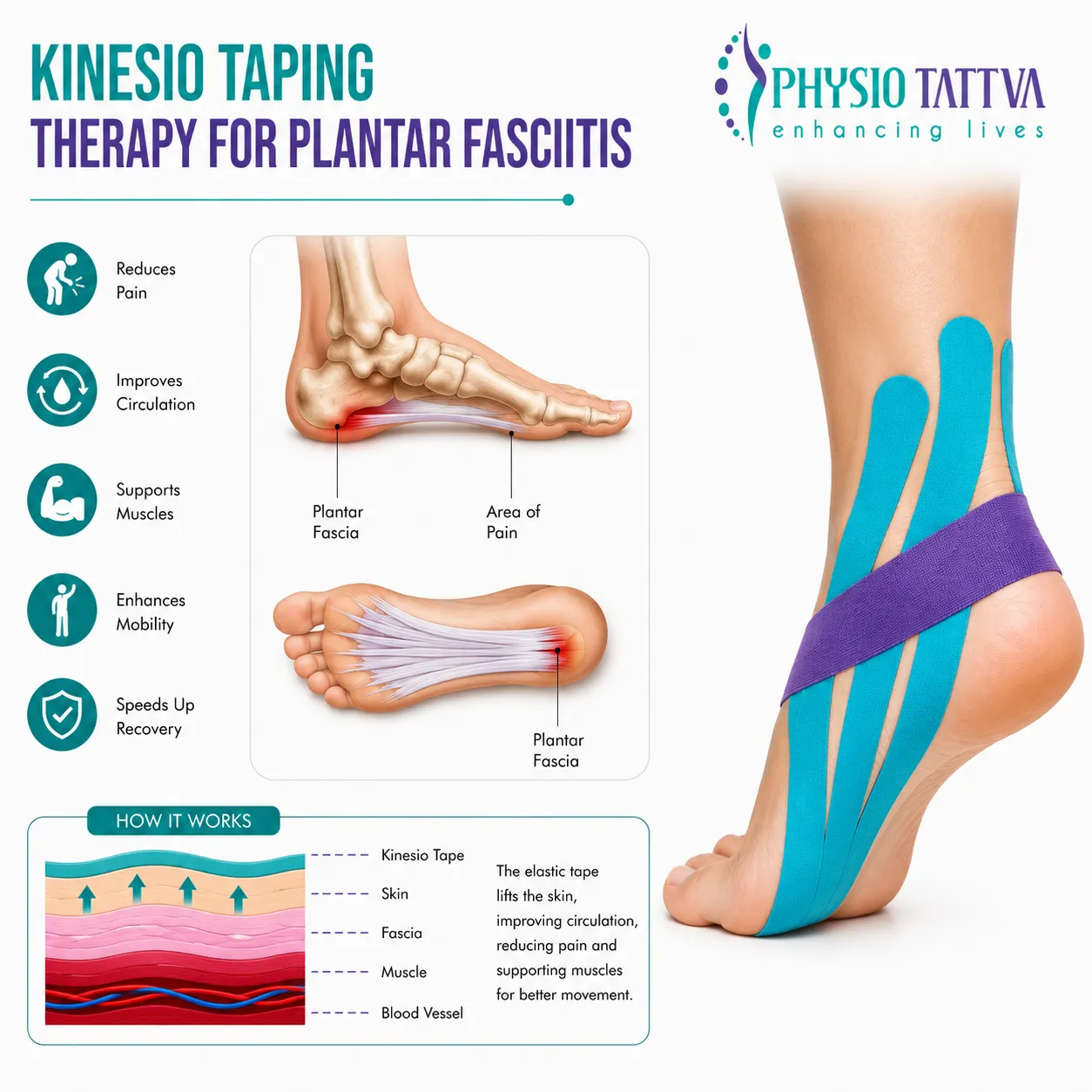
The plantar fascia is a thick, web-like ligament that connects your heel to the front of your foot. It acts as a shock absorber and supports the arch of your foot. When this ligament becomes inflamed or strained, it results in a condition called plantar fasciitis.
Common Symptoms Include:
People with plantar fasciitis often experience one or more of the following symptoms, which may vary in intensity throughout the day:
- Stabbing pain near the heel.
- Pain that is most intense with the first steps in the morning.
- Increased pain after (not during) exercise.
- Discomfort after long periods of standing or sitting.
How Does Kinesio Taping Therapy Work?
Kinesio tape (or kinesiology tape) is an elastic therapeutic tape made of cotton with an acrylic adhesive. Unlike rigid athletic tape, it's designed to mimic the skin's elasticity, allowing for a full range of motion.
When applied correctly for plantar fasciitis, Kinesio tape works in several ways:
- Pain Relief via Decompression: The tape gently lifts the skin, creating a microscopic space between the skin and the underlying tissues. This can reduce pressure on pain receptors and improve circulation.
- Structural Support: It provides gentle support to the arch of the foot and the plantar fascia ligament, reducing the strain on the inflamed tissue.
- Improved Proprioception: The sensation of the tape on your skin enhances your brain's awareness of your foot's position (proprioception). This can help you unconsciously adjust your gait to a less painful pattern.
- Reduced Inflammation: By creating space and improving fluid dynamics, the tape promotes better lymphatic drainage, which can help reduce swelling and inflammation in the affected area.
How to Apply Kinesio Tape for Plantar Fasciitis: Step-by-Step Guide
Applying Kinesio tape correctly is essential to ensure proper support, pain relief, and long-lasting adhesion. The following method is commonly used by physiotherapists and requires one long strip and three shorter strips of Kinesio tape.
Step 1: Preparation
Proper preparation helps the tape stick securely and reduces the risk of skin irritation.
- Clean the Skin: Wash and thoroughly dry your foot and ankle. The area must be free of oils, lotions, or sweat for the tape to adhere properly.
- Cut the Tape: Use sharp scissors. Round the corners of each strip to prevent the edges from catching on socks and peeling off.
- Create the Strips: Before applying the tape, prepare the required strips to ensure proper support and accurate placement during taping:
- Strip 1 (Anchor & Arch Support): Measure a strip from the ball of your foot to just past your heel.
- Strips 2, 3, & 4 (Decompression Strips): Cut three shorter strips, each about 4-6 inches long.
Step 2: Application
Position: Sit in a chair and cross the affected leg over your other knee. Gently pull your toes back towards your shin to stretch the plantar fascia (this is called dorsiflexion).
Apply the Arch Support Strip (Strip 1)
This strip provides gentle support to the arch and helps reduce strain on the plantar fascia during movement.
- Tear the paper backing about two inches from one end to create an anchor.
- Apply the anchor at the ball of your foot (just behind the toes) with no stretch.
- While keeping your toes pulled back, apply the rest of the strip along the arch and over the heel with about 25-50% stretch.
- Lay down the final inch of the tape on your Achilles tendon with no stretch.
Apply the Decompression Strips (Strips 2, 3, & 4)
These strips are designed to target the most painful area and reduce pressure directly at the heel.
- Take one of the shorter strips. Tear the backing paper in the middle.
- Find the most painful point on your heel.
- With about a 50-75% stretch in the center of the tape, apply it directly across the point of pain. Lay the ends down with no stretch.
- Repeat this with the other two short strips, creating a star or asterisk pattern over the point of pain. One strip will be horizontal, and the other two will be diagonal, intersecting at the center of your heel pain.
Step 3: Activation
Once all tape strips are in place, firmly rub over the tape for 30–60 seconds. This friction creates gentle warmth, which activates the adhesive and helps the tape bond securely to the skin.
The tape can be worn for 3–5 days, including during showers. After getting it wet, gently pat the area dry with a towel and avoid using a hairdryer, as excessive heat may weaken the adhesive.
Best Practices and Tips for Kinesio Taping for Plantar Fasciitis
Following a few simple guidelines can help you get the best results from Kinesio taping while reducing the risk of skin irritation or poor adhesion:
- "Paper-Off" Tension: To apply stretch, hold the tape and pull the paper backing off. The natural recoil of the tape is a good guide for a light-to-moderate stretch.
- Don't Overstretch: Overstretching the tape, especially at the ends, can cause skin irritation and make the tape peel off faster.
- Listen to Your Body: If you experience any itching, redness, or increased pain, remove the tape immediately.
- Removal: To remove the tape, apply baby oil or vegetable oil to loosen the adhesive. Peel it off slowly in the direction of hair growth, pressing down on the skin as you go.
Benefits & Limitations of Kinesio Taping for Plantar Fasciitis
Kinesio taping can be a helpful part of plantar fasciitis management, but like any treatment, it has both advantages and limitations. Understanding both helps set realistic expectations and ensures better outcomes.
Benefits of Kinesio Taping
When applied correctly, Kinesio taping offers several practical benefits for managing heel pain and supporting daily movement:
- Drug-Free Pain Relief: A great alternative or complement to anti-inflammatory medications.
- Supports an Active Lifestyle: Allows you to continue with daily activities and light exercise by providing support.
- Non-Invasive: A safe and gentle treatment method.
- Cost-Effective: A roll of tape is affordable and can be used for multiple applications.
Limitations of Kinesio Taping
Despite its benefits, Kinesio taping should be viewed as a supportive tool rather than a standalone solution:
- It's Not a Cure: Kinesio taping therapy for plantar fasciitis is a supportive treatment. It helps manage symptoms but does not "fix" the underlying cause.
- Proper Technique is Key: Effectiveness is highly dependent on correct application.
- Effectiveness Varies: Some individuals experience significant relief, while others may find it less effective.
When to See a Professional for Kinesio Taping Therapy for Plantar Fasciitis
Although Kinesio taping can be applied at home, professional guidance ensures accurate diagnosis, correct technique, and more effective long-term results. Consulting a trained healthcare professional can help in the following ways:
- Confirm the Diagnosis: A physical therapist, podiatrist, or sports medicine doctor can confirm whether your heel pain is truly plantar fasciitis and rule out other causes.
- Create a Personalised Treatment Plan: This may include plantar fascia and Achilles tendon stretching, strengthening exercises for the foot and lower leg, and activity modifications.
- Footwear and Orthotic Guidance: Professionals can recommend supportive footwear or orthotic inserts based on your foot structure and walking pattern.
- Hands-On Therapies: Manual therapy and other physiotherapy techniques may be added to speed up recovery.
- Correct Taping Technique: A professional can teach the most effective Kinesio taping therapy for plantar fasciitis tailored to your pain pattern, arch type, and daily activity level.
Move Forward with Confidence with Physiotattva
Kinesio taping therapy for plantar fasciitis provides a simple, non-invasive way to manage heel pain while supporting the foot’s natural arch. By relieving pressure and promoting better movement, it helps you stay active during recovery. When combined with stretching and proper footwear, it can make everyday movement more comfortable again.
At Physiotattva physiotherapy clinics in Bangalore and Hyderabad, you receive personalised care tailored to your specific needs, ensuring effective results and comfort throughout your journey to recovery.
Don’t wait to start your recovery! Get in touch with Physiotattva for more details! Contact us at +91 89510 47001.
Why Physiotattva?
22+
50,000+
95%
200+
25+
4.8
Cities We Serve

Bangalore
At Physio Tattva, we are committed to bring access to quality physio care through ultra-modern clinics and high-skilled practitioners to all.
.webp)
Hyderabad
At Physio Tattva, we are committed to bring access to quality physio care through ultra-modern clinics and high-skilled practitioners to all.
.webp)
Vishakhapatnam
At Physio Tattva, we are committed to bring access to quality physio care through ultra-modern clinics and high-skilled practitioners to all.
Core Treatments
Core Conditions
Core Symptoms
Frequently Asked Questions
How long can I wear Kinesio tape for plantar fasciitis?

Will I feel relief immediately?
Are there any side effects or risks of this therapy?
Can I apply the tape myself?






%20(1)-p-3200.jpeg)


.jpg)
.webp)
.webp)
.webp)